
 Worksheets
REVISION
Total questions: 150
Worksheet time: 1hrs 28mins
Which of the following is a physical change?
Rusting of iron
Melting of wax
Combustion of magnesium ribbon
Burning of candle
A chemical change may involve
Change in color only
Change in temperature only
Evolution of gas only
Any or all of the above
Which of the following processes is used to prevent articles from rusting?
Crystallization
Galvanization
Evaporation
Electolysis
Expansion on heating and contraction on cooling of metals is a
Chemical Change
Physical Change
Irreversible change
Reversible change
Which of the following changes is accompanied by sound?
Photosynthesis
Spoilage of food
Explosion of fire works
Crumpling of paper
Name the gas which turns lime water milky.
carbon dioxide
oxygen
nitrogen
Melting of a wax is a _____ change.
physical
chemical
Which of the two is permanent change chemical change or physical change?
physical
chemical
all of them
none of them
The chemical name of baking soda is Sodium hydrogencarbonate.
true
false
What type of change is photosynthesis?
physical change
chemical change
A change is a chemical change when it is accompanied by:
energy change
formation of new substances
change in chemical properties
all of the above
The shipping industry has to bear huge financial losses because of rusting of ships.The rusting of ships occurs because:
the body of ship is always in contact with water
the air around the ship is humid
presence of salts in sea water speed the process of rusting
all of the above
The chemical formula for Magnesium Oxide ?
( Mgo2 ]
[ Mg ( OH)2 ]
[ MgO]
Which of the following processes is used to prevent articles from rusting?
Crystallization
Digestion
Galvanization
Magnetic Effect
Crystallization is a process to obtain -
Pure solids
Pure liquids
Candies
Solids and powder
Equation for reaction between carbon dioxide and lime water :
Carbon Dioxide + Lime Water = Carbon Monoxide
Carbon Dioxide + Lime Water = Calcium Carbonate
Carbon Dioxide + Lime Water = Magnesium Hydroxide
Carbon Dioxide + Lime Water = Aqueous Solution
What is galvanisation ?
The process of depositing iron over steel
The process of depositing manganese over iron to prevent from rusting
The process of depositing a layer of nickel over zinc
The process of depositing a layer of zinc over iron
Is neutrilisation a chemical change ?
Yes
No
Which gas is evolved when vinegar reacts with baking soda
Oxygen
Nitrogen
Carbon Dioxide
Hydrogen

is the picture chemical or physical
chemical
physical
rust is chemical
true
false

What are the products of aerobic respiration?
Carbon Dioxide and Energy
Lactic Acid
Water and Carbon Dioxide
Glycogen and Carbon Dioxide

Yeast is a
Multicellular
Carnivore
Anaerobe
Single-celled organism
Lungs are present in the
Chest Cavity
Nasal cavity
Respiration
Diaphragm
During inhalation diaphragm moves
Down
Left
Right
Up
Earthworms skin is
Moist and slimy
Moist and rough
Rough and slippery
Rough and slimy
When we inhale air, it passes through our nostrils into the
Nasal cavity
Chest cavity
Tracheae
Spiracles
Is there difference between breathing and respiration
Yes
No


When breakdown of glucose occurs with the use of oxygen it is called
aerobic respiration
anaerobic respiration
cellular respiration
anaerobes
In the cells Oxygen is used to break down
glucose into carbon di oxide
Glucose into carbon di oxide and water
water into carbon di oxide
carbon di oxide into water
During heavy exercise when supply of oxygen to our muscles is insufficient food breakdown is by
anaerobic respiration
aerobic respiration
cellular respiration
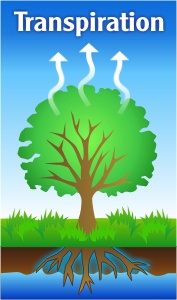
Why plants become wilt?
Less water evaporate from the plants
The plant loss excessive amount of water through transpiration
The stomata of the plants are closed
The weather are cool.
Which of the following indicates the pathway of water through a plant?
root hair cell --> xylem --> stomata
stomata --> root hair cell --> xylem
xylem --> stomata --> root hair cell
Root hairs help in absorption of water by
increasing the surface area
decreasing the surface area
holding the plant in the soil
none of the above
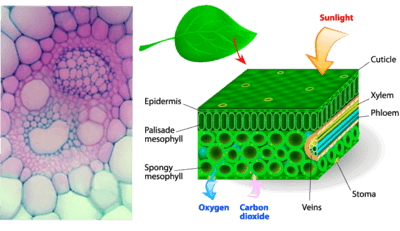
Recall that the movement of food in the phloem is called.
Translocation
Transpiration stream
Evaporation
Respiration
All organisms need food, ________, and water for survival.
Oxygen
Shelter
Carbon Dioxide
All of these
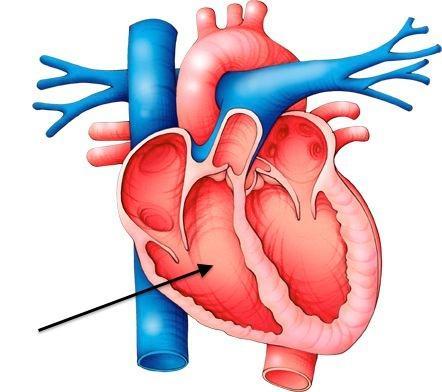
Which of the following are parts of the heart?
Right Auricle
Left ventricle
Tricuspid Valve
Cerebrum
The red pigment in blood is called
Plasma
Arteries
Haemoglobin

The process of removal of unwanted, harmful, and toxic substances in our body is called excretion system.
True
False
Is this statement true/false?-
" Dialysis is the process of filtering blood through an artificial process when a person's kidney stops working due to an injury or malfunctioning"
False
True
Can't say

Which part in this diagram absorbs water from soil?
ROOT HAIR
ROOT CAP
REGION OF ELONGATION
MERISTEMATIC REGION
Which type of reproduction envolves one parent
Asexual
Sexual
None of these
Both of these
Vegetative propagation is a type of sexual reproduction. True/False
True
False
Vegetative propagation in potato takes place by
Leaves
Stem
Root
Seeds
In which of the following plants buds are present on the margins of leaves?
Bryophyllum
Touch me not
Chandan
Neem
In yeasts reproduction occurs by:
Fragmentation
Budding
Spore formation
Vegetative propagation
Seeds of drumstick and maple are carried to long distances by wind because they possess:
winged seeds
large and hairy seeds
long and ridged fruits
spiny seeds
Pollination refers to the:
transfer of pollen from anther to ovary
transfer of male gametes from anther to stigma
transfer of pollen from anther to stigma
transfer of pollen from anther to ovule
What is fertilization?
Fusion of male and female gametes
Fusion of pollen and female gametes
Fusion of pollen and male gametes
Fusion of male and male gametes
Algae reproduces through :
Budding
Fragmentation
Spore formation
Vegetative propagation
Reproduction is
The process of giving birth to young ones by their on kind
Process of breathing in air
Process of digesting food
Process of excreting wastes

Why do living things reproduce?
Living things do not have a choice.
To ensure continuity of their kind.
To ensure consistency in their kind.
What is NOT a characteristic of seeds dispersed by wind?
wing-like structures
feathery
light
Has pods
Which of the following is NOT a characteristic of seeds dispersed by water?
has fibrous husks
has hooks
has waterproof covering
can stay afloat on water
When we prevent overcrowding of plants, we reduce the competition for ________________________________________.
Water, Minerals and Light
Water, Nutrients and Minerals
Water, Nutrients, Light and Minerals
Water, Light and Space
Which is NOT a characteristic of seeds dispersed by animals?
Fruits or seeds have hooks
Fruits are fleshy and juicy
Fruits have trapped air in their husks
Seeds are passed out through animal's droppings
Which of the following consists of only parts of the female parts of the flower?
style, ovary, anther, pollen grain
anther. style, ovary, stigma, egg cell
egg cell, male reproductive cell, ovule
ovule, ovary, style, stigma, egg cell
Which of the following is describes Self-Pollination?
Pollen grains are transferred from anther to stigma of another flower.
Pollen grains are transferred from filament to stigma of the same flower.
Pollen grains are transferred from anther to stigma of the same flower.
Pollen grains are transferred from stigma to anther of the same flower.
Root, stem and leaves are called-
Sexual parts
Vegetative parts
When a plant reproduces by its vegetative parts it is called-
Asexual reproduction
Sexual reproduction
The roots of this plant can give rise to a new baby plant.
Bryophyllum
Sweet potato
Sugarcane
Stem cutting is a common method of artificial vegetative propagation in which plant?
Rose
Jasmine
Blueberry
Apple
Flowers become fruits, which bear seeds. The seeds germinate to give new plants. Name this type of reproduction.
Asexual reproduction
Sexual reproduction
Vegetative propagation
The bouncing of light by any smooth surface, like a mirror, is called
Refraction
Galvanisation
Reflection
None of these
Due to the reflection of light, the impression of an object formed in a mirror is called the ___ of the object
Image
shadow
Light
As the distance of the object from the mirror increases, the distance of the image also ___.
Decreases
Increases
It remains the same
none of these
Lens used in spectacles for correction of defects of vision is
Always concave
Concave or convex
Lens of different shape
Always convex
An inverted image can be seen in a convex mirror,
under no circumstances
when the object is very far from the mirror
when the object is at a distance equal to the radius of curvature of the mirror
when the distance of the object from the mirror is equal to the focal length of the mirror
An object of length 5 cm is placed at a distance of 20 cm in front of a plane mirror. The size and position will be
5 cm high and 20 cm behind the mirror
5 cm high and 20 cm in front of mirror
5 cm high and 10 cm behind the mirror
3 cm high and 20 cm behind the mirror
Latha is observing her image in a plane mirror. The distance between the mirror and her image is 6 m. If she moves 2m towards the mirror then the distance between latha and her image will be
8 m
4 m
10 m
5 m
If you are standing 2m away from a plane mirror the distance between you and your image are
2m
4m
6m
8m
Convex lens is also called as
Diverging lens
Converging lens
Plane lens
Power lens
What kind of image formed by concave lens?
Virtual
Real
Both
None
Which of the following always diverge light rays?
Convex mirror and plane mirror
Concave lens and convex mirror
Concave mirror and convex lens
Concave lens and convex mirror
Boojho and Paheli were given one mirror each by their teacher. Boojho found his image to be erect and of the same size, whereas Paheli found her image erect and smaller in size. This means that the mirrors of Boojho and Paheli respectively are
plane mirror and concave mirror
convex mirror and plane mirror
plane mirror and convex mirror
concave mirror and convex mirror
Which of the following would you prefer to use while reading small letters found in a dictionary?
(a) A convex lens
(b) A convex mirror
(c) A concave lens
(d) Either (a) or (b)
A
B
C
D
A virtual image
(a) can be formed on the screen
(b) cannot be formed on the screen
(c) is formed only by a plane mirror
(d) is formed only by the convex mirror
a
b
c
d
An erect and enlarged image can be formed by
(a) only a convex mirror
(b) only a concave mirror
(c) only a plane mirror
(d) Both convex and concave mirrors
Which one shows lateral inversion?
(a) Plane mirror
(b) Convex mirror
(c) Concave mirror
(d) All of these
a
b
c
d
The inner surface of a steel spoon acts as a ………………….. mirror.
plane mirror
convex mirror
concave mirror
convex lens
The image which is obtained on a screen
upright
impression
virtual image
real image
You are provided with a concave mirror, a convex mirror, a concave lens and a convex lens. To obtain an enlarged image of an object you can use either
concave mirror or convex mirror
concave mirror or convex lens
concave mirror or concave lens
concave lens or convex lens
You are provided with a convex mirror, a concave mirror, a convex lens and a concave lens. You can get an inverted image from
both concave lens and convex lens
both concave mirror and convex mirror
both convex mirror and convex lens
both convex mirror and concave lens
A smooth shining surface, which rebounds the light back in same or in different direction, is called
Mirror
Incident ray
Lens
Idealisation
The splitting of white light into its seven constituent colours is called
refraction
dispersion
deviation
reflection
What makes objects visible ?
the absorption of light by objects
the reflected light from the object
the total internal reflection taking place in an object
sunlight called white light consits of __________________
colours
1
5
0
7

This situation shows that
light travels in a straight line
light is everywhere
light penetrates certain objects
light is produces by the Sun

What conclusion can be made from this investigation?
Light travels in parallel
Light travels in a straight line
Light cannot pass through and opaque object
Light cannot bend

This investigation is carried out to show that
light travels in a straight line
light can be seen through the holes
light penetrates a transparent object
light travels in many ways


Our body also eliminates waste through the skin.
True
False
Oxygenated means the blood has a lot of....
Oxygen
Carbon Dioxide
Deoxygenated blood means that the blood is low in...
Oxygen
Carbon Dioxide

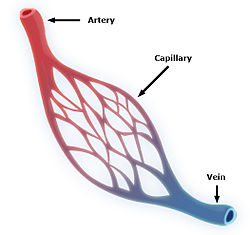
Veins are blood vessels containing blood going to the heart
True
False

Arteries are blood vessels with blood flowing from the heart
True
False

The blood obtains the oxygen from which organ?
Brain
Lungs
Heart
Stomach

In the body, the superior vena cava receives blood to the heart from
Head
Neck
Upper Limbs
Chest

The purpose of the valves is to keep the blood flowing in the right direction
True
False

After the blood leaves the right atrium, it goes to the...
Right Ventricle
Right Atrium
Left Ventricle
Left Atrium

After the right ventricle, the blood goes through the pulmonary artery to...
Lungs
Heart

In the lungs, the blood gets rid of...
Oxygen
Carbon Dioxide

After the blood gets oxygen from the lungs, it goes through the pulmonary veins to the heart's....
Right Atrium
Left Ventricle
Right Ventricle
Left Atrium

Lastly, the oxygenated blood goes through the ___________ to the rest of the body.
Aorta
Vena Cava
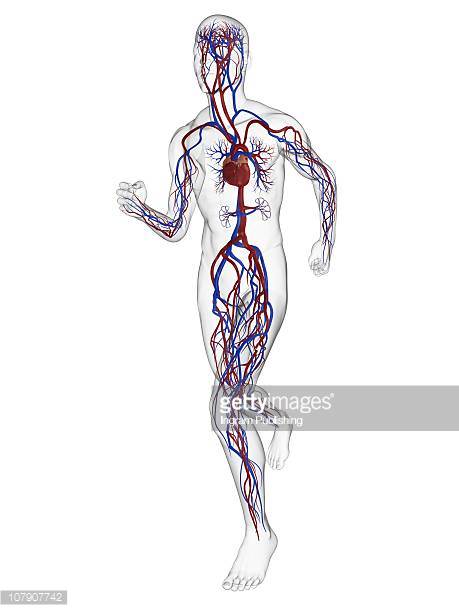
What is the main organ of the circulatory system?
small intestine
bone
lungs
heart

Inhalation occurs when diaphragm moves ____________ and ribs move upward and ______________.
Downward, inward
Upward, inward
Downward, outward
Upward, outward
Path followed by exhaled air is -
Nostrils-->windpipe--> lungs
Lungs--> Nostrils--> windpipe
Nostril --> lungs --> windpipe
Lungs --> windpipe --> nostrils
Insects have air holes or ____________ for respiration.
Spiracles
Nostrils
Lungs
Gills

