Wayground logo

Free Printable Worksheets

Font size

S
M
L
XL
Worksheets

ACAP Review Part 2

Total questions: 100

Worksheet time: 4hrs 22mins
Name
Class
Date
1.
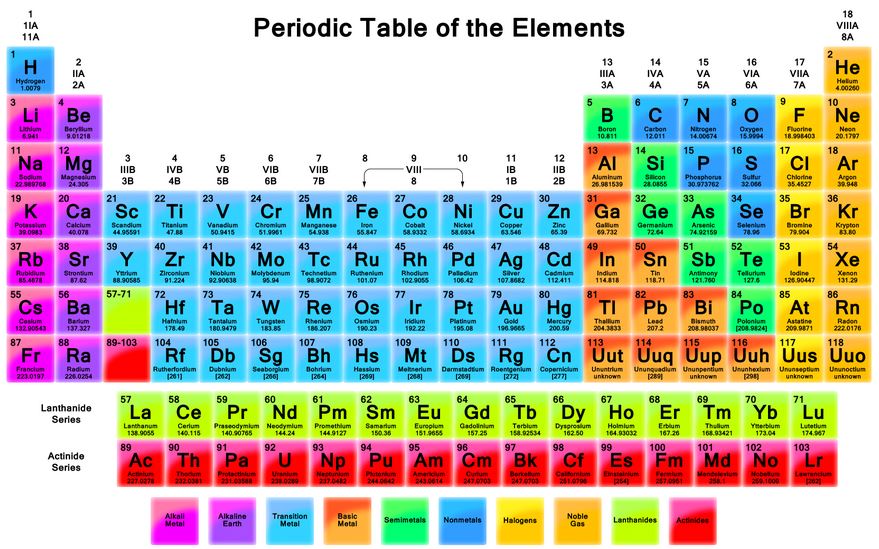
Which of the following has a full valence shell?
a)
Oxygen
b)
Neon
c)
Barium
d)
Carbon
2.
Elements on the LEFT side of the periodic table will most likely form:
a)
Positive ions
b)
Negative ions
c)
Neutral Ions
d)
None of these
3.
An ionic bond forms when atoms ___________ electrons.
a)
gain
b)
share
c)
increase
d)
transfer
4.
All chemical bonds involve two atoms sharing electrons.
a)
True
b)
False
5.
Chemical bonds form when atoms
a)
combined nuclei
b)
give up neutrons
c)
gain protons
d)
share or transfer electrons
6.
Bonds that form between two metals are called ______________ bonds.
a)
ionic 
b)
covalent
c)
metallic
d)
pervasive
7.
If an atom loses two electrons what charge will it have?
a)
+ 2
b)
 - 2
c)
+1
d)
-1
8.
If an atom gains one electron what charge will it have?
a)
-2
b)
-1
c)
+1
9.
Covalent compounds
a)
Share electrons
b)
transfer electrons
c)
contain a sea of electrons
d)
conduct electricity
10.
What is the number of valence electrons for Oxygen?
a)
8
b)
6
c)
2
d)
1
11.
How many valence electrons in this structure?
a)
6
b)
5
c)
4
d)
7
12.
A bond that forms when electrons are transferred is called a/an
a)
ionic bond
b)
covalent bond
c)
hydrogen bond
13.
The chemical bond formed when two atoms share electrons  is called a(an) IONIC bond. 
a)
True
b)
False
14.
How are covalent bonds explained?
a)
When one atom takes the other atom's electron
b)
When the atom shares an electron with an another atom
c)
When the two nucleus merge
d)
When the neutrons leave the nucleus
15.
Atoms joined together by SHARING electrons are?
a)
Ionic bonds
b)
Covalent bonds
c)
Metallic Bonds
d)
James Bonds
16.
Which of the following is an example of an IONIC COMPOUND?
a)
NaCl
b)
H2O
c)
CO2
d)
NO
17.
Which of the following is an example of a COVALENT COMPOUND?
a)
H2S
b)
KI
c)
CaCl2
d)
MgO
18.
What charge does a bromine (Br) ion have?
a)
-1
b)
-2
c)
-3
d)
-4
19.
What charge does a potassium (K) ion have?
a)
+1
b)
-1
c)
+2 
d)
-2
20.
Which category of elements have the property of being malleable and ductile?
a)
gases
b)
metals
c)
metalloids
d)
nonmetals
21.
Ionic bonds are between _______ and ________. 
a)
nonmetals and nonmetals 
b)
metals and metals 
c)
metals and nonmetals
d)
none
22.
How does a positively charged ion form?
a)
An atom loses an electron
b)
An atom gains an electron
c)
An atom gains a proton
d)
An ionic compound dissolves
23.
Covalent bonds tend to happen between two
a)
metals
b)
nonmetals
c)
metal and nonmetal
24.
Outer shell electrons are called
a)
outer electrons
b)
valence electrons
c)
negatives
25.
Atoms want
a)
A full outer shell of electrons
b)
One electron short of a full shell
c)
kit kats
26.
What is a coefficient?
a)
The small number on the right of the chemical symbol.
b)
The large number to the left of a formula.
27.
Which side of a chemical equation is the product side?
a)
Left (before the arrow)
b)
Right (after the arrow)
28.
Which side of a chemical equation is the reactant side?
a)
Left (before the arrow)
b)
Right (after the arrow)
29.
Which problem is balanced?
a)
PbO2 + 2H2
b)
SO2 + H20 --> H2SO4
c)
2Na + 2H2O --> 2NaOH + H2
30.
Is the equation balanced?: 2H2O + O2 --> 4MgO + 3Fe
a)
Yes
b)
No
31.
What is the little number after an element in a chemical equation called.
Example: H2
a)
Coefficient 
b)
Subscript
c)
Atom
d)
Equation
32.
Balance this equation
_Zn+_HCl-->_ZnCl2 +_H2
a)
1,1,2,1
b)
1,1,1,2
c)
1,2,1,1
d)
2,1,1,1
33.
Balance this equation.
_Mg + _Cl2 --> _MgCl2
a)
1, 2,1
b)
already balanced
c)
2,1,1
d)
1,1,2
34.
What does the Law of Conservation of Mass state?
a)
Matter cannot be gained or lost in a chemical reaction.
b)
Matter can only be lost in a chemical reaction.
c)
Matter can only be gained in a chemical reaction.
d)
Matter can be gained and lost in a chemical reaction. 
35.
Is this balanced?...
Fe + S --> FeS
a)
YES!
b)
NO!
36.
Balance this equation-
__P4 + __O2 --> __P2O3
a)
it is already balanced
b)
2, 1, 3
c)
1, 2, 3
d)
1, 3, 2
37.
How many atoms of aluminum are on each side of the following equation: 4Al + 3O2 --> 2Al2 O3
a)
2
b)
6
c)
1
d)
4
38.
The blue numbers in the image below represent ________
a)
Charges
b)
coefficients
c)
subscripts
d)
none of the answers are correct
39.
Number of H in 3(NH₄)₂CrO₄
a)
4
b)
6
c)
8
d)
24
40.
How many Elements are in the compound C2H8O ?
a)
2
b)
1
c)
3
d)
0
41.
Is this equation balanced?
a)
yes
b)
no
c)
Not enough information
42.
When balancing equations a ____ can be placed to the left of a formula of a substance to make the equations balanced
a)
charge
b)
subscript
c)
random number
d)
coefficient
43.
How many atoms of carbon (C) are in C6H12O6?
a)
3
b)
6
c)
12
d)
24
44.
How many atoms are there TOTAL in:
H2SO4
a)
6
b)
5
c)
7
d)
3
45.
The following is what type of reaction:
PbCl2 + AgNO3 → Pb(NO3)2 + AgCl
a)
Synthesis
b)
Decomposition
c)
Single Replacement
d)
Double Replacement
46.
The following is what type of reaction:
NH3 + HCl  → NH4Cl
a)
Synthesis
b)
Decomposition
c)
Single Replacement Replacement
d)
Double Replacement Replacement
47.
What type of chemical reaction is this?
Al(OH)3 → Al2O3  + H2O
a)
Decomposition
b)
Combustion
c)
Synthesis
d)
Single Replacement 
48.
3Ca + 2AlCl3 --> 3CaCl2 + 2Al
a)
Synthesis
b)
Decomposition
c)
Single Displacement
d)
Double Displacement
49.
One reactant into several products.
a)
Decomposition
b)
Synthesis
c)
Combustion
d)
Single Replacement
50.
Always starts with a Hydrocarbon that reacts with oxygen and produces carbon dioxide and water. 
a)
Decomposition
b)
Synthesis
c)
Combustion
d)
Single Replacement
51.
4Si   + S8   -->   2Si2S4
a)
Synthesis
b)
Decomposition
c)
Single Displacement
d)
Double Displacement
52.
C4H12 + O2 → CO2 + H2O
a)
Synthesis
b)
Combustion
c)
Single Replacement
d)
Double Replacement
53.
2Pb(NO3)2   -->   2PbO +  4NO2  +  O2
a)
Synthesis
b)
Decomposition
c)
Single Displacement
d)
Combustion
54.
3Mg + N2 --> Mg3N2
a)
Synthesis 
b)
Decomposition
c)
Single displacement
d)
Combustion
55.
2NO2 --> N2 + 2O2
a)
Synthesis
b)
Decomposition
c)
Single displacement
d)
Combustion
56.
P4 + 3O2 --> 2P2O3
a)
Synthesis 
b)
Decomposition
c)
Single displacement
d)
Combustion
57.
3KOH + H3PO4 --> K3PO4 + 3H2O
a)
Synthesis 
b)
Decomposition
c)
Single displacement
d)
Double displacement
58.

What reaction has the following general formula:

AB --> A + B

a)

Combination

b)

Decomposition

c)

Single Replacement

d)

Double Replacement

e)

Combustion

59.

What reaction has the following general formula:

A + CD --> C + AD

a)

Combination

b)

Decomposition

c)

Single Replacement

d)

Double Replacement

e)

Combustion

60.

What reaction has the following general formula:

AB + CD --> CB + AD

a)

Combination

b)

Decomposition

c)

Single Replacement

d)

Double Replacement

e)

Combustion

61.

What reaction has the following general formula:

A + B --> AB

a)

Combination

b)

Decomposition

c)

Single Replacement

d)

Double Replacement

e)

Combustion

62.
What is the formula for calculating speed?
a)
S= D x T
b)
S= T/D
c)
S= D/T
d)
S= D+T
63.
Calculate the speed of a train that traveled 400 miles in 5 hours.
a)
20 mph
b)
20 m/s
c)
80 mph
d)
80 m/s
64.

A plane flying 300 mph west toward California is an example of...

a)

Speed

b)

Velocity

c)

Acceleration

d)

Direction

65.
mph is a unit for ... 
a)
Speed
b)
Distance
c)
Time
d)
Direction
66.

Calculate the speed of a sprinter who ran 200 meters in 20 seconds.

a)

10 m/s

b)

10 km/s

c)

10 m/hr

d)

10 km/hr

67.
Speed is
a)
the change in distance in a given time
b)
change in direction
c)
moving in a specific direction
d)
moving
68.

What is this?

"Rocky is running 8mph North"

a)

Speed

b)

Velocity

c)

Acceleration

69.

What is velocity?

a)

Speed + Direction

b)

Speed Only

c)

Speed + Time

d)

Only Direction

70.

Which of the following are examples of velocity?

a) 50 mph

b) 24 mph North

c) 24 mph Northeast

d) 30 mph West

a)

All but (d)

b)

All are velocity except (a)

c)

Only (b)

d)

None are velocity

71.

Speed = _______________

a)

Distance + time

b)

Distance – time

c)

Distance x time

d)

Distance / time

72.

Which of the following is a unit of distance?

a)

Km/hr

b)

Minutes

c)

meters

d)

seconds

73.
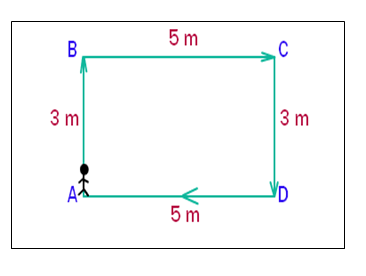
Scott travels north 5 miles and then goes west 3 miles before coming straight back south 2 miles. What is his distance?
a)
10
b)
7
c)
8
d)
6
74.
Distance and direction of an object's change in position from a starting point
a)
displacement
b)
distance
c)
motion
d)
reference point
75.
 Jermaine runs exactly 2 laps around a 400 meter track. What is the displacement?
a)
800
b)
400
c)
0
d)
200
76.
David walks 3 km north, and then turns east and walks 4 km. What is the distance?
a)
7 km
b)
3 km
c)
4 km
d)
1 km
77.
Bill runs 400 meters to Andy's house, turns around, and runs 400 meters back home.  What is Bill's distance?
a)
0 meters
b)
400 meters
c)
800 meters
d)
1600 meters
78.
Bill runs 400 meters to Andy's house, turns around, and runs 400 meters back home.  What is Bill's displacement?
a)
0 meters
b)
400 meters
c)
800 meters
d)
1600 meters
79.

A place or object (like a stop sign or mailbox) used for comparison to determine if another object is in motion is called a

a)

comparison point

b)

frame of reference

c)

point of view

d)

motion detector

80.
Sara walks from Point A to Point B. Which is true?
a)
Distance and displacement are EQUAL
b)
Distance is less than displacement
81.
What law is best described by inertia?
a)
1st
b)
2nd
c)
3rd
d)
law of conservation of mass
82.
a)
1st
b)
2nd
c)
3rd
d)
law of motion
83.
A person not paying attention while skateboarding hits a rock. The skateboard stops...they don't.
a)
The Law of Inertia (1st law)
b)
The Law of Acceleration (2nd law)
c)
The Law of Conservation of Momentum
d)
Action Reaction Law (3rd law)
84.
What Unit do we Measure Force in? 
a)
Newtons
b)
Joules
c)
Force
d)
Kilograms
85.
With unbalanced forces, the object will move in the direction that the _______ force is being applied.
a)
larger 
b)
smaller 
c)
equal 
d)
less
86.
What is Newton's First Law
a)
F=ma
b)
Every action has an equal and opposite reaction
c)
An object at rest stays at rest, an object in motion stays in motion. 
d)
Friction 
87.
A person is pushed forward into their seatbelt when a car stops
a)
1st
b)
 2nd
c)
2 and 3
d)
3rd 
88.
Which type of force(s) will cause a change in an object's motion?
a)
gravity
b)
zero net force
c)
balanced forces
d)
unbalanced forces
89.
A 20 kg bike accelerates at 10 m/s2.  what was the force
a)
25 Newtons
b)
20 Newtons
c)
200 Newtons
d)
10 Newtons
90.
Newton's third law states that any action will have a(n) _______ and ______ reaction
a)
Equal and similar
b)
Equal and opposite
c)
Equal and different
d)
Greater and opposite
91.
8 N to the left , and 4 N to the right. Find the net force. Is this balanced 
a)
12 N Right  No
b)
4 N Left  No
c)
12 N Right  Yes
d)
4 N Left  Yes
92.
What are the appropriate units to describe acceleration?
a)
m/s
b)
m/s2
c)
cm
d)
there are no units associated with acceleration
93.

When a student runs and kicks a ball, they have applied an ___________ force to move the ball.

a)

Balanced

b)

Magnetic

c)

Spring

d)

Unbalanced

94.

If the earth did not have _________, it would be impossible for humans to do anything because we would not be able to sit, stand, or walk around.

a)

weight

b)

the 3rd law of motion

c)

ice cream

d)

gravity

95.

Standing in line is an example of a ________ ________ since you are not moving forward, backward, or sideways.

a)

negative acceleration

b)

balanced force

c)

unbalanced force

d)

1st law of motion

96.
a)

1

b)

2

c)

3

d)

All of the above

97.
a)

1

b)

2

c)

3

d)

All of the above

98.

Acceleration is due to a force put on an object mass

a)

1

b)

2

c)

3

d)

All of the above

99.

. Force exerted between the surfaces of two objects.

a)

Friction

b)

Inertia

c)

Forces

d)

Gravity

100.

Object tendency to resist change

a)

Friction

b)

Inertia

c)

Forcé

d)

Gravity