
Font size
 Worksheets
SCIENCE GRADE 8
Total questions: 100
Worksheet time: 55mins
The only non-metal which is liquid at room temperature is
(a)
The non-metal which is a very good conductor of electricity.
(a)
Which of the following metals is used for making foil to pack foodstuff?
Aluminium
Mercury
Sodium
Copper
Metals react with oxygen to form:
Basic oxides
Acidic oxides
Neutral oxides
None of these
Sulphur reacts with oxygen to form:
Sulphur nitrate
Sulphur dioxide
Sulphate
Sulphide
The property of metal used for making temple bells is:
(a)
Metals react with water to form ______gas.
Nitrogen
Oxygen
Hydrogen
Ozone
Which of the following statements is incorrect?
Metals have lustre
Metals are malleable
Metals are good conductors of electricity
Metals are poor conductors of heat
Which of the following metals corrodes easily?
Gold
Silver
Nickel
Iron
A __________reactive metal can displace a ________reactive metal from its salt solution.
(a)
A sample of gas was found to burn with a pop. Which of the following could have given this result?
Carbon Dioxide
Hydrogen
Nitrogen
Oxygen
An example of metal which can be cut with a knife is (a) .
Sulphur dioxide dissolves in water to form (a) .
Magnesium oxide dissolves in water to form (a) .
Those minerals from which the metals can be extracted conveniently and profitably are called (a) .
The arrangement of metals in a series in the decreasing order of their reactivity is called (a) .
When iron is exposed to moist air , a brown reddish coating is deposited on its surface. This process is called (a) .
(a) , the hardest natural substance known, is an allotrope of carbon.
Offspring created from a single parent.
asexual reproduction
sexual reproduction
Choose all that apply.
Asexually produced offspring are _____________.
identical to the parent
identical to each other
different than the parent
different than each other

What type of asexual reproduction is shown?
budding
vegetative propagation
binary fission
pollination

Vegetative propagation is a form of asexual reproduction of _____.
plants
fungi
animals
bacteria
What do you call the cell that forms from fertilization?
fertilized egg
sperm cell
zygote
egg cell
What do you call the type of reproduction in which the genetic materials from two different cells combine, producing an offspring?
pollination
sexual reproduction
fertilization
asexual reproduction
What do you call the female sex cell?
egg cell
sperm cell
diploid
haploid
Pairs of chromosomes that have genes for the same traits arranged in the same order are called ___________.
Haploid
Diploid
Homologous chromosomes
Heterogous chromosomes
What do you call the cells that have pairs of chromosomes?
Diploid
Haploid
Sperm cell
egg cell
In this cell division, one diploid cell divides and makes four haploid sex cells. What do you call this special kind of cell division?
mitosis
meiosis
fertilization
pollination
Which of the following is NOT a stage of meiosis?
Prophase
Metaphase
Interphase
Telophase
What do you call the type of asexual reproduction wherein a new organism grows by mitosis and cell division on the body of its parent?
fission
regeneration
budding
cloning
What is the advantage of sexual reproduction?
It requires less energy and time.
It creates offspring that are identical to the parents.
It creates genetic diversity in offspring.
There are no advantages to sexual reproduction.


Encloses the cell, it acts like a gatekeeper, allowing some materials to pass through it but not others.
Chloroplasts
Cell Wall
Cell Membrane
Cytoplasm
A gel like fluid that takes up most of the space inside the cell. The organelles are found scattered throughout it.
Chloroplasts
Cell Wall
Cell Membrane
Cytoplasm
Small structures in the cytoplasm that do special jobs.
Nucleus
Ribosomes
Organelles
Vacuoles
Saclike structures that store materials such as water, salts, proteins, and carbohydrates.
Nucleus
Ribosomes
Organelles
Vacuoles
Function of the cell membrane to block the movement of certain sizes, shapes and kinds of particles from entering the cell.
permeable
impermeable
semi-permeable
Function of the cell membrane to allow substances to flow freely through, in and out of the cell.
permeable
impermeable
semi-permeable
Function of the cell membrane to not allow the substance or substances to pass through the membrane.
permeable
impermeable
semi-permeable

Who looked at cork and named what he saw cells?
Anton van Leeuwenhoek
Robert Hooke
Rudolph Virchow
Matthias Schleiden

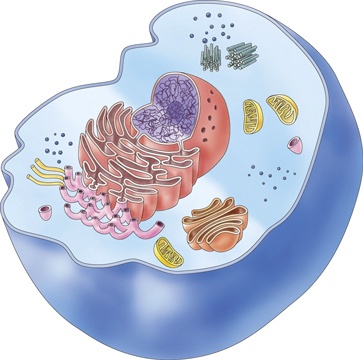


Which two organelles are NOT found in animal cells?
Cell membrane
Cell wall
Cytoplasm
Nucleus
Chloroplast
The cytoplasm and nucleus make up the (a) .
The shape and the size of the cell is related to its (a) .
Tisssues make up an (a) .
Organ systems make up an (a) .
Robert Hooke discovered cell by observing_______under the magnifying device.
Drop of blood
Onion Peel
Slice of cork
Sample of pond water
Which of the following is/are example of unicellular organism(s):
(I) Amoeba (II) Paramecium (III) White Blood Cell (IV) Hen
Only I
Both I and II
I, II and III
All of them

Identify the Cell shown in the figure
Red Blood Cell
Muscle cell
Nerve cell
Amoeba
In a multicellular living organism, X is made up of Y and Y are made up of cells. What are X and Y?
X-Organ, Y-tissues
X-Organ , Y- Organ System
X- tissue, Y- Organs
X-tissue, Y- Organ Systems
The living substance of the cells is known as
Cytoplasm
Nucleoplasm
Protoplasm
Chloroplast
Plant cells do not have Cell membrane
True
False
The unit of inheritance responsible for the transfer of hereditary characters from parents to offspring is
Nucleus
Chromosomes
Genes
Necleolus
Prokaryotic Cells do not have
Cell membrane
Nuclear membrane
Cytoplasm
Nuclear material
Which of the following differences between plant cells and animal cells is incorrect?
Cell wall is present in plant cells but absent in animal cells
Plastids are present in plant cells but absent in animal cells
Vacuoles are smaller in plant cells but larger in animal cells
All the differences are correct
Which of the following is the best example of an electrical conductor?
tire
steel
plastic
none of the above
Which best briefly summarizes the law of electric charges?
charges always attract
charges always repel
unlike charges attract
unlike charges repel

What kind of circuit is this?
series
parallel
If a substance has a higher number of electrons than protons on its surface, what type of charge does it have?
neutral charged
positively charged
negatively charged
no charges at all

What is this symbol for?
light bulb
wire
cell
battery
Electric current is the flow of _________.
protons
electrons
neutrons
none of them
Carbon is The only non-metal material that can conduct electricity.
true
false

What kind of circuit is this?
series
parallel
Electroplating is based on ___________of an electric current.
Physical effect
Chemical effect
Heating effect
Magnetic effect
Adding common salt to distilled water makes it
Good Conductor
Poor Conductor
No change
Both A and B
Electroplating prevents
electric current
chemical effect
lightening
rusting
Out of the following, which metal is used to electroplate iron to make it shining and rust resistant?
Gold
Chromium
Zinc
Tin
Boojho’s uncle has set up an electroplating factory near his village.
He should dispose off the waste of the factory
in the nearby river.
in the corn field
according to the disposal guidelines of the local authority.
in the nearby pond
Most liquids that conducts electricity are solutions of acids, bases and salts.
True
False
All liquids conduct electricity.
True
False
Polythene is
a conductor
an insulator
semi conductor
none of these
An electric current can produce
heating effect only.
chemical effect only.
magnetic effect only.
chemical, heating, and magnetic effects.
Boojho’s uncle has set up an electroplating factory near his village. He should dispose off the waste of the factory
in the nearby river.
in the nearby pond.
in the nearby cornfield.
according to the disposal guidelines of the local authority.

Which of the following solutions will not make the bulb in Fig 14.2 glow?
(a)
(b)
(c)
(d)
sodium chlorides
copper sulphate
silver nitrate
sugar solution in diluted water
1.An electric current can produce
heating effect only.
chemical effect only.
magnetic effect only.
chemical, heating, and magnetic effects.
When an electric current is passed through a conducting solution, there is a change of colour of the solution. This indicates
the chemical effect of current.
the heating effect of current.
the magnetic effect of current.
the lightning effect of current.
The object to be electroplated is taken as ____________ electrode.
cathode
anode
electrode
none of these
An electrolyte is
a metal
a solution
a liquid that conducts current
all of above
An electroscope is a device which is used to find if an object is
charged
magnetic
free of cracks
Hot
When a glass rod is rubbed with a piece of silk cloth the rod
becomes positively charged while the cloth has a negative charge.
and the cloth both acquire positive charge.
and the cloth both acquire negative charge.
becomes negatively charged while the cloth has a positive charge.
Which of the following is not likely to cause Tsunami?
A major nuclear explosion undersea
Earthquake
Volcanic eruption
Lightning
The outermost layer of earth is called
Crust
Mantle
Inner core
Outer core
Earthquakes can cause
(i) Tsunami
(ii) Landslide
(iii) Floods
(iv) Lightning
(i), (ii) & (iii)
(ii) & (iv)
(ii), (iii) & (iv)
(iii) & (iv)

the process of transfer of charges from a charged object to earth is called
earthing
lightning
charge changing
electron movement

which is not a natural phenomena
cyclone
earthing
thunderstorms
tsunami
the electrical charges generated by rubbing are (a) .
benjemin franklin has showed lightning in
1725
1527
1752
1572
SUSZA = ....
drought
draught
draft
dirt
The trees were .... in the strong wind.
swifting
swamping
swaying
swapping

