
NEW
Font size
 Worksheets
Pre-CA Mixed Review
Total questions: 42
Worksheet time: 1hrs 24mins

Which of the following parts of the nucleotides shown in the picture is unique to that nucleotide?
The phosphate
The sugar
The nitrogenous base (A, G, T, or C)

What does specificity mean when talking about enzymes?
The structure (shape) of the active site matches the shape of the substrate
The structure (shape) of the active site can match with any substrate
Enzymes can change their shape to fit any substrate

Which part of the DNA structure codes for traits?
The deoxyribose sugar
The phosphate group
The sequence of the nitrogenous bases
How do enzymes affect chemical reactions?
Enzymes speed up chemical reactions by increasing the activation energy
Enzymes speed up chemical reactions by decreasing the activation energy
Enzymes slow down chemical reactions by decreasing the activation energy

Which of the following correctly labels the structures on the nucleotide?
A: nitrogenous base, B: phosphate, C: sugar
A: phosphate, B: sugar, C: nitrogenous base
A: sugar, B: phosphate, C: nitrogenous base

Both birds and lizards lay eggs coated in a hard outer shell. This shared reproductive strategy is evidence that birds and lizards...
Live in similar habitats
Have a common ancestor
Are both prokaryotic
You can distinguish a prokaryote apart from a eukaryote by--
The presence of a cell membrane
The presence of a nuclear membrane
The presence of DNA

Sickle-shaped red blood cells result from a mutation in the gene that codes for hemoglobin. This mutation results in sickle-cell anemia. A partial sequence of bases from a normal hemoglobin gene and a sequence that results in sickle-cell anemia are shown picture. What type of mutation is depicted in this sequence?
Substitution
Insertion
Deletion
DNA sequence is 3' ACAGTG 5'. How would this be coded on mRNA?
5' TGTCAC 3'
5' UGUCAC 3'
5' GUGACA 3'
Which of the following is present in ALL living things?
DNA
A nucleus
Motility

What process is shown in the diagram?
DNA replication
Translation
Transcription
In plants, tall (T) is dominant to short (t). Perform the following cross: Tt x Tt. What are the ratios of possible offspring genotypes?
1 TT: 2 Tt: 1 tt
4 TT: 0 Tt: 0 tt
2 TT: 2 Tt: 0 tt

What is the correct amino acid sequence for the mRNA code 5' AUG CCA GUA UGA 3'
Met-Pro-Ala-Val
Met-Pro-Val
Tyr-Gly-His

Scientists can insert a gene for a glow-in-the dark protein from jellyfish into E. coli bacteria and the bacteria can still produce the glowing protein. Why are bacteria able to use a gene from jellyfish?
All life uses a universal genetic code
Both E.coli and jellyfish have a nucleus
The sequences of the E. coli genome and the Jellyfish genome are identical
The struggle between organisms for food, space, water and mates
competition
adaptation
natural selection
gene flow

The movement of genetic information from one population to another
genetic drift
adaptation
homology
gene flow

Similar structures in different organisms which may or may not have a similar function.
adaptation
natural selection
homology (homologous structures)
competition

Remains of ancient organisms are called
Extinctions
Fossils
Mutations
Variations

Which of the following is NOT an example of natural selection?
People breeding dogs for certain traits.
Insect populations developing resistance to certain pesticides.
Bacteria becoming resistant to antibiotics.
Male birds of certain species developing colorful feathers to attract female mates.

The shark to the left of the newt has---
hair
no tail
lungs
jaws
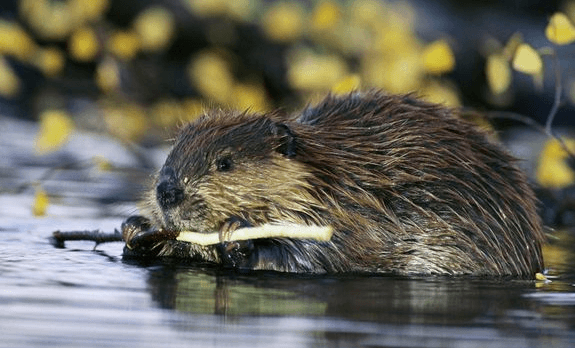
What is the term for a feature that allows an organism to survive better in its environment?
adaptation
variation
homologous structure
vestigial structure
A population of rhinos in a savanna in Africa migrates and joins a population of rhinos at a water hole. Over time, the now larger population of rhinos evolves. Which cause of evolution does this example represent?
mutation
genetic drift
natural selection
gene flow
A crop is treated with a pesticide and 98% of the insects are killed. What will most likely happen to the remaining insects?
They will migrate to another area.
They will reproduce and pass on resistant genes.
They will die off due to a decrease in their population size.
They will mate with a different species of insect to ensure survival.
Which organisms are most closely related?
Organisms with 0% similar amino acid sequences.
Organisms with 10% similar amino acid sequences.
Organisms with 35% similar amino acid sequences.
Organisms with 60% similar amino acid sequences.

The diagram shows fossils in different rock layers. Which of these statements about the age of these fossils is most likely correct?
Fossil A and C are the same age
Fossil B is older than fossil C
Fossils A is older than fossil B
Fossil D is older than fossil C
If species A and B have very similar genes and proteins, what is probably TRUE?
species A and B share a relatively recent common ancestor
species A evolved independently of species B for a long period
species A is younger than species B
species A is older than species B

Changes in an organism's DNA or genes, known as ________________, can result in traits which enable living organisms to compete better than other members of their group.
mutations
overproduction
adaptations
phenotypes

Why do scientists use scientific names?
to confuse people
to have a common language
to allow people to say the same thing
because common names are not appropriate
Which biomolecule is a main source of quick energy?
Nucleic Acid
Protein
Lipid
Carbohydrate
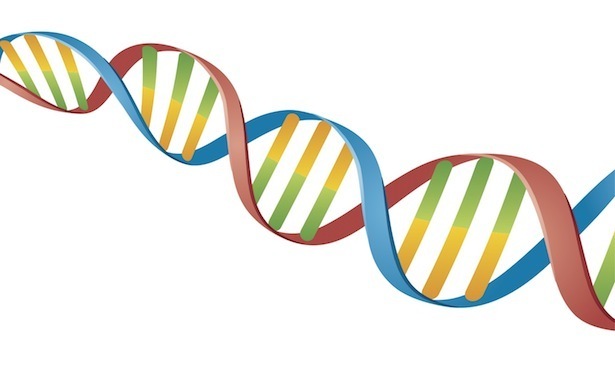
Which biomolecule is made of nucleotides?
Carbohydrate
Lipids
Protein
Nucleic Acid
Which biomolecule helps form muscles and catalyze chemical reactions?
Nucleic Acid
Carbohydrate
Protein
Lipids
Which biomolecule is responsible for insulation and long-term energy storage?
Protein
Nucleic Acid
Lipid
Carbohydrate

The structure circled is a...
monomer
polymer
lipid
nucleic acid

