
 Worksheets
Chapter 14 Reaction Rates
Total questions: 54
Worksheet time: 47mins
Increase in temperature of the reactants can do one of the following
Slow collision frequency
make the particles face each other and thus lower the activation energy
give the particles less energy to collide
increase the energy of the collisions between the particles thus increasing the rate.
Why don't all collisions between particles cause a reaction?
the particles also need to collide with a catalyst
not all the particles collide with enough energy and are facing the correct direction
not all the particles collide at a low enough temperature and face the right direction
the particles need to collide with each other twice
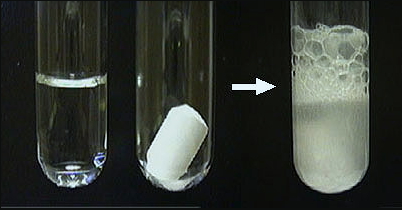
How could we make this reaction happen more quickly?
Decrease the concentration of the acid
crush the chalk to increase the surface area
Put the test tube in an ice bath
When surface area is DECREASED the rate of reaction...
Decreases, because there are FEWER possible sites for correct collisions
Increases, because there are FEWER possible sites for correct collisions
Decreases, because there are MORE possible sites for correct collisions
Increases, because there are MORE possible sites for correct collisions
Choose any factors that affect the rate of a reaction
temperature
concentration
surface area
catalysts and inhibitors
color

WHY does a higher concentration increase the rate of reaction?
it increases the amount of reactants
it lowers the activation energy
it increases the energy of particle collisions
it increases the chance of particles hitting other particles
The ______________is required to break the bonds of the reactants.
Carbonic energy
Activation energy
Plutonic energy
Energi Gaib
The minimum amount of energy needed for colliding particles to react is called
Chemical Energy
Kinetic Energy
Activation Energy
Potential Energy
A substance that increases speed of chemical reaction without being being used up is called:
Catalyst
Acid
Base
pressure
inhibitor
This slows down or even stops a chemical reaction.
de-activator
catalyst
enzyme
inhibitor
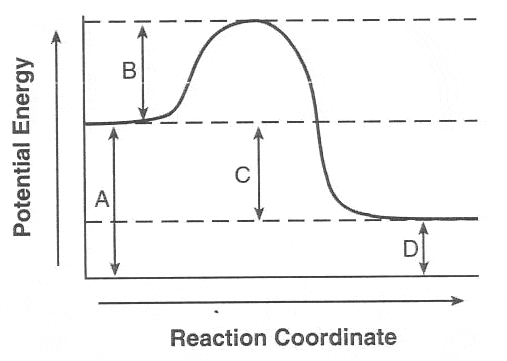
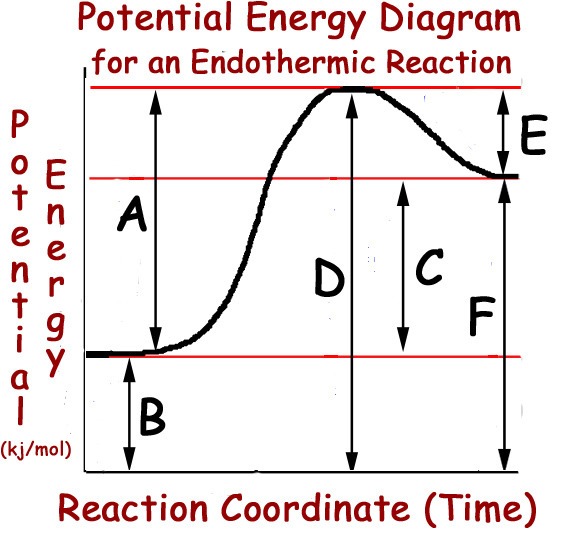
What type of reaction is this?
Endothermic
Exothermic
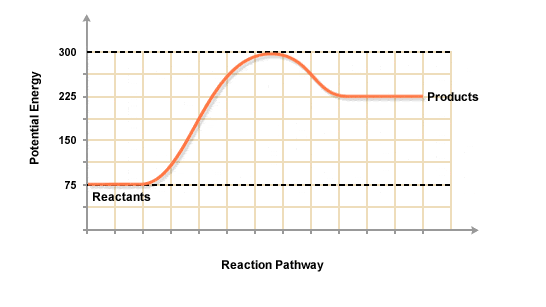
What is the energy of the activated complex?
75 kJ
225 kJ
300 kJ
50 kJ
What is the name given to a catalyst in the human body?
Biology
Catalyst
Chemical
Enzyme
If the reactant particles collide with less energy than the activation energy, the particles will be rebound, and no reaction will occur.
True
False
The collisions which bring about a chemical reaction are called:
Consistent collisions
Normal collisions
Effective collisions
More collisions correspond to a:
Faster reaction rate
Slower reaction rate
Constant reaction rate
Which one of the following factors does not affect the rate of a chemical reaction:
humidity
concentration
temperature
nature of the reactants
Activation energy is the amount of energy required to
break the bonds between the reacting molecules
convert the reactants into the activated complex
make the reacting particles collide
form the bonds between the product molecules

The heat of reaction, ΔH, for the forward reaction is
+200 kJ C.
- 50 kJ
+150 kJ
+ 50 kJ

The activation energy, Ea, for the reverse reaction is
+ 50 kJ
+ 200 kJ
-150 kJ
+ 150 kJ

The activation energy of the forward reaction is best represented by what number shown on the graph:
2
4
5
3

What is the potential energy of the reactants for the forward reaction?
40J
10J
80 J

What is the potential energy of the reactants for the REVERSE reaction?
80 J
60 J
20 J

What is the activation energy for the REVERSE reaction?
80 J
70 J
40 J
10 J
30 J

What letter represents where the Δ H of this reaction is located?
A
B
C
D

Is this reaction endothermic or exothermic?
Endothermic because the middle state is higher in energy than the first state.
Exothermic because the last state is lower than the first state.

If I add 25 J of energy to the forward reaction ...
the reaction will continue and make the products.
the reaction will not proceed because not enough energy was added to get to the top of the hill where the activated complex is.
the reaction will start slowly, but will finish to make the products.

What letter represents what the heat of the products is?
E
F
C
D
A

What letter represents where the activated complex sits?
E
C
D
A

Is the forward or reverse reaction favored?
forward because it is exothermic
reverse because it is exothermic
forward because it is endothermic
reverse because it is endothermic

Which step is the rate determining step?
step 1
step 2
not enough information
What is the rate determining step?
the slowest step of a reaction mechanism.
the fastest step of a reaction mechanism.
the step with the smallest activation energy.
the first step of a reaction mechanism.
the last step of a reaction mechanism.

Which value would be smaller if you add a catalyst?
A
B
C
D

What is an intermediate state in this reaction?
NH3
N2H4
NH2Cl
Cl-
In a reaction mechanism a catalyst is
added at the beginning and remade at the end.
created in the first step and then used.
added and then changed into a product.
created and never used.
In a reaction mechanism an intermediate is
created and used.
created at the end.
added in the middle step.
added and then remade at the end.
In a reaction mechanism step 1 has an Ea of 35 J, step 2 has an Ea of 85 J, and step 3 has an Ea of 100J.
Step 1 is the rate determining step.
Step 2 is the rate determining step.
Step 3 is the rate determining step.
What are ways to increase the concentration in a reaction?
heat it up
add more reactants
increase the pressure
crush up the particles
What does a catalyst do?
lowers the activation energy
holds the reactants in the correct position to increase the chances of them reacting
provides a different path for the reaction to proceed
slows down the reaction
gets used up in a reaction
If I start a reaction at 40C and heat it up to 70C how much faster will it go approximately?
2 times faster
4 times faster
8 times faster
20 times faster
16 times faster
How what should I heat my reaction to in order to make it go 32 times faster if it started at 35C?
45 C
55 C
65 C
85 C
75 C

