
Font size
 Worksheets
Classifying Matter Review Two
Total questions: 84
Worksheet time: 21hrs 0mins


How do you find the number of neutrons in an atom?
Atomic Number
Atomic Mass
Atomic Mass - Atomic Number
Atomic Number + Atomic Mass
a grouping of elements based on similar properties, arranged by columns in the periodic table; also known as a group
family
period
row
isotope
a row on the Periodic Table of Elements
family
period
row
isotope
one of several forms of a single element, which contains the same number of protons, but different numbers of neutrons
isotope
ion
orbital
nucleus
What are valence electrons?
Any of an atom's electrons
Electrons located on the first energy level
Electrons not attached to any atom
electrons located on the outer energy level
What category is silicon (Si) a part of?
Metal
Nonmetal
Metalloid
Halogens
What is group name of the most reactive metals?
Noble gases
Halogens
Alkali metals
Alkaline earth metals
Why are halogens so reactive?
They want to get rid of their only valance electron
They only need one more electron
They are non reactive, they have a full shell

noble gases


These are found on the Periodic Table.
Compounds
Elements
Mixtures

Which elements have properties in common?
elements in a group
elements in a period
Which element in Period 2 has the greatest atomic radius?
Be
C
Na
Li
Which of the group 13 elements is the largest?
B
Tl
Fr
Ga
Of the halogens, which has the smallest radius?
F
Br
He
At
Of the halogens, which has the smallest electronegativity?
F
Cl
At
Ne
Which of the period 3 elements has the largest electronegativity?
Ar
Cl
Na
F
Cl or Al?
N or C?
H or F?


How many orbitals does an s sublevel have?
1
3
5
7
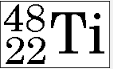

Isotopes of an element have a different number of...
Protons
Neutrons
Electrons
Mass
What does the mass number of an element represent?
The number of protons in an atom
the number of neutrons in an atom
the number of electrons in an atom
the number of protons and neutrons in an atom
What charge does an atom have when it GAINS electrons?
Positive
Negative
Neutral


The "Law of Octaves" stated that
The properties of the elements repeated every eighth element when arranged by their atomic mass
Elements could be classified in groups of three based on their mass and properties
The properties of the elements repeated of a regular basis when arranged by their atomic number
doubling the frequency of a tone raises its pitch by an octave
The "Law of Octaves" was the brainchild of
Glenn Seaborg
Lothar Meyer
Johann Dobereiner
John Newlands
Where are the s sublevels located based on the periodic trend?
groups 1A and 2A (plus helium)
transition metals
inner transition metals
groups 3A to 8A (minus helium)
Where are the p sublevels located based on the periodic trend?
groups 1A and 2A (plus helium)
transition metals
inner transition metals
groups 3A to 8A (minus helium)
Where are the d sublevels located based on the periodic trend?
groups 1A and 2A (plus helium)
transition metals
inner transition metals
groups 3A to 8A (minus helium)
Where are the f sublevels located based on the periodic trend?
groups 1A and 2A (plus helium)
transition metals
inner transition metals
groups 3A to 8A (minus helium)

