
 Worksheets
The Dynamic Earth - 9 Week Exam Q3
Total questions: 65
Worksheet time: 2hrs 10mins
The semi-molten rock underneath a volcano is called ____________
geyser
lahar
lava
magma
Active volcanoes are most likely to be found ___________
in convergent boundaries
in the Pacific Ring of Fire
where tectonic plates pull apart
in transformed boundaries
When magma is thick with more dissolved gas, we can expect the volcanic eruption to be a/an _______
oozing ash and lava
lava frothing over the crater
spewing water like a geyser
violent ejection of ash and lava
When magma is thick with more dissolved gas, we can expect the volcanic eruption to be a/an _______
oozing ash and lava
lava frothing over the crater
spewing water like a geyser
violent ejection of ash and lava
Which of the following formations would most likely result from a single violent volcanic eruption?
caldera
shield volcano
stratovolcano
cinder cone
Which is true about volcanoes in the Philippines?
they are always big.
they erupt violently.
they all have perfect cones.
they are parts of the Pacific Ring of Fire
What is a volcano?
The movement of the Earth's crust by the movement of plate boundaries
A mountain created by the folding of the Earth's crust
A cone-shaped mountain or hill formed by eruptions of lava and ash
A landform that extends above the surrounding terrain
Magma's resistance to flow, or how thick it is, is called _________
volcanism
viscosity
pyroclastic flow
convection
The "Ring of Fire" is a volcanic island arc extending from the southwestern Pacific through Indonesia. The island arc formed as a result of ________ collision.
oceanic plate-continental plate
oceanic plate-oceanic plate
continental-plate-continental plate
terrane-craton
The Himalayas formed as a result of the ongoing collision of the Indian and Eurasian plates. This is an example of ________ collision.
oceanic plate-continental plate
oceanic plate-oceanic plate
continental-plate-continental plate
terrane-craton
Molten rock that pours forth on Earth's surface is called
metamorphic.
magma.
lava.
pyroclastics.
Small conical-shaped hills with truncated tops that formed during moderately explosive volcanic eruptions are known as
cinder cones.
craters.
calderas.
domes.
Large, basin-shaped depressions that form when summit materials on a volcanic mountain collapse inward after an eruption or loss of magma are known as
cinder cones.
craters.
calderas.
domes.

Which of the following most completely defines a volcano?
a cone-shaped structure on land where pyroclastic material is ejected
a partly molten region of Earth's mantle where subducting rock is melted
a ridge system between two diverging plates through which magma escapes
a vent or hole in Earth's surface through which magma or ash escapes

What process causes the volcanoes of the Hawaiian Islands to form?
subduction zones
divergent boundaries
hot spots
convergent boundaries

Which kind of volcanism is most likely to occur at location A in the following map?
Location A is a hot spot in oceanic crust, so it is likely to erupt lava with a low silica content, resulting in relatively quiet volcanism.
Location A is a hot spot in oceanic crust, so it is likely to erupt lava with a high silica content, resulting in explosive volcanism.
Location A is a mid-ocean ridge at a divergent boundary, so it is likely to erupt lava with a low silica content, resulting in relatively quiet volcanism.
Location A is a mid-ocean ridge at a divergent boundary, so it is likely to erupt lava with a high silica content, resulting in explosive volcanism.

Which of the following is an example of Intraplate Volcanism?
Mid-Atlantic Ridge
Cascade Mountain Range
Hawaiian Islands


Where the earthquake begins on surface.
epicenter
joint
fault
focus


The youngest rocks on the ocean floor are located ____.
near continents
at mid-ocean ridges
far from mid-ocean ridges
near Asia
Scientists have observed that the continents move apart or come together at speeds of a few centimeters per ____.
century
year
day
decade
Seafloor spreading occurs because ____.
new material is being added to the asthenosphere
earthquakes break apart the ocean floor
sediments accumulate at the area of spreading
molten material beneath Earth's crust rises to the surface
A vast, underwater mountain chain is called a(n) _________.
ocean ridge
oceanic crust
deep-sea trench
ocean floor sediment

What particular event is shown on the picture?
mid-ocean ridge
subduction zone
transform boundary
divergent boundary
What technology did scientists use in the mid-1900s to map the mid-ocean ridge?
satellites
submarines
deep-sea diving
sonar
In sea-floor spreading, molten material rises from the mantle and erupts
in deep-ocean trenches
along the edges of all the continents
along mid-ocean ridges
at the north and south plate
The process by which the ocean floor sinks beneath an deep-ocean trench and back into the mantle is known as
continental drift
subduction
conduction
convection
The process of ___________ continually adds new crust to the ocean floor along both sides of the mid-ocean ridge.
plate tectonics
seafloor spreading
continental drift
convection
The scientist credited with sea-floor spreading is _________
Alfred Wegener, a German scientist
Harry Hess, an American geologist
J.Tuzo Wilson, a Canadian scientist
Kenn Bulaso, a Filipino educator
What does the Law of Uniformity claim?
mountain ranges form everwhere give time
The geologic processes that formed our current geology have always been in place and currently are still at play
Continents can move and move very quickly
Pangea never existed.
What did Wegener name the large supercontinent where all the continents were joined together?
Wegenerland
Gondwanaland
Laurasia
Pangaea
Most geologists rejected Wegener's idea of Continental Drift because _________.
He used too many pieces of evidence to support the idea.
He wanted to know what Earth looked like millions of years ago, which is impossible.
He couldn't identify what would cause continents to move around.
They were afraid of the new idea.
Wegener used the fit of the continents as evidence to support his hypothesis of Continental Drift.
true
false
Wegener used matching mountain ranges across different continents as evidence to support his hypothesis of Continental Drift.
true
false
Wegener used evidence of glaciers in places now too warm as evidence to support his hypothesis of Continental Drift.
true
false
Wegener used matching matching fossils of the same organisms on different continents as evidence to support his hypothesis of Continental Drift.
true
false
Wegener used evidence of convection currents in the mantle as evidence to support his hypothesis of Continental Drift.
true
false
What were 2 kinds of evidence were used to prove that the seafloor spread?
rock formations, WWII shipwrecks
magnetic seafloor stripes, WWII ship logs
magnetic seafloor stripes, age of rocks
Why does oceanic crust sink below the continental crust during subduction
oceanic crust is less dense
oceanic crust is more dense
oceanic crust is older
oceanic crust is warmer
What theory states that the continents were once part of a super continent called Pangaea and have moved slowly to their current locations over hundreds of millions of years.
Oceanic wandering
Land-form Evidence
Continental Drift
Fossil Distribution
How long did it take the continents to move into their current position?
Hundreds of years
Thousands of years
Almost a million years
Hundreds of millions of years
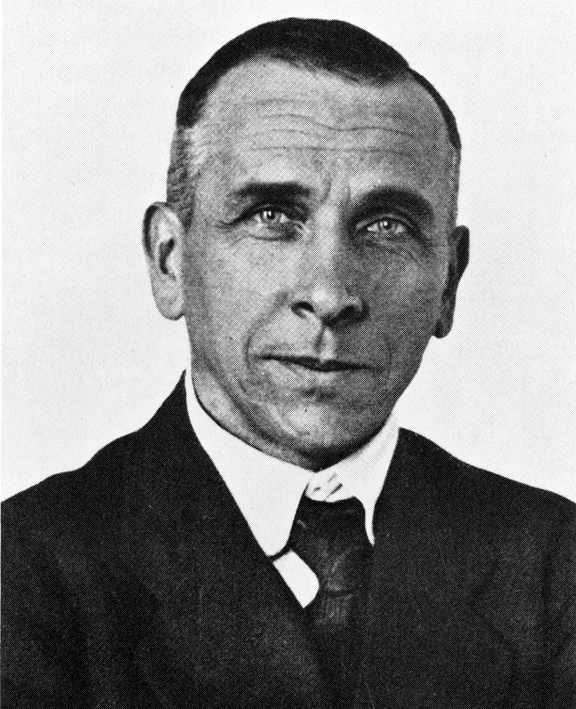
Who is the person credited with developing the theory of continental drift?
Harry Hess
Albert Einstein
Alfred Wegener
Isaac Newton
The Appalachian Mountains in the U.S. match up with a similar mountain ranges in northern Europe. How does this support Wegener's theory of Continental Drift?
The mountains were formed after tectonic plates had moved away from each other
The similarities provide evidence North America & Europe were connected when the mountains formed.
Similar rock samples were found on the ocean floor and at the two mountain ranges indicating that they both formed around the same time.
This evidence does not support the theory of continental drift.
Alfred Wegener used all of the following for evidence of his idea EXCEPT...
The shapes of the continents fitting together like a puzzle
Similar fossils on different continents
Comparable modern weather patterns on different continents
Similar rock formations on different continents
Which of the following best describes Wegener's continental drift ideas?
Hypothesis: There was data to support the idea but more information was needed to build it into a scientific theory.
Theory: It was an early idea of Wegener's but it didn't yet have any evidence to support it.
Theory: It was a well supported idea that explained many things. No additional information was needed (it just needed time for people to accept it).
Hypothesis: It was an educated guess that Wegener made based on maps, but he hadn't yet collected experimental data.

___________ help explain why Earth is not getting any larger even though the tectonic plates are always moving.
earthquakes
subduction zones
fossils
volcanoes
What does a magnetometer record?
The density of the seafloor
The elevation of the seafloor.
The magnetic orientation of the rock it is aimed at.
The magnetic density of the oceanic crust
Ocean crust is created at the ______ and destroyed at the _____.
trenches, rift valleys
mid-ocean ridges, rift valleys
mid-ocean ridges, trenches
trenches, mid-ocean ridges

