wayground logo

Free Printable Worksheets

Font size

S
M
L
XL
Worksheets

Biome

Total questions: 146

Worksheet time: 2hrs 54mins

Name
Class
Date
1.
Is it true that there are cold desert biomes?
a)
Yes
b)
NO
2.
Is there salt in freshwater biomes?
a)
yes
b)
no
3.
Where can I study world biomes, and eco-systems?
a)
the Internet
b)
Universities
c)
Community Colleges
d)
All of the above
4.
Do grassland biomes occur naturally?
a)
Yes
b)
NO
5.
What is the difference between biomes and ecosystems?
a)
A biome is an ecosystem containing different plants, animals, and minerals indigenous to a specific geographic area. 
b)
An Ecosystem is where you go for clean water
6.
What are the different types of land biomes?
a)
DesertForestGrassland, and Tundra
b)
deciduous, arctic, marine, wetlands
7.
What are chaparral biomes?
a)
The Chaparral biome is a coastal biome consisting mainly of evergreen shrubbery and other resilient plants
b)
The Chaparral biome is out west consisting of tumble weeds and cactus
8.
What are some of the vital resources of the tropical rain forest biomes?
a)
medicines
b)
rubber
c)
oils
d)
all of the above
9.
What are the main types of forest biomes?
a)
Boreal, tropical rainforests, and old growth rainforests
b)
Tiaga forests, chaparral, evergreen
10.
Are polar biomes the same as tundra biomes?
a)
polar biomes are the coldest of the tundra biomes
b)
No
11.
A desert is very hot during the day and receives very little rain. 
Which plants will most likely survive in this kind of environment?
a)
plants with waxy coatings
b)
plants with few roots
c)
plants with large leaves
d)
plants with soft stems
12.
The rainforest is very moist and receives much rain. 
Which plants will most likely survive in this kind of environment?
a)
plants with few roots
b)
plants with needles 
c)
plants with large leaves
d)
plants that grow close together
13.
How do adaptations help animals?
a)
To hide from predators
b)
to hunt for food
c)
to survive in their habitats
d)
All of these are correct
14.
An example of a physical adaptation is...
a)
a turtle hiding inside its shell
b)
The spikes on a porcupine fish
c)
a rabbit burrowing underground
d)
a viper biting when threatened
15.
An animal's color or pattern that helps it blend into its surroundings
a)
Environment 
b)
Mimicry
c)
Camouflage
16.
Some plants have small leaves that help them do which of these?
a)
grow tall
b)
save water
c)
make seeds
make seeds
d)
fall off in winter
17.
Which feature of a rose helps it grow without being eaten by large animals?
a)
flowers with bright colors
b)
sharp thorns
c)
small seeds
d)
deep roots
18.
What is an adaptation?
a)
A feature that helps a plant grow.
b)
A feature that helps a living thing survive.
c)
A feature that helps a living thing walk.
d)
A feature that that helps only animals survive. 
19.
Consumers that get energy by eating ONLY plants are called: _____
a)
herbivores
b)
omnivores
c)
carnivores
20.
Consumers that eat ONLY animals are ______
a)
herbivores
b)
carnivores
c)
omnivores
21.
Consumers that eat BOTH plants and animals are ______
a)
omnivores
b)
carnivores
c)
herbivores
22.
These animals digest the waste and remains of dead plants and animals
a)
scavengers
b)
decomposers
23.
The ears of this fox are an example of...
a)
A behavioral adaptation
b)
Poor breeding
c)
A physical adaptation
d)
Plastic surgery gone horribly wrong
24.
Beak shape depends on...
a)
where birds live 
b)
who they hang out with 
c)
diet (fish or seeds) 
d)
exercise 
25.
An animal's body covering helps it to survive.  Which group is made up of body coverings?
a)
fur, teeth, feathers, skin
b)
bones, teeth, feet, eyes
c)
feathers, fur, skin, scales
d)
scales, fur, claws, skin
26.
Who is at the bottom of an energy pyramid?
a)
producer
b)
organism
c)
consumer
d)
soil
27.
Some animals move great distances as the seasons change.  What is this called?
a)
hibernation
b)
migration
c)
mimicry
d)
habitat
28.
An organism has thick white fur, a bushy tail, and short ears. It often burrows holes and curls into a ball for warmth. For which environment is this organism most likely adapted?
a)
Grassland
b)
Arctic Tundra
c)
Coniferous Forest
d)
Desert
29.
 Which population would best be adapted to maneuver in a rocky, mountainous region?
a)
a population of organisms with hooves
b)
a population of organisms with thick fur
c)
a population of organisms with gills
d)
a population of organisms with moist skin
30.
A Viceroy butterfly looks like the Monarch butterfly. The Viceroy tastes terrible to birds, so birds won't take the chance and eat the Viceroy. What is this kind of adaptation?
a)
Mimicry
b)
Camouflage
c)
Hibernation
d)
Migration
31.
The grasslands are found in the middle ____________
a)
graze
b)
trees
c)
fast
d)
latitudes
32.
The grasslands don't receive much of this.
a)
grasses
b)
droughts
c)
herbivores
d)
rainfall
33.
Many animals of the grasslands do this.
a)
latitudes
b)
trees
c)
fast
d)
graze
34.
The semi-drys grasslands have very few of these that grow in this biome.
a)
antarctica
b)
trees
c)
fast
d)
grasses
35.
The only continent grasslands aren't found on.
a)
antarctica
b)
latitude
c)
graze
d)
dormant
36.
In order to escape predators, animals tend to be very ___________.
a)
latitudes
b)
drought
c)
fast
d)
grasses
37.
There's a growing and a ____________ season in the grasslands.
a)
dormant
b)
drought
c)
trees
d)
fast
38.
Many of the animals are ____________.
a)
herbivores
b)
trees
c)
grasses
d)
antarctica
39.
The dominant plants in the grasslands are ___________.
a)
rainfall
b)
dormant
c)
grasses
d)
trees
40.
Plants are very resistant to _____________ in the grasslands.
a)
drought
b)
fast
c)
herbivores
d)
trees
41.
____________ rates are faster than rainfall rates.
a)
nocturnal
b)
evaporation
c)
winds
d)
reptiles
42.
Plants in the desert are able to store__________ in their roots, stems and leaves.
a)
evaporation
b)
nocturnal
c)
water
d)
driest
43.
Plants and animals living in the desert must be able to adapt to extreme heat and _______________.
a)
winds
b)
chia
c)
dryness
d)
evaporation
44.
Many of the animals are ______________ to avoid the extreme heat during the day.
a)
cacti
b)
chia
c)
water
d)
nocturnal 
45.
Plants and animals in the desert need to be able to adapt to strong____________.
a)
winds
b)
nocturnal
c)
water
d)
cacti
46.
Plants that store water in their roots, stems and leaves are called______________.
a)
succulents
b)
water
c)
dryness
d)
driest
47.
Tundra means: Land of the __________ sun
a)
small
b)
midnight
c)
long
d)
trees
48.
A layer of the ground is called the  __________
a)
shelter
b)
midnight
c)
permafrost
d)
treeless
49.
Most of the tundra plants are __________.
a)
perennials
b)
cold
c)
long
d)
small
50.
Due to the short growing season, plants typically have _______ life span.
a)
shallow
b)
small
c)
shelter
d)
short
51.
These do not grow in the tundra
a)
treeless
b)
tree
c)
shallow
d)
cold
52.
The world tundra means this...
a)
long
b)
small
c)
permafrost
d)
treeless
53.
To retain moisture, the plants in the tundra are usually...
a)
small
b)
cold
c)
midnight
d)
perennials
54.
Plants and animals must be able to adapt to the extremely ___________ weather
a)
small
b)
cold
c)
perennials
d)
shallow
55.
Plants have a very ________ root system
a)
long
b)
small
c)
cold
d)
shallow
56.
To survive the tundra, animals need fur and __________.
a)
small
b)
shelter
c)
cold
d)
shallow
57.
Which animal is a predator in the rainforest?
a)
giraffe
b)
zebra
c)
camel
d)
jaguar
58.
Is this an Amazon Rain forest animal
a)
True
b)
False
59.
Which of these describes the rainforest?
a)
populated by squirrels, bears and pine trees
b)
relatively few trees
c)
generally close to the equator
d)
short, mild, dry summers
60.
The rainforest has the greatest variety of different organisms that live there. In other words, the rainforest has the greatest ______.
a)
speciation
b)
biodiversity
c)
climate
d)
succession
61.
Which of these is the greatest limiting factor for plants on the forest floor?
a)
space
b)
soil
c)
sunlight
d)
water
62.
How many species are there of animals, plants, and insects known to mankind that live in the rainforest?
a)
10,000,000
b)
Less than half
c)
More than half
d)
one fourth
63.
Does it rain a lot in the rainforest?
a)
Yes
b)
No
c)
Of course not
d)
I don't care
64.
How can temperatures in the tropical rainforest be described?
a)
Very variable throughout the year
b)
Do not vary very much throughout the year
c)
Usually around 15°C
65.
Most of the nutrients in the rainforest ecosystem are in the
a)
organisms
b)
topsoil
c)
air
d)
groundwater
66.
The climate zones around the equator are
a)
biomes
b)
temperate
c)
polar
d)
tropical
67.
Average yearly precipitation in a tropical rain forest
a)
76 cm to 250 cm
b)
100 cm
c)
0-25 cm
d)
200 cm or more
68.
How much rain falls in the desert?
a)
10 inches
b)
more than 10 inches
c)
less than 10 inches
d)
none at all
69.
Which adaptations help plants STORE water?
a)
long, thick roots
b)
thick stems and waxy skin
c)
shallow, wide roots
d)
large leaves and thorns
70.
Which adaptation helps plants to conserve water?
a)
thick stems
b)
spines
c)
wide leaves
d)
small leaves
71.
Which adaptation protects some plants from being eaten?
a)
thick, waxy skin
b)
thick stems
c)
thorns or spines
d)
thick leaves
72.
What does nocturnal mean?
a)
being able to blend in which the environment
b)
being active at night and sleeping during the day
c)
soil that does not have very much humus
d)
a biome with a hot temperatures and a dry climate
73.
Which adaptation helps some desert animals stay cool?
a)
light colored fur
b)
long ears
c)
short, thick fur
d)
small feet
74.
Which adaptation helps protect some desert animals from their enemies?
a)
being nocturnal
b)
light colored fur
c)
moving quickly
d)
camouflage
75.
This occurs in the higher latitudes such as northern America or Russia. It has very cold winters and cool summers with moderate to low precipitation, mostly evergreen trees and a variety of animals in the summer. Which biome is this? 
a)
Grasslands
b)
Taiga
c)
Tundra
d)
Desert
76.
 Which biome contains lichens, mosses, and grasses? 
a)
Grasslands
b)
Taiga
c)
Tundra 
d)
Desert 
77.
Which of the following describes an abiotic factor that describes the taiga biome? 
a)
Mountains
b)
Moose
c)
Red foxes
d)
Long warm summers
78.
Which of the following is a common plant found in this biome?
a)
Maple Trees
b)
Spruce Trees
c)
Deciduous Trees
d)
Oak Trees
79.
The ___________ big paws, thick coat, and long legs which allows it to walk in deep snow.
a)
Snow Hare
b)
Grizzly Bear
c)
Siberian Tiger
d)
Snow Hare
80.
Looking at your map that locates this biome, which of the following describes where this biome is?
a)
Most of Canada and Russia
b)
Eastern United States
c)
Along the equator
d)
North of the Tundra biome
81.
Needles that stay green throughout the year is a characteristic of evergreens. This is an adaptation that
a)
allows the plants to undergo photosynthesis throughout the year without sheding its leaves and spending energy to regrow them.
b)
keeps animals from eating it's spiky needles.
c)
The green colors melts snow so that the weight of the snow does not break its branches.
d)
allows them to capture more sunlight than larger leaves.
82.
Which of the following describes the seasons found in the taiga?
a)
Long summers and cold winters
b)
4 distinct seasons
c)
Winter throughout the year
d)
Long winters and short mild summers
83.
One characteristic feature of the tundra is that only the surface thaws in the summer and refreezes in the winter, leaving a permanently frozen subsoil. This characteristic is known as 
a)
Hoarfrost
b)
Glaciation
c)
Permafrost
d)
Crystallization 
84.
Which major biome is home to cacti, mesquite, white torn, pack rats, small reptiles, and coyotes?
a)
Desert
b)
Taiga
c)
Tundra
d)
Grassland
85.
Which of these types of information do scientists use to organize the Earth into biomes?
a)
Forest and endangered species
b)
Biomass, energy, and human populations
c)
Precipitation, temperature, and vegetation
d)
Renewable and non-renewable resources
86.
An animal that has thick fur, webbed flippers and blubber would probably live in 
a)
The Arctic Ocean
b)
The Amazon Rainforest
c)
A large freshwater lake
d)
The Mojave Desert
87.
Which biome is characterized by low temperatures and low amounts of rainfall?
a)
Tundra
b)
Desert
c)
Temperate Deciduous Forest
d)
Tropical Rainforest
88.
Which biome is most common in GA?
a)
Taiga
b)
Grassland
c)
Temperate Forest
d)
Desert
89.
Which biome, because of its climate, has the largest number of species of plants and animals?
a)
Tundra
b)
Rainforest
c)
Desert
d)
Pineforest
90.
The northern United States and Southern Cnanada are characterized by forest of deciduous trees that lose their leaves in winter and coniferous trees that are evergreens. This area is a transition between which 2 major biomes?
a)
Cold woodland and arctic tundra
b)
Temperate forest and taiga
c)
Northern prairie and deciduous forest
d)
Desert and temperate forest
91.
Which characteristics are common in the taiga biome?
a)
Spruces. elk, snowshoe hares, sever winters
b)
Lichens, reindeer, and permafrost
c)
Grasses, bison, prairie dogs
92.
Grasslands and savannas are biomes that are very valuable as areas for farming and grazing livestock. In the United States these biomes are most commonly found in the
a)
Southwest
b)
Midwest
c)
Northwest
d)
Southwest
93.
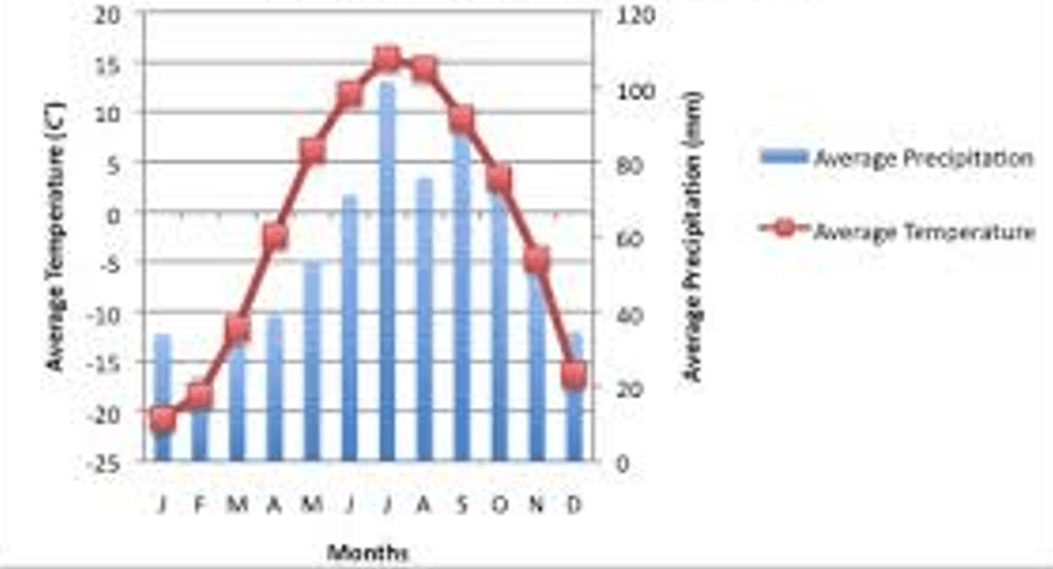
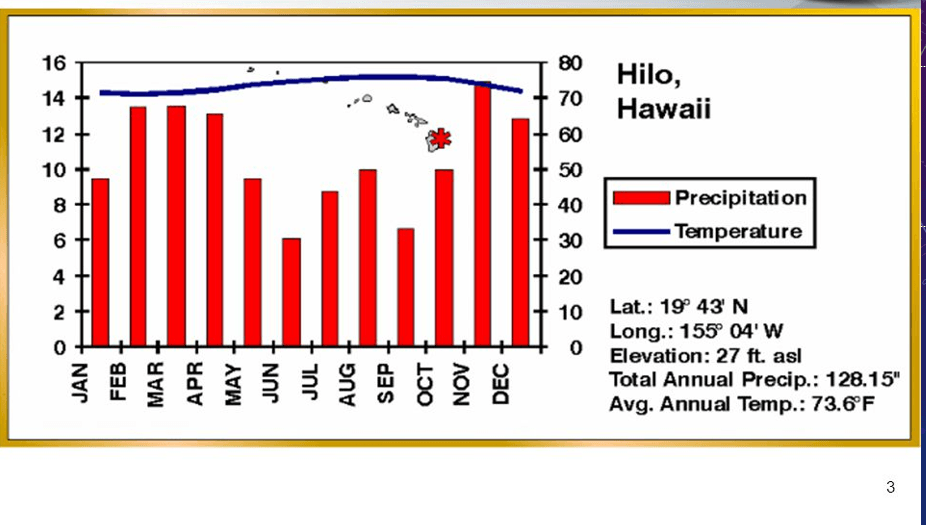
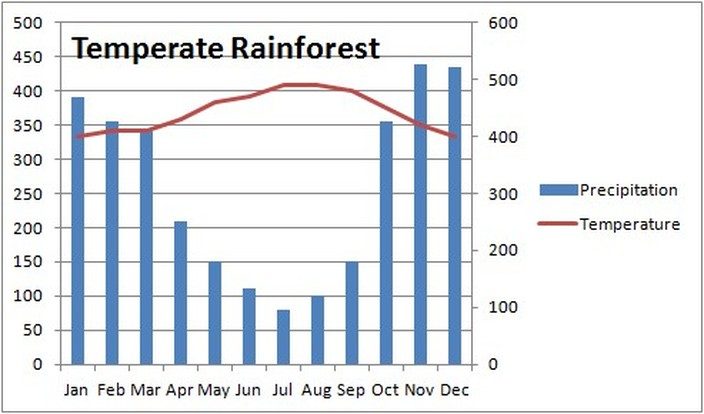
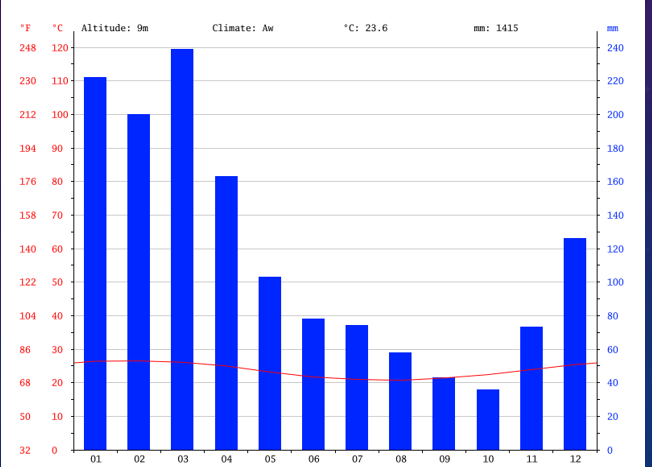
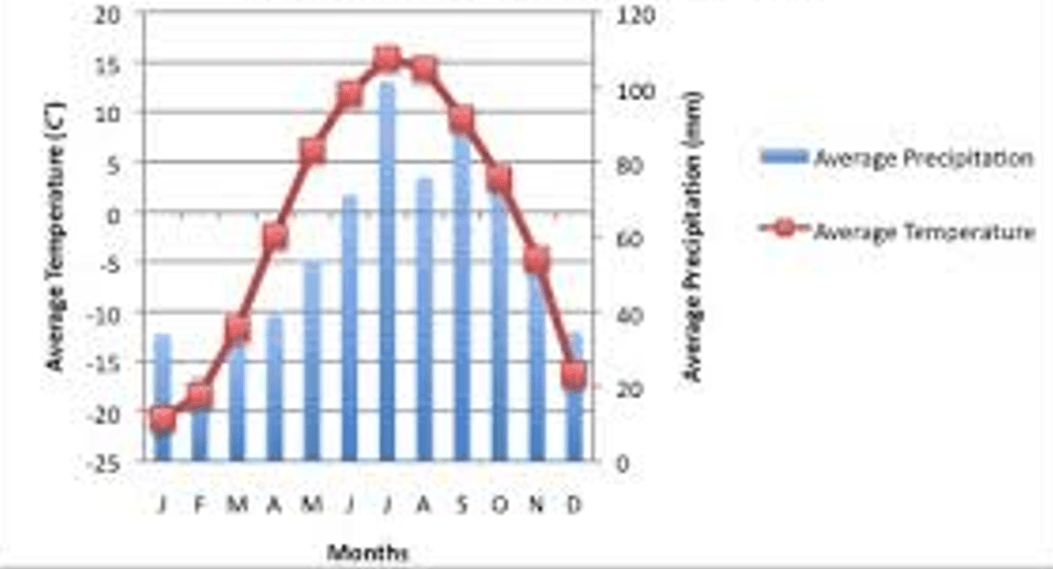
Which biome is represented by the climatograph?
a)
Rainforest
b)
Taiga
c)
Savanna
d)
Temperate Forest
94.
Which biome is represented by the climatograph?
a)
Rainforest
b)
Tundra
c)
Savanna
95.
The biome known for trees with broad leaves that fall off the trees in the winter.
a)
Coniferous Forests
b)
Deciduous Forests
c)
Deserts
d)
Tropical Rain Forests
96.
Biomes tend to be found at the same...?
a)
Longitude
b)
Latitude
c)
Elevation
d)
Climate
97.
Which biome is characterized by low temperatures and low amounts of rainfall?
a)
tundra
b)
desert
c)
temperate deciduous forest
d)
tropical rain forest
98.
Which biome, because of its climate, has the largest number of species of plants and animals?
a)
tundra
b)
desert
c)
tropical rainforest
d)
pine forest
99.
Which major biome is home to cacti, mesquite, white thorn, pack rats, small reptiles, and coyotes?
a)
desert
b)
taiga
c)
tundra
d)
grassland
100.
One characteristic feature of tundra is that only the surface thaws in the summer and refreezes in the winter, leaving a layer of permanently frozen subsoil.  This characteristic is known as
a)
glaciation
b)
permafrost
c)
crystallization
d)
soilfrost
101.
This biome contains mostly spruce trees and Douglas firs, which are both evergreen.  The winters are long and cold and the summers are short and rainy.  The soil is very rich.  Moose and elk live here.  This biome is classified as a
a)
taiga
b)
tundra
c)
deciduous forest
d)
temperate forest
102.
The most important abiotic factors when studying biomes are...
a)
Food and Water
b)
Water and Sunlight
c)
Temperature and Oxygen
d)
Water and Temperature 
103.
Which major biome is home to cacti, mesquite, white thorn, pack rats, small reptiles, and coyotes?
a)
desert
b)
taiga
c)
tundra
d)
grassland
104.
Which biome is MOST LIKE the "desert" in terms of precipitation?
a)
tropical rainforest
b)
temperate deciduous forest
c)
tundra
d)
coniferous forest
105.
Which biome could an animal who hibernates in the winter to survive the cold live in?
a)
Grasslands
b)
Taiga
c)
Desert
d)
Rainforest
106.
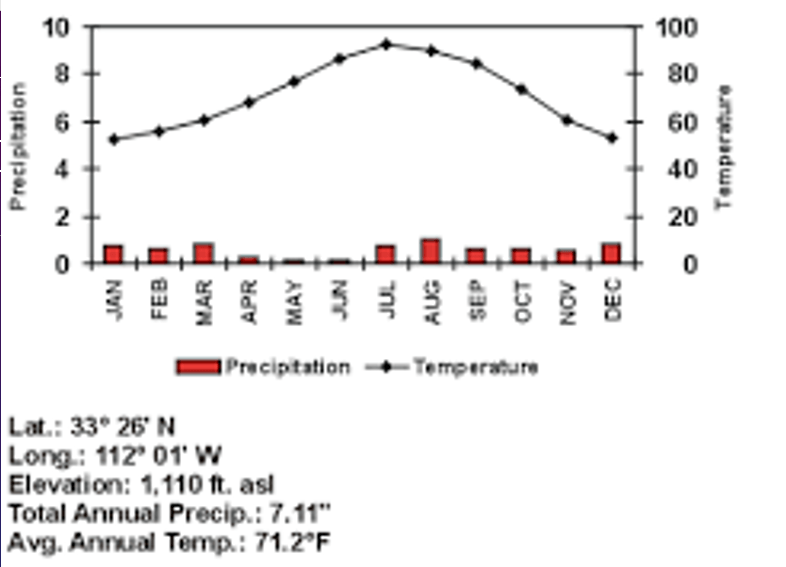
Which biome is represented by the climatograph?
a)
Grassland
b)
Tundra
c)
Desert
107.
cacti are the main plant associated with this biome
a)
Desert
b)
Tundra
c)
Taiga
d)
Grasslands
108.
Which biome is represented by the climatograph?
a)
Rainforest
b)
Taiga
c)
Savanna
109.
Which biome is represented by the climatograph?
a)
Grassland
b)
Tundra
c)
Desert
110.
The bar graph represents?
a)
Temperature
b)
Precipitation
c)
Wind Direction
111.

Where are the taiga forest biomes located in the world?

a)

Near the equator

b)

Near the south pole

c)

In the far north just below the arctic circle

112.

Biome with plants and grasses, but no trees.

a)

grassland

b)

desert

c)

forest

d)

arctic tundra

113.

Biome with many different species of cacti and reptiles and very little rainfall.

a)

Desert

b)

Temperate Rainforest

c)

Tropical Rainforest

d)

Arctic Tundra

114.
Type of forest biome near the equator; receives a lot of rain; temperatures are warm all year.
a)
desert
b)
tropical rain forest
c)
arctic
d)
temperate rain forest
115.

Forest biome with many different trees, mosses and ferns; most trees lose and regrow their leaves each year.

a)

temperate rainforest

b)

biome

c)

desert

d)

grassland

116.

Which biome contains large populations of grazing herbivores, few species of birds, and deep, rich soil?

a)

tropical rain forest

b)

desert

c)

deciduous forest

d)

grassland

117.

Which biome is represented by the rainfall amounts in letter C?

a)

desert

b)

prairie

c)

deciduous forest

d)

tropical rain forest

118.
Which biome is the driest?
a)
Desert
b)
Tundra
c)
Taiga
d)
Rainforest
119.
Which biome has deciduous trees (which lose their leaves)?
a)
Temperate Forest
b)
Rainforest
c)
Grasslands
d)
Taiga
120.
Which biome has coniferous trees (which don't lose their leaves)?
a)
Taiga
b)
Temperate Forest
c)
Tundra
d)
Grasslands
121.
Which biome has 4 seasons?
a)
Taiga
b)
Tundra
c)
Grasslands
d)
Temperate Forest
122.
Which biome has the most variety of plants and animals?
a)
Temperate Forest
b)
Rainforest
c)
Tundra
d)
Grasslands
123.
In which 2 biomes can only plants/animals with adaptations survive?
a)
Taiga/Temperate Forest
b)
Grasslands/Desert
c)
Tundra/Desert
d)
Rainforest/Tundra
124.
A biome is......
a)
Like a snowglobe that you shake and can see different types of animals.
b)
A large region of earth with a certain type of climate
c)
An area of earth only found in the United States.
d)
A community of living things.
125.
True of False?  
Animals that live in the desert have adapted to live with little water since the desert gets little rainfall.
a)
True
b)
False
126.
A Biome covered with grasses is called....
a)
Grasslands
b)
Africa
c)
Meadow
d)
Forest
127.
Birds, beavers, fish, and insects live in this biome.
a)
Marine
b)
Freshwater
c)
Tundra
d)
Taiga
128.

A turkey is in which biome?

a)

Temperate Forest Biome

b)

Marine Biome

c)

Desert Biome

d)

Grassland Biome

129.

What are two common factors in the summer?

a)

Fire and Drought

b)

Hot and Rainy

c)

Cold and Snowy

d)

Wet and Windy

130.

The Chaparral Biome can sometime be referred to as _________

a)

The West Coast

b)

Mediterranean Climate

c)

Savanna

d)

That one place over there

131.

Chaparral's exist between _______ N latitude.

a)

10-20

b)

20-30

c)

30-40

d)

40-50

132.

Types of terrain that you would find in the chaparral would include __________.

a)

Rocky hills

b)

Mountianous slopes

c)

Flat Plains

d)

All of the above

133.

Due to the prevailing winds, Chaparral's tend to be on the ________ side of continents.

a)

Western

b)

Eastern

c)

Northern

d)

Southern

134.

The plants in the Chaparral have adapted by conserving _____ through small, waxy leaves and being able to live with as little _____ as possible.

a)

carbon dioxide

b)

water

c)

food

d)

nutrients

135.

The Chaparral that is located in the United States is located __________.

a)

Southwest Arizona

b)

Northern California

c)

Southern California

d)

West Texas.

136.

Type of terrain for this picture of chaparral?

a)

plains

b)

mountains

c)

rocky hills

d)

Chaparral

137.
a type of vegetation that includes broadleaf evergreen shrubs and is located in an area with hot dry summers and mild , wet winters.
a)
savannas
b)
chaparral
c)
canopy
d)
taiga
138.
A aquatic biome classified as marine would have...
a)
Fresh Water
b)
Salt Water
c)
Either Fresh Water or Salt Water
d)
Neither Fresh Water or Salt Water
139.
In which biome would you MOST LIKELY find this organism?
a)
taiga/coniferous forest
b)
temperate deciduous forest
c)
tropical rainforest
d)
desert
140.
In which biome would you MOST LIKELY find this organism?
a)
temperate grassland
b)
desert
c)
tropical rainforest
d)
savanna
141.

Which of the following are reasons that the global temperatures has been increasing?

a)

burning fossil fuels

b)

deforestation

c)

driving cars

d)

all of the above

142.

True or False: Coral reefs are being affected by the warmer temperatures.

a)

True

b)

False

143.

Species that is not native to an area ____________.

a)

Exotic species

b)

Endangered species

c)

Endemic species

d)

Extinct species

144.

Species that is no longer found on Earth is called ________.

a)

Exotic species

b)

Endangered species

c)

Endemic species

d)

Extinct species

145.

Since cactus is expected to be found in the desert biome. Cactus is an ____________ species in the desert.

a)

Exotic

b)

Endemic

c)

Extinct

d)

Threatened

146.
The Pampas is a grassland that can be found on the continent of __________.
a)
North America
b)
Australia
c)
Asia
d)
South America