Wayground logo

Free Printable Worksheets

Font size

S
M
L
XL
Worksheets

Hertlein - Performance Final Review

Total questions: 82

Worksheet time: 50mins

Name
Class
Date
1.
the central region of an atom where its neutrons and protons are is its 
a)
nucleus 
b)
electron cloud
c)
core 
d)
center 
2.

Protons are

a)

negative

b)

positive

c)

neutral

3.

Typically in an atom, which two subatomic particles are equal in number?

a)

protons and neutrons

b)

all subatomic particles are equal in number

c)

neutrons and electrons

d)

protons and electrons

4.
The atomic number is equal to _.
a)
the number of protons and electrons
b)
the number of neutrons only
c)
the total number of protons and neutrons
d)
the number of protons neutrons and electrons
5.

Which subatomic particle does the RED(+) circle represent?

a)

proton

b)

neutron

c)

electron

d)

nucleus

6.

Which subatomic particle does the YELLOW(-) circle represent?

a)

proton

b)

neutron

c)

electron

d)

nucleus

7.

Which subatomic particle does the GREEN( ) circle represent?

a)

proton

b)

neutron

c)

electron

d)

nucleus

8.
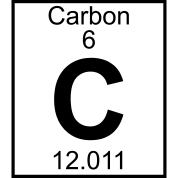
What does 12.011 represent?
a)
atomic mass
b)
atomic number
c)
element name
d)
chemical symbol 
9.
What does the 6 represent?
a)
atomic mass
b)
atomic number
c)
element name
d)
chemical symbol 
10.
How do covalent bonds form?
a)
Donating & receiving valence e- between atoms.
b)
Opposite slight charges attract each other between compounds.
c)
Scientists are still not sure how they form.
d)
Sharing valence e- between atoms.
11.
What two types of atoms make a covalent bond?
a)
2 Nonmetals
b)
1 Nonmetal and 1 Metal
c)
2 Metals
d)
2 Noble Gases
12.
What is the correct name for NO?
a)
Mononitrogen Monoxide
b)
Nitrogen Monoxide
c)
Mononitrogen Dioxide
d)
Nitrogen Oxide
13.
What is the formula for Tricarbon Octahydride?
a)
Ca3O
b)
C2H8
c)
C3H8
d)
Ca3H8
14.
What is the definition of isotope?
a)
atoms of an element with different numbers of neutrons.
b)
materials break down over time at a very consistent rate
15.
If you have 10 protons and 9 neutrons, what would the mass number be?
a)
19
b)
9
c)
10
d)
1
16.
What are the names of the horizontal rows on the periodic table?
a)
The periods
b)
The Groups
c)
The Non-Metals
d)
Ionization Energies
17.

What are valence electrons?

a)

The total number of electrons in an atom

b)

The number of electrons in the outermost shell

c)

The number of electrons in the second shell

d)

The number of protons in the outermost shell

18.

A class of elements characterized by physical properties that include shininess, malleability, ductility, and conductivity.

a)

mixture

b)

metal

c)

non-metal

d)

metalloid

19.

An element that has some characteristics of metals and some characteristics of non-metals

a)

metalloid

b)

metals

c)

non-metals

d)

Halogens

20.

Non-metals, group 18, the most non-reactive elements.

a)

Halogens

b)

Noble gasses

c)

Alkali metals

d)

Alkali Earth metals

21.

contains non metals, 7 valence electrons in it's outermost energy level. Very reactive. Group 17

a)

Noble Gasses

b)

Alkali Metals

c)

Halogens

d)

Alkali Earth Metals

22.

The ability of a substance to combine chemically with another substance

a)

reactivity

b)

mixture

c)

compound

d)

atomic mass

23.

Determine which atom is being described here: Shiny, has the properties of both metals and nonmetals, and has three valence electrons.

a)

Tin (Sn)

b)

Boron (B)

c)

Germanium (Ge)

d)

Antimony (Sb)

24.

On the periodic table, reactivity increases as you move ______________.

a)

from right to left

b)

from left to right

25.

Poor conductor of heat and electricity is a property of ___________.

a)

metals

b)

nonmetals

c)

metalloids

26.

What are the most likely positions of element A and element B on the periodic table?

a)

Both elements A and B are on the left of the periodic table.

b)

Both elements A and B are on the right of the periodic table.

c)

The element A is on the left of the periodic table, and element B is on the right of the periodic table.

d)

The element A is on the right of the periodic table, and element B is on the left of the periodic table.

27.
Balance this equation
_Zn+_HCl-->_ZnCl2 +_H2
a)
1,1,2,1
b)
1,1,1,2
c)
1,2,1,1
d)
2,1,1,1
28.
Balance this equation.
_Mg + _Cl2 --> _MgCl2
a)
1, 2,1
b)
already balanced
c)
2,1,1
d)
1,1,2
29.
Balance this equation
_N2 + _H2 --> _NH3
a)
1,2,3
b)
1,3,2
c)
1,1,2
d)
2,1,1
30.
The number to the lower side of an element is a 
a)
Subscript
b)
Superscript
c)
Coefficient
d)
Charge
31.
The number in front of a compound or element is a 
a)
Subscript
b)
Coefficient
c)
Superscript
d)
Charge
32.
If reaction starts with 20g of reactants it should produce 
a)
a total of 40g of products
b)
a total of 10g of products
c)
a total of 80 g of products
d)
a total of 20g of products
33.

________ are the starting substances in a chemical equation.

a)

Reactants

b)

Producer

c)

Reaction

d)

Products

34.

A student mixes 125 grams of sugar, 250 grams of water and 5 grams of flavoring. The solution weighs...

a)

250 grams

b)

380 grams

c)

375 grams

d)

400 grams

35.
If a reaction starts with a total 75g of reactants it should produce 
a)
a total of 40g of products
b)
a total of 75g of products
c)
a total of 180 g of products
d)
None of the above
36.
How do the following two elements bond together?
Al3+  O2-         
a)
AlO
b)
Al2O3
c)
Al3O6
d)
Al3O2
37.
What is the correct formula for the compound, lithium oxide?
a)
LiO
b)
Li2O
c)
LiO2
d)
Li2O2
38.
AgF
a)
silver fluoride
b)
silver fluorine
c)
monosilver monofluoride
d)
silver monofluorine
39.
What is the formula for the compound formed by magnesium ions and nitrogen ions?
a)
MgN
b)
Mg2N3
c)
Mg3N2
d)
MgN3
40.
Gas Laws involve what three terms?
a)
Solid Liquid Gas 
b)
Speed Velocity Acceleration 
c)
Elements Compounds Mixtures 
d)
Pressure Temperature Volume 
41.
Charles' Law States...
a)
As Pressure goes up volume goes down
b)
As Pressure goes up temperature goes up
c)
As Volume goes up temperature goes up 
d)
As Pressure goes down volume goes down 
42.
Whose law states that as pressure goes up, volume goes down?
a)
Charles 
b)
Boyle
c)
Aglow
d)
Mazias 
43.
Directly proportional means that as one value increases ....................
a)
the other stays the same 
b)
the other increases as well
c)
the other decereases
d)
the other goes to zero
44.
Inversely proportional means as one value increases the other............. 
a)
increases 
b)
decreases 
c)
stays the same 
d)
goes to zero
45.
Temperature describes  the ______________ of particles.
a)
volume
b)
mass
c)
motion
d)
conductivity
46.
If the temperature of a gas increase, the pressure...
a)
Decreases
b)
Increases
c)
Does not change
47.
If a balloon is cooled what will happen to the volume?
a)
Volume will increase
b)
Volume will decrease
c)
Volume will not change
48.
Which container will have lower pressure?
a)
left
b)
right
c)
they both have the same pressure
49.
Boyle's law :  The pressure and volume of a gas show a _____ relationship. 
a)
No relationship 
b)
Direct 
c)
Inverse 
d)
Equal
50.
When a cold tire is inflated to a certain pressure and then is warmed up due to friction with the road, the pressure increases. This happens because the
a)
air molecules hit the walls of the tire less frequently
b)
rubber in the tires reacts with oxygen in the atmosphere
c)
air molecules speed up and collide with the tire walls more often
d)
air molecules diffuse rapidly through the walls of the tire.
51.

When a piston compresses in a chamber the volume of the gas inside decreases. What happens to the pressure and which gas law is this representing?

a)

The pressure decreases - Charles'

b)

The pressure increases - Charles'

c)

The pressure decreases - Boyle's

d)

The pressure increases - Boyle's

52.
When Pressure increases then the Volume must...
a)
Increase
b)
decrease
53.
When Volume increases then Pressure must...
a)
Increase
b)
Decrease
54.
The following graph shows ____ relationship. 
a)
Direct
b)
Inverse
55.
Boyle's law :  The pressure and volume of a gas show a _____ relationship. 
a)
Inverse 
b)
Direct 
56.
What Is Volume?
a)
How heavy something is.
b)
The amount of space taken up by and object.
c)
How a liquid flows.
d)
The international unit of measurement.
57.
Liquids and gases are similar because __________________________.
a)
they both take the shape of their container
b)
they both have their own shape
c)
liquids pour and gases don't
d)
liquids take the shape of the container but gases have their own shape
58.
Gas particles have the ________ kinetic energy because they move the fastest.
a)
least
b)
most
59.

How are plasma and gas different?

a)

Plasma has a definite shape, but gas does not.

b)

Gas is hotter than plasma.

c)

Electrons separate from atoms in plasma and plasma is hotter.

d)

Gas has a definite volume, but plasma does not.

60.
Which state of matter?
a)
Solid
b)
Liquid
c)
Gas
d)
Texas
61.

The substance being dissolved is called the ________

a)

solvent

b)

solid

c)

solute

d)

solvate

62.

When no more solute dissolves the solution is _________

a)

supersaturated

b)

unsaturated

c)

saturated

d)

supercalifragilisticexpialidocious

63.
What does it mean to be "Soluble" ?
a)
Capable of being a solid.
b)
To have soul.
c)
Capable of being dissolved.
d)
To sink.
64.
A supersaturated solution is one that....
a)
contains the maximum amount of dissolved solute.
b)
contains less solute than a saturated solution.
c)
contains more solute than a saturated solution.
d)
is the amount of a substance required to form a saturated solution.
65.
A saturated solution is one that....
a)
contains the maximum amount of dissolved solute.
b)
contains less solute than a saturated solution.
c)
contains more solute than a saturated solution.
d)
is the amount of a substance required to form a saturated solution.
66.
An unsaturated solution is one that....
a)
contains the maximum amount of dissolved solute.
b)
contains less solute than a saturated solution.
c)
contains more solute than a saturated solution.
d)
is the amount of a substance required to form a saturated solution.
67.
The substance dissolved in a solution is called ... 
a)
colloid
b)
solution
c)
solute
d)
solvent
68.

What is the pH of distilled water?

a)

pH 12

b)

pH 3

c)

pH 8

d)

pH 7

69.

What other laboratory substance can you use to test if colourless substance is an acid or an alkali?

a)

Catalyst

b)

Salt

c)

Universal Indicator

d)

Water

70.

Which pH levels indicated a strong acid?

a)

1-3

b)

4-6

c)

8-11

d)

12-14

71.

Which pH level indicates a weak acid?

a)

1-3

b)

4-6

c)

8-11

d)

12-14

72.
7 on the pH scale means that it is...
a)
Acidic
b)
Basic
c)
Neutral
73.
Drain cleaner has a pH of 13. What is drain cleaner?
a)
An acid.
b)
A strong base.
c)
Neutral.
d)
A weak base.
74.
If the pH of a solution is 9, it is a....
a)
acid
b)
base
c)
both
d)
none
75.
Which of the following substances is basic?
a)
Apple juice
b)
Ginger ale
c)
Baking soda
d)
Distilled water
76.
Which of the following substances is basic?
a)
soda
b)
lemon juice
c)
soap
d)
vinegar
77.
Litmus paper is an indicator of acids and bases, it turns red for bases.
a)
True
b)
false
78.
Bases will turn litmus paper __________, while acids will turn litmus paper __________.
a)
blue.....red
b)
red.....blue
c)
pink.........colourless
d)
colourless..........pink
79.
What color does litmus paper turn in the presence of an acid?
a)
Red
b)
Blue
80.
One benefit of Red Cabbage Juice Indicator is that it...
a)
Tells you the exact pH 
b)
Is very accurate
c)
It is very expensive
d)
It can be made from materials you have at home
81.

A student added purple cabbage juice to a small amount of liquid cleaner and it turned greenish-yellow. What is the likely pH of that liquid cleaner?

a)

pH6

b)

pH 13

c)

pH 14

d)

You cannot tell pH using cabbage juice

82.

If cabbage juice was added to an unknown liquid and it turned pink, which statement would you know is true?

a)

the unknown liquid is a base

b)

the unknown liquid is an acid

c)

the unknown liquid is poisonous

d)

the unknown liquid is has a neutral pH