
Font size
 Worksheets
EOY Spiral Review
Total questions: 157
Worksheet time: 2hrs 0mins
The taiga
a cold, treeless, desert-like biome found near the North and South Poles
found mostly in Africa
a cold forest biome covered by coniferous trees, such as pine and spruce
a dry, rocky biome found in the central part of South America.
One abiotic feature of the tundra is that only the surface thaws in the summer and refreezes in the winter, leaving a permanently frozen subsoil that plant roots cannot penetrate. This characteristic is known as
winter frost
Glaciation
Permafrost
Crystallization
Which of the following in a coastal ecosystem is classified as a biotic factor?
Rock
Sand
Wind
Palm Tree
Which of the following in the desert is an abiotic factor?
Sunlight
Cactus
Scorpion
Snake
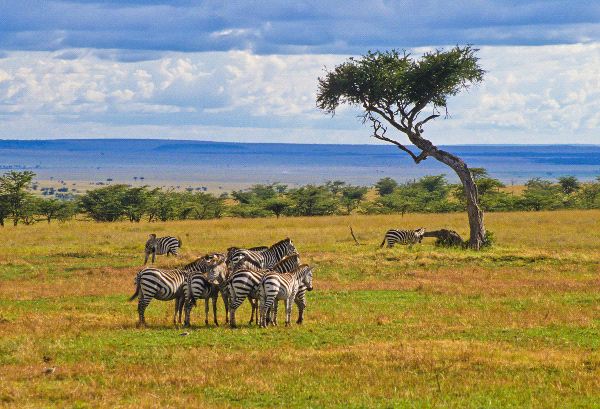
What are the biotic factors of the savanna
animals, grass, water
plants, sunlight, water
grass, fires, animals
grass, insects, animals
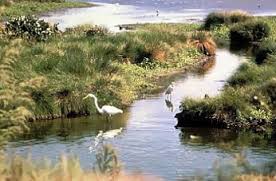
What are the abiotic factors in this image?
water, sunlight, dirt, air
birds and plants
water, plants, and birds
sunlight, plants, herbivores, and carnivores
A certain plant needs moisture, carbon dioxide, oxygen,light, and minerals to survive in the Decidious forest. This scenario shows that this particular living organism depends on .
Biotic and Abiotc Factors
Biotic Factors
Abiotic Factors
None of the Above
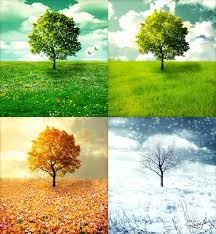
How does light, soil composition, and temperature influence most land biomes?
They cause the ecosystem to become extinct
They cause water in the ecosystem to be polluted
They don't influence a land biome
They help determine what types of plants and animals that live in the biome
Which answer choice best describes humidity?
the force exerted onto a surface by the weight of the air
the amount of water vapor (moisture) in the air
measurement of how fast the air is moving
the direction the wind is moving
A barometer measures…
Direction of the wind
How fast the wind is moving
Temperature
Air pressure
A hygrometer measures…
Wind speed
Air pressure
Humidity level
Temperature
A wind vane shows…
Direction of the wind
Humidity level
Temperature
Air pressure
Which temperature is below freezing?
90°F
75°F
32°F
30°F
How does air pressure affect weather?
High air pressure means “lousy” weather such as rain or storms.
High air pressure means “happy” weather such as clear skies.
Low air pressure means “lousy” weather such as sunny skies.
Low air pressure means “happy” weather such as rainy conditions.
Which of the following weather conditions can you predict with the following data?
Air Pressure- decreasing
Temperature-75°F
Humidity - rising from 60%
Warm and rainy
Cold and rainy
Cold and foggy
Warm and snowing
Which weather conditions can be predicted using the following data?
Temperature- 75 degrees
Humidity- 50%
Air Pressure- moving from high to low
Wind speed- 4 mph
Cold and clear
Warm and clear
Cool and foggy
warm and rainy
11. The following weather conditions are forecasted for Knoxville, TN today. What type of weather should we expect?
Air pressure: High Humidity: 17%
Temperature: 25 F Wind Speed: NE at 7mph
clear and warm
clear and cold
cloudy and cool
snowy and cool
What causes condensation? ( 2 answers)
water vapor molecules gain thermal energy
water vapor molecules lose thermal energy
Liquid changes to gas
gas changes to liquid
When two air masses meet, there is a _____, or boundary.
thunderstorm
watch
front
cloud


When a cold front overtakes a warm front, the temperature drops as the warm air mass is cut off from the ground and pushed upward.
Warm Front
Cold Front
Occluded Front
Stationary Front
This type of air mass is cold and humid (wet).
Continental Polar
Continental Tropical
Maritime Polar
Maritime Tropical
This type of air mass is dry and warm.
Continental Tropical
Continental Polar
Maritime Tropical
Maritime Polar
Cold water near the ocean floor often flows in deep-water currents. The cold water flows toward the deepest regions of the ocean because
it is more dense than the warm water above it.
the water above it is frozen in icebergs.
the water above it contains less algae
it is warmer than the cold water above it.
Water is cooler near the poles and warmer near the equator. Movement of cooler and warmer water from these regions moderates the global climate. Which of the following describes the movement of water between the poles and the equator?
evaporation
gravity
ocean currents
tides

The image above shows part of an ocean current in the Pacific Ocean. The blue line represents the motion of deep, cool water. The red line represents the motion of warm surface water. What most likely causes the current to behave as shown in the image?
When the deep water is cooled, it loses energy and becomes denser.
When the surface water is heated by the Sun, it becomes denser.
When the cold water evaporates, less dense water rises to take its place.
When the water is heated, it becomes less dense and rises

The ocean's currents are driven by differences in temperature and density. Different masses of water are warmer and less dense than other masses. This water tends to move along the ocean's surface in surface currents. Colder masses and more dense masses of water tend to sink and move along the ocean floor in deep-water currents. As shown in the diagram above, at several locations warm, less dense water cools, becomes more dense and falls to the ocean floor. At other locations, cold, dense water warms, becomes less dense and rises back to the surface.
This cycling of ocean water along currents is an example of _______.
absorption
convection
conduction
radiation

A student puts water in a long glass tank to make a model of ocean currents. He heats the left side of the tank and cools the right side. This heating and cooling produces a current of water in the tank. Which diagram correctly shows the flow of the water?
W
X
Y
Z
The currents of the Earth's oceans are caused by
global winds and differences in temperature and salinity.
waves and earthquakes along tectonic plate boundaries.
disturbances by submarines and large ships.
marine organisms and volcanic eruptions.

The following image shows the Earth's jet streams. In this picture, most of the United States lies in the yellow zone between the polar jet and the subtropical jet streams. The United States is marked with an X. Based on the directions in which air moves in the jet streams, how would you expect weather patterns in the United States to move?
from east to west
from south to north
from west to east
from north to south

A student wants to model the Coriolis effect. She spins a globe and then uses a marker to draw a line on it while it spins. She begins drawing near the North Pole and moves her hand directly toward the Equator.
Which diagram best represents the line drawn on the globe?
W
X
Y
Z
Which of the following factors drives all the weather on Earth, including large-scale storms and local weather systems?
The greenhouse effect ensures that some thermal energy will always be trapped near the Earth's surface.
The Sun heats up the air at different rates, and the atmosphere undergoes changes to equalize temperatures and pressures.
The Coriolis effect curves the motion of wind due to the Earth's rotation.
The ocean holds thermal energy more efficiently than land.
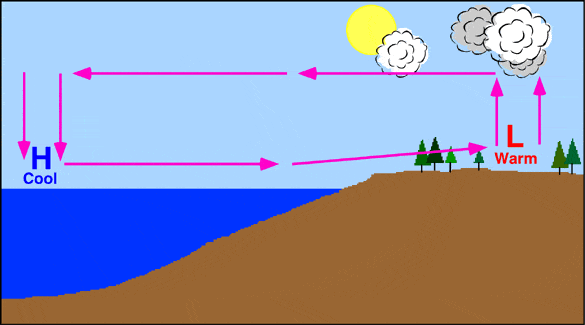


What is the main cause of winds?
amount of trees
the moon's gravity
amount of animals
uneven heating of Earth's surface

The Coriolis Effect influences wind direction around the world due to the ______ of Earth cause the winds to curve.
tilt
shift
height
rotation
1. How does climate change as Bri hikes to the top of the
mountain?
Air pressure decreases, temperature decreases
Air pressure decreases, temperature increases
Air pressure increases, temperature decreases
Air pressure increases, temperature is not impacted

What type of breeze is shown in the diagram?
Land breeze
Polar Easterly breeze
Sea breeze
Mountain breeze

1. How is climate impacted by geographic features in the image?
Differences in latitude have caused one side of the mountain to have great biodiversity, while the other side has low biodiversity.
A cold surface current has caused one side of the mountain to have great biodiversity, while the other side has low biodiversity.
A rain shadow has caused one side of the mountain to have significantly more rain, resulting in more biodiversity for that side.
Differences in altitude have caused one side of the mountain to have great biodiversity, while the other side has low biodiversity.
1. Which answer choice best describes the leeward side of a rain shadow?
Great biodiversity, many different types of plants and animals
Large amounts of rain or snow
Dry, desert-like climate
Low air pressure, cold temperatures

Why is the surface of the earth unevenly heated?
When the sun’s energy is transferred to the earth’s surface, it hits the area around the equator most directly, while hitting the area around the north and south poles at an angle.
When the sun’s energy is transferred to the earth’s surface, it hits the area around the north and south poles most directly, while hitting the area around the equator at an angle.
The earth’s surface is evenly heated.
None of the above
Salinity refers to the amount of ___________________ dissolved in a given amount of liquid.
Oxygen
Thermal energy
Salt
Nitrogen
___________________ is the type of heat transfer that occurs in fluids, such as warm air rising and cold air sinking; creating wind.
conduction
convection
insulation
radiation
An ecosystem that has a high level of _______ is able to fill all of its niches.
Salt Water
Pollution
Biodiversity
Carbon Dioxide

Fish are a major part of human diets in many parts of the world. Fish are also part of natural ecosystems and sometimes humans remove too many fish from an ecosystem. Food webs from two ecosystems are shown below. If tuna were overfished from both ecosystems, how would the effects compare?
Ecosystem B would be more stable than ecosystem A, and it would provide more natural resources than it did before the tuna were overfished.
Ecosystem A would be more stable than ecosystem B, but it would provide fewer natural resources than it did before the tuna were overfished.
Ecosystem A would be more stable than ecosystem B, and it would provide more natural resources than it did before the tuna were overfished.
Ecosystem B would be more stable than ecosystem A, but it would provide fewer natural resources than it did before the tuna were overfished.
A grassland ecosystem (ecosystem X) supports 13 different grass species. A different grassland ecosystem (ecosystem Y) supports just one species of grass. Bison graze on all of the grass species in both of these ecosystems. A drought strikes both ecosystem X and ecosystem Y, but the bison in ecosystem X are better able to survive it. Which of the following is a likely explanation?
The bison in ecosystem X only eat one species of grass.
Ecosystem Y has a greater amount of biomass.
Ecosystem X has a greater amount of biodiversity.
Ecosystem Y has a greater amount of biodiversity.
Climate change has had a large impact on the biodiversity of Earth's ecosystems. One example is the rise of Earth's temperature, which has resulted in droughts in some regions. Which of these is the most likely impact of droughts caused by climate change?
a decrease in the demand for plant and animal resources used by the human population
a population increase for the majority of plant and animal populations used by humans as resources
an increase in the human population due to increased availability of plant and animal resources
a decrease in the biodiversity of plant and animal populations available for humans to use as resources

The diagram shows the plants and animals in a freshwater ecosystem. Which of the following might make this ecosystem more sustainable?
if it supported more plant species, but fewer animal species
if it supported more plant and animal species
if it supported fewer plant and animal species
if it supported more animal species, but fewer plant species

The following images show food webs for two similar ecosystems. Which ecosystem is more likely to survive if a disease causes a significant decline in the insect population?
ecosystem 2, because fewer animals will need to adapt to the new conditions
ecosystem 1, because animals that eat insects have more sources of food
ecosystem 1, because more types of plants are available for insects to eat
ecosystem 2, because there are fewer animals competing for resources
Fisherman in a certain region have noticed a significant decrease in the biodiversity of fish species present in a local body of water. This has caused a decrease in the variety of fish available for consumers in the region. Which of the following changes has most likely caused this change in biodiversity?
the introduction of an invasive species
an increase in fish reproduction rates
a decrease in water pollution
a prolonged period of increased rainfall

Animal that gets its energy and nutrition from eating plants.
Parasite
Herbivore
Carnivore
Ominvore

Animal that gets its energy and nutrition from eating meat.
Detritivore
Ominvore
Carnivore
Herbivore

Organisms that produce their own food mostly through photosynthesis (producers). Examples are plants and algae.
Ominvore
Detritivore
Heterotroph
Autotroph

The level in an Ecological pyramid that includes all the organisms that share the same place in a food chain.
Trophic Levels
Toxic Levels
KeKe Levels
Environmental Systems

which number on the diagram below sows the level of secondary consumers?
3
2
1
in an energy pyramid, which way does the energy transfer?
from top of the pyramid to the bottom
from the bottom of the pyramid to the top
all of these
none of these


An autotroph can also be called a
animal.
consumer.
heterotroph.
producer.

In the food chain pictured, what type of organism is the bird?
producer
primary consumer
secondary consumer
tertiary consumer

In the savanna, Cattle Egrets look for insects in fields among cattle. The Egret gets easy access to flying insects stirred up by the cattle, and the cattle don't care if they are there or not.
mutualism
commensalism
competition
parasitism

Which of the following describes a predator/prey relationship in an ocean?
Phytoplankton in the sea make food from sunlight.
Sharks consume smaller fish they catch in the ocean.
Frogs in a pond rest on a lilypad
Fish of the same species compete for plants to eat.

In the desert, Yucca flowers are pollinated by yucca moths. The moths lay their eggs in the flowers where the larvae hatch and eat some of the developing seeds. Both species benefit.
parasitism
commensalism
mutualism
Which of the following is NOT considered to be a symbiotic relationship?
A mother bear caring for her cub
Worms living in a cow’s intestine
A boxer crab carrying anemones on its arms
A buffalo and a cattle egret grazing together
In Predator/Prey Graphs what happens to Predator numbers if Prey numbers increase.
The predator numbers INCREASE
The predator numbers DECREASE
In Predator/Prey Graphs what happens to Predator numbers if Prey numbers decrease.
The predator numbers INCREASE
The predator numbers DECREASE

Which two types of organisms are competing for resources in this African savanna? select two
Zebras and hyenas
Hyenas and cheetahs
Trees and elephants
Fungi and soil microbes

In the aquatic food web below, which two organisms have a predator-prey relationship?
Shad and sturgeons
Sturgeons and blue crabs
Blue crabs and rangia clams
Phytoplankton and amphipods
Why do honeybees dance?
to find honeycombs
to visually tell other bees he found a mate
to fly home
to visually tell other bees where the nectar (food) is
A bark, snort, growl, and hoot are all examples of what type of communication
visual communication
auditory communication
short distance communication
chemical communication
What are some visual ways a bird would try to attract a mate? select two
A male bird showing off his colorful feathers
A female bird singing in a tree
A male bird doing a dance around the female
A male bird screeching loudly when a cat is near
A male bird flying really fast past the female
An example of visual communication could be through the use of
howling
pheromones
colors on the feathers of birds
touch
Why would animals use auditory communication? select three
To warn others of intruders
To see who can be the loudest
To find food (Echolocation)
To let others know where its territory is
To show off its bright colors

At which position does the child on the swing have the most gravitational potential energy?
W
X
Y
Z
What is elastic potential energy?
energy stored in stretched or compressed elastic materials
energy that comes from the temperature of matter
energy transferred through the substance in a wave
energy stored in the height of the object off the ground
Which statement is true?
Oranges contain Elastic Energy
Food contains Chemical Energy
Phone on the table doesn't contain Gravitational Energy
Radiator contains Nuclear Energy
What is an example of Electric Energy
Apple
Rubber Bands
Car Battery
Table

Which 2 types of energy does the object in the image use?
Electric and Thermal
Nuclear and Elastic
Chemical and Mechanical
Sound and Elastic
The measure of the amount of matter in an object
mass
force
speed
acceleration
The measure of the amount of matter in an object
mass
force
speed
acceleration
The energy an object has due to its motion is called
elastic potential energy
potential energy
kinetic energy
gravitational potential energy
The energy that results from the position (height off the ground) or shape (stretched or compressed) of an object is called
elastic potential energy
potential energy
kinetic energy
gravitational potential energy
Energy is directly related to an object's height off the the ground
elastic potential energy
kinetic energy
potential energy
gravitational potential energy
Energy that is due to an object being compressed or stretched is called
elastic potential energy
kinetic energy
potential energy
gravitational potential energy
The energy of electric charges is called
mechanical energy
thermal energy
nuclear energy
electrical energy
This type of energy is a form of potential energy that is stored in chemical bonds between atoms.
electromagnetic energy
energy transformation
chemical energy
law of conservation of energy
The rule that energy cannot be created or destroyed is
electromagnetic energy
energy transformation
chemical energy
law of conservation of energy
Which answer choice best describes thermal energy?
energy an object has due to its height
energy an object has due to the motion of its molecules
energy an object has due to being stretched or compressed
energy an object has due to its mass and speed

Which 2 types of energy are being used by the bungee jumper in the image?
Elastic
Chemical
Gravitational
Thermal
What type of energy does pizza provide for us?
Pizza is chemical potential energy that is transformed to kinetic energy later on, as we move.
Pizza is gravitational potential because our body will digest it.
Pizza is elastic potential because the cheese stretches out of its normal position.
Pizza is chemical potential energy that is later destroyed in our bodies.
What type of energy does pizza provide for us?
Pizza is chemical potential energy that is transformed to kinetic energy later on, as we move.
Pizza is gravitational potential because our body will digest it.
Pizza is elastic potential because the cheese stretches out of its normal position.
Pizza is chemical potential energy that is later destroyed in our bodies.
Potential energy depends on the ________ and ________ of the object.
Height (position)
Mass
Speed
Friction

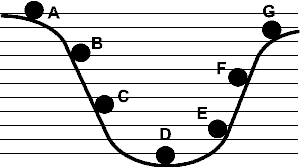
Which point has the most potential energy?
G
F
B
A

At which point of the roller coaster is potential energy the greatest?
W
X
Y
Z


The faster an object moves, the ________ kinetic energy it has.
more
less
__________ is stored energy.
Potential
Kinetic


The more mass an object has the _____________ kinetic energy it has
more
less
The more mass an object has the _____________ kinetic energy it has
more
less
Which of the following is an example of convection?
the rays of the Sun warming the earth
hot air rising and cooler air falling
a hot object transferring heat to a cooler one
a hot oven warming the air around it
Heat is the transfer of _______ energy.
mechanical
chemical
thermal
electrical
Lakelynn pours hot coffee into a cold mug. A few moments later, she picks up the mug, and it is now warm.
What is the main form of energy transfer involved in heating the mug?
conduction
radiation
convection
all of the above
Once heat from the Sun penetrates the Earth's atmosphere, the heat is circulated as warm air rises and cold air sinks. What is this process called?
radiation
conduction
convection
reflection
Choose 2 answers: Which answer choices represent the best examples of conservation?
Purchasing certified lumber that comes from sustainable logging
Purchasing non-certified lumber
Volunteering to help at the zoo
Recycling items such as glass and paper products
A local rancher plants blueberry and blackberry bushes on her land so that deer and other native animal populations can still use the land. This is an example of…
Habitat fragmentation
Conservation
Habitat management
Species endangerment

What is one impact caused by the melting of glaciers and ice caps?
Sea levels will decrease because of warmer climates
There will be more freshwater available due to cooler climates
Sea levels will increase due to warmer climate changes
There will be less freshwater available due to cooler temperatures
How is the harvesting of exotic woods harmful for some ecosystems?
The removal of exotic wood species is beneficial, since many are invasive
It increases biodiversity, meaning that have more life than they can support
It increases the amount of habitat for many species
It creates loss of habitat for many species

The image below shows President Franklin D. Roosevelt dedicating The Great Smoky Mountains National Park in the year 1940. Many people sacrificed time and money to establish our national park. The establishment of The Great Smoky Mountains National Park is an example of…
Habitat management
Conservation
Species protection
Sustainable logging
Which answer choices represent the best examples of conservation? (2 answers)
Purchasing certified lumber that comes from sustainable logging
Purchasing non-certified lumber
Volunteering to help at the zoo
Recycling items such as glass and paper products

Which of the following is a list of natural resources?
Tables made from lumber
Pencils manufactured from lumber and graphite
Coal and gold mined out of the earth
Clothing made from cotton

