
NEW
Font size
 Worksheets
CHEMISTRY EXIT 2021
Total questions: 60
Worksheet time: 54mins


Which of the following statements about elements and compounds is accurate?
Elements are many different types of atoms together but compounds are just one type of atom.
Elements are pure substances that cannot be broken down physically but compounds are pure substances that can be broken down physically.
Elements are not found on the Periodic Table but compounds are found on the Periodic Table.
Elements are pure substances that cannot be broken down chemically but compounds are pure substances that can be broken down chemically.
Which of the following could be the chemical formula for a compound?
Na
CO2
H2 + O2
Au
Which of the following could be the chemical formula for an element?
Si2
H2O
C + O2
C6H12O6
Which of the following statements is true regarding the atomic number of an element?
The atomic number is the number of protons in an element
The atomic number is the number of electrons in an element.
The atomic number is the number of neutrons in an element.
The atomic number is the mass of the nucleus of an element.
The horizontal rows on the Periodic Table are referred to as which of the following?
Groups or Families
Periods or Rows
Columns or Rows
Valence or Orbitals
The vertical columns on the Periodic Table are referred to as which of the following?
Groups or Families
Periods or Rows
Columns or Rows
Valence or Orbitals
Calcium (Ca) is in group 2 on the Periodic Table. What does this tell you about this element?
It is not reactive with water.
It has 2 valence electrons.
It has 2 protons in its nucleus.
It has 2 energy levels/shells in its electron cloud.
The atomic number of an element is determined by which of the following?
Number of electrons
Number of neutrons
Number of protons
Number of protons and neutrons
The big number on the front of the chemical formula is called the ______
Coefficient
Element Symbol
Subscript
Atomic Number
How many of each element are in 3Al2(SO4)3
6Al, 9S, 36O
3Al2, 3S, 12O
18Al, 9S, 12O
6Al, 12SO
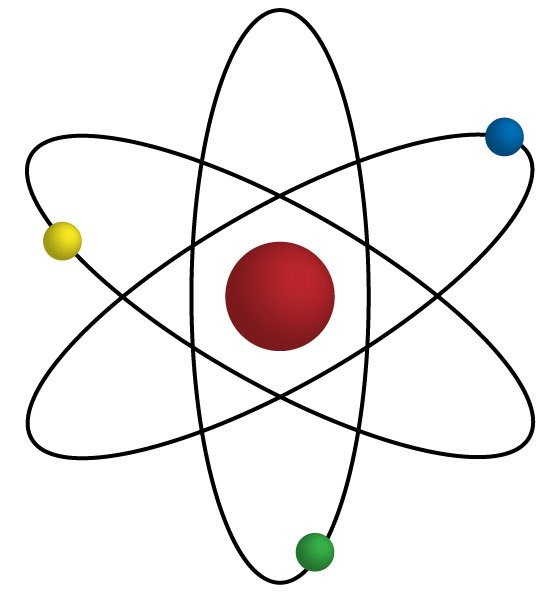
What are the 3 particles that make-up the atom?
protons, neutrons, and isotopes
neutrons, isotopes, and electrons
positives, negatives, and electrons
protons, neutrons, and electrons

What is the number of protons that the element in this image contain?
14
7
15
18
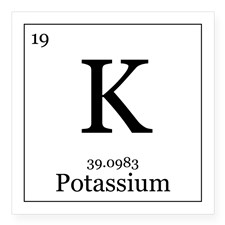
How many neutron are in the atom "K"?
7
2
39
12
True or False? Neutrons have a negative charge
True
False
The proper formula for magnesium hydroxide:
MgOH
Mg2OH
Mg(OH)2
Mg2OH2
How do the following two elements bond together?
Al3+ O2-
AlO
Al2O3
Al3O6
Al3O2

Which best describes a chemical reaction?
Products --> Reactants
Reactants --> Products
The statements below are the steps involved in an investigation.
P Making hypothesis
Q Identifying and controlling variables
R Identifying problem
S Collecting data
T Making conclusion
U Interpreting data
Which of the following is the correct sequence?😄
P, Q, R, S, T, U
Q, P, R, T, S, U
R, P, Q, S, U, T
R, Q, P, U, S, T

Which of the following is done if a hypothesis is rejected in an experiment?
A theory is made
Variables are changed
A new hypothesis is made
The scientific concept is changed

The higher the temperature of the water,
the higher the mass of sugar dissolved in it.
Which is the responding variable for the above experiment?
Temperature of the water
Mass of sugar dissolved
Volume of the water
Size of the sugar granules

Which one of the following substances consists of atom?
Water, H2O
Zinc metal, Zn
Carbon dioxide gas, CO2
Solid sodium chloride, NaCl

Diagram above shows an experiment to investigate diffusion process in liquid.
What will be the observation after a few hours?
Two layers are formed
A purple solution is formed
A colourless solution is formed
Potassium manganate(VII) crystal remain unchanged
The boiling point of carbon tetrachloride, CCl4 is 76.0 OC.
Which of the following statement is true about the molecules of carbon tetrachloride at 80.0 OC?
The carbon tetrachloride molecules becomes lighter
The distance between the carbon tetrachloride molecules decrease
The kinetic energy of the carbon tetrachloride molecules becomes lower
The forces of attraction between the carbon tetrachloride molecules becomes weaker
Which of the following occurs when liquid naphthalene are cooled at room temperature ?
The particles move faster
The contents of energy increases
The arrangement of particles is not in order
The attraction forces between particles increase
a group of letters and subscript numbers that represent the make-up of a chemical compound
synthesis reaction
single displacement reaction
chemical equation
chemical formula
an atom or a group of atoms that has an electrical charge, either positive or negative
reactant
ion
product
base
two or more reactants combine to make a new product
synthesis reaction
neutralization reaction
single displacement reaction
decomposition reaction
one compound breaks down into two or more simpler compounds
double displacement reaction
decomposition reaction
synthesis reaction
single displacement reaction
a reaction in which one element takes the place of another element in a compound
double displacement reaction
decomposition reaction
synthesis reaction
single displacement reaction
NaOH may be found in drain cleaners and as a component of soaps. Is NaOH an acid or a base?
Acid
Base
Neither (Neutral)

Is pure water acidic, basic, or neutral?
Acidic
Basic
Neutral
sulfuric acid
HSO3
H2SO3
H2SO4
H3SO4
Basic oxide
BaO
P2O5
ZnO
CO2
Which oxide is able to react with HNO3?
MgO
CO2
NO2
CO
Alkalis are substances that produce OH- ion when dissolved in water.
True
False

