
Font size
 Worksheets
Properties At Atoms and the Periodic Table Review
Total questions: 106
Worksheet time: 1hrs 1mins

Columns on the periodic table are known as __________.
Periods
Groups
Pillars
Grouper Fish

Horizontal rows on the periodic table are known as ___________.
Groups
Columns
Period
Timeline

Where are metals located on the periodic table?
Left of Zig Zag line
Only Groups 3-12
Right of Zig zag line
Along Zig Zag Line

Where are the nonmetals located on the periodic table?
To the left of the zig zag line
Along the Zig Zag Line
The two rows at the bottom of the table
To the right of the zig zag line

Where are the metalloids located on the periodic table?
Left of zig zag line
Right of zig zag line
Along the zig zag line
Row 1 group 1

An element that is lustrous, malleable, ductile, and a good conductor is a ____.
Non Metal
Metalloid
Nontraditional non metals
Metal

Elements in the same group have similar __________.
Shapes
Properties
Colors
Energy levels

Elements in the same group have the same number of ____________.
Valence Electrons
Energy Levels
Protons
Charges

Which element has similar properties to Oxygen (O)?
Cl
He
Mg
S

Which group is the most reactive nonmetal group?
1
17
7
18

Which is the most reactive group of metals?
1
17
11
18

What element is the most reactive non metal in period 5?
Iodine
Rubidium
Niobium
Antimony

Which group(s) have the highest reactivity on the periodic table?
18
2-6
8
1 and 17

Valence Electrons determine an elements what?
Identity
Reactivity
Neutrons
Availability

Which subatomic particle determines an elements identity?
Proton
Neutron
Electron
Valence Electron

Which element has similar properties to Aluminium?
Thallium
Silicon
Germainium
Magnesium

The most stable group on the periodic table and why.
Group 8, because they have a full outer shell
Period 8, because they have a full outer shell
Group 18, because they have a full outer shell.
Group 18 because they are one away from being full and are super excited about it.

The charge of Oxygen's nucleus
+8
+6
-8
0

The periodic table is arranged by increasing ______ ______, which is equal to the number of protons.
atomic mass
atomic number
If an element is shiny, can be hammered into thin sheets, and is a good conductor of electricity, what type of element is it? (6.6A)
a metal
a metalloid
a non-metal
a gas

Determine the number of neutrons in an atom of Carbon (round the mass number). (8.5B)
12
6
18
2

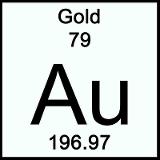
Look at this picture of Argon off the periodic table. Which of the following is true for this element?
18 protons
40 protons
22 protons
21.9 protons
What is an atom?
It is an element on the Periodic Table.
is the smallest component of an element, characterized by a sharing of the chemical properties of the element and a nucleus with neutrons, protons and electrons.
An atom is the largest component of an element, characterized by a sharing of the chemical properties of the element and a nucleus with neutrons, protons and electrons.
An atom is the combination of electrons and protons.
On the Periodic Table of Elements what element is at Group 2 Period 4?
Oxygen
Tin
Calcium
Carbon
The element Iron(Fe) is located at what Group and Period?
Group 4 Period 7
Group 8 Period 4
Group 8 Period 11
Group 4 Period 8
What is the chemical symbol for Potassium?
P
PO
K
Pu
An elements Atomic number gives it its specific what?
weight
Identity
group
shape
What element has an atomic number of 14?
Aluminum
Tin
Silicon
Iron
What Group and Period is Cobalt located?
Group 4 Period 3
Group 4 Period 9
Group 5 Period 9
Group 9 Period 4
What is the element name for Ne?
Nonsense
Nickle
Nitrogen
Neon
What element has an atomic number of 36
Xenon
R2D2
Krypton
Iron
What element is at Group 1 Period 2?
Helium
Lithium
Oxygen
Potassium
What is the element name for the symbol Ga?
Gas
Gobdium
Gallenium
Gallium
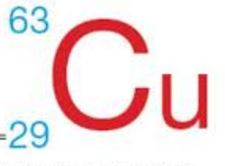
What is the symbol for the element Copper?
Co
Cu
Cp
Ca
What element is located at Group 18 Period 3?
Argon
Neon
Oxygen
Calcium
What element has an Atomic Number of 30?
Copper
Zinc
Nickel
Iron
What element has an Atomic Number of 108
Iron
Hassium
Potassium
Gallium


Which element in Group 15 has the strongest metallic character?
Bi
As
P
N
In the modern Periodic Table, the elements are arranged in order of increasing
atomic number
mass number
oxidation number
valence number
Which pair of symbols represents a metalloid and a noble gas?
Si and Bi
As and Ar
Ge and Te
Ne and Xe
Which list includes elements with the most similar chemical properties?
Br, Ga, Hg
Cr, Pb, Xe
O, S, Se
N, O, F
Which element is malleable and a good conductor of electricity ?
argon
carbon
iodine
silver
List the scientists in order of their atomic theories:
Rutherford, Bohr, Dalton
Dalton, Rutherford, Bohr
The atomic theory model with fixed orbits
Bohr
Rutherford
The atomic theory model with a positive nucleus and orbiting electrons
Bohr
Rutherford
Groups 1 & 2 are metals. What are Groups 3-12?
Transition metals
Halogens (non-metals)
Noble Gases (non-metals)
Noble Gases have what state of matter?
Liquids at room temperature
Gases at room temperature
Who developed the Periodic Table of Elements?
Dmitri Mendeleev
Dmitri Mendeleev and Scientists
Dmitri Mendeleev and Julius Lothar Meyer
Dmitri Mendeleev, Julius Lothar Meyer and other Scientists
2 rows beneath the main periodic table
Lanthanide
Lanthanide and Actinide
Lanthanide and Hydrogen
Actinide and Hydrogen
Book Mendeleev wrote in 1867
Principals in Chemistry
Principles in Chemistry
Principles of Chemistry
Organic Chemistry
Why was Mendeleev's students struggling in his Science Class?
It was boring
It was too much info
There's no fun activities
There's no system to organize elements
What did Dmitri invent?
Children
Periodic Table
Russian currency
Calculator
How many elements did Dmitri predict?
1
20
4
17
How many elements were on the original Periodic Table?
60
56
75
118
How did Dmitri predict elements?
Time traveled
Predicted the properties by the atomic numbers left
Guess and checked
Calculated the atomic mass and properties
How are the elements arranged on the periodic table today?
By atomic mass
By number of electrons
By atomic number
By alphabetic order
Dmitri had an element named after him
True of False?
True
False
When was the original periodic table created?
1959
400 B.C
1869
1776
How many elements does the periodic table currently have?
(Current = 2018)
60
118
181
227
Which of the following is an alkaline Earth metal?
Ca
Cl
K
Ne
Which of the following is a halogen?
Sr
Br
Na
Kr
Which element is a metalloid?
O
Be
Sn
As
What property did Mendeleev use to organize his periodic table, at first?
Atomic Number
Color
Reactivity
Atomic Weight
JJ Thomson discovered what subatomic particle
nucleus
neutron
proton
electron
Rutherford discovered what part of the atom
nucleus
neutron
proton
electron
First person to propose the concept of an atom
Rutherford
Democritus
Dalton
Bohr
Who proposed the theory that atoms orbit the nucleus in specific orbits.
Bohr
Democritus
Rutherford
Chadwick
This particle balances the charges from the protons to make the atom neutral
proton
electron
neutron
nucleus
These particles are found in the nucleus
protons and electrons
nucleus and neutrons
protons and neutrons
electrons and neutrons
Which of the following shows the correct order of Atomic Theory Timeline
Rutherford, Bohr, Dalton, Democritus, Thomson
Bohr, Democritus, Thomson, Rutherford, Dalton
Dalton, Thomson, Rutherford, Bohr, Democritus
Democritus, Dalton, Thomson, Rutherford, Bohr
Thomson Experimented with ______
Gold Foil
alpha particles
cathode rays
protons

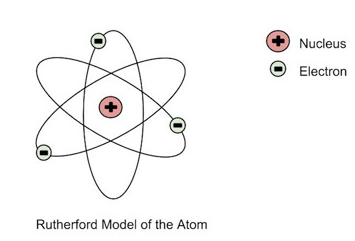
Which Scientist created this model
Democritus
Chadwick
Bohr
Rutherford
Rutherford experimented with ____
Gold foil and alpha particles
Cathode rays and alpha particles
electron and alpha particles
gold foil and cathode rays



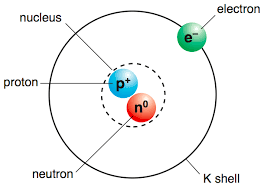
Do electrons contribute to the atomic mass of an atom?
YES of course, they are there for a reason
NO, they are useless to the atom
No, their mass is too small to contribute to the mass
YES, silly, they are the superstars of the atom

