Worksheets
TCAP Review 7th Grade Science (Part 2)
Total questions: 65
Worksheet time: 37mins

A mixture of gases that surrounds the Earth like a blanket.
atmosphere
troposphere
ozone
nitrogen
The gas that makes up most of Earth’s atmosphere
lifting
troposphere
wind funnel
nitrogen
The air we breathe is mostly made of
nitrogen
oxygen
Earth's atmosphere is mostly made up of which 2 gases? CHOOSE 2!!!!!!
nitrogen
oxygen
ozone
water vapor

Which of the following have been changed or altered due to climate change ?
droughts
flooding
melting of polar ice caps
all of the above
The main human activity that releases greenhouse gases is
using public transportation and there by reduce the affects of greenhouse gases.
burning fossil fuels
texting on cellphones
eating meat
Which of the following is contributing to an INCREASE in carbon dioxide in the atmosphere?
deforestation
photosynthesis
oceans
all of the above
the loss of animal species
Kingdom Eubacteria and Kingdom Archaea contain organisms which were once placed into the same kingdom. While biochemical analysis of their genomes and metabolisms shows that they are significantly different, they were once thought to belong to the same kingdom because they both -
maintain steady metabolisms
contain only prokaryotic organisms
construct proteins using ribosomes and mRNA
act as the main producers in forest biomes
What do archaea and bacteria have in common?
Their cells have well-defined nuclei
They are multicellular
They are all shaped like rods, spheres, and spirals
Their cells have no nuclei


Which of these is an element?
Salt (NaCl)
Water (H20)
Oxygen (O)
Carbon Dioxide (CO2)
Which of these is a compound?
Aluminium (Al)
Carbon Dioxide (CO2)
Nitrogen (N)
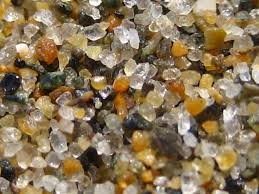
Sand
Air is:
An element
A compound
A mixture
None of these
Which of the following is classified as a pure substance?
Lemonade
Fruit punch
ketchup
Helium
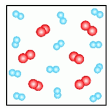
___________ are the smallest unit of an element that maintains the properties of that element.
Atoms
Elements
Compounds
Mixtures
A ______________ is made up of different kinds of atoms chemically combined.
element
compound
mixture
molecule
True or False: elements AND compounds are pure substances.
True
False
When a substance is heated, particles will
Move further apart
Get larger
Move closer together
Be unaffected
The process when a solid turns into a liquid
Evaporation
Sublimation
Freezing
Melting
The process when a gas turns into a liquid
Condensation
Sublimation
Freezing
Evaporation
The process when a liquid turns into a gas
Evaporation
Melting
Condensation
Deposition
The process when a solid turns into a gas
Sublimation
Deposition
Evaporation
Melting
The process when a gas turns into a solid
Deposition
Weathering and Erosion
Super freezing
Sublimation
A ________ is a group of 2 or more organs working together to keep an organism alive.
cell
tissue
organ
Organ system
The ______ system helps you move, protects your organs, gives support to the body, and makes red blood cells.
skeletal system
muscular system
digestive system
respiratory system
The ________ system works with the skeletal system to help you move and provides shape and warmth.
skeletal
integumentary
muscular
digestive
The _____ system's function is to break down food into molecules that the body (cells) can use for energy.
muscular
digestive
respiratory
endocrine
The _____ system is a transport system, carrying oxygen, carbon dioxide, and wastes to and away from cells using the heart and blood.
endocrine
circulatory
respiratory
excretory
The ______ system's function is gas exchange. It brings oxygen in and exhales carbon dioxide with the lungs, trachea, and diaphragm
endocrine
excretory
circulatory
respiratory
The _______ system includes the skin, hair, and nails. It is the body's first line of defense, absorbs vitamin D, excretes sweat.
respiratory
nervous
Integumentary
skeletal
This system controls the body using the brain, spinal cord, and nerves.
nervous system
endocrine system
excretory system
digestive system
The ______ system removes the body's wastes through the kidneys (cell wastes), digestive (feces), respiratory (CO2), and integumentary (salts/sweat)
excretory
digestive
respiratory
circulatory
Green plants and algae make their own food through photosynthesis. What is photosynthesis?
a cell process that uses energy from sunlight to convert water and oxygen into food
a cell process that uses energy from sunlight to convert water and glucose into food
a cell process that uses energy from sunlight to convert water and chlorophyll into food
a cell process that uses energy from sunlight to convert water and carbon dioxide into food
Plant cells contain a green pigment called chlorophyll. Chlorophyll has a role in the process of photosynthesis. What does chlorophyll do?
produces glucose from oxygen
produces oxygen from glucose
absorbs light energy from the sun
absorbs glucose from the plant
Plants absorb and store some of the energy in sunlight through a process called …
Cellular respiration
Photosynthesis
Carbon Cycle
Decomposer
What is the function of the mitochondria?
To protect the nucleus
To supply energy for the cell via cellular respiration
To digest food
To carry out photosynthesis
What is the function of the chloroplast?
To protect the nucleus
To supply energy for the cell via cellular respiration
To digest food
To carry out photosynthesis
The ______________ is the cellular organelle that converts glucose into ATP, a chemical form of energy the cell can use.
Chloroplast
Chlorophyll
Mitochondria
Nucleus
Both plants and animal cells can carry out the following cell process…
Photosynthesis because they both contain chloroplast
Cellular respiration because they both contain chloroplast
Photosynthesis because they both contain mitochondria
Cellular respiration because they both contain mitochondria
Which of the following is the chemical equation for cellular respiration?


Which of the following is the chemical equation for photosynthesis?