wayground logo

Free Printable Worksheets

Font size

S
M
L
XL
Worksheets

5th Grade Science End of Year Review

Total questions: 141

Worksheet time: 2hrs 16mins

Name
Class
Date
1.

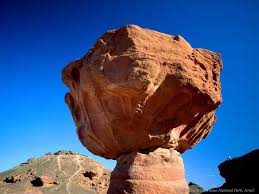
An avalanche is an example of which process?

a)

Weathering

b)

Erosion

2.
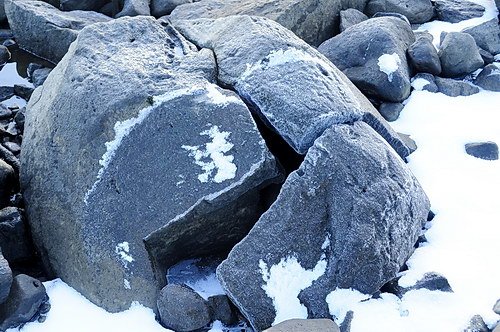
How does freezing water cause the weathering of rocks?  The freezing water—
a)
keeps the rocks in place.
b)
makes the rocks last longer.
c)
expands cracks and breaks rocks.
d)
causes rocks to fall in landslides.
3.
The process that breaks down rocks and other materials on Earth's surface is called
a)
Weathering
b)
Erosion
4.

What is the process that picks up and moves weathered rocks?

a)

Erosion

b)

Weathering

5.
What causes the greatest erosion effect on our beaches?
a)
Waves
b)
Gravity
c)
Glaciers
d)
Wind
6.

The process by which water, ice, wind, or gravity moves weathered rock and soil from one place to another.

a)

Weathering

b)

Erosion

7.

Which of these is an example of erosion?

a)

Light shining onto a mountain.

b)

Rain breaking down rocks on a mountain into smaller pieces.

c)

Wind blowing away bits of dirt to a new place on the mountain.

d)

All of the above.

8.
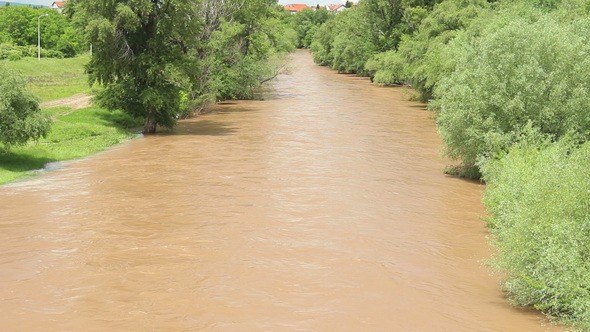
Muddy water being carried away by a fast-moving river is an example of
a)
Weathering
b)
Erosion
c)
A mess
d)
A nice place to swim
9.
What is an enormous mass of ice moving over land, causing weathering of rock and soil?
a)
A glacier
b)
An iceberg
c)
An ice wedge
d)
A sand dune
10.
How do plants weather rocks?
a)
Plants don't weather rocks.
b)
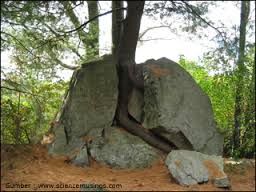
When roots grow into cracks of rocks and expand the rock breaks.
c)
When the plant moves water from the roots to the leaves, the rock breaks.
11.

What is the wearing away or breaking down of rocks called?

a)

Weathering

b)

Erosion

12.

Flood water pounding against a canyon wall and wearing it down is an example of

a)

Weathering

b)

Erosion

13.
Weathering and erosion are the same thing.
a)
True
b)
False
14.
Wind blowing sand from one location to another is called
a)
Weathering
b)
Erosion
15.
The process of carrying away weathered bits of rocks is called
a)
weathering
b)
erosion
16.
The process of slowly breaking rocks into smaller pieces is called
a)
weathering
b)
erosion
17.
This is the process of dropping sediment in a new location.
a)
Weathering
b)
Erosion
c)
Deposition
18.

Which of these examples is deposition?

a)

wind blowing sand

b)

sand that was dropped on the beach by waves

c)

pebbles falling downhill due to gravity

d)

a tree root breaking a rock

19.
Look at the picture.
A dog that sits when told to.
a)
inherited
b)
learned
20.
Look at the picture.
Eye color.
a)
inherited
b)
acquired
21.
Look at the picture.
A bird knowing how to build a nest.
a)
inherited
b)
learned
22.
Look at the picture.
A baby crying when its hungry.
a)
inherited
b)
learned
23.
Look at the picture.
Speaking different languages.
a)
inherited
b)
learned
24.
Look at the picture
Dog playing guitar.
a)
instinct
b)
learned
25.
Which trait does a puppy inherit from its parents?
a)
fur color and pattern
b)
obedience to commands
c)
food brand preference
d)
affection for a specific home
26.

Which of the following behaviors of a dog is most likely learned?

a)

Panting in warm weather

b)

Playing fetch with a ball

c)

Barking at other dogs

d)

Chasing smaller animals

27.

An 11-year-old girl with green eyes and red hair plays the piano. Which of the following characteristics is an example of a learned behavior?

a)

Playing the piano

b)

Having green eyes

c)

Having red hair

d)

Being 11 years old

28.

Which of the following characteristics of a rabbit was most likely inherited from its parents?

a)

Bent whiskers

b)

Missing tooth

c)

Long ears

d)

Broken foot

29.

The offspring of this cactus will most likely inherit all of the following of its characteristics EXCEPT–

a)

the thick trunk.

b)

the green color.

c)

the sharp spines.

d)

the birds nesting.

30.

Which of the following is an example of a learned behavior?

a)

A turtle laying its eggs on the beach

b)

A dog retrieving a stick for its owner.

c)

A bird migrating south for the winter.

d)

A baby chick cracking open its shell.

31.

A characteristic that a living thing gets from its parents

a)

inherited trait

b)

learned behavior

c)

physical behavior

d)

acquired trait

32.

What is an acquired trait?

a)

a characteristic that a living thing is born with

b)

a characteristic that a living thing gets during its lifetime

c)

physical appearance

d)

heredity

33.

A vertebrate is an animal...

a)

with a spine or backbone

b)

without a spine or backbone

34.

An invertebrate is an animal...

a)

with a spine or backbone

b)

without a spine or backbone

35.

What does it mean to classify animals?

a)

Sort animals into different groups

b)

Showing how animals are alike

c)

Both answers are correct

36.

People are...

a)

Vertebrates

b)

Invertebrates

37.

Mammals are vertebrates.

a)

True

b)

False

38.

Birds, fish, snakes, and turtles are invertebrates.

a)

True

b)

False

39.

Insects, spiders, and worms are vertebrates.

a)

True

b)

False

40.

Most of the world's animals are invertebrates.

a)

True

b)

False

41.

Mammals breath air with lungs.

a)

True

b)

False

42.

Are birds vertebrates?

a)

Yes

b)

No

43.

Most fish are vertebrates.

a)

True

b)

False

44.

Amphibians are invertebrates.

a)

True

b)

False

45.

Cold-blooded animals...

a)

Are cold all the time

b)

Are hot all the time

c)

Use the environment to control their own body temperature

46.

Reptiles are invertebrates

a)

True

b)

False

47.

Which of the following BEST describes a mammal?

a)

Cold blooded and has scales.

b)

Has hair on body, warm blooded, breathes with lungs.

c)

Born in the water and breathes through gills.

48.

I have two legs and two wings. I lay eggs. I am covered with feathers. What am I?

a)

Fish

b)

Mammal

c)

Amphibian

d)

Bird

49.

I lay eggs without shells in water. I breathe with gills. I have fins but no legs and no toes. What am I?

a)

Fish

b)

Reptile

c)

Mammal

50.

Which best describes the animal in the picture above?

a)

Fish

b)

Amphibian

c)

Mammal

d)

Bird

51.

Choose the TWO answers that best describe a fish.

a)

Cold blooded.

b)

Warm blooded.

c)

Has gills.

d)

Has hair.

52.

Which best describes the animal in the picture above?

a)

Reptile

b)

Amphibian

c)

Mammal

d)

Bird

53.

Humans are _______________________.

a)

Fish

b)

Mammal

c)

Amphibian

d)

Bird

54.

Which best describes the animal in the picture above?

a)

Reptile

b)

Amphibian

c)

Mammal

d)

Bird

55.

Which best describes the animal in the picture above?

a)

Reptile

b)

Amphibian

c)

Mammal

d)

Bird

56.

Pick ALL of the pictures of fish.

a)
b)
c)
d)
e)
57.
Animals that began their life in water, but live most of it on land are
a)
mammals
b)
amphibians
c)
reptiles
d)
birds
58.

Fish have gills to help them ________ in water.

a)

live

b)

dance

c)

swim

59.

Fish and birds have babies that __________ from eggs.

a)

drop

b)

hatch

c)

pop

60.

Mammals need _______ to live.

a)

sneakers

b)

gills

c)

air

61.

Which animal is NOT a mammal?

a)

alligator

b)

cat

c)

elephant

62.
Which set of animals contain only mammals?
a)
centipede, earthworm, snake
b)
cat, bat, deer
c)
turtle, seagull, frog
d)
butterfly, bird, bat
63.
You can identify a mammal by looking at its
a)
sand
b)
hair
c)
water
d)
air
64.
Mammals are animals that require what to breathe?
a)
gills
b)
skin
c)
lungs
d)
warm blood
65.

This is the brain or control center of the cell.

a)

Cytoplasm

b)

Nucleus

c)

Cell membrane

66.

What cell part is NOT found in all cells?

a)

Chloroplasts

b)

Cell Membrane

c)

Cytoplasm

d)

Nucleus

67.

True or False:

Plant cells have a more rigid structure than animal cells.

a)

True

b)

False

68.

This type of cell needs a cell wall and chloroplasts

a)

Animal Cell

b)

Plant Cell

69.

This cell part is in ALL cells. It is the gel-like substance that provides cell shape.

a)

Chloroplasts

b)

Cell membrane

c)

Cytoplasm

d)

Nucleus

70.

Plants perform photosynthesis through this organelle. It captures energy from the sun and uses it to produce food for the cell.

a)

Cytoplasm

b)

Chloroplasts

c)

Cell Wall

d)

Nucleus

71.

What shape are most plant cells?

a)

round

b)

rectangular

72.

What shape are most animal cells?

a)

round

b)

rectangular

73.

What type of cell is pictured above?

a)

Plant Cell

b)

Animal Cell

74.

What type of cell is pictured above?

a)

Plant Cell

b)

Animal Cell

75.

Both a plant and animal cells have a cell wall

a)

True

b)

False

76.

What is the power house in the plant and animal cell?

a)

nucleus

b)

mitochondria

c)

Cell membrane

d)

none of the above

77.

What is the large sac that holds food, water, and waste?

a)

Cytoplasm

b)

Vacuole

c)

Nucleus

d)

Mitochondria

78.

Which cell has a cell wall?

a)

Animal Cell

b)

Plant Cell

c)

Both

79.

How many nucleus' are in a plant cell?

a)

1

b)

5

c)

9

d)

3

80.

What is the cell membrane?

a)

Power House

b)

Its the outer layer of a cell

c)

Large sac that holds food, water, and waste

d)

Jelly like substance

81.
Fungi is benefical to us because of the following reason:
a)
They are a source of oxygen
b)
They can clean up pollution
c)
They are a source of antibiotics
d)
They help to clean run off from waste
82.
What is true about bacteria?
a)
Bacteria use photosynthesis to make their own food
b)
Bacteria can only be found in dirt
c)
Bacteria is always beneficial
d)
Bacteria can be used to make certain foods
83.
Which of the following is an example of a harmful microorganism?
a)
Fungi used as antibiotics
b)
Ecoli on food that makes people sick
c)
Bacteria found in yogurt.
d)
Microorganisms helping dead matter to decay
84.
Probiotics are an example of ....
a)
A microorganisms that can make people sic
b)
A microorganism that lives in the ocean
c)
An example of bacteria and all bacteria is harmful
d)
an example of live bacteria and yeast that is helpful to humans by aiding in the digestion of food
85.
Which of the following statements are true?
a)
All microorganisms are bad
b)
All microorganisms are good
c)
Some microorganisms are harmful, while some can be helpful
d)
Microorganisms are too small to do anything to anyone
86.
Which is not an example of a helpful microorganism?
a)
Yeast to help bread rise
b)
A virus used in a vaccine
c)
Microbes used to clean oil spills
d)
Bacteria that causes strep throat
87.
Which is not an example of a harmful microorganism?
a)
Mold growing on a kitchen sponge
b)
Bacteria found in yogurt
c)
Bacteria that causes turberculosis
d)
Salmonella on uncooked chicken
88.
Are microorganisms helpful or harmful?
a)
Helpful
b)
Harmful
c)
Both
d)
Neither
89.
Which two examples below are helpful bacteria?
a)
Medicine and Cherry Coke
b)
Yogurt and bread
c)
Salmonella and E. Coli
d)
Water and germs
90.

They cause stomach illness or even death.

a)

Penicillin

b)

Athletes Foot

c)

Algae

d)

Salmonella / E Coli

91.

A fungus that causes skin disease.

a)

Ring Worm

b)

Salmonella

c)

Yeast

d)

Athletes Foot

92.

A fungus that is usually located on your feet which causes skin disease.

a)

Ring Worm

b)

Athletes Foot

c)

E Coli

d)

Protozoa

93.

Helpful in the making of bread.

a)

Penicillin

b)

Salmonella

c)

Yeast

d)

Fungi

94.

Helps to digest the food in your stomach.

a)

Fungi

b)

Algae

c)

Yeast

d)

Bacteria

95.

A fungus used as a medicine.

a)

Yeast

b)

Bacteria

c)

Penicillin

d)

Algae

96.
A circuit made of wires, a lamp, a switch, and a cell is shown at the right. What change is needed for the lamp to glow? 
a)
The switch needs to be opened.
b)
The switch needs to be closed.
c)
The cell needs an insulator.
d)
The wire needs to be connected to the bottom of the cell.
97.

Which of these materials is a good insulator?

a)

gold

b)

copper

c)

silver

d)

plastic

98.

Which of the following is an insulator?

a)

an eraser

b)

a wire

c)

a penny

d)

a metal spoon

99.

Which of the following is a conductor?

a)

wood

b)

rubber

c)

metal

d)

plastic

100.

This picture shows a circuit that is

a)

closed

b)

open

c)

an insulator

d)

static electricity

101.

What kind of electricity is natural (example: lightning)?

a)

current electricity

b)

static electricity

c)

power source

d)

insulator

102.

Imagine you are creating a circuit. It works and the light bulb turns on. Then you add a piece of plastic to the circuit, and the light bulb does not turn on. We can infer that the plastic is

a)

an insulator

b)

a conductor

c)

an electron

d)

static electricity

103.

If the light bulb turns ON in a circuit, that means the circuit is


a)

open

b)

closed

104.

Items that have the same charge will do what?

a)

attract

b)

repel

105.

Items that have opposite charges do what?

a)

attract

b)

repel

c)

nothing changes

106.

What is a device that supplies the power to an electric circuit (for example: a battery)?

a)

electron

b)

atom

c)

power source

d)

fuse

107.

Electrons will move easily through Aluminum. Based on this, we know Aluminum is a(n)

a)

conductor

b)

insulator

108.

Which is an example of static electricity?

a)

Neutrons are located in the center of an atom

b)

A light bulb turns on when the circuit is closed

c)

An electromagnet picks up metal objects

d)

a boy shocks his sister after sliding his feet across the carpet

109.

How can it be explained that someone's hair can stick to a balloon?

a)

There is static electricity.

b)

There is too much dust in the air.

c)

The person needs to wash his hair.

110.

The flow of electric charge in a circuit is called _______.

a)

Heat

b)

Sound

c)

Electric Current

d)

Magnetic

111.

Identify the part of the circuit that is labeled 1.

a)

battery

b)

wire

c)

switch

d)

bulb

112.

Identify the part of a circuit that is labeled 2.

a)

battery

b)

wire

c)

switch

d)

bulb

113.

Identify the part of a circuit that is labeled 3.

a)

battery

b)

wire

c)

switch

d)

bulb

114.
A/an _________________ is a material that will not allow electricity to flow through it.
a)
insulator
b)
conductor
115.
A/an _________________ is an object that will allow electricity to flow through it.
a)
insulator
b)
conductor
116.

Identify the conductor below.

a)

cloth

b)

plastic

c)

metal

117.
Identify the insulator below.
a)
aluminum foil
b)
paperclip
c)
rubber eraser
118.
What do magnets stick to?
a)
copper
b)
wood
c)
iron
d)
plastic
119.
Magnetism is a type of ____________
a)
force
b)
book
c)
plant
d)
animal
120.
When two magnets attract, they ______________
a)
push apart
b)
change color
c)
get colder
d)
pull together
121.
When two magnets repel, they ________________
a)
change color
b)
pull together
c)
push apart
d)
get colder
122.
Magnets have a north and a south ___________
a)
shape
b)
color
c)
pole
d)
region
123.
Two north poles will attract.
a)
True
b)
False
124.
A north pole and a south pole will attract.
a)
True
b)
False
125.
The force of magnetism is stronger when magnets are ________________
a)
cold
b)
round
c)
closer together
d)
farther apart
126.
Poles are ....
a)
The part of the magnet where the force is the strongest
b)
A force created by magnets that pulls some metals
c)
To Pull towards
d)
An object able to pull some metals towards itself
127.
A magnet cannot not move which of the following objects?
a)
a paper clip
b)
a nail
c)
a toothpick
d)
a staple
128.
Earth acts like a giant magnet because its center is made up MOSTLY of
a)
granite
b)
limestone
c)
iron
d)
nickel
129.
True or False: All metals stick to magnets.
a)
True
b)
False
130.
Freezing Juice?
a)
Physical Change
b)
Chemical Change
131.
Exploding Fireworks?
a)
Physical Change 
b)
Chemical Change 
132.
Melting a chocolate bar?
a)
Physical Change
b)
Chemical Change 
133.
Rotting bananas?
a)
Physical Change
b)
Chemical Change
134.
Cutting your hair?
a)
Physical Change
b)
Chemical Change
135.
Is spoiling food a physical or chemical change?
a)
phyiscal
b)
chemical
136.
What happens when a piece of wood burns?
a)
A physical change takes place.
b)
A chemical change takes place.
c)
The wood loses its gravity.
d)
The wood loses its inertia.
137.
Which answer makes a correct statement?
a)
Physical change only changes the size.
b)
Physical change only changes the color.
c)
Physical changes begin and end with the same matter.
d)
Physical changes change the matter into something total different.
138.
A change that does not result in a new substance.
a)
Physical Change
b)
Chemical Change 
139.
A teacher is demonstrating physical and chemical changes to her class. Which action should she use to demonstrate a chemical change?
a)
cutting a piece of paper
b)
folding a piece of paper
c)
tearing a piece of paper
d)
burning a piece of paper
140.
Is this an example of a physical or chemical change? 
a)
Physical because it is a mixture.
b)
Chemical because the parts have changed shape.
141.
What is a mixture?
a)
Pennies
b)
2 or more different things combined.
c)
Ice
d)
Marbles