Wayground logo

Free Printable Worksheets

Font size

S
M
L
XL
Worksheets

pH

Total questions: 87

Worksheet time: 1hrs 17mins

Name
Class
Date
1.
The pH scale is a range from:
a)
1-7
b)
0-14
c)
1-5
d)
1-20
2.
A(n) ______ is a substance with a pH less than 7
a)
Acid
b)
Alkaline
c)
Base
d)
Buffer
3.
A(n) _______ is a substance with a pH greater than 7.
a)
Base
b)
Acid
c)
Buffer
d)
Water
4.
What is the only substance with a neutral pH of 7?
a)
Milk
b)
Orange Juice
c)
Water
d)
Blood
5.
If you have a substance with a pH of 7.1 it is a(n).....
a)
Acid
b)
base
6.
According to the pH range which substance is more acidic than lemon juice
a)
Hydrochloric acid
b)
cabbage
c)
milk
7.
Bleach is a strong base, what is the pH level of bleach?
a)
13
b)
14
c)
1
d)
2
8.

In a test of pH levels, a baking soda has a pH of 9 and bleach has a pH of 12. What is true about there relationship?

a)

Both of the solution are Bases

b)

Both of the solution are Acids

c)

The Baking soda is an acid and the Bleach is a base

d)

The baking soda is a base and the Bleach is an Acid.

9.
On the pH scale higher numbers indicate
a)
acids
b)
bases
10.

What is the pH of blood?

a)

7.0

b)

7.4

c)

7.8

d)

8.0

11.

Which of the following is a characteristic of a base?

a)

bitter

b)

sour

c)

corrosive

d)

releases hydrogen ions in water

12.

Which of the following is a characteristic of an acid?

a)

bitter

b)

slippery

c)

sour

d)

releases hydroxide ions in water

13.

What is a mixture of chemicals that react with a base/acid to keep pH in a particular range?

a)

catalyst

b)

enzyme

c)

water

d)

buffer

14.

An acid’s pH is between :

a)

0 to 6

b)

7

c)

8-14

d)

6-14

15.

Phenolphthalein in acidic solution is

a)

Colorless

b)

turns pink

c)

turns Yellow

d)

turns green

16.
Which is most acidic?
a)
Baking Soda
b)
Lemon Juice
c)
Black Coffee
d)
Milk
17.
Tastes Sour
a)
Acids
b)
Bases
c)
Salts
d)
All
18.
Tastes bitter.
a)
Acids
b)
Bases
c)
Salts
d)
All
19.
Feels slippery.
a)
Acids
b)
Bases
c)
All
20.
Litmus paper is an indicator of acids and bases, it turns red for bases.
a)
True
b)
false
21.
Bases will turn litmus paper __________, while acids will turn litmus paper __________.
a)
blue.....red
b)
red.....blue
c)
pink.........colourless
d)
colourless..........pink
22.
An indicator will ______________ when it is in contact with an acid or base
a)
Bubble
b)
Form a new substance
c)
Change color
d)
Stay the same color
23.
What is a substance that is one color in an acid and another color in a base? 
a)
Oxidizer
b)
Indicator
24.
What color does litmus paper turn in the presence of an acid?
a)
Red
b)
Blue
25.
According to the image, the substance tested is a...
a)
Acid
b)
Neutral
c)
Strong Acid
d)
Base
26.
Which describes a base?
a)
Turns blue litmus red
b)
Turns red litmus blue
c)
pH of 7
d)
pH of 3
27.
Which of the following is an acid?
a)
Ammonia
b)
Drain cleaner
c)
Shampoo
d)
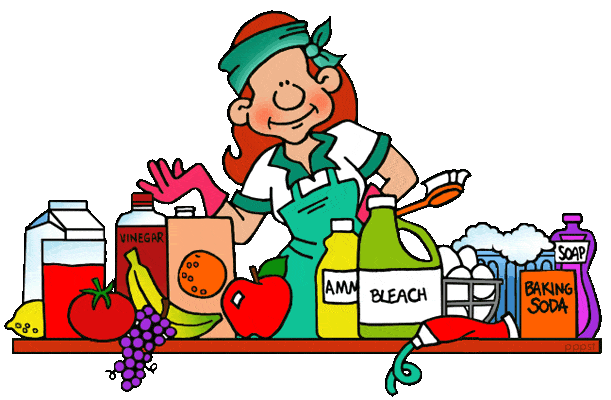
Orange
28.
You can eat or drink an acid.
a)
True
b)
False
29.
Vinegar is a base.
a)
True
b)
False
30.
Which is an acid?
a)
Turns blue litmus red
b)
Turns red litmus blue
c)
Has a pH of 11
d)
Has a pH of 7
31.
When found in food, acids are ________
a)
Sour
b)
Bitter
c)
Salty
d)
Slippery
32.
When found in food, bases are _______.
a)
Sour
b)
Bitter
c)
Salty
d)
Soggy
33.
What color does acid turn litmus paper?
a)
It turns litmus paper purple.
b)
It turns red litmus paper blue.
c)
It turns blue litmus paper blue.
d)
It turns blue litmus paper red.
34.
What color does bases turn litmus paper?
a)
It turns litmus paper purple.
b)
It turns blue litmus paper red.
c)
It turns red litmus paper blue.
d)
It turns red litmus paper re
35.
What are properties of acids?
a)
Bitter, slippery, ph above 7
b)
Sour, reacts with metals, ph below 7
c)
Sour, reacts with metals, ph above 7
d)
Bitter, ph of 7, does not react with metals
36.
Is this substance acidic, basic, or neutral?
a)
Acidic
b)
Basic
c)
Neutral
37.
pH greater than 7.
a)
Acids
b)
Bases
c)
All
38.
pH less than 7.
a)
Acids
b)
Bases
c)
All
39.
The pH scale measures
a)
the acidity of a chemical
b)
the reactivity of a chemical
c)
the boiling point of a chemical
d)
the electrical conductivity of a chemical
40.
Is this substance acidic, basic, or neutral?
a)
Acidic
b)
Basic
c)
Neutral
41.

The Acid-Base classification system that defines an acid as any compound that contains hydrogen and ionizes to produce H+ and a base as any compound that contains hydroxide and ionizes to produce OH-

a)

Bronsted-Lowry

b)

Arrhenius acid-base

c)

Lewis acid-base

d)

Monoprotic and Polyprotic Acids

42.

The Acid-Base classification system that defined any chemical species that accepts a pair of electrons as an acid, and a base is a chemical species that donates a pair of electrons.

a)

Bronsted-Lowry

b)

Arrhenius acid-base

c)

Lewis acid-base

d)

Monoprotic and Polyprotic Acids

43.

The Acid-Base classification system that defined an acid as any compound that can donate a proton (an H+ ion) to an appropriate acceptor. A base is a compound that can remove (or accept) a proton.

a)

Bronsted-Lowry

b)

Arrhenius acid-base

c)

Lewis acid-base

d)

Monoprotic and Polyprotic Acids

44.

Accepts a pair of electrons

a)

Lewis Acid

b)

Lewis Base

c)

Bronsted Lowry Acid

d)

Arrhenius Base

45.

Lewis bases are defined as

a)

H+ acceptors

b)

electron pair acceptors

c)

H+ donors

d)

electron pair donors

46.

Classify the following molecule

a)

Lewis Acid

b)

Lewis Base

47.

Classify the following molecule

a)

Lewis Acid

b)

Lewis Base

48.

True or False? All acids are Lewis acids.

a)

True

b)

False

49.

Which is the correct set of acid properties?

a)

sour taste, corrosive, change litmus from red to blue

b)

sour taste, corrosive, change litmus from blue to red

c)

sweet taste, slippery, change litmus from blue to red

d)

sour taste, slippery, change litmus from blue to red

50.

Phosphate ion is

a)

acidic

b)

basic

c)

amphoteric

d)

none of the above

51.

Hcl is which type of acid?

a)

Lewis Acid

b)

Bronsted Acid

c)

Strong Acid

d)

Weak Acid

52.

The litmus test shown in the image indicates the presence of which type of solution in the beaker?

a)

An Acid

b)

A Base

53.

Classify this acid.

a)

Arrhenius Acid

b)

Bronsted Lowry Acid

c)

Lewis Acid

54.

Classify this acid.

a)

Arrhenius Acid

b)

Bronsted Lowry Acid

c)

Lewis Acid

55.
The Acid-Base classification system that defined any chemical species that accepts a pair of electrons as a _______, and a _________ is a chemical species that donates a pair of electrons.
a)
Bronsted-Lowry
b)
Arrhenius acid-base
c)
Lewis acid-base
d)
Monoprotic and Polyprotic Acids
56.
The Acid-Base classification system that defined a __________ is any compound that can donate a proton (an H+ ion) to an appropriate acceptor. A _________ is a compound that can remove (or accept) a proton.
a)
Bronsted-Lowry
b)
Arrhenius acid-base
c)
Lewis acid-base
d)
Monoprotic and Polyprotic Acids
57.
Accepts a pair of electrons
a)
Lewis Acid
b)
Arrhenius Acid 
c)
Bronsted Lowry Acid 
d)
Arrhenius Base
58.
The following statement is true for arrhenius acid and base EXCEPT
a)
Arrhenius acid produces H+ ions
b)
Arrhenius base produces OH- ions
c)
H2O need to be present for arrhenius acid base to dissociate
d)
Hydrogen atoms that make the solution acidic
59.
The following statement is true for Bronsted Lowry Conjugate Acid Base pair EXCEPT
a)
Bronsted Lowry Acid is a proton donor
b)
Bronsted Lowry Acid is a electron pair acceptor
c)
Conjugate acid has 1 hydrogen atom more than base
d)
Conjugate base has 1 hydroxide more than base
60.
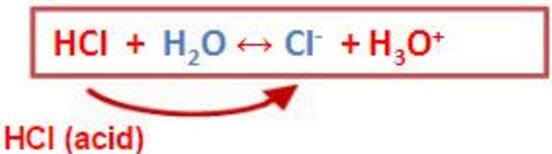
Which of the following shows the correct conjugate acid base pair?
a)
HCI (acid) / H3O+ (conjugate base)
b)
HCI (acid) / CI- (conjugate base)
c)
HCI (base) / CI- (conjugate acid)
d)
HCI (base) / H3O+ (conjugate acid)
61.
Which of the following shows the correct conjugate acid base pair?
a)
H2O (base) / H3O+ (conjugate acid)
b)
H2O (acid) / CH3COO- (conjugate base)
c)
CH3COOH (acid) / H3O+ (conjugate base)
d)
CH3COOH (base) / CH3COO- (conjugate acid)
62.
Which of the following shows the correct conjugate acid base pair?
a)
SO32-(base) / HSO3- (conjugate base)
b)
HPO42- (acid) / HSO3-(conjugate base)
c)
SO32-(acid) / HSO3- (conjugate base)
d)
HPO42- (acid) / PO43-(conjugate base)
63.
HCI dissociates completely and is irreversible. Why?
a)
HCI is a strong acid and CI- is a weak base
b)
H2O is a weak base
c)
CI- is a strong conjugate base, will not accept H+ from H3O+
d)
CI- is a weak conjugate base, will not accept H+ from H3O+
64.
The following statement is true EXCEPT
a)
Dissociation for strong acid is unidirectional
b)
Dissociation for weak acid is reversible
c)
Weak acid has a strong conjugate base
d)
Strong acid has a weak conjugate base
65.
H2O is amphiprotic, can act as acid or base. Which of the following is TRUE ?
a)
H2O is an acid because it is a proton donor
b)
H2O is an base because it is a proton acceptor
c)
H2O can gain or lose a proton, H+
d)
H2O can easily form hydronium ion, H3O+
66.
The following statement is true for Lewis acid EXCEPT
a)
Lewis acid are electrophiles
b)
Lewis acid are proton acceptor
c)
Lewis acid are electron pair acceptor
d)
Lewis acid are electron deficient
67.
The following statement is true for Lewis bases EXCEPT
a)
Lewis bases are nucleophiles
b)
Lewis bases are proton donors
c)
Lewis bases are electron pair donor
d)
Lewis bases are electron rich
68.
The following is true for Lewis acid and base EXCEPT
a)
BF3 is a Lewis acid
b)
NH3 is Lewis base
c)
BF3 is a electron pair acceptor
d)
NH3 is a lone pair acceptor
69.
The following is true for Lewis acid and base EXCEPT
a)
CO2 is a Lewis acid
b)
H2O is Lewis base
c)
CO2 is a electron pair acceptor
d)
H2O is a lone pair acceptor
70.

NaOH is:

a)

an Arrhenius base

b)

an Arrhenius acid

c)

neither an acid nor a base

d)

both an acid and a base

71.
If a solution is basic which ion will be more present?
a)
H+
b)
K+
c)
OH-
d)
H-
72.

Which of the following will conduct electricity? Select all that apply

a)

Acidic solutions

b)

Basic solutions

c)

Ionic solutions

d)

Neutral covalent solutions

73.

Which of the following ions do all acids have in common?

a)

H+

b)

Na+

c)

OH-

d)

Ca2+

74.

An Arrhenius base:

a)

donates H+

b)

accepts H+

c)

produces H+

d)

produces OH-

75.

An Arrhenius acid:

a)

donates H+ to another substance

b)

accepts H+ from another substance

c)

produces H+

d)

produces OH-

76.
 Which of the following is an acid?
a)
shampoo
b)
baking soda
c)
orange juice
d)
water
77.
A hydrogen ion, H+, is the same as a(n):
a)
neutron
b)
electron
c)
proton
d)
hydroxide ion
78.
What are the products to a neutralization reaction?
a)
H2 + Ionic Salt
b)
H2O + Ionic Salt
c)
H3O+ + Ionic Salt
d)
OH- + Ionic Salt
79.
If a solution is basic which ion will be more present?
a)
H+
b)
K+
c)
OH-
d)
H-
80.
Forms a OH- hydroxide ion
a)
Lewis Base
b)
Arrhenius Base
c)
Bronsted Lowry Base
d)
Bronsted Lowry Acid
81.

Which of the following is a hydronium ion?

a)

H+

b)

H2O

c)

OH–

d)

H3O+

82.

According to Arrhenius, what is the definition of an ACID?

a)

a substance that contains hydroxide and ionizes to produce OH-

b)

a substance that contains hydrogen and ionizes to produce H+

c)

a substance that contains hydrogen and ionizes to produce OH-

d)

a substance that contains hydroxide and ionizes to produce H+

83.

According to Bronsted-Lowry, what is the definition of an BASE?

a)

a substance that donates a hydrogen (H+) ion

b)

a substance that donates a hydroxide (OH-) ion

c)

a substance that accepts a hydrogen (H+) ion

d)

a substance that accepts a hydroxide (OH-) ion

84.

What is the conjugate base in the following reaction?

a)

HCO3-

b)

HCl

c)

H2CO3

d)

Cl-

85.
What is the conjugate acid in the following equation?
a)
PO43- 
b)
HNO3 
c)
NO3- 
d)
HPO42-
86.

Which of the following correctly identifies an Acid-Base Pair?

a)

HH4+ , OH-

b)

H2O , OH-

c)

CaCO3 ,CaCl2

d)

HNO3 , H2SO4

87.

Which of the following is an Arrhenius Acid?

a)

LiOH

b)

CO32-

c)

OH-

d)

H3PO4