wayground logo

Free Printable Worksheets

Font size

S
M
L
XL
Worksheets

Biology Spring Final 2021

Total questions: 75

Worksheet time: 43mins

Name
Class
Date
1.

Which of the following RNA sequences would be transcribed from the DNA sequence ATGCCTAGGAC?

a)

TACGGATCCTG

b)

UAGCGAUCCUG

c)

AUGCCUAGGAC

d)

UACGGAUCCU

e)

GCAUUCGAAGU

2.

What is the outcome of the following Punnett Square for albinism:

Aa x aa

a)

50% Aa, and 50% aa

b)

100% Aa

c)

100% aa

d)

25% Aa, and 75% aa

3.

Genetic combinations are best predicted by using a Punnett Square.

a)

TRUE

b)

FALSE

4.

Which of the following is TRUE about prokaryote cells?

a)

Prokaryotes make up the animal kingdom.

b)

Prokaryotes have membrane-bound organelles.

c)

Prokaryotes are bigger than eukaryotes.

d)

Prokaryotes lack a nucleus.

5.

What can be inferred about these 4 different limbs?

a)

These organisms are all the same.

b)

Their similar structures suggest a common ancestry.

c)

These organisms live in the same enviornment.

d)

These limbs perform the same functions.

6.

In natural selection, what is meant by the term "survival of the fittest?"

a)

Animals with the largest muscles will survive.

b)

Organisms that humans use for food and survival are the most important.

c)

Animals that can fight other organisms will always survive.

d)

Organisms adapted to their environment can survive and reproduce better than others.

7.

Which level of taxonomy includes the closest relationships and shared traits?

a)

Phylum

b)

Class

c)

Order

d)

Genus

8.

Which organisms would share the most characteristics?

a)

The Leopard and the Turtle

b)

The Turtle and the Tuna

c)

The Salamander and the Lamprey

d)

The Lamprey and the Lancelet

9.

The eagle and bear both feed on the same limited supply of salmon. Describe the relationship between them:

a)

Commensalism

b)

Competition

c)

Parasitism

d)

Mutualism

10.

Select the best example of a community.

a)
b)
c)
d)
11.

In a food chain:

Producers → Herbivores → Carnivores → Omnivores

a)

TRUE

b)

FALSE

12.

Which answer is true based on the image?

a)

The mouse is the producer.

b)

The snake is a primary consumer.

c)

The hawk is a tertiary consumer.

d)

The wildflowers are heterotrophs.

13.

Which answer is true based on the image?

a)

This is an insertion mutation.

b)

This is a deletion mutation.

c)

This is a substitution mutation.

d)

This is a multiplication mutation.

14.

Which trophic level has the greatest total amount of energy to transfer to the next level?

a)

Producers

b)

Primary Consumers

c)

Secondary Consumers

d)

Tertiary Consumers

e)

Carnivores

15.

Some birds live in close association with horses. These birds feed on insects that are parasites to the horses. Which type of relationship between horses and these birds does this illustrate?

a)

Commensalism

b)

Mutualism

c)

Parasitism

d)

Predation

16.
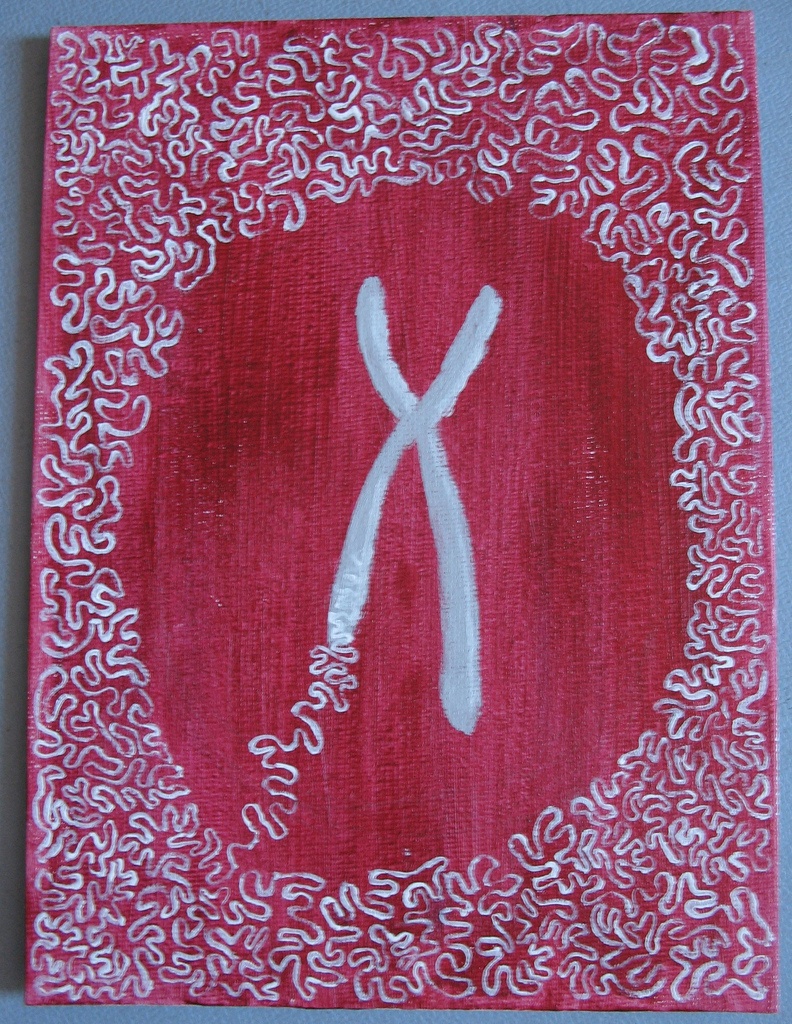
One of the threadlike structures in the nucleus of a cell that contain directions for the cell's activities
a)
variation
b)
pedigree
c)
DNA
d)
chromosome
17.
Deoxyribonucleic acid, a long, complex molecule that controls heredity
a)
inherited trait
b)
chromosome
c)
DNA
d)
pedigree
18.
Organisms that have inherited two different forms of the same trait, one from each parent
a)
purebred
b)
hybrid
c)
dominant trait
d)
recessive trait
19.
The hidden form of an inherited trait
a)
dominant trait
b)
recessive trait
c)
purebred
d)
hybrid
20.
The form of an inherited trait that masks the other form of the same trait.
a)
dominant trait
b)
recessive trait
c)
purebred
d)
hybrid
21.
TT,tt,PP,pp,SS,ss are examples of alleles that are?
a)
homozygous
b)
heterozygous
c)
different
d)
homologous 
22.
The exact genetic makeup of an organism, such as RR, Tt, PP is its?
a)
phenotype
b)
dominance
c)
genotype
d)
trait
23.
Y for yellow body is dominant over y for blue body.  What alleles would produce yellow bodies?
a)
YY,yy
b)
Yy,yy
c)
YY only
d)
YY,Yy
24.
"The Great White Shark was 20 feet in length.  Phenotype or Genotype?
a)
phenotype
b)
genotype
25.
If "T" is the allele for tall and "t" is the allele for short, then Tt would produce?
a)
tall
b)
short
c)
medium
d)
not enough info
26.

What is the probability of bb offspring?

a)

1/4

b)

2/4

c)

0/4

d)

4/4

27.

What allele combination should go in the missing box?

a)

AA

b)

Aa

c)

aa

d)

none of these

28.
G = green, g = yellow
The genotype for a yellow plant is...
a)
GG
b)
Gg
c)
gg
d)
all of the choices result in yellow
29.
Where, in the eukaryotic cell, is DNA located?
a)
ribosomes
b)
nucleus
c)
E.R.
d)
cytoplasm
30.
Term for an organism that display two dominant phenotypes at the same time
a)
codominance
b)
incomplete dominance
c)
multiple alleles
d)
linked genes
31.
Sex cells are produced through the process of
a)
mitosis
b)
cytokinesis
c)
binary fission
d)
meiosis
32.
What does heterozygous mean?
a)
An organism that has the same genes for a trait (TT or tt)
b)
An organism that has different genes for a trait (Tt)
c)
When neither gene is fully dominant; offspring is a mixture of both
d)
the different forms of a trait (hair color--> brown, blonde, red
33.
Incomplete dominance means that the traits are
a)
expressed equally
b)
dominant
c)
recessive
d)
blended
34.
Which of the following is homozygous dominant?
a)
Yy
b)
Y
c)
yy
d)
YY
35.

The different forms of a gene

a)

alleles

b)

atoms

c)

proteins

d)

wheels

36.

How many offspring will show the recessive trait?

a)

0%

b)

25%

c)

50%

d)

75%

37.
What gamete possibilities could come from this parent's genotype?
a)
AB, AB, aB, aB
b)
Ab, AB, Ab, ab
c)
Ab, Ab, Ab, Ab
d)
AB, aB, ab, aB
38.
What goes in box 1
a)
AABb
b)
AABB
c)
aabb
d)
AaBb
39.
What goes in box 3
a)
Aabb
b)
AABB
c)
AAbb
d)
aaBb
40.
parent 1: GgBB
parent 2: ggBb
Find the gametes for parent 1.
a)
GB, GB, gB, gB
b)
gB, gb, gB, gb
c)
Gg, BB, GB, GB
d)
gg, Bb, gB, gb
41.
Assume dad's gametes are on top, what is his genotype?
a)
AAPP
b)
AaPp
c)
aaPP
d)
Aapp
42.

Which organelle is the location where protein is made?

a)

Ribosome

b)

Nucleus

c)

Cytoplasm

d)

Nucleotide

43.

During transcription, this type of ribonucleic acid is responsible for copying the DNA and brining it out of the nucleus.

a)

tRNA

b)

mRNA

c)

rRNA

d)

dRNA

44.

When these bond together, they form a protein

a)

Amino Acids

b)

Peptide Bonds

c)

Ribose

d)

Nucleotides

45.

mRNA occurs during this process

a)

Translation

b)

Transcription

c)

Replication

d)

Delivery

46.

Which of the following is the complementary mRNA sequence to this DNA strand: AACTGAA

a)

UUGACUU

b)

TTGACTT

c)

AACTGAA

d)

AACUGAA

47.

Which of the following is the tRNA that will be used to decode to this DNA strand: AACTGA

a)

AAC and TGA

b)

TTG and ACT

c)

UUG and ACU

d)

AAC and UGA

48.
The central dogma of biology states that information flows in one direction from 
a)
nuclei to RNA to cytoplasm
b)
ribosomes to proteins to DNA
c)
genes to nuclei to ribosomes
d)
DNA to RNA to proteins
49.
Which of the following is the site of transcription?
a)
vacuole
b)
lysosome
c)
nucleus
d)
ribosome
50.
Which of the following is the site of translation?
a)
vacuole
b)
lysosome
c)
nucleus
d)
ribosome
51.

What type of mutation is shown in the diagram?

a)

Point mutation - missense

b)

Frameshift Mutation - deletion

c)

Frameshift Mutation - addition

d)

Point mutation - nonsense

52.
What type of gene mutation has occurred here? 
T-G-A-C-C-A
T-G-A-C-C-A-A
a)
Base Substitution
b)
Base Deletion
c)
Base Insertion
d)
Frameshift 
53.
DNA molecule segment is : TTACGCAAG
The mutated DNA segment is TTACGCAAC. This is an example of ___ mutation.
a)
Base Substitution
b)
Base Insertion
c)
Base Inversion
d)
Translocation
54.

Substitution

a)

A

b)

B

c)

C

55.

Deletion

a)

A

b)

B

c)

C

56.

Insertion

a)

A

b)

B

c)

C

57.
The male sex cell is called
a)
egg
b)
zygote
c)
sperm
d)
mitosis
58.
Which process and type of resulting cells are represented?
a)
mitosis, gametes
b)
mitosis, body cells
c)
meiosis, gametes
d)
meiosis, body cells
59.
Females have ____ and males have _____ chromosomes.
a)
XX, XY
b)
XY, XX
c)
XX, XX
d)
XY, XY
60.

CROSSING OVER INCREASES

a)

LIFE SPAN

b)

GENETIC VARIATION

c)

THE NUMBER OF OFF-SPRING

d)

ALL ARE TRUE

61.

Based on the karyotype, what is the sex of this baby?

a)

Male

b)

Female

62.

What process creates reproductive cells used in sexual production?

a)

meiosis

b)

mitosis

c)

cellular respiration

d)

photosynthesis

63.

Individuals undergo evolution.

a)

True

b)

False

64.
Genetic drift is change in the allele frequency of a population due to...
a)
random chance
b)
natural selection
c)
non-random mating (sexual selection)
d)
artificial selection
65.

The pelvic bone of whales is not needed for movement within the water. This is an example of a(n) ______________ structure.

a)

vestigial

b)

analogous

c)

homologous

66.

Many different groups of organisms have wings, even though they do not share a recent common ancestor. This is because they evolved in environments with similar selective pressures. Wings are an example of a(n) ______________ structure.

a)

vestigial

b)

analogous

c)

homologous

67.

A flood drowns a large portion of an insect population, with only a few random individuals surviving. This is an example of ______.

a)

genetic drift

b)

adaptation

c)

natural selection

68.
What is the term for a feature that allows an organism to survive better in its environment?
a)
variation
b)
adaptation
c)
homologous structure
d)
vestigial structure
69.
All the individuals of a species that live in a particular area are called a
a)
variation
b)
population
c)
fossil
d)
group
70.
Study of embryos of various organisms to show a common ancestor because of similarities in development
a)
natural selection
b)
embryology
c)
speciation
d)
evolution
71.
What process is being shown in this image?
a)
Variation
b)
Natural Selection
c)
Selective Breeding
d)
Homeostasis
72.
I am single stranded.
a)
DNA
b)
RNA
c)
Both DNA and RNA
73.
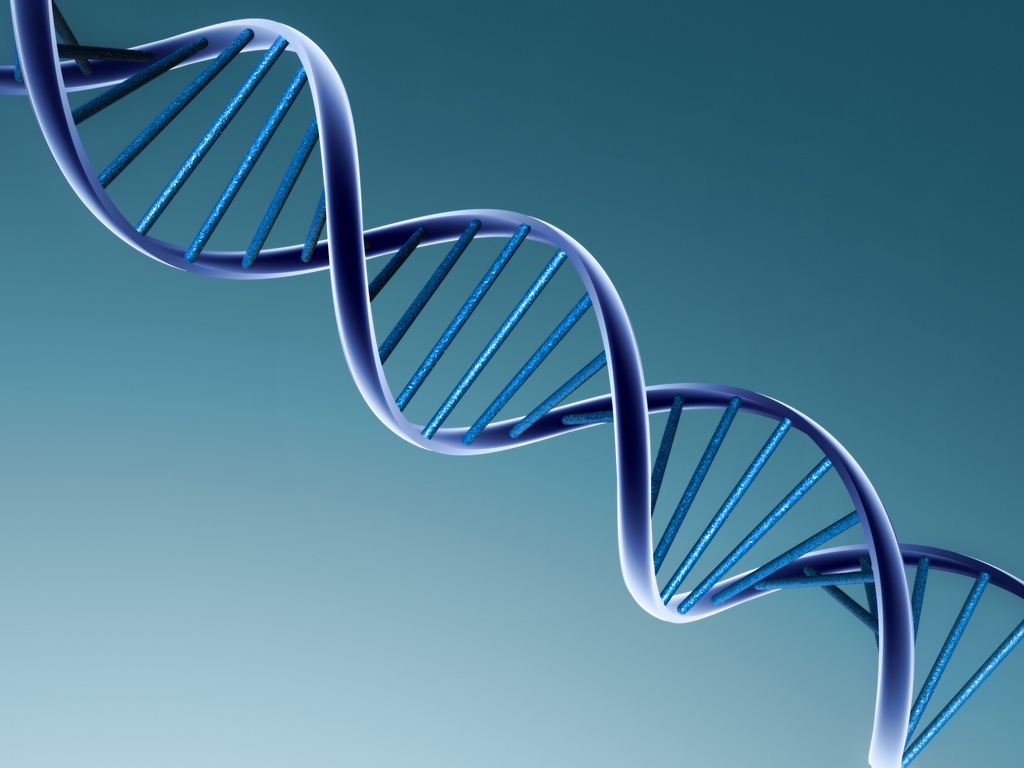
I am arranged as a double helix or "twisted ladder."
a)
Both DNA and RNA
b)
DNA
c)
RNA
74.
What does this picture represent?
a)
amino acid
b)
base pairing
c)
nucleotide
d)
the DNA molecule
75.
the process of making a copy of DNA
a)
transcription
b)
double helix
c)
DNA replication
d)
replication fork