
 Worksheets
KMT, Gas Laws, Solutions
Total questions: 90
Worksheet time: 2hrs 49mins




Identify the solvent


Which of the following actions will NOT
increase the rate of dissolution
(dissolving)?
Stirring the solution
Decreasing the temperature
Increasing the surface area of the
solute
Increasing the temperature
You are given a small beaker of solution at room temp. You add a bit of solute to the solution and it dissolves. The solution was:
saturated
unsaturated
concentrated
warm
How do you know when you have a saturated solution?
You don't see anymore material in the solution. It has dissolved.
The material dissolves and no more will dissolve because you see it collect at the bottom.
The solution is bubbling and cloudy.
The solution is clear and there is nothing at the bottom.


solution. Which amount would you need to change to solve for molarity?

KMnO4?" What is the correct formula set up to solve for this problem?

solution?

mixture has a temperature of 20°C. About how many grams of the sodium nitrate dissolved?

the best job of communicating the general features of the graph?

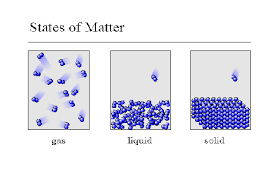


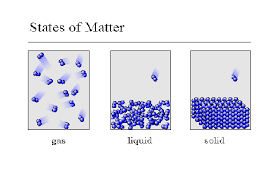


These properties describe a ___.
solid
liquid
gas

These properties describe a ___.
solid
liquid
gas

These properties describe a ___.
solid
liquid
gas
The force of attraction between molecules is ___.
intermolecular forces
bridge forces
chemical bonds
Which of the following is not true about the volume of a gas?
Most of the volume is empty space.
The volume is occupied by particles in continuous, rapid, random motion.
The volume is about 10 times greater than that occupied by an equal number of particles in the liquid or solid state.
Generally, the volume can be easily changed
A hypothetical gas that perfectly fits all the assumptions of the kinetic molecular theory is known as
real gas
ideal gas
imaginary gas
perfect gas
When any kind of gas such, as nitrogen or carbon dioxide, is heated, it
sublimates.
evaporates
explodes
expands
Which particles of matter in this phase easily diffuse?
solids
liquids
gases
Gas pressure is caused by
gas molecules colliding with surfaces
gas molecules hitting other gas molecule
gas molecules condensing to a liquid
barometers

Which of the following correctly describes the figure?
Flask 1 contains the most molecules
Flask 3 contains the most molecules
Flask 2 contains the most molecules
Flask 4 contains the most molecules

Which of the following correctly describes the figure?
Flask 1 contains the least pressure
Flask 3 contains the least pressure
Flask 2 contains the least pressure
Flask 4 contains the least pressure

Which of the following is true?
Since all flask have same amount of gas, flask 1 has the least pressure
Since all flask have same amount of gas, flask 3 has the least pressure
Since all flask have same amount of gas, flask 2 has the least pressure
Since all flask have same amount of gas, flask 4 has the least pressure

Which of the following is true about KMT?
Gas particles are elastic and do not attract each other.
Energy is not lost when gas particles collide with each other or with the walls of the container.
The kinetic energy of gas is dependent on temperature
All of the above.

Which of the lines on the figure is the best representation of the relationship between the volume of a gas and its pressure, other factors remaining constant?
a
b
c
d
e
Matter is made up of particles that are constantly moving.
True
False


Which states of matter are fluid?
gases and liquids
liquids and solids
gases only
liquids only
According to the Kinetic Molecular Theory a liquid's (SELECT ALL THAT APPLY)
particles are held close together by intermolecular forces
particles are in constant motion
particles are vibrating in place and closely packed
particles are not moving

Which of the following is the most accurate description of the changes in energy that takes place when ice melts?
(think about phases changes)
The ice absorbs energy and the process is exothermic.
The ice releases energy and the process is exothermic.
The ice releases energy and the process is endothermic.
The ice absorbs energy and the process is endothermic.
Which of following statements describe what happens to the gas molecules during this process of evaporation?
The molecules remain as a gas but they speed up, and the amount of space between the molecules increases.
The molecules slow down, and the attraction that exists between the molecules pulls the molecules close enough together to change them from a liquid to a gas
The molecules remain as a gas but they slow down, and the attraction that exists between the molecules pulls the molecules closer together.
The molecules speed up, and the amount of space between the molecules increases enough to change them from a liquid to a gas.
Which states of matter are fluid?
gases and liquids
liquids and solids
gases only
liquids only
The kinetic theory states
Particles won't move if you don't apply energy to it.
Particles only move in liquids and gases.
Particles are always in motion.
At the same temperature the object that has the most mass heats quicker.

