Wayground logo

Free Printable Worksheets

Font size

S
M
L
XL
Worksheets

Chem I Spring 2021 Semester review

Total questions: 77

Worksheet time: 2hrs 14mins

Name
Class
Date
1.

Which of the following elements has 5 valence electrons?

a)

boron

b)

phosphorus

c)

magnesium

d)

chlorine

2.

The lowest energy state of an atom

a)

excited state

b)

ground state

c)

frequency

d)

wavelength

3.

1. What atom matches this electron configuration?

1s2 2s2 2p6 3s23p4

a)

sodium

b)

sulfur

c)

silicon

d)

potassium

4.

What is the correct electron configuration for oxygen?

a)

1s22s22p63s23p64s2

b)

1s22s22p63s23p4

c)

1s12s22p5

d)

1s22s22p4

5.

What element is depicted in the orbital diagram above?

a)

scandium

b)

chlorine

c)

bismuth

d)

bromine

6.

Which rule says orbitals are filled from lowest energy to highest?

a)

Aufbau's principle

b)

Hund's principle

c)

Pauli exclusion principle

d)

Law of conservation of mass

7.
All orbitals of equal energy are occupied by one electron before any single orbital is occupied by a second electron.
a)
Aufbau principle
b)
Pauli exclusion principle
c)
Hund’s rule
d)
Core Notation
8.

An orbital can hold at most 2 electrons, and when paired in the same orbital electrons spin in opposite directions.

a)

Aufbau principle

b)

Pauli exclusion principle

c)

Hund’s rule

d)

Noble gas notation

9.
Which guideline, Hund’s rule or the Pauli exclusion principle, is violated in the following orbital diagrams?
a)
Hund's
b)
Aufbau's
c)
Pauli's Exclusive
10.
Which guideline, Hund’s rule or the Pauli exclusion principle, is violated in the following orbital diagrams?
a)
Aufbau's
b)
Hund's
c)
Pauli exclusive
11.
Looking at atoms in the same group/family, what factor affects Coulombic attraction?
a)
number of protons
b)
distance from the nucleus
12.
Ionization energy is the...
a)
energy needed to remove the outermost electron.
b)
ability of an atom to attract electrons from another atom.
13.
Electronegativity is the...
a)
energy needed to remove the outermost electron.
b)
ability of an atom to attract electrons from another atom.
14.
Which element has the smaller atomic radius: potassium (K) or bromine (Br)?
a)
potassium (K)
b)
bromine (Br)
15.
Which element has the greatest ionization energy: Aluminum (Al)    or    Chlorine (Cl)?
a)
Aluminum (Al)
b)
Chlorine (Cl)
16.
Which element has the greatest electronegativity: Nitrogen (N) or Arsenic (As)?
a)
Nitrogen (N)
b)
Arsenic (As)
17.
The Periodic Table of the Elements is useful for revealing patterns and trends in the elements. Which statement accurately describes a pattern in the size of atomic radii in the Periodic Table of the Elements?
a)
Atomic radii decrease from left to right across a period and decrease from top to bottom in a group.
b)
Atomic radii increase from left to right across a period and increase from top to bottom in a group.
c)
Atomic radii decrease from left to right across a period and increase from top to bottom in a group.
d)
Atomic radii increase from left to right across a period and decrease from top to bottom in a group.
18.

Typically, atoms are more stable when they are

a)

bonded together

b)

apart from each other

19.

Why do atoms bond?

a)

They typically don't bond

b)

To add or take away energy levels

c)

To have a full valance shell.

d)

To have a full inner shell

20.

Ionic bonding is between a

a)

nonmetal and nonmetal

b)

metal and nonmetal

c)

metal and metal

d)

Depends on the situation

21.

Predict the bond between Mg and Cl

a)

covalent

b)

ionic

c)

metallic

d)

none of the above

22.

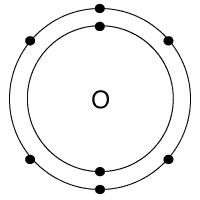
Which is the correct Lewis Structure for oxygen?

a)
b)
c)
d)
23.

What is the chemical formula for Lithium Nitride?

a)

Li3N

b)

LiN3

c)

NLi3

d)

N3Li

24.

What is the ionic formula for a bond between Calcium and Phosphorus?

a)

Ca2P3

b)

Ca3P2

c)

Ca2P5

d)

P5Ca2

25.

What category of element usually forms a positive ion?

a)

Metals

b)

Nonmetals

c)

metalloids

d)

Noble gases

26.

Which category of elements usually form negative ions?

a)

metals

b)

nonmetals

c)

metalloids

d)

noble gases

27.
In chemical compounds, covalent bonds form when
a)
the electronegativity difference between two atoms is very large.
b)
electrons are completely transferred between two metals.
c)
pairs of electrons are shared between two nonmetal atoms.
d)
two nonmetal atoms are attracted to each other by opposite charges.
28.
The number of _____ is most important in determining how an atoms will bond. 
a)
Neutrons
b)
Protons
c)
Valence Electrons
d)
Electron sin the innermost shell
29.
What happens when an atom loses an electron?
a)
It becomes Negatively Charged
b)
It remains neutral because the proton also leaves.
c)
It becomes Positively Charged
d)
It stays the same.
30.
High Melting & Boiling Points
a)
Ionic
b)
Covalent
31.
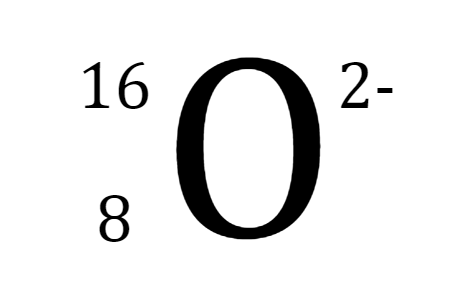
If an oxygen atom has 8 protons (+) and 10 electrons (-), what is it's charge?
a)
O10-
b)
O8+
c)
O2-
d)
O10+
32.
Which of the following gives the correct chemical formula for the compound Dinitrogen Monoxide?
a)
NO
b)
N2O
c)
N2O2
d)
O2N2
33.
What is the correct chemical name for the ionic compound: Fe3N2
a)
Iron nitride
b)
Iron (III) nitride
c)
Iron (II) nitride
d)
TriIron dinitride
34.
What is the correct chemical name for the molecular compound:  CS2
a)
Carbon Sulfide
b)
Carbon diSulfide
c)
diCarbide diSulfide
d)
Carbon (II) Sulfide
35.
What is the basis of a metallic bond?
a)
the attraction of neutral metal atoms.
b)
the attraction between protons and neutrons.
c)
the attraction between positive metal ions and interlocking electrons.
d)
the attraction between positive metal ions and free floating electrons.
36.
At room temperature, most metals are
a)
liquid
b)
solid
c)
gas
d)
an alloy
37.
What does malleable mean?
a)
able to be shaped
b)
will break easily
c)
can be used for wire
d)
is shiny
38.
Which of these is NOT an alloy?
a)
bronze
b)
copper
c)
brass
d)
stainless steel
39.
Why do metals conduct
a)
They are shiny
b)
The electrons are held tightly within the lattice
c)
The electrons are delocalised and able to move
d)
The electrons are shared between two metal ions
40.
What is the ability of a substance to allow heat, sound, or electricity to flow through it?
a)
Malleability
b)
Ductility
c)
Solubility
d)
Conductivity
41.

Which of these are considered properties of metals? (choose ALL that apply)

a)

brittleness

b)

low melting point

c)

luster (shininess)

d)

malleability

e)

ductility

42.
Which of the following is the correct Lewis dot structure for the molecule fluorine (F2)?
a)
A
b)
B
c)
C
d)
D
43.
How many electrons can be used in the Lewis Structure for : NO3 -
a)
23
b)
20
c)
18
d)
24
44.

What is the correct Lewis structure for NH3?

a)
b)
c)
d)
45.

Which of the following statements regarding the mole is INCORRECT?

a)

A mole is a unit of quantity equal to 6.02 x 10²³ particles.

b)

The number of particles in a mole is known as Avogadro’s number.

c)

A mole of particles of an element is numerically equal to the atomic mass of the element.

d)

none of the above

46.

What is the molar mass of PbSO4?

a)

303.27 g/mol

b)

255.27 g/mol

c)

163.87 g/mol

d)

372.27 g/mol

47.

How many formula units are in 2.5 moles of NaCl?

a)

1.5 x1024 formula units

b)

1.5 formula units

c)

4.2 formula units

d)

4.2 x10⁻²⁴ molecules

48.

Shivani measures out 6.0 moles of epsom salt (MgSO4) to put in her bath. How many grams of MgSO4 went in the bath?

a)

3.6 x 1024 g

b)

720 g

c)

0.050 g

d)

340 g

49.

Which of the following dimensional analysis setups will correctly convert 27.76 g of Li to atoms of Li?

a)

A

b)

B

c)

C

d)

D

50.

Calculate the number of atoms in 0.0340 g Zn.

a)

5.20 x 10⁻⁴ atoms Zn

b)

3.13 x 10²³ atoms Zn

c)

3.13 x 10²⁰ atoms Zn

d)

2.05 x 10²² atoms Zn

51.

Which of the following dimensional analysis setups will correctly convert 4.00x10²³atoms of cobalt to moles of cobalt? How many moles of colbalt are there?

a)

setup B : 0.664 mol Co

b)

setup A: 2.41x1047mol Co

c)

setup A : 0.664 mol Co

d)

setup B: 2.41x1047mol Co

52.
Whats the empirical formula of a molecule containing 18.7% of Lithium, 16.3% of Carbon and 65.0% of oxygen?
a)
CO2Li3
b)
Li2CO3
c)
Li3CO2
d)
LiCO5
53.

C2H6O

Which is the correct empirical formula

a)

CHO

b)

C2H6O

c)

C4H14O2

d)

None

54.
What is the molecular formula for a compound with the empirical formula: K2SO4 and a molecular mass of 696g.
a)
K2SO4 
b)
K8SO16
c)
K8S4O8 
d)
K8S4O16 
55.
What is the formula for phosphorous acid?
a)
H3PO4
b)
H2PO4
c)
H3P
d)
H3PO3
56.
Find the percentage composition of  Mg in Mg3(PO4)2.
   

a)
27.75% Mg
b)
23.57% Mg
c)
48.68% Mg
d)
13.45% Mg
57.
A 15.67 g sample of a hydrate of magnesium carbonate was heated to drive off the water. The mass was reduced to 7.58 g. What is the formula of the hydrate?
a)
MgCO3 · 5H2O
b)
MgCO3 · 4H2O
c)
MgCO3 · 6H2O
d)
MgCO3 · 1H2O
58.
A hydrate of magnesium chloride is present and the following data is collected:
mass of crucible = 22.130 grams
mass of crucible + hydrate = 25.290 grams
mass of crucible and contents after heating = 23.491 grams
What is the complete formula of this hydrate?
a)
MgCl2 · 7H2O
b)
MgCl2 · 11H2O
c)
MgCl2 · 6H2O
d)
MgCl2 · 13H2O
59.

What coefficient should go in front of iron to balance the following eqn.?

iron + sulfur -> iron(II) sulfide

a)

1

b)

2

c)

3

d)

4

60.

If you mix any two substances together, a reaction always happens

a)

True

b)

False

61.

Any reaction with oxygen as a reactant is combustion.

a)

True

b)

False

62.

The mass of products is always equal to the mass of the reactants

a)

True

b)

False

63.

Air and oxygen are the same gas

a)

True

b)

False

64.
What is the left part of a chemical equation called?
2H2 + O2 --> 2H2O
a)
Reactants
b)
Products 
c)
Yields 
d)
Chemical Equation 
65.
Which of the following reactions is balanced?
a)
2CH4 + O2 -> CO2 + H2O
b)
CH4 + 2O2 -> CO2 + H2O
c)
CH4 + 2O2 -> CO2 + 2H2O
d)
None of the chemical equations are balanced.
66.
Identify this type of reaction,
Cl2 + 2KI -->  I2 + 2KCl
a)
Synthesis
b)
Single displacement
c)
Double displacement
d)
Decomposition
67.
2 RbNO3 + BeF2 --> Be(NO3)2 + 2 RbF
a)
single displacement
b)
double displacment
c)
decomposition
d)
synthesis
68.
Which of the following is an example of synthesis?
a)
Na + Br2 --> NaBr
b)
KClO3 --> KCl + O2
c)
HgO + Cl2-->HgCl + O2
d)
Cl2 + NaBr --> NaCl + Br2
69.
Which of the following is a sign that a chemical reaction has occurred?
a)
change in shape
b)
melting
c)
formation of a gas
d)
dissolving
70.
A white baking soda solution was combined with white calcium chloride. Once combined the temperature increased, the substances bubbled, and were white in color. What indicators of a chemical change were shown?
a)
Temperature increase
b)
Color change
c)
Bubbling/fizzing
d)
Temperature increase and bubbling/fizzing
71.

Based on the activity series, what are the predicted products of this reaction?

Br2 (l) + KI (aq) →

a)

KBr + I2

b)

KBr + I

c)

KBr2 + I

d)

No Reaction

72.

Based on the activity series, will this reaction occur?

Au (s) + HCl (l) →

a)

AuCl + H

b)

No Reaction

c)

AuCl + H2

d)

Au2Cl + H2

73.

A mixture contains cobalt, copper, and tin . This mixture is mixed with nickel nitrate. Which metals, if any, will react?

a)

Cobalt only

b)

Copper only

c)

Tin only

d)

All 3

74.
What is a precipitate?
a)
A solid formed from a single replacement reaction
b)
An aqueous compound formed from single replacement reaction 
c)
An aqueous compound formed from double replacement reaction
d)
A solid formed from a double replacement reaction
75.

Predict the products of this reaction: Al2(SO4)3 + Ca3(PO4)2 --->

a)

This reaction will not occur

b)

Al(PO4) + Ca(SO4)

c)

Al2Ca3 + (PO4)2(SO4)3

d)

Al2(SO4)3 + Ca3(SO4)3

76.

Identify the spectator ions in this reaction?

CuCl2(aq) + NaOH(aq) → Cu(OH)2(s) + NaCl(aq)

a)

Cu2+ and OH1-

b)

Na2+ and Cl2-

c)

Na1+ and Cl1-

d)

Na1+ and OH1-

77.

What is a Net Ionic Equation?

a)

a balanced chemical equation in which all the reactants and products are given by their chemical formulae.

b)

a chemical equation that shows all soluble species broken into their respective ions.

c)

a chemical equation showing only the species which are actively involved in the reaction.