Wayground logo

Free Printable Worksheets

Font size

S
M
L
XL
Worksheets

Chemistry Unit Review

Total questions: 105

Worksheet time: 2hrs 45mins

Name
Class
Date
1.

Subatomic particles with a negative charge

a)

Electrons

b)

Neutrons

c)

Protons

d)

Quarks

2.
Subatomic particles with a positive charge
a)
neutrons
b)
atomic mass
c)
protons
d)
isotopes
3.
Measure mainly of the nuclear particles: protons + neutrons
a)
Subatomic Particles
b)
Atomic Number
c)
Atomic Mass
d)
Gluons
4.
Subatomic particles that are neutral in charge
a)
Neutrons
b)
Protons
c)
Nucleus 
d)
Electrons
5.
Where electrons are likely to be found as they travel around the nucleus
a)
Nucleus
b)
Electron Cloud
c)
Within a Proton
d)
Within a Neutron
6.
A tiny but very dense, positively charged portion of the atom that holds most of the atomic mass
a)
Electron Shells
b)
Orbitals
c)
Electron Cloud
d)
Nucleus
7.
Arrangement of elements organized by atomic number
a)
Electron Cloud 
b)
Periodic Table 
c)
Electron Configuration
d)
None of these
8.

Calculation used to find the number of neutrons in an atom

a)

Mass Number- Atomic Number

b)

Atomic Number - Mass Number

c)

Mass Number - Electrons

d)

protons = electrons = neutrons

9.
How many protons does an aluminium atom have? (Use the image to help you)
a)
27
b)
14
c)
40
d)
13
10.
How many neutrons does a sodium atom have? (Use the image to help you)
a)
23
b)
11
c)
12
d)
34
11.
Atoms of the same element must always have the same number of _________
a)
electrons
b)
neutrons
c)
isotopes
d)
protons
12.
The _________ of an element equals the number of protons in an atom of that element
a)
mass number
b)
atomic weight
c)
atomic number
d)
isotopes
13.

The __________ of an atom is the sum of the protons and neutrons in the nucleus of that atom.

a)

mass number

b)

atomic number

c)

ionic charge

d)

isotope weight

14.
compounds are chemically bounded together 
a)
False
b)
true
c)
I don't know?
15.
Can an element be broken down into a simpler substance 
a)
yes 
b)
No
16.
Are there any compounds on the periodic table 
a)
yes there are many 
b)
no because only elements are on the periodic table
c)
I think they are?
17.
Contains only one kind of atom.
a)
Element
b)
Compund
c)
Mixture
18.
A mixture that appears to be evenly mixed throughout:
a)
an atom
b)
a compound
c)
a homogeneous mixture
d)
a heterogeneous mixture
19.
A pure substance...
a)
is an element or a compound
b)
is an element or a mixture
c)
is a compound or a mixture
d)
is a mixture
20.
 A substance that cannot be broken down into any other substance by ordinarychemical means is called —
a)
molecule
b)
mixture
c)
element
d)
compound
21.
Two or more physically combined substances form —
a)
a compoud
b)
an acid
c)
an element
d)
a mixture
22.
NaHCO3 is an example of —
a)
an abbreviation
b)
a compound
c)
a mixture
d)
an element
23.
What is an example of a mixture?
a)
Table salt
b)
Salt water
c)
Oxygen
d)
Air
24.
A substance made of only one type of atom is called —
a)
an element
b)
a mixture
c)
a compound
d)
a salt
25.
Which of the following is a way in which elements and compounds are similar?
a)
Elements and compounds are pure substances.
b)
Elements and compounds are both made up of different kinds of atoms.
c)
Elements and compounds can both be broken down by physical means.
d)
Elements and compounds are listed on the periodic table.
26.
Glucose (C6H12O6) is an example of a...
a)
Element
b)
Compound
c)
Mixture
27.
Jello is an example of a...
a)
Element
b)
Compound
c)
Mixture
28.
_____ small particles that make up most types of matter on Earth.
a)
compounds
b)
atoms
c)
mixtures
d)
elements
29.
Salt has a chemical formula of NaCl.  Salt is a...
a)
Compound
b)
Element
c)
Mixture
d)
None of the Above
30.
a)
2
b)
3
c)
5
31.
a)
2
b)
8
c)
3
d)
13
32.
a)
7
b)
8
c)
9
d)
10
33.
Valence electrons are the...
a)
Innermost electrons
b)
Middle electrons
c)
Outermost electrons
d)
Any electrons
34.

What are valence electrons?

a)

The total number of electrons in an atom

b)

The number of electrons in the outermost shell

c)

The number of electrons in the second shell

d)

The number of protons in the outermost shell

35.
How many valence electrons are in an atom of Ar?
a)
2
b)
8
c)
4
d)
1
36.
How many valence electrons are found in atoms of group 1?
a)
7
b)
6
c)
4
d)
1
37.

USE THE PERIODIC TABLE

How many valence electrons does Phosphorus have?

a)

31

b)

5

c)

15

d)

4

38.
Which of these is a property of metals?
a)
It's malleable
b)
It can't conduct electricity
c)
They are used in food
d)
It's very brittle
39.
Which of these grouping of elements could have the characteristic of brittle?
a)
Metal
b)
Nonmetal
40.
Which of the following is a good conductor of heat?
a)
Metal
b)
Nonmetal
c)
Metalloid
41.
Some characteristics of a metal are that it is malleable and ductile.
a)
TRUE
b)
FALSE
42.
If a material can easily be drawn into the shape of a wire, it is
a)
Ductile
b)
Magnetic
c)
Malleable
d)
Reactive
43.
Iron is a good conductor, malleable and magnetic. What type of element is Iron? 
a)
Metal
b)
Nonmetal
c)
Metalloid
d)
Pretty
44.
Which elements are found on the left to middle of The Periodic Table? 
a)
Metals
b)
Nonmetals
c)
Metalloids
d)
Candles
45.
Silicon is a semiconductor and has properties of both metals and nonmetals. What type of element is Silicon? 
a)
Metal
b)
Nonmetal
c)
Metalloid
d)
Pretty
46.
Which elements are found on the right side of The Periodic Table?
a)
Metals
b)
Nonmetals
c)
Metalloids
d)
Water
47.
Which element is a metalloid?
a)
Titanium
b)
Selenium
c)
Potassium
d)
Polonium
48.
a)

Metal

b)

Nonmetal

c)

Metalloid

49.
a)

Metal

b)

Nonmetal

c)

Metalloid

50.

Atoms of elements that are in the same group have the same number of

a)

protons.

b)

neutrons.

c)

valence electrons.

d)

protons and neutrons.

51.

Which of the following elements is an alkali metal?

a)

calcium

b)

magnesium

c)

mercury

d)

sodium

52.

Each column of the periodic table is

a)

an element.

b)

a group.

c)

an isotope.

d)

a period.

53.

Most elements are

a)

metals.

b)

nonmetals.

c)

metalloids.

d)

semiconductors.

54.

Elements in an elemental family have similar

a)

atomic symbols.

b)

atomic sizes.

c)

atomic weights.

d)

chemical properties.

55.

Which statement about the alkali metals is correct?

a)

They are located in the left-most column of the periodic table.

b)

They are extremely nonreactive.

c)

They are usually gases.

d)

They form negative ions with a 1- charge.

56.

Which group is very stable due to the fact that they have a full outermost energy level?

a)

alkali metals

b)

halogens

c)

alkaline-earth metals

d)

noble gases

57.

Which of the following is a property of group 18 elements?

a)

malleable

b)

brittleness

c)

high electrical conductivity

d)

unlikely to react with other elements

58.

Based on its location on the periodic table, which of these elements most likely has physical and chemical properties most similar to boron (B)?

a)

magnesium (Mg)

b)

aluminum (Al)

c)

neon (Ne)

d)

chlorine (Cl)

59.
Name group 2 on the periodic table.
a)
alkali metals
b)
alkaline earth metals
c)
noble gases
d)
transition metals
60.
Name group 18 on the periodic table.
a)
alkali metals
b)
alkaline earth metals
c)
transition metals
d)
noble gases
61.
Name groups 3 - 12 on the periodic table.
a)
noble gases
b)
halogens
c)
metalloids
d)
transition metals
62.
A horizontal row of elements in the periodic table.
a)
column
b)
group
c)
period
63.
metal
a)
an element that conducts heat and electricity well and requires high temperatures to melt
b)
an element that has a mixture of properties in between metals and nonmetals
c)
an element that does not conduct heat or electricity well and melts at lower temperatures
d)
the smallest component of an element; consists of protons, neutrons, and electrons
e)
a subatomic particle with a positive charge; found in the nucleus of an atom
64.
metalloid
a)
an element that has a mixture of properties in between metals and nonmetals
b)
an element that does not conduct heat or electricity well and melts at lower temperatures
c)
the smallest component of an element; consists of protons, neutrons, and electrons
d)
a subatomic particle with a positive charge; found in the nucleus of an atom
e)
an element that conducts heat and electricity well and requires high temperatures to melt
65.

How many periods does the Modern Periodic Table has?

a)

7

b)

8

c)

10

d)

18

66.

How many groups does the Modern Periodic Table has?

a)

7

b)

8

c)

10

d)

18

67.

Which two elements are in the same period?

a)

Boron and Carbon

b)

Potassium and Sodium

c)

Lithium and Magnesium

d)

Zinc and Nitrogen

68.

An atom has 18 protons and 8 valence electrons. Which statement would best identify this element?

a)

The element is "happy" or stable because its outer energy level is filled.

b)

The element has an atomic mass of 18.

c)

The element is highly reactive with eight electrons in its outer shell.

d)

The element is a metal.

69.

Which two elements would have the same number of energy levels (shells)?

a)

Nickel and Palladium

b)

Magnesium and Lithium

c)

None of these elements

d)

Copper and Zinc

70.

How many valence electrons makes most atoms stable (nonreactive)?

a)

2

b)

8

c)

1

d)

4

71.

On the periodic table, reactivity increases as you move ______________.

a)

from right to left

b)

from left to right

72.
How many Valance electrons does Iodine Have?
a)
6
b)
16
c)
7
d)
17
73.
An element with five valence electrons is
a)
phosphorus
b)
oxygen
c)
beryllium
d)
rubidium
74.
Which of the following is a physical change?
a)
sawing a piece of wood in half
b)
burning a piece of wood
c)
rusting of an iron fence
d)
a copper roof changing from red to green
75.
Which of the following is a clue of a chemical change?
a)
iron changes color when heated
b)
gas bubbles form in boiling water
c)
melted wax forms around hot candle
d)
 gas forms when vinegar and baking soda are mixed.
76.
Which of the following is NOT a clue that a chemical change has occurred?
a)
change in color
b)
production of gas
c)
formation of a precipitate
d)
change in shape
77.
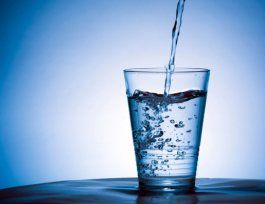
Is salt dissolving in water a physical or chemical change?
a)
Physical
b)
Chemical
78.
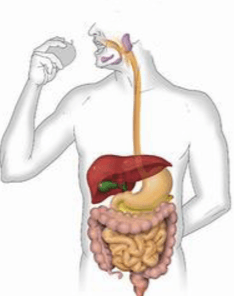
Is digesting your food a physical or chemical change?
a)
Physical
b)
Chemical
79.
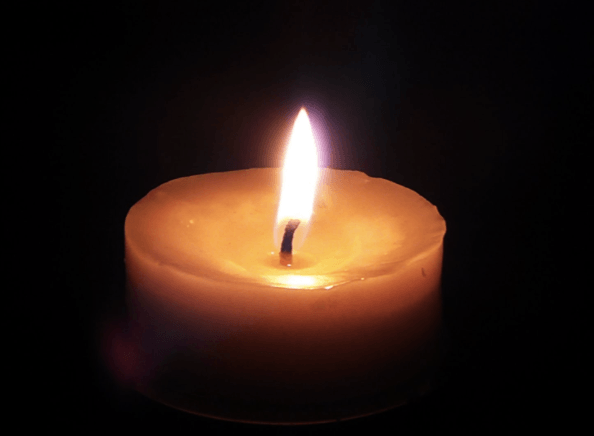
Is a burning candle a physical or chemical change?
a)
Physical
b)
Chemical
80.
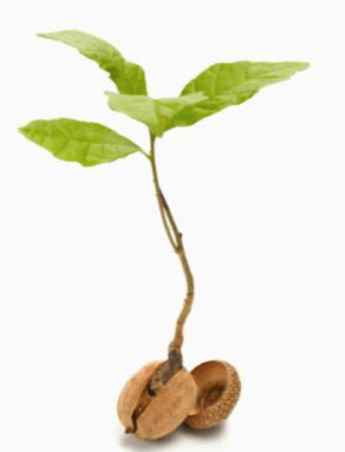
Is a tree sprouting a physical or chemical change?
a)
Physical
b)
Chemical
81.
Is getting a tan a physical or chemical change?
a)
Physical
b)
Chemical
82.
Is melting iron a physical or chemical change?
a)
Physical
b)
Chemical
83.
When baking soda and vinegar mix it creates a bubbly mess. Is this a chemical or physical change?
a)
Physical
b)
Chemical
84.
If liquid nitrogen is brought to a boil, is this a physical or chemical change?
a)
Physical
b)
Chemical
85.
If a new substance is formed would this be a physical or chemical change?
a)
Physical
b)
Chemical
86.
Gallium spoon melting is a physical change because a puddle of _____ metal is left afterwards.
a)
iron
b)
steel
c)
aluminum
d)
gallium
87.
The Law of Conservation of matter states that the total amount of matter ______________ after it undergoes change.
a)
disappears
b)
stays the same
c)
weighs less
d)
explodes
88.
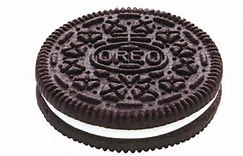
An oreo cookie weighs 20 grams.  It gets crushed into crumbs for a recipe.  How much do its crumbs weigh?
a)
15 grams
b)
25 grams
c)
20 grams
89.
Matter can not be created nor destroyed: it can only be
a)
Destroyed a little bit
b)
Invisible
c)
Transformed, changed
d)
None of the above
90.
What will weigh more when a chemical change is complete?  The reactants before the chemical reaction, or the product after the reaction is complete?
a)
They both will weigh the same
b)
The product always weighs more than the reactant
c)
The reactant will weigh more than the product
d)
They both will loose mass after the reaction
91.
The number in front of a compound or element is a 
a)
Subscript
b)
Coefficient
c)
Superscript
d)
Charge
92.
The number to the lower side of an element is a 
a)
Subscript
b)
Superscript
c)
Coefficient
d)
Charge
93.
How many nitrogen atoms does NH3 have?
a)
1
b)
2
c)
3
d)
4
94.

Which Chemical Equation is Balanced?

a)

CH₄+O₂------CO₂+2H₂O

b)

H₂+O₂-----2H₂O₄

c)

4Al+3O₂-----2Al₂O₃

95.

How many oxygen atoms are in this chemical formula?

a)

6 oxygen atoms

b)

2 oxygen atoms

c)

3 oxygen atoms

d)

4 oxygen atoms

96.
What is the law of conservation of mass?
a)
The amount of matter changes when reacted or changed.
b)
The mass of all reactants are changed during a physical or chemical change
c)
The mass of the reactants equals the mass of the products
d)
The mass of the products is different than the mass of the reactants.
97.
When CaCO3 is heated, it forms CaO and CO2. Which of these statements best describes the mass of the products if 100 g of CaCO3 is heated?
a)
The difference in the products’ masses is equal to the mass of the CaCO3
b)
The sum of the products’ masses is less than the mass of the CaCO3
c)
The mass of each product is equal to the mass of the CaCO3
d)
The sum of the products’ masses equals the mass of the CaCO3
98.

_________ are the substances that are produced in a chemical reaction.

a)

Reactants

b)

Producer

c)

Reaction

d)

Product

99.

________ are the starting substances in a chemical equation.

a)

Reactants

b)

Producer

c)

Reaction

d)

Products

100.
What is the left part of a chemical equation called?
2H2 + O2 --> 2H2O
a)
Reactants
b)
Products 
c)
Yields 
d)
Chemical Equation 
101.
What is the right part of a chemical equation called...
2H2 + O2 --> 2H2O
a)
Reactants
b)
Products 
c)
Yields 
d)
Chemical Equation 
102.
How many atoms of carbon (C) are in C6H12O6?
a)
3
b)
6
c)
12
d)
24
103.
Is this balanced?...
Al + O2 --> 2Al2O3
a)
Yes!
b)
NO!
104.
Why is the following chemical equation not balanced?
H2 + O2 --> H2O
a)
each side of the equation has a different number of oxygen atoms
b)
each side of the equation has a different number of hydrogen atoms
c)
each side has the same mass
105.
Is the following equation balanced or unbalanced?
Fe + S --> FeS
a)
balanced
b)
unbalanced