wayground logo

Free Printable Worksheets

Font size

S
M
L
XL
Worksheets

Aquatic Science Spring 21' Cumulative Final Exam Review

Total questions: 112

Worksheet time: 28hrs 0mins

Name
Class
Date
1.

What is the difference between the two organisms in the photo?

a)

Euglena moves with cilia; amoeba move with pseudopodia.

b)

Euglena can be photosynthetic; ameoba is never photosynthetic.

c)

Euglena is bacterium; amoeba is protista.

d)

Euglena moves with a flagellum; amoeba is unable to move.

2.

How do we classify algae?

a)

According to where they live

b)

According to the type of cell they have

c)

According to how they move

d)

According to their color

3.
Small, short hairlike projections use for movement in some protists are called:
a)
flagella
b)
cilia
c)
pseudopods
d)
hair
4.
What structure is use by an ameoba to gather food?
a)
oral groove
b)
contractile vacuole
c)
flagella
d)
pseudopod
5.
What structure is use by an ameoba to move?
a)
oral groove
b)
contractile vacuole
c)
flagella
d)
pseudopod
6.

A hazardous algal bloom can be caused by ?

a)

Too much oxygen in the water

b)

The dumping of raw sewage into the water.

c)

A large number of fish dying in the water.

d)

Too little oxygen in the water.

7.

Which type of algae can grow in the deepest water depths?

a)

red algae

b)

brown algae

c)

golden algae

d)

green algae

8.

What phylum is green algae placed in?

a)

phaeophyta

b)

rhodophyta

c)

chrysophyta

d)

chlorophyta

9.

How do we classify algae?

a)

According to where they live

b)

According to the type of cell they have

c)

According to how they move

d)

According to their color

10.

What are Protists?

a)

A diverse group of eukaryotes that cannot be classified as animals, plants, or fungi so they have their own kingdom

b)

They are an infectious agent of small size and simple composition that can multiply only in living cells of animals, plants, or bacteria

c)

A group of microscopic single-celled organisms that live in enormous numbers in almost every environment on Earth

d)

Organisms that lacks a distinct nucleus and other organelles due to the absence of internal membranes

11.
Reasons that viruses are considered to be nonliving is because
a)
They are not cellular
b)
They cannot reproduce on their own
c)
They cannot make proteins
d)
all of the above
12.

What magnificent thing happened between two single-celled organisms about 2 billion years ago?

a)

They merged to form what is today known as a prokaryotic cell

b)

They merged to form what is today known as a eukaryotic cell

c)

They mated and reproduced to form a super-cell

d)

They fought over resources until one won, and later evolved what is now known as a eukaryotic cell

13.

How long ago did these Cyanobacteria first show up?

a)

1 million years ago

b)

4 million years ago

c)

3.5 billion years ago

d)

last week

14.

What is the name of some of the very first Algae on our planet?

a)

Blue Algae

b)

Green Algae

c)

Cyanobacteria

d)

Protozoa

15.
The ecological roles filled by prokaryotes include all of the following except
a)
decomposers
b)
producers
c)
scavengers
d)
nitrogen fixers
16.
During an experiment a scientist observed prokaryotes that lived near volcanic vents deep in the ocean.  The scientist must likely observed
a)
photoautotrophs
b)
chemoautotrophs 
c)
heterotrophs
d)
photoheterotrophs
17.
The bacteria seen in the picture is
a)
bacillus
b)
cocci
c)
spirilla
18.
Which organism cannot survive in the presence of oxygen?
a)
heterotrophs
b)
autotrophs
c)
obligate anaerobe
d)
facultative anaerobe
19.
Which organism can survive either with or without oxygen?
a)
heterotrophs
b)
autotrophs
c)
obligate anaerobe
d)
facultative anaerobe
20.
The bacteria seen in the picture is
a)
cocci
b)
bacillus
c)
spirilla
21.
 A cell that does not contains a nucleus is
a)
prokaryote
b)
eukaryote
22.
The bacteria seen in the picture is
a)
bacillus
b)
coccus
c)
spirilla
23.
Prokaryotes are found in which domain
a)
Animalia
b)
Plantae
c)
Eukarya
d)
Bacteria
24.
 A cell that contains a nucleus is
a)
prokaryote
b)
eukaryote
25.
What is the endocrine system?
a)
senses the hormone levels in the blood
b)
controls all other endocrine glands
c)
A group of glands that work together with the nervous system to coordinate all body functions
d)
decreases bone calcium levels
26.
chemical made by glands that tell cells to make something or respond in some way.
a)
acid
b)
enzyme
c)
perspiration
d)
hormone
27.
a body system that controls and coordinates all body activities through electric impulses/messages between brain, spinal cord and nerves.
a)
endocrine system 
b)
nervous system
c)
nerve
d)
neuron
28.

The group of organisms that use the process of homeostasis includes

a)

mammals, only

b)

animals, only

c)

plants and animals

d)

all living things

29.
The maintenance of an organism’s internal environment is called:
a)
compensating
b)
homeostasis
c)
balancing
d)
routine
30.
When many organ systems work together it can form...
a)
organ
b)
cells
c)
organ system
d)
organism 
31.

An organism that is made up of many cells is called:

a)

unicellular

b)

multicellular

c)

pluracellular

32.

2 or more organs that work together.

a)

cell

b)

tissue

c)

organ

d)

organ system

e)

organism

33.
Which of these organelles do animal cells not have?
a)
Nucleus
b)
Chloroplasts
c)
Cell membrane
d)
Lysosome
34.

Any single living individual, and can refer to a single human, animal, plant,

Protista, bacteria, or fungi.

a)

Community

b)

Cell

c)

Population

d)

Organism

35.

Group of tissues with similar functions.

a)

Organelles

b)

Cells

c)

Tissues

d)

Organs

36.

Groups of cells with similar functions.

a)

Organs

b)

Molecules

c)

Tissues

d)

Organelles

37.

This is an example of....

a)

cell

b)

tissue

c)

organ

d)

organ system

38.
The smallest level of organization of life in an organism
a)
tissue
b)
cell
c)
organ
d)
organ system
39.

Tapeworms are parasitic worms with flattened bodies, no respiratory system, and an incomplete digestive system; which phylum do they belong in?

a)

Cnidaria

b)

Platyhelminthes

c)

Nematoda

d)

Annelida

40.
What is the Phylum for barnacles?
a)
Echinodermata
b)
Maxillopoda
c)
Arthropoda
d)
Cheliped
41.
To which phylum do crabs and spiders belong?
a)
Echinodermata
b)
Arthropoda
c)
Cnidaria
d)
Mollusca
42.
I am spiny, have a water vascular system with tube feet, radial symmetry, and am called a brittle star.
a)
Mullosk
b)
Arthropod
c)
Echinoderm
d)
Cnidarian
43.

This animal is Planaria, a type of parasitic worm with a flattened body, no respiratory system, and an incomplete digestive system. Which invertebrate phylum does it belong in?

a)

Nematoda

b)

Annelida

c)

Platyhelminthes

d)

Porifera

44.

What is the class name of the fish that LACK jaws, produce slime as a defense and live on the bottom of the ocean?

a)

myxini

b)

agnatha (cephaloaspidomorphii)

c)

chondrichthyes

d)

osteoichthyes

45.

What class does this fish belong to?

a)

chondrichthyes

b)

osteichthyes

c)

myxini

d)

agnatha

46.
A type of asexual reproduction in which an unfertilized egg develops into an embryo
a)
parthenogenesis
b)
oviparous
c)
ovoviviparous
d)
viviparous
47.

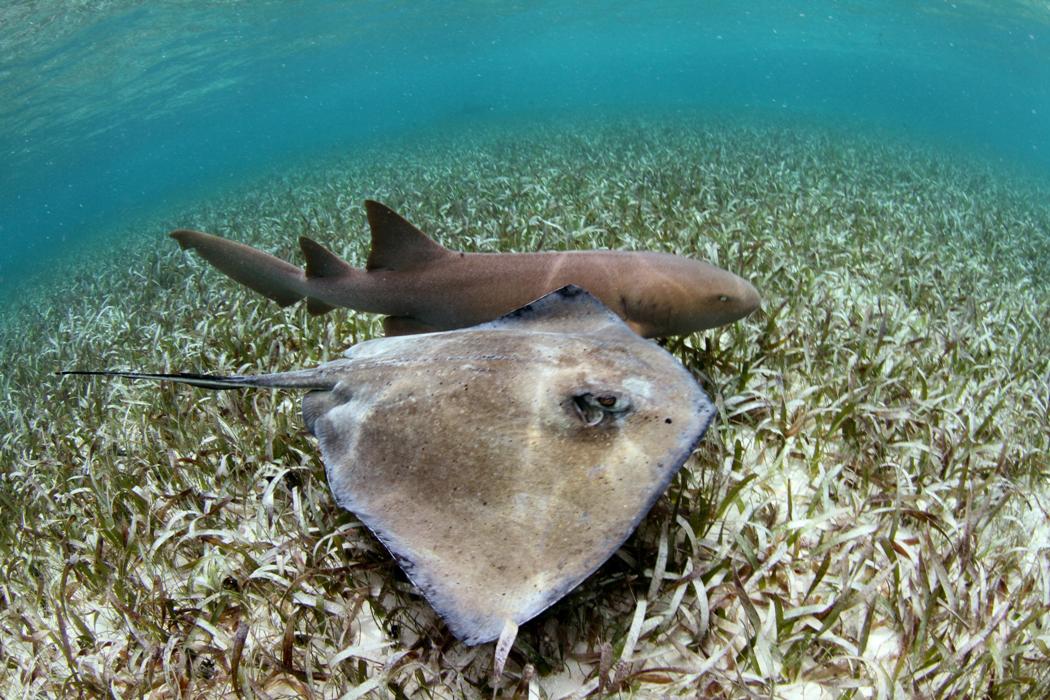
Cartilaginous fishes that include sharks, skates, and rays

a)

Superclass Agnatha

b)

Class Osteichthyes

c)

Class Chondrichthyes

d)

Superclass Gnathostomata

48.

Fish "swallow" water to

a)

force it from the mouth and over the gills.

b)

steady themselves in the water.

c)

feed.

d)

all of these answer choices.

49.

In most fish, blood circulates from the heart to the

a)

rest of the body, to the gills, and back to the heart.

b)

gills, to the rest of the body, and back to the heart.

c)

gills, back to the heart, and to the rest of the body.

d)

lungs, to the rest of the body, and back to the heart.

50.

The order (Lamniformes) is also known as:

a)

Skates and Rays

b)

Dogfish Sharks

c)

Mackerel Sharks

d)

Ground Sharks

51.

What system does the spleen belong in?

a)

digestive

b)

urogenital

c)

immune

d)

respiratory

52.

This shark belongs to the order:

a)

Orectolobiformes

b)

Heterodontiformes

c)

Lamniformes

53.

This shark belongs to the order:

a)

Lamniformes

b)

Orectolobiformes

c)

Heterodontiformes

54.

This shark belongs to the order:

a)

Heterodontiformes

b)

Orectolobiformes

c)

Lamniformes

55.
A collective name for sharks, rays and skates.
a)
Ichthyes
b)
Elasmobranchs
c)
Crustaceans
d)
Tunicates
56.
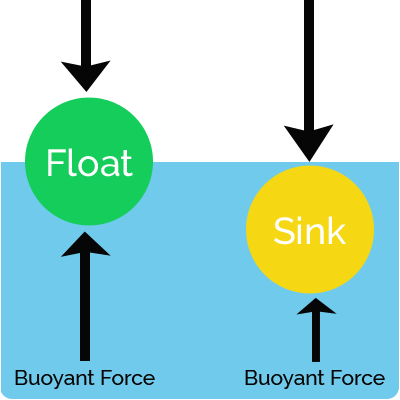
What is a shark's adaptation to maintain neutral buoyancy?
a)
Fluid in the ears
b)
 Gas filled bladder
c)
Large oily liver
d)
Nictitating membrane
57.

which of the following is heterodontiformes

a)
b)
c)
d)
58.

To sense vibrations, sharks have a _________________ that contains fluid-filled sensory canals that run from head to tail.

a)

spiracle

b)

lateral line

c)

operculum

d)

dorsal fin

59.

What order to turtles & tortoises belong to?

a)

Testudines

b)

Crocodilia

c)

Rynchocephalia

d)

Squamata

60.

Order that includes lizards and snakes?

a)

Squamata

b)

Testudines

c)

Crocodilia

d)

Rynchocephalia

61.

What group is actually more closely related to birds than other reptiles?

a)

Crocodilia

b)

Rynchocephalia

c)

Squamata

d)

Testudines

62.

Because Reptiles don't include all of the descendents of a common ancestor, they are considered...

a)

Paraphyletic

b)

Monophyletic

c)

Polyphyletic

d)

Paranormal

63.

This is a characteristic common to both Reptiles and Amphibians

a)

Bony endoskeleton

b)

4-chambered heart

c)

Endothermic

d)

Smooth skin lacking scales

64.

What part of the skin are most reptile scales made from?

a)

Dermis

b)

Epidermis

c)

They don't have scales.

d)

The scales aren't made from skin.

65.

What are the thicker, harder dermal scales in some reptiles called?

a)

Scutes

b)

Hemipenes

c)

Chorion

d)

Brille

66.

Which membrane in the amniotic egg is responsible for providing nutrients to the developing embryo?

a)

Yolk sac

b)

Albumen

c)

Amnion

d)

Chorion

67.

This is the part of the amniotic egg that surrounds the embryo with fluid to cushion it.

a)

Amnion

b)

Allantois

c)

Albumen

d)

Yolk Sac

68.

How is the sex of a reptile determined?

a)

Based on the temperature at which the eggs are incubated.

b)

Based on the temperature when the eggs are fertilized.

c)

Whether they have XX or XY chromosomes.

d)

There are not separate sexes because they are hermaphroditic.

69.

Most reptiles are...

a)

Diurnal and ectothermic

b)

Diurnal and endothermic

c)

Nocturnal and ectothermic

d)

Nocturnal and poikilothermic

70.

Which is correctly matched?

a)

Toxin is made by a living thing

b)

Venom can be living or nonliving

c)

Poison is injected through the skin

d)

Venom can be swallowed or inhaled

71.
Reptiles are_______.
a)
Warm blooded
b)
Hot Blooded
c)
Cold Blooded
d)
without blood.
72.

COMPLETE THE SENTENCE:

BIRDS ARE __________, WHICH MEANS THAT THEY REPRODUCE BY LAYING EGGS

a)

VIVIPAROUS

b)

OVIPAROUS

c)

OVOVIVIPAROUS

73.
Zoologists have long seen the evolutionary connection between birds and what other group of animals? 
a)
Fish
b)
Amphibians
c)
Humans
d)
Reptiles 
74.
A bird's feathers are very similar to a reptile's scales. They are both made of this substance. 
a)
Dentin 
b)
Spicules
c)
Keratin
d)
Cartilage 
75.
Birds are...
a)
Ectothermic homeotherms
b)
Ectothermic poikilotherms
c)
Endothermic homeotherms
d)
Endothermic poikilotherms 
76.
All birds lay eggs that develop outside the body. This means they are...
a)
Viviparous
b)
Ovoviviparous
c)
Oviparous
d)
Ovuliparous 
77.
Which of the following is not a trait by which birds are organized into their orders?
a)
Size
b)
Behaviors
c)
Songs
d)
Anatomical Differences
78.
How do penguins feed their babies?
a)
With a spoon
b)
Regurgitate in their mouth
c)
Hunt for food themselves
d)
They don't eat
79.
What is a baby penguin called?
a)
Puppy
b)
Chick
c)
Calf
d)
Cub
80.
What colors are most penguins? 
a)
black and white
b)
red and yellow
c)
yellow and black 
d)
purple and blue
81.
A penguin chick is covered in feathers called...
a)
fur
b)
down
c)
cotton
d)
scales
82.
What is it called when penguins group together for warmth?
a)
Snuggling
b)
Grouping
c)
Huddle
d)
Nesting
83.
What do penguins eat?
a)
krill
b)
Ice
c)
Ice cream
d)
Cookies
84.
Where do all Penguins in the wild live?
a)
The North Pole
b)
Middletown, Ohio
c)
In the Southern Hemisphere
d)
In the United States and Canada
85.
Manatees & Dugongs belong to which order of mammals?
a)
Sirenian
b)
Carnivor
c)
Cnidarian
d)
Mustelid
86.
Of the following, which marine mammals have been heavily hunted for their fur?
a)
seals and gray whales
b)
seals and sea otters
c)
dolphins and manatees
d)
gray whales and manatees
87.
Which is not a trait of Marine Mammals?
a)
Hair
b)
Warm Blooded
c)
Nursing young
d)
Ectotherm
88.
The tail of a whale or dolphin is called?
a)
fin
b)
dorsal fins
c)
caudal fin
d)
flukes
89.

Mammals have the largest ____ of all vertebrates.

a)

brain

b)

heart

c)

liver

d)

lungs

90.

Which of the following is NOT a use for blubber in a marine mammal?

a)

keep warm

b)

buoyancy

c)

food reserve

d)

attack prey

91.

Seals and Sea Lions are examples of what type of mammals ___?

a)

Cetacean

b)

Felines

c)

Pinnipeds

d)

Sirenians

92.

What are the animals often referred to as "unicorns of the sea" (because of their single tusk)?

a)

narwhals

b)

walrus

c)

manatees

d)

beaked whales

93.

Any member of the group of marine mammals which includes whales, dolphins, and porpoises.

a)

pinniped

b)

echolocation

c)

adaptation

d)

cetacean

94.

What part of the body is used for directing outgoing sound waves during echolocation?

a)

Melon

b)

Lower jaw

c)

Nasal plug

d)

Air sac

95.
Minerals and nutrients from deep in the ocean are brought to the surface in cold water as a result of __________________.
a)
thermal pollution
b)
upwelling
c)
marine turbulence
d)
human activity
96.
Fisheries renew themselves naturally each year, but __________________ has caused a shortage of fish in some areas.
a)
overfishing
b)
catch limits
c)
global warming
d)
aquaculture
97.
Fuels such as ________________ are created naturally over the course of hundreds of millions of years from the remains of dead marine organisms.
a)
coal
b)
nuclear material
c)
oil and natural gas
d)
wood
98.
_________________, the farming of salt and freshwater organisms, is increasingly common.
a)
Aquaculture
b)
Fisheries
c)
Surf fishing
99.
Although some ocean pollution is the result of natural occurrences, most pollution is related to _______________.
a)
global warming
b)
human activities
c)
ozone depletion
d)
upwelling
100.
Metals on the ocean floor can concentrate around pieces of shell, forming black lumps called _____________.
a)
coal
b)
nodules
c)
tar balls
d)
pollution
101.
Fresh water can be produced by removing the salt from ocean water using a process called ______________.
a)
salt water cleanup
b)
desalination
c)
water purification
d)
wastewater treatment
102.
___________________ from damaged tankers or drilling platforms can cause wide destruction to living things in the ocean.
a)
Propellors
b)
Sewage dumping
c)
Scrap metal
d)
Oil pollution
103.
The best way to keep the ocean clean is to ______________________. 
a)
skim trash regularly
b)
stop using the ocean as a resource
c)
establish regulations for safety and environmental regulations
d)
start a war to take over the ocean as our own resource
104.

Why is overfishing a problem?

a)

It reduces the fish population.

b)

It leaves the fish population as it is.

c)

It increases the fish population.

d)

It results in holding ponds.

105.

What is bycatch?

a)

catching fish with drift nets

b)

fish other than the targeted species, often thrown away

c)

fish that are processed on a fishing vessel

d)

animals other than fish that are caught in nets

106.

Which statement about ocean resources is true?

a)

Humans get very few resources from the ocean.

b)

Demand for the ocean's resources is increasing.

c)

The ocean is so big that we will never use up the resources.

d)

The ocean's resources have already been used up.

107.

How much fish is harvested from the ocean each year?

a)

almost 7 millions tons

b)

almost 17 millions tons

c)

almost 75 million tons

d)

almost 700 millions tons

108.

Why do people raise fish in fish farms?

a)

Many ponds are available.

b)

Fish farms help meet humans' demand for seafood.

c)

Fish farms are easy to operate.

d)

Fish farms produce better fish than the ocean.

109.

Oil and natural gas are ______________ resources.

a)

nonrenewable

b)

desalination

c)

dry

d)

seismic

110.

The constant motion of the ocean can generate a lot of ______________________.

a)

tides

b)

manganese

c)

renewable

d)

energy

111.

Tidal energy comes from the movement of __________________.

a)

tides

b)

manganese

c)

renewable

d)

energy

112.

Both wave energy and tidal energy are clean and ___________________ resources.

a)

tides

b)

manganese

c)

renewable

d)

energy