
 Worksheets
6th Grade EOC Review (1st semester)
Total questions: 95
Worksheet time: 3hrs 34mins
Scientists frequently repeat the experiments of others scientists. Why is this important in science?
Scientists often ask each other for help in performing experiments.
Replication of experiments helps to confirm and verify results.
Scientists frequently perform other scientists’ experiments in order to practice their technique.
Repeating experiments is an effective way to make sure a laboratory is in optimal condition.
Cara read an article on why repetition and replication are so important, but she did not understand the difference between them. Which of the following best explains the two terms?
Repetition is when a scientist repeats an experiment; replication is when a scientist conducts an experiment on genetic material.
Repetition is when a scientist does the same experiment a number of times; replication is when other scientists reproduce a scientist’s experiment.
Repetition is when a scientist publishes in more than one scientific periodical; replication is when another scientist reproduces another scientist’s results.
Repetition is when a scientist commits an error in an experiment the first time and must repeat it; replication is when a scientist repeats an experiment to make sure it is valid.
Kaylee reads an article that states that the frequency of chirping by crickets is related to the temperature of
their environment. She wants to conduct an experiment to see if this is true. Kaylee states this hypothesis:
Crickets chirp more frequently when the temperature of their environment increases. What is the test
variable (independent variable) and outcome variable (dependent variable) in Kaylee’s experiment?
a.test variable (independent variable): number of crickets; outcome variable (dependent variable): frequency of chirping
b. test variable (independent variable): temperature of environment; outcome variable (dependent variable): frequency of chirping
c. test variable (independent variable): number of crickets; outcome variable (dependent variable): temperature of environment
d. test variable (independent variable): frequency of chirping; outcome variable (dependent variable): temperature of environment
What step does every scientific experiment begin with?
hypothesis
question/problem
procedures
conclusion
The variable that is being measured or observed is called the _______________. Hint: this is the variable that is the result or effect
independent variable
dependent variable
control variable
What is a constant/control in an experiment?
Things that do not change in a experiment. It's the variable that stays the same. You can have many variables stay the same.
It's the variables that the scientist changes in the experiment
It's the variables that are being measured in an experiment


A structure made up of different types of tissue and performs a specific function in the body.
cells
tissue
organ
organ system
Groups of specialized cells working together to perform the same function.
tissue
organelle
mass
tendon
Which of the following is the correct order of organization in living things from least organized to most organized?
a. Organism, cell, tissue, organ, organ system
a. Organ system, organ, tissue, cell, organism
a. Cell, tissue, organ, organ system, organism
a. Cell, organ, tissue, organ, organism, organ system
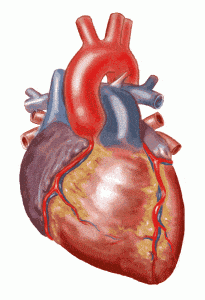
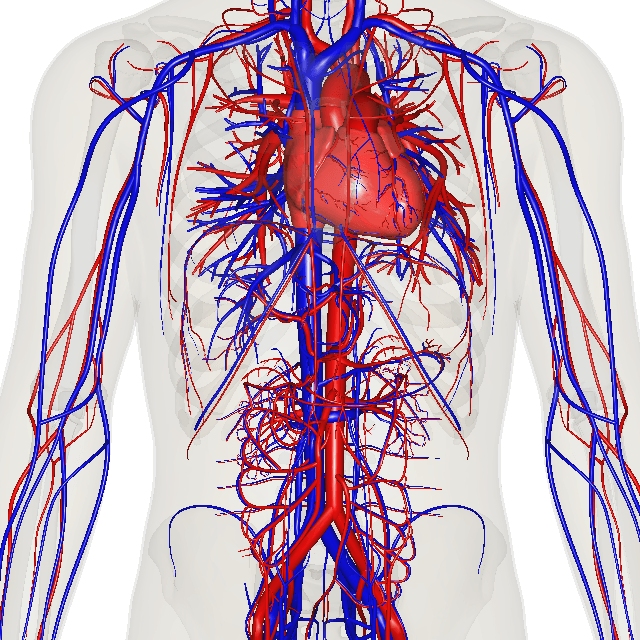
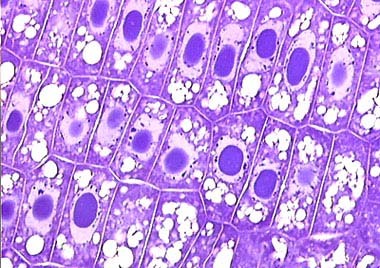
How does an organ system differ from an organ?
An organ system is more complex and contains several organs
An organ system is not made up of cells like an organ is.
An organ system is only found in very large organisms.
An organ system is just one part of an organ.
Which sequence describes the levels of organization from MOST organized to LEAST organized?
Organism, Organ, Tissue, Cell
Cell, Tissue, Organ, Organ System, Organism
Cell, Organ, Tissue, Organ System
Organism, Organ System, Organ, Tissue, Cell
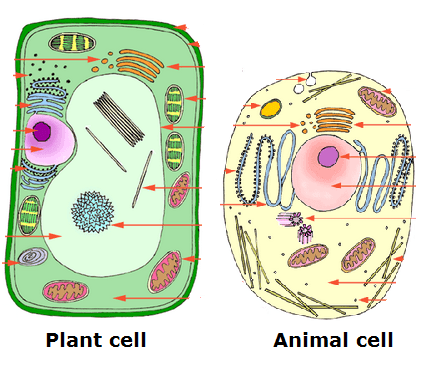
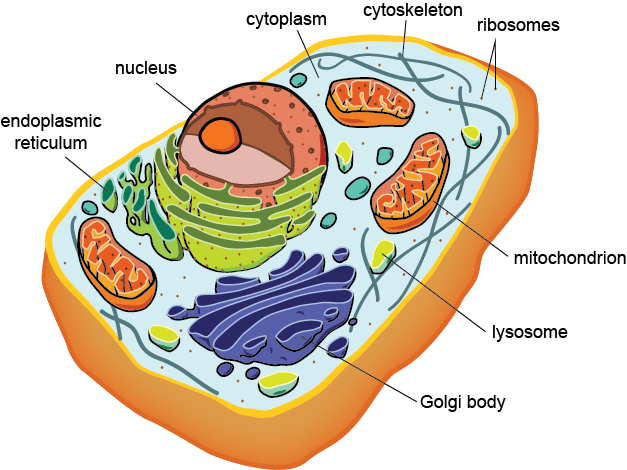
What distinguishes a plant cell from an animal cell? (How do you tell them apart) Hint: There's 3 ways (Check all 3)
Central Vacuole
Mitochondria
Cell Wall
Ribosomes
Chloroplasts

The 3 parts of the Cell Theory are...?
All living things are composed of cells
Cells are the basic units of structure and function in living things
All cells are produced from other cells
All living things are composed of cells
Cells are the basic units of dance and vibes in living things
All cells are destroyed from other aliens
All living things are composed of Jell-O
Cells are the basic units of structure and function in living things
All cells are produced from factories in Canada
All living things are composed of cells
Cells do karate and practice eating whole pies in their free time
All cells are produced from other cells

Cellular Respiration occurs within me and I am in BOTH plant and animal cells. I am a....
Nucleus
Golgi Body
Cytoskeleton
Mitochondria

I like to be thought of as the "storage bubble" for both plant and animal cells. I am a...
Cell Membrane
Cytoskeleton
Vacuole
Endoplasmic Reticulum

I am the "brain" of the cell or the "control center" for everything happening within the cell. I am a...
Golgi Body/Apparatus
Nucleus
Ribosome
Lysosome

Photosynthesis takes place within me. I am a...
Mitochondria
Cell Wall
Chlorine
Chloroplast

I decide what goes in and out of the cell. I am fluid like and found in BOTH plant and animal cells. I am a...
Cell Wall
Cell Membrane
Cytoplasm
Golgi Apparatus
There are three tenets of the Cell Theory. Which of the following is NOT a tenet?
Cells are the basic structure and function of life.
All living things are made of one or more cells.
The cell is the basic unit of matter.
All cells come from preexisting cells.
____ is credited with being the first scientist to observe cork cells.
Leewenhoek
Shleidon
Hooke
Which of the following statements is true?
Plants and animal cells have cell walls for protection.
Animal cells have one large vacuole; the plant cell has tiny ones.
Plant cells contain chlorophyll; animal cells have lysosomes.
Animal cells are box shaped; plant cells are circular
Check all the boxes for each organelle that plant and animal cells both have.
lysosomes
cell membrane
mitochondria
nucleus
cell wall
Sometimes called the “powerhouse” of the cell, this organelle is where respiration takes place.
Mitochondria
Nucleus
Vacuole
Bacteria is classified as a what?
Prokaryote
Eukaryote
Which scientist was credited as being the first in observing cells?
Hooke
Leewenhoek
Virchow


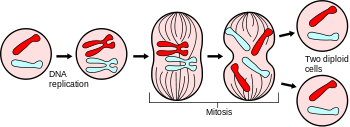
When cells are damaged, new cells are created by cell a process called cell division. How does the cell theory support this fact?
It states that all cells have a nucleus which divides.
It states that all living things are made up of one or more cells.
It states that cells come from previously existing cells.
It states that the basic units of structure and function are cells.
Small simple cells are called
prokaryotic
eukaryotic
Unicellular organisms are usually
prokaryotic
eukaryotic
Multicellular organisms are
eukaryotic
prokaryotic
Which cells are more complex and larger?
prokaryotic
eukaryotic
Plant and animal cells are usually
prokaryotic
eukaryotic
Which organelle protects cells?
nucleus
cytoplasm
cell membrane
ribosomes
Which organelle is liquid and contains other organelles?
cell membrane
cytoplasm
ribosomes
nucleus
Which organelles produce energy?
ribosomes
mitochondria
chloroplasts
Golgi apparatus
A ________ is a group of 2 or more organs working together to keep an organism alive.
cell
tissue
organ
Organ system
The ______ system helps you move, protects your organs, gives support to the body, and makes red blood cells.
skeletal system
muscular system
digestive system
respiratory system
The ________ system works with the skeletal system to help you move and provides shape and warmth.
skeletal
integumentary
muscular
digestive
The _____ system's function is to break down food into molecules that the body (cells) can use for energy.
muscular
digestive
respiratory
endocrine
The _____ system is a transport system, carrying oxygen, carbon dioxide, and wastes to and away from cells using the heart and blood.
endocrine
circulatory
respiratory
excretory
The ______ system's function is gas exchange. It brings oxygen in and exhales carbon dioxide with the lungs, trachea, and diaphragm
endocrine
excretory
circulatory
respiratory
This system controls the body using the brain, spinal cord, and nerves.
nervous system
endocrine system
excretory system
digestive system
The ______ system removes the body's wastes through the kidneys (cell wastes), digestive (feces), respiratory (CO2), and integumentary (salts/sweat)
excretory
digestive
respiratory
circulatory

What is the Net Force and the direction of the object's movement as a result of the net force?
2N, Right
0N, Left
3N, Right
4N, Left

What is the Net Force and the direction of the object's movement as a result of the net force?
5N, Right
5N, Left
9N, Right
9N, Left

What is the Net Force and the direction of the object's movement as a result of the net force?
8N, Right
8N, Left
0N, Right
0N, No Movement

What is the Net Force and the direction of the object's movement as a result of the net force?
9N, Right
9N, Left
3N, Right
3N, Left

What is the Net Force and the direction of the object's movement as a result of the net force?
12N, Right
12N, Left
4N, Left
4N, Right

What is the Net Force and the direction of the object's movement as a result of the net force?
1N, Right
1N, Left
9N, Left
9N, Right

What is the Net Force and the direction of the object's movement as a result of the net force?
3N, Right
3N, Left
6N, Left
6N, Right

What is the Net Force and the direction of the object's movement as a result of the net force?
11N, Right
11N, Left
1N, Left
1N, Right

What is the Net Force and the direction of the object's movement as a result of the net force?
3N, Right
3N, Left
9N, Left
9N, Right
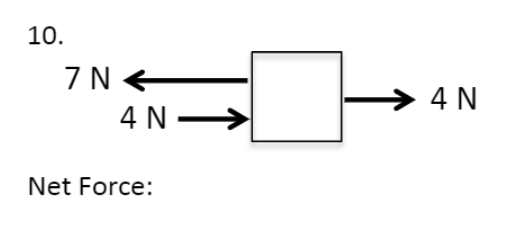
What is the Net Force and the direction of the object's movement as a result of the net force?
15N, Right
7N, Left
1N, Right
4N, Left

What is the unit to MEASURE force?
Kilogram
Meter
Pounds
Newton

A ____________ is a push or a pull on an object.
friction
force
magnet
gravity



Name the domains
Archea, Bacteria
Bacteria, Fungi, Kingdom
Archea, Bacteria, Eukarya
Domain, Kingdom, Other
To decide what domain an organism is in you look at
type of cells
number of cells
color
how it gets food
A domain that includes asexual and sexual reproduction includes
Eukarya
Bacteria
Animalia
Kingdom
To decide what domain an organism is in you look at
type of cells
number of cells
color
how it gets food
What characteristics are used to classify organisms?
number of cells, how they get their food, cell type, mode of reproduction
number of cells, how they breathe, mode of reproduction
color of cells, cell type, how they get their food, mode of reproduction
none of the above
Which domain are not -single-celled without a nucleus?
bacteria
archaea
fungi
Eukarya
The Bacteria Domain
have a nucleus
have cell walls
are not real
do not have a nucleus
What comes after Domain in the classification system?
Kingdom
Phylum
Class
Order
This organism has many cells, nucleus, and feed on algae. In which Kingdom would it work?
Archea
Fungi
Bacteria
Protista
What is the difference between prokaryotic and eukaryotic cells?
Prokaryotic=nucleus
Eukaryotic=no nucleus
Prokaryotic=always multi-cellular
Eukaryotic=nucleus
The words autotrophic and heterotrophic are referring to
color
having a nuclei
how organisms get their food
reproduction

