
 Worksheets
Chemistry Final Exam Review
Total questions: 166
Worksheet time: 4hrs 18mins
What is the first step in the scientific method?
Data
Conclusion
No Horse Play
Observe a problem
Experiment: Sendel wants to see if taking the backroads to work is faster than taking the highway during rush hour.
In Sendel's driving experiment, what is the control group?
Highway
Backroads
Time she drives to work
Rush hour
How many significant figures: 450 m
3
2
1
0

The table top is smooth.
Qualitative Observation
Quantitative Observation
15 m = _____ mm
15,000
1,500
0.015
150
762 cL = _____ L
7.62
0.762
76.2
7,620
3.85 hg = _____ cg
38,500
3,850
38.5
0.000385
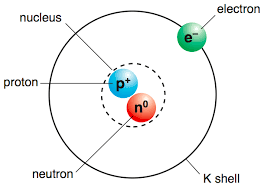
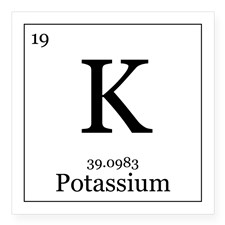
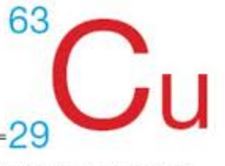
How many neutron are in the atom "K"?
29
19
58
20
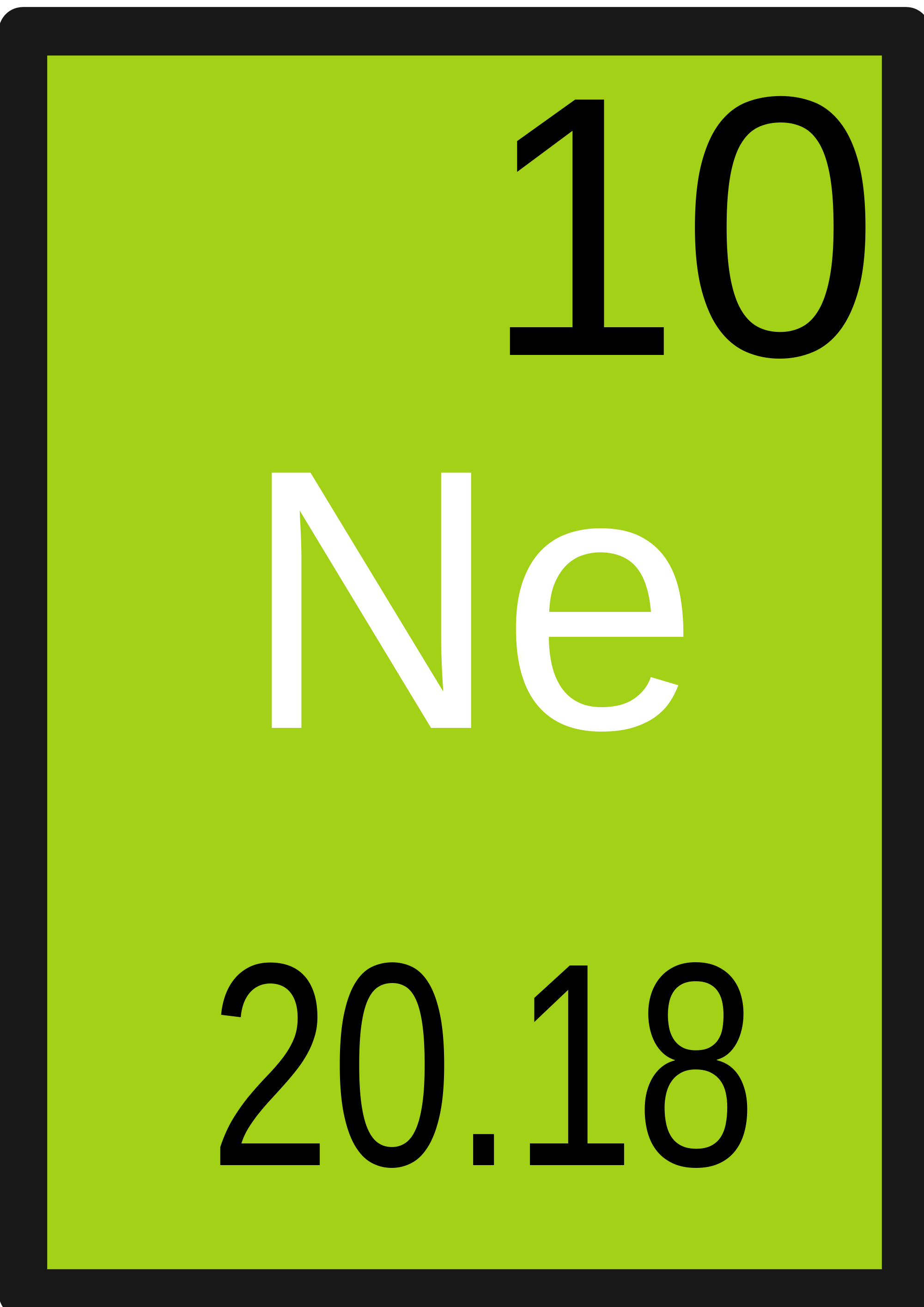

The vertical (up and down) columns in the Periodic Table are called
groups
towers
periods
atomic numbers

N or C?

Which element has the highest electronegativity?

Metal
Nonmetal
Metalloid

Metal
Nonmetal
Metalloid

Metal
Nonmetal
Metalloid

Metal
Nonmetal
Metalloid

Metal
Nonmetal
Metalloid
1s22s22p63s23p64s23d10
1s22s22p63s2

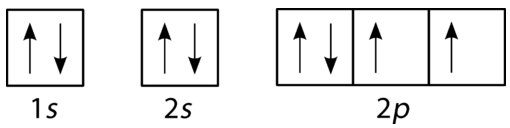

What is incorrect about this orbital diagram?
Both arrows in the 2p box should be pointing up
There is nothing incorrect with this diagram
There should be 1 electron (arrow) in the first 2p box and one in the 2nd 2p box
All the arrows should be pointing up.
USE THE PERIODIC TABLE
How many valence electrons does Phosphorus have?
31
5
15
4
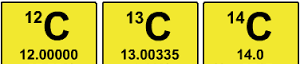
Bromine-80 has how many neutrons?
41
42
44
45
Rubidium has two common isotopes, 85Rb and 87Rb. If the abundance of 85Rb is 72.2% and the abundance of 87Rb is 27.8%, what is the average atomic mass of rubidium?
85.468 amu
37 amu
85.6 amu
86.4 amu
There are two primary isotopes found in any sample of copper: copper-63 and copper-65. The isotope 65Cu composes 69.2% of the sample and 63Cu comprises the other 30.8%. Based on this data, what is the atomic mass of copper?
29 amu
63.546 amu
64.4 amu
63.6 amu
A covalent bond forms when atoms ___________ electrons.
gain
share
increase
transfer
Why do atoms bond?
They typically don't bond
To add or take away energy levels
To have a full valence shell.
To have a full inner shell
Ionic bonding is between a
nonmetal and nonmetal
metal and nonmetal
metal and metal
Depends on the situation
CaCl2 is an example of what type of bond?
Covalent
Metallic
Ionic
What charge would a potassium (K) ion have?
+1
-1
+2
-2
13. What elements generally make a covalent bond?
metal and nonmetal
2 or more nonmetals
metal
none of the above
Conducts electricity well when melted or dissolved
Ionic compounds
Covalent compounds
Poor electrical conductivity
Ionic compounds
Covalent compounds
Generally high melting & boiling points
Ionic compounds
Covalent compounds
Generally low melting and boiling points
Ionic compounds
Covalent compounds
What is the charge, or oxidation number, for elements in Group 2?
-2
+2
-3
What is the charge, or oxidation number, for elements in Group 17?
+ 1
-7
-1
What is the charge, or oxidation number, for elements in Group 13?
+ 3
-5
+13
The name of FeCl₂ is
iron chloride
iron (II) chloride
iron (I) chloride
iron dichloride
What is the name of the compound Na2(SO4)?
Sodium sulfate
Sodium sulfide
Sodium sulfite
Sodium sulfuroxide
Name the ionic compound SnSe2
Tin diselenide
Tin (IV) Selenide
Tin selenide
Tin (II) triselenide
Fe + O2 -> Fe2O3
__P4 + __O2 --> __P2O3
_Al +_HCl --> _H2 +_AlCl3
_CH4 + _O2 --> _CO2 + _H2O

CoCO3 → CoO + CO2
H2 + O → H2O
H2 + O → H2O
Which type of reaction is:
3 Pb + 2 H3PO4 → 3 H2 + Pb3(PO4)2
Fill in the blank. (Copper has a charge of 2+)
Cu+ AgNO3 → Ag + _____
Cu(NO3)2
CuNO3
CuAg
Cu
Predict the products of this synthesis reaction: H2 + Cl2 →
HCl
H2Cl2
H2Cl
HCl2
Predict the products for the this Single Replacement reaction:
K + HCl →
KCl + H2
KHCl
KH + Cl2
HCl + K2
Predict the products for the this Double Replacement reaction:
AgNO3 + KCl →
AgCl + KNO3
AgK + ClNO3
KAg + NO3Cl
AgCl + 3 KNO
Predict the product of this synthesis reaction:
Al + S₈ →
AlS
AlS8
Al2S
Al2S3
Predict the products for the decomposition of aluminum oxide, Al2O3 →
Al + O2
O + Al2
Al2 + O3
Al + O
What are the products of this reaction:
C2H4 + O2 →
C2O2 + H4
CO2 + H2 + O2
CO + H
CO2 + H2O
In an endothermic reaction, heat is ...
taken in
given out


What type of reaction is this?
Endothermic and Exothermic
Endothermic
Exothermic
Neither Endothermic or Exothermic

Magnesium can be burned in oxygen to produce solid magnesium oxide.
Mg + O2→ MgO
Mg+ O→ MgO
Mg + CO2 → MgO + C
Mg + O2→ Mg2O2

Sodium reacts with chlorine gas to produce sodium chloride.
NaCl→ Cl + Na
Na+ CO2 → NaCO2
Na + Cl2→ NaCl
Na + Cl → NaCl

Iron reacts with solid sulfur to produce iron(II) sulfide powder.
Fe + S → Fe2S
Fe + S → FeS
Fe2 + S→ Fe2S2
Fe + S2 → Fe2S
When the temperature of a substance is lowered, its particles
vibrate more quickly
stop vibrating completely
escape the attractive forces of the other particles
vibrate more slowly
A green powder is heated & a gas is given off while it turns to a black solid. This describes
Physical Change
Chemical Change
Change in State
Change in Temperature
Which of the following could indicate that a chemical change took place?
Change in color
Production of Energy
Formation of Gas
All are correct
The formation of a solid when two liquids combine is called?
Solidification
Freezing
Precipitate
Solubility

Identify what type of change happening in the picture below...
Chemical Change
Physical Change
Endothermic Reaction
Exothermic Reaction

Identify what type of change happening in the picture below...
Chemical Change
Physical Change
Endothermic Reaction
Exothermic Reaction

Identify what type of change happening in the picture below...
Chemical Reaction
Physical Change
Change in State
Change in appearance only
If the chemical properties of a substance remain unchanged & the appearance or shape of an substance changes it is a...
Chemical Change
Physical Change
Both a physical and chemical change.
Neither a physical or chemical change.
A student mixes 125 grams of sugar, 250 grams of water and 5 grams of flavoring. The solution weighs...
250 grams
375 grams
380 grams
400 grams

How many moles of oxygen are consumed if 8 moles H2 are used?
How many moles of oxygen are produced when 6.7 moles of KClO3 decompose completely?
Actual yield = 62g
Calculate the percent yield.
How many grams of NO are formed if 6.30g of ammonia react with 1.80g of oxygen?
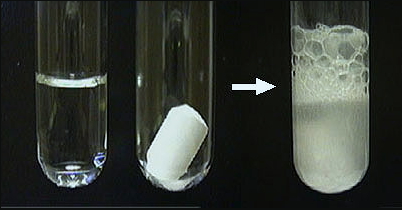
How could we make this reaction happen more quickly?
Decrease the concentration of the acid
crush the chalk to increase the surface area
Put the test tube in an ice bath

