wayground logo

Free Printable Worksheets

Font size

S
M
L
XL
Worksheets

Unit 2 Review

Total questions: 169

Worksheet time: 4hrs 51mins

Name
Class
Date
1.

Atomic number of potassium (K)

(a)  

2.

Number of electrons in a neutral bromine (Br) atom

(a)  

3.

Mass of number of an atom with 15 protons, 16 electrons and 14 neutrons

(a)  

4.

Number of electrons in a +2 Magnesium ion

(a)  

5.

Number of protons in a +3 aluminum (Al) ion

(a)  

6.

Number of neutrons for an atom with a mass number of 45 and an atomic number of 25

(a)  

7.

Atomic number of a -2 ion having 18 electrons

(a)  

8.

Number of protons in a neutral krypton (Kr) atom

(a)  

9.

Number of electrons in a P-3 ion

(a)  

10.

Number of electrons in a B+3 ion

(a)  

11.

Number of protons in a N-3 ion

(a)  

12.

Mass number of an ion with 8 protons, 10 electrons and 9 neutrons

(a)  

13.

Number of neutrons in a Cl atom with a mass number of 37

(a)  

14.

Atomic number of Cobalt (Co)

(a)  

15.
What is the name of this element?
a)
Helium
b)
Hydrogen
c)
Argon
d)
Silver
16.

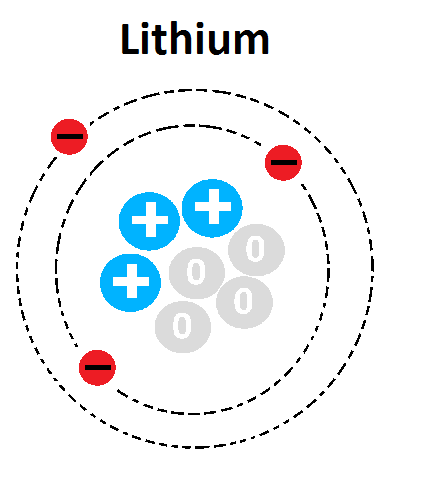
What element is represented in this Bohr Model?

a)

Carbon

b)

Hydrogen

c)

Aluminum

d)

Lithium

17.
What is the name of this element?
a)
Lithium
b)
Boron
c)
Carbon
d)
Neon
18.
What is the name of this element?
a)
Beryllium
b)
Boron
c)
Barium
d)
Bromine
19.
What is the mass number of this atom?
a)
1
b)
3
c)
4
d)
7
20.
What is the atomic number of this atom?
a)
2
b)
4
c)
6
d)
none of the above
21.
What group does this element belong to?
a)
Group 1: Alkali metals
b)
Group 18: Noble Gases
c)
Group 2: Alkaline-Earth Metals
d)
Group 17: Halogens
22.
Identify this atom.
a)
Lithium
b)
Boron
c)
Carbon
d)
Neon
23.
How many valence electrons?
a)
2
b)
3
c)
5
d)
10
24.
What's a valence electron?
a)
electrons in the second energy level
b)
electrons in the outermost energy level
c)
the atomic number
d)
electrons in the first level
25.
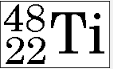
How many protons does this isotope of titanium have?
a)
48
b)
22
c)
26
d)
70
26.
In a correctly written symbol what would be located in the "A" position?
a)
number of neutrons
b)
atomic number
c)
number of electrons 
d)
mass number
27.
What quantities vary between isotopes of an element?
a)
protons, electrons, and atomic mass
b)
protons, electrons, and atomic number
c)
neutrons and electrons
d)
neutrons and atomic mass
28.

Isotopes are atoms of the same element with different numbers of __________ & therefore different __________.

a)
n0 ;  atomic #’s
b)
p+ ; atomic #’s
c)
e- ; atomic masses
d)
n0 ; atomic masses
29.

If X is the symbol for an element, which of the following represent isotopes of the same element?

I. 7735

II. 7733

III. 8137X

IV. 8135 X

a)
I and II
b)
III and IV
c)
I and IV
d)
I and III
30.

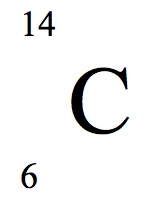
Two isotopes of carbon are carbon-12 and carbon-14. These isotopes differ from one another by two protons.
a)
true
b)
false
31.

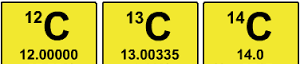
The photo above shows the isotopic notation for which isotope?

a)

Carbon-12

b)

Carbon-13

c)

Carbon-14

d)

Carbon-6

32.
What is the atomic mass of the pictured isotope?
a)
2
b)
4
c)
6
d)
Hehehehe
33.
What is the atomic mass of the pictured isotope?
a)
17
b)
35
c)
18
d)
What a "clorious" isotope!
34.
What do these isotopes of carbon all have in common?
a)
neutrons & mass number
b)
atomic number and neutrons
c)
atomic number and electrons
d)
protons, atomic number, and mass number
35.
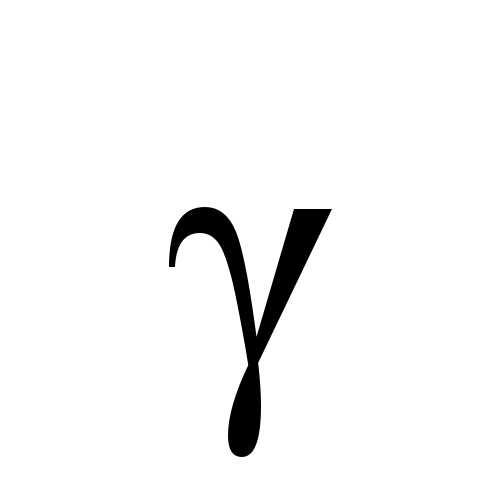
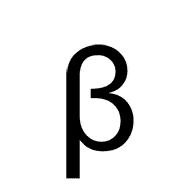
Has the symbol
a)
Alpha
b)
Beta 
c)
Gamma
d)
electron
36.
Has the symbol
a)
Alpha
b)
Beta
c)
Gamma
d)
proton
37.
Has the symbol
a)
Alpha
b)
Beta
c)
Gamma
d)
neutron
38.
In order of most to least penetrating radiation we have
a)
Alpha , Beta,  Gamma
b)
Beta , Gamma , Alpha
c)
Gamma, Beta, Alpha
d)
Gamma, Alpha, Beta
39.
Which type of nuclear radiation is being emitted here?
a)
Alpha
b)
Beta
c)
Gamma 
d)
none
40.
Has a mass of 4 and a charge of +2
a)
Alpha
b)
Beta
c)
Gamma
d)
neutron
41.
Which type of nuclear radiation is being emitted here along with Rn
a)
alpha
b)
beta
c)
gamma
d)
none
42.
What type of nuclear equation is this?
a)
fusion
b)
fission
c)
alpha
d)
beta
43.
Which type of radiation has the greatest penetrating power?
a)
Alpha
b)
Beta
c)
Gamma 
d)
Microwaves
44.
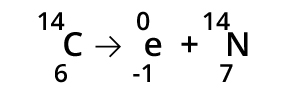
Balance the following equation:
146C --> 0-1e + ________
a)
145B
b)
146C
c)
147N
d)
42He
45.

What would complete the equation?

a)

230

Pa

91

b)

230

U

92

c)

4

He

2

d)

0

e

-1

46.

What completes the equation?

a)

0

e

-1

b)

0

e

+1

c)

4

He

2

d)

0

y

0

47.

What completes the equation?

a)

246

Pu

94

b)

246

Cm

96

c)

238

U

92

d)

240

U

92

48.

What completes the equation?

a)

204

Bi

83

b)

204

At

85

c)

4

He

2

d)

204

Po

84

49.

What completes the equation?

a)

alpha particle

b)

beta particle

c)

positron

d)

gamma ray

50.

What completes the equation?

a)

alpha particle

b)

beta particle

c)

positron

d)

gamma ray

51.

What completes the equation?

a)

alpha particle

b)

beta particle

c)

positron

d)

gamma ray

52.

What completes the equation?

a)

alpha particle

b)

beta particle

c)

positron

d)

gamma ray

53.

Which radioactive particle is the same as a Helium nucleus?

a)

alpha particle

b)

beta particle

c)

positron

d)

gamma ray

54.

Which radioactive particle has the same mass as an electron, but has a +1 charge?

a)

alpha particle

b)

beta particle

c)

positron

d)

gamma ray

55.
After the third half-life, how much of the sample is left?
a)
1/2
b)
1/3
c)
1/16
d)
1/8
56.
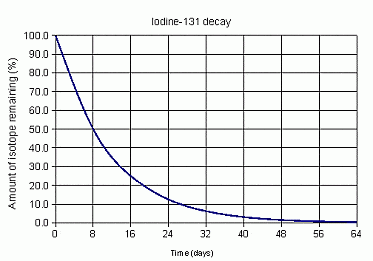
If 10 mg of iodine 131 is given to a patient, how much is left after 24 days? The half-life of iodine-131 is 8 days.
a)
1.25mg
b)
1.25g
c)
10g
d)
10mg
57.
The half-life of strontium-90 is 25 years. How much strontium-90 will remain after 100 years if the initial amount is 4.0 g?
a)
3.0g
b)
0.25mg
c)
0.3g
d)
0.25g
58.
If the half-life of uranium-232 is 70 years, how many half-lives will it take for 10 g of it to be reduced to 1.25 g?
a)
1 half-life
b)
2 half-lives
c)
3 half-lives
d)
4 half-lives
59.

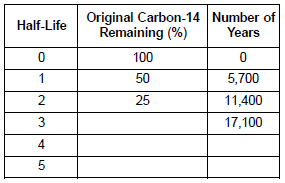
After 22,800 years, approximately what percentage of the original carbon-14 remains?

a)

15%

b)

12.5%

c)

6.25%

d)

3.125%

60.
What is the half-life of iodine-131?
a)
32 days
b)
8 days
c)
16 days
d)
24 days
61.

The % of the parent isotope remaining after 1 Half Life.

a)

50%

b)

25%

c)

12.5%

d)

6.25%

62.

The % of the parent isotope remaining after 2 Half Lives.

a)

50%

b)

25%

c)

12.5%

d)

6.25%

63.

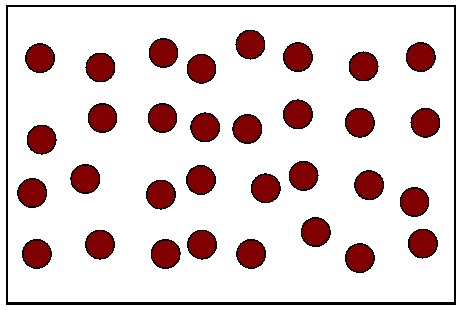
The diagram shows 32 atoms

32 of the Red are the parent isotope

0 of the atoms are daughter isotopes

How many half-lives have occurred?

a)

0

b)

1

c)

2

d)

3

64.

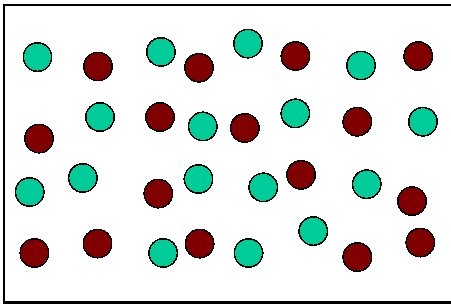
The diagram shows 32 atoms.

16 of the Red are parent isotopes

16 of the Green are daughter isotopes

How many half-lives have occurred?

a)

0

b)

1

c)

2

d)

3

65.

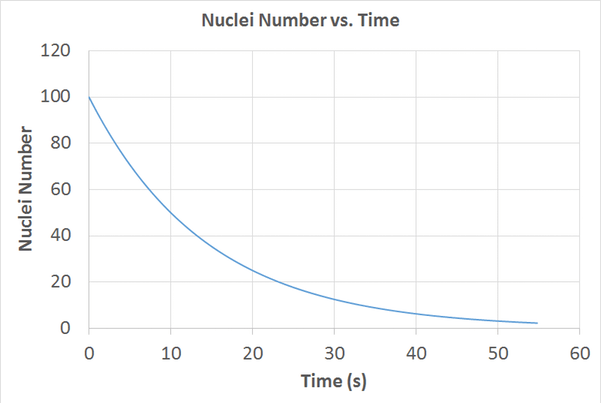
What is the Half life of this isotope?

a)

5 seconds

b)

10 seconds

c)

15 seconds

d)

20 seconds

66.

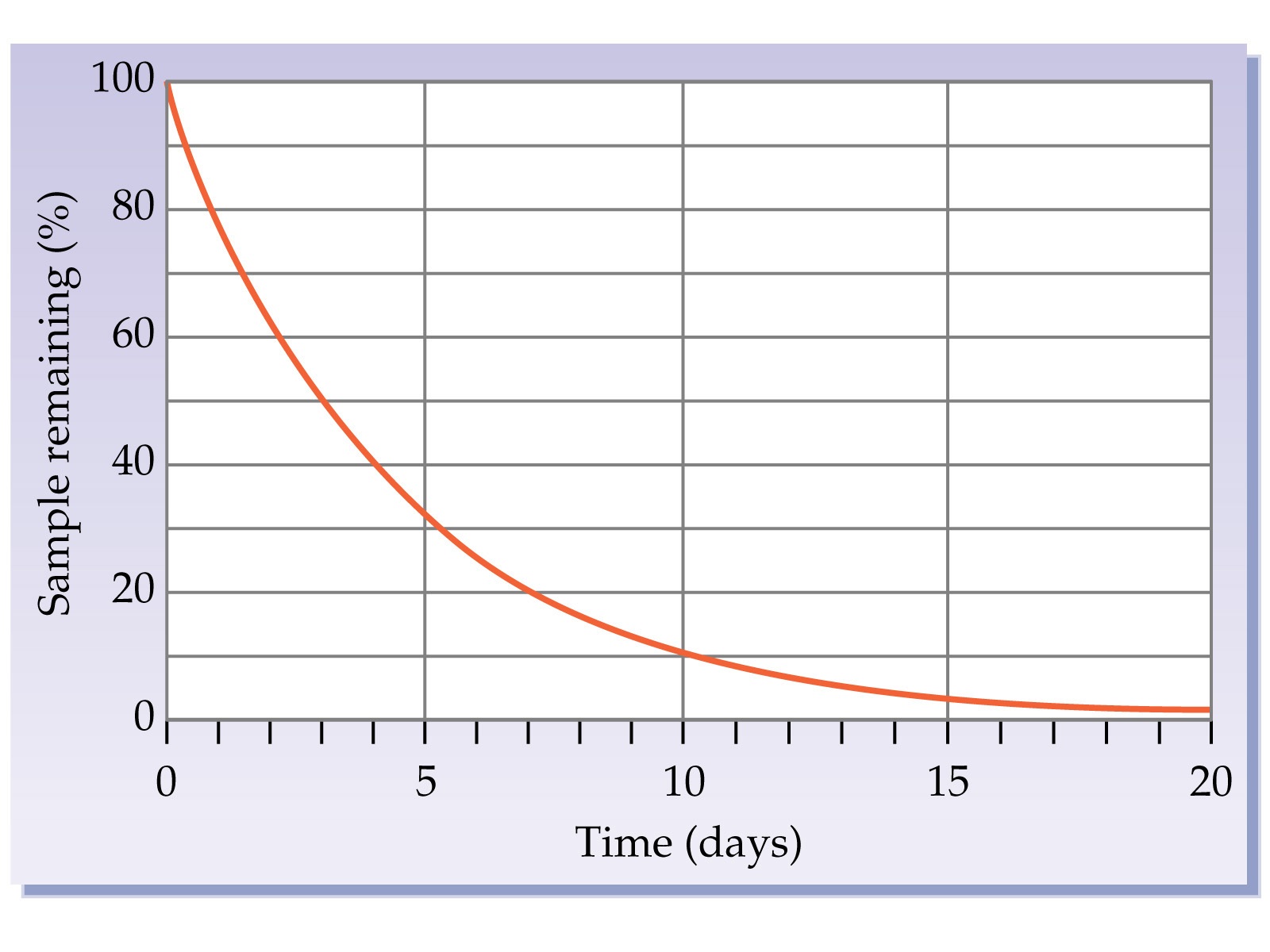
What is the Half Life of this isotope?

a)

3 days

b)

5 days

c)

8 days

d)

10 days

67.
What type of decay is being illustrated in following picture? 
a)
beta decay
b)
alpha decay 
68.
Imagine you have 50,000 atoms of uranium-238. If U-238 has a half-life of 4.5 billion years, how many U-238 atoms will be left after 4.5 billion years? 
a)
25,000
b)
50,000
c)
12,500
d)
0
69.
You have 100 grams of radioactive C-14. The half life of C-14 is 5730 years. 
How many grams are left after 1 half life? 
a)
100 grams
b)
25 grams
c)
2 grams
d)
50 grams
70.

Cations are metals that form ____________ ions by __________ electrons.

a)

negative, losing

b)

negative, gaining

c)

positive, gaining

d)

positive, losing

71.

Anions are nonmetals that form ____________ ions by __________ electrons.

a)

negative, losing

b)

negative, gaining

c)

positive, gaining

d)

positive, losing

72.
What is the charge of an atom that has lost one electron?
a)
-1
b)
-2
c)
+1
d)
+2
73.
Which group has a complete outer shell, and will not form ions or bond?
a)
Alkali Metals
b)
Transition Metals
c)
Halogens
d)
Noble Gases
74.

Group 7 always has ions with a charge of 

a)
+1
b)
+2
c)
-1
d)
-2
75.
Magnesium ion
a)
Mg+
b)
Mg2+
c)
Mg-
d)
Mg2-
76.
What happens when phosphorus forms an ion?
a)
gains two electrons
b)
loses two electrons
c)
gains three electrons
d)
loses one electron
77.
What will nitrogen's charge be as an ion?
a)
+3
b)
-3
c)
0
d)
-1
78.

Which is the correct name for CaBr2?

a)

Calcium Dibromide

b)

Calcium bromate

c)

Calcium Bromide

79.
What is the formula of Sodium oxide?
a)

NaOH

b)
NaO2
c)

Na2OH

d)
Na2O
80.

potassium fluoride

a)

KF

b)

K2F

c)

KF2

d)

K2F2

81.

calcium oxide

a)
CaO2
b)
CaO
c)
Ca2O
d)

CaOH

82.
Formula for strontium nitride
a)
Sr3N2
b)

Sr(NO3)2

c)
Sr3N
d)
Sr5N2
83.

Barium phosphate

a)

Ba3P2

b)

Ba3(PO4)2

c)

Ba3PO42

84.

For the compound copper (II) sulfate, what does the II after copper indicate?

a)

there are 2 copper in the compound

b)

the charge of the copper ion is 2+

c)

copper needs 2 more electrons

85.

What is the chemical name for FeN?

a)

Iron (III) Nitrate

b)

Iron (III) Nitride

c)

Iron Nitride

86.

In the compound TiBr2 what must titanium's charge be?

a)

1+

b)

2+

c)

3+

87.

What would be the name of TiBr2?

a)

titanium (I) bromide

b)

titanium (II) bromide

c)

titanium bromide

88.

What is the correct formula for copper (II) chloride?

a)

CuCl2

b)

Cu2Cl

c)

CuCl

d)

Cu(ClO3)2

89.

sulfate

a)

S2-

b)

SO42-

90.

magnesium sulfate

a)

MgS

b)

MgSO4

c)

Mg4SO

91.

calcium hydroxide

a)

Ca(OH)2

b)

Ca2OH

c)

CaO

d)

CaOH2

92.
Ionic Bonding involves...
a)
The transfer of protons
b)
The transfer of nuetrons 
c)
The transfer of electrons
d)
None Of the above
93.
What two types of atoms make a covalent bond?
a)
2 Nonmetals
b)
1 Nonmetal and 1 Metal
c)
2 Metals
d)
2 Noble Gases
94.
A chemical bond resulting from electrostatic attraction between positive and negative ions is a(n)
a)
nonpolar covalent
b)
ionic
c)
polar covalent
d)
coordinate covalent
95.

What is a covalent bond?

a)

A bond between atoms where electrons are shared.

b)

A bond between atoms where one atom gains an electron and another loses an electron.

c)

A bond where electrons dance in a 123 pattern.

d)

A bond between two atoms where they send each other special BFF messages.

96.

What part of the atom makes a bond?

a)

Electrons

b)

Protons

c)

Neutrons

d)

Any subatomic particle

97.

What type of bond is formed between a metal and a nonmetal?

a)

Covalent

b)

Ionic

c)

Metallic

d)

Carina

98.

Octet rule states that ...

a)

elements need 8 electron

b)

the element that has atomic number 8 is stable

c)

there are 8 elements with the highest stability

d)

elements tend to have 8 electrons in their outermost shell because that makes them more stable

99.

8. Predict what type of bond would form between Mg and Cl.

a)

Ionic

b)

Covalent

c)

Metallic

d)

Polar Covalent

100.

10. If an atom loses two electrons what charge will it have?

a)

+2

b)

-2

c)

+1

d)

-1

101.

13. How many valence electrons do elements in the group 14 contain?

a)

3

b)

4

c)

13

d)

14

102.

14. Using the image, identify what type of chemical bond would most likely be formed? (choose all that apply)

a)

An ionic bond because there are positive and negative ions.

b)

A covalent bond because the electrons are being shared.

c)

An ionic bond because it happens by transfer of electron

d)

An ionic bond because it happens between two non metals.

103.

5. Why do atoms bond?

a)

They typically don't bond

b)

To add or take away energy levels

c)

To satisfy the octet rule

d)

To have a full inner shell

104.
Is hydrogen considered a metal or a non-metal?
a)
A metal
b)
Nonmetal
c)
Metalloid
105.

Which of the following best predicts the type of bond that forms between Cs (metal) and Cl (non metal)?

a)

non polar covalent

b)

polar covalent

c)

ionic

d)

metallic

106.

MgCl2, this compound has ...

a)

ionic bond

b)

covalent bond

107.

CH4, this compound has ...

a)

ionic bond

b)

covalent bond

108.

What type of bond would form between Li and O?

a)

Polar Covalent

b)

Non-Polar Covalent

c)

Ionic

109.

Valence electrons are found

a)

in the innermost energy level of an atom

b)

in the middle energy levels of an atom

c)

in the outermost energy levels of an atom

110.

What do atoms that form positive ions tend to do?

a)

lose electrons

b)

gain electrons

c)

lose protons

d)

gain protons

111.
Which of the following is an ionic bond?
a)
H3N
b)
CaCl2
c)
NO2
d)
SCl
112.

An atom with 1 valence electron 'needs' a full shell, so it can either gain 7 electrons or lose 1. Which is more likely to occur?

a)

nothing

b)

gain 7

c)

lose 1

113.

Cl2

a)

Ionic Bond

b)

Covalent Bond

114.

NaO

a)

Ionic Bond

b)

Covalent Bond

115.

NH3

a)

Ionic Bond

b)

Covalent Bond

116.

What is the formula for trinitrogen octahydride?

a)

N3H8

b)

NH4

c)

N8H3

d)

N3H6

117.

What is the name of SF4?

a)

sulfur fluoride

b)

sulfur trifluoride

c)

sulfur tetrafluoride

d)

monosulfur difluoride

118.

What is the name of P2O5?

a)

pentaphosphorus dioxide

b)

diphosphorus pentoxide

c)

phosphorus oxide

d)

phosphorus pentoxide

119.

Covalent compounds are made up of__________

a)

metal and metal

b)

metal and nonmetal

c)

nonmetal and nonmetal

d)

metal and polyatomic

120.

Which of the following is an ionic compound?

a)

disulfur trioxide

b)

sulfate

c)

carbon monoxide

d)

sodium chloride

121.

A Boron ion has a charge of +3, and a sulfur ion has a charge of –2. Which would be the product of a reaction between these two elements?

a)

B2S3

b)

B3S2

c)

B2S

d)

2BS3

122.

What is the formula for calcium nitrate?

a)

CaNO2

b)

Ca2NO3

c)

Ca(NO3)2

d)

Ca(NO4)2

123.

What is the chemical formula of Cobalt(II) hydroxide?

a)

CoH2

b)

Co(OH)2

c)

CO2(OH)

d)

Co2H2O

124.

What is the IUPAC name for the compound P2S3?

a)

Diphosphorus trisulfur

b)

Phosphate sulfide

c)

Disulfur triphosphorus

d)

Diphosphorus trisulfide

125.

What is the accepted IUPAC name for the compound Be3N2?

a)

Beryllium nitride

b)

Triberyllium nitride

c)

Diberyllium trinitride

d)

Triberyllium dinitride

126.

What is the correct name for the compound whose formula is Fe2​O3​?

a)

Iron (II) oxide

b)

Iron trioxide

c)

Iron (III) oxide

d)

Iron oxide

127.

What is the name for the compound Li3PO4?

a)

Lithium phosphorus

b)

Lithium phosphide

c)

Lithium phosphite

d)

Lithium phosphate

128.

Which of the following is the scientific name for KCl?

a)

chlorine potassium

b)

chloro potassium

c)

potassium chloride

d)

potassium chlorine

129.

Ionic compounds are made up of_______

a)

metal and non-metal

b)

2 non-metals

c)

2 metals

d)

metal and cation

130.
Name BCl3
a)
boron chloride
b)
boron (III) chloride
c)
boron trichloride
d)
boron chlorine
131.
Give the formula for oxygen dichloride
a)
OCl2
b)

O2Cl2

c)
OCl
d)
O2Cl
132.
Give the formula for phosphorus trifluoride
a)
P3F
b)
PF
c)
PF3
d)
P3F3
133.
Name CO2
a)
carbon dioxide
b)
carbon monoxide
c)
carbon oxide
d)
monocarbon dioxide
134.
What part of an atom is involved in chemical bonding?
a)
protons
b)
neutrons
c)
electrons
d)
nucleus
135.
Compounds made from only nonmetals are _________________ compounds.
a)
ionic
b)
covalent
c)
metallic
d)
chemical
136.
Where are the non-metals located on the periodic table?
a)
All over
b)
On the left side of the "staircase"
c)
On the right side of the "staircase"
137.
A covalent bond involves a __________ of electrons.
a)
sharing
b)
borrowing
c)
exchanging
d)
switching
138.
What is the chemical formula for Tetrasulfur pentoxide?
a)
SO
b)
S4O
c)
S4O5
d)
S5O4
139.
What is the name of C3Cl?
a)
Carbon octachloride
b)
Tricarbon octachloride
c)
Carbon trichloride
d)
Octacarbon trichloride
140.
What is the name of Br6F10 ?
a)
Bromium fluoride
b)
Hexabromine fluoride
c)
Bromium decafluoride
d)
none of the above
141.
What is the name of CO
a)
Carbon oxide
b)
Carbon dioxide
c)
Carbon monoxide
d)
Carbon II oxide
142.

The chemical bond between a non-metal and another non-metal will be a ________ bond.

a)

metal

b)

ionic

c)

covalent

d)

polar

143.
Write the formula for:
dinitrogen tetroxide
a)
N2O4
b)
NO2
c)
NO
d)
N4O8
144.
phosphorus trichloride
a)
KCl3
b)
PCl3
c)
K3Cl
d)
P3Cl
145.

dichloride pentoxide

a)

Cl2O5

b)

ClO5

c)

Cl5O2

d)

Cl2O6

146.
Name this compound. 
N2O
a)
Dinitrogen monoxide
b)
Dinitrogen oxide
c)
Nitrogen oxide
d)
Nitrogen dioxide
147.

Br₄S₁₀

a)

tetraboron decasulfide

b)

bromine decasulfide

c)

tetrabromine decasulfide

d)

bromine decasulfur

148.

tetraphosphorus heptoxide

a)

K₄O₁₀

b)

P₄O7

c)

KO

d)

P₁₀O₄

149.
SF6?
a)
Monosulfur Hexafluoride
b)
Sulfur hexafluoride
c)
Sulfate hexafluoride
d)
Sulfur hexafluorine
150.

BaF2

a)

Barium (II) Fluoride

b)

Barium Fluorine

c)

Barium Fluoride

d)

Barium difluoride

151.
Ca+2P-3
a)
PCa
b)
P2Ca3
c)
CaP
d)
Ca3P2
152.
The correct chemical formula for magnesium phosphide is
a)
MgP
b)
Mg₂P₃
c)
Mg₃P₂
d)
Mg₃(PO₄)₂
153.
The name of FeCl₂ is
a)
iron chloride
b)
iron (II) chloride
c)
iron (I) chloride
d)
iron dichloride
154.

The correct name of Cu₃N₂ is

a)

copper (I) nitride

b)

copper (II) nitride

c)

copper nitride

d)

tricopper dinitride

155.
What is the correct formula for aluminum phosphide?
a)
Al₃P₃
b)
AlP
c)
AlPO₄
d)
AlPO₃
156.
What is the formula for manganese(III) oxide?
a)
MgO
b)
Mg2O3
c)
MnO
d)
Mn2O3
157.

Name the following ionic compound: MgSO4

a)

magnesium sulfoxide

b)

magnesium sulfide

c)

magnesium sulfate

d)

magnesium oxide

158.
Name the following ionic compound: Cr(NO2)3
a)
chromium nitrite
b)
chromium nitride
c)
chromium III nitride
d)
chromium III nitrite
159.
The name of the compound Ca3(PO4)2
a)
calcium phosphate
b)
tricalcium diphosphate
c)
calcium phosphorus oxide
d)
calcium phosphide
160.

The chemical formula of Iron (III) bromide is

a)
FeBr
b)
Fe(III)Br
c)
FeBr₃
d)
Fe₂Br₃
161.
What is the name of Al(NO3)3?
a)
Aluminum trinitrate
b)
Monoaluminum nitrate
c)
Aluminum (III) nitrate
d)
Aluminum Nitrate
162.
The chemical compound for sodium phosphate would be:
a)
NaPO4
b)
Na2PO4
c)
Na3PO4
d)
Na(PO4)3
163.

The first step in naming an ionic compound is always...

a)

Naming the anion (non-metal)

b)

Changing the ending to -ide

c)

Naming the cation (metal)

d)

Writing the cation charge

164.
Which of these combinations is an ionic compound made of?
a)
Metal and Metal
b)
Nonmetal and Nonmetal
c)
Metal and Nonmetal
d)
Cation and Cation
165.

What is the name for SrO?

a)

strontium monoxide

b)

strontium oxide

c)

strontium oxygen (II)

d)

strontium (II) oxide

166.

What is the correct formula for nickel(II) carbonate?

a)

NiCO3

b)

Ni(CO3)2

c)

NiHCO3

d)

Ni(NO3)2

167.

When naming binary ionic compounds, you change the ending of the second element to ___.

a)

-ate

b)

-ite

c)

-ide

d)

-ine

168.

What is the formula for magnesium carbonate?

a)

MgCO3

b)

Mg(CO3)2

c)

Mg2CO6

d)

Mg2CO3

169.

In the compound CuCl2 what is the charge of the copper ion?

a)

+1

b)

+2

c)

-1

d)

-2