wayground logo

Free Printable Worksheets

Font size

S
M
L
XL
Worksheets

Chemical Bonding

Total questions: 170

Worksheet time: 3hrs 48mins

Name
Class
Date
1.
What elements generally make an ionic bond?
a)
metal and nonmetal
b)
2 nonmetals
c)
metal
d)
none of the above
2.
What elements generally make a covalent bond?
a)
metal and nonmetal
b)
2 nonmetals
c)
metal
d)
none of the above
3.
In chemical compounds, covalent bonds form when
a)
the electronegativity difference between two atoms is very large.
b)
electrons are completely transferred between two metals.
c)
pairs of electrons are shared between two nonmetal atoms.
d)
two nonmetal atoms are attracted to each other by opposite charges.
4.
Predict the bond that will form between Be and F.
a)
Ionic
b)
Covalent
5.
Predict the bond that will form between Se and Cl
a)
Ionic
b)
Covalent
6.
Using electronegativities, what type of bond is formed by S and Br.
a)
ionic
b)
polar covalent
c)
non-polar covalent
7.
Using electronegativities, what type of bond is formed by Co and F.
a)
ionic
b)
polar covalent
c)
non-polar covalent
8.
How many electrons can the first energy level hold?
a)
1
b)
2
c)
8
d)
0
9.
There are 4 different types of subshells s,p,d,f
a)
true
b)
false
10.
What happens when an atom loses an electron?
a)
It becomes Negatively Charged
b)
It remains neutral because the proton also leaves.
c)
It becomes Positively Charged
d)
It stays the same.
11.
The number of _____ is most important in determining how an atoms will bond. 
a)
Neutrons
b)
Protons
c)
Valence Electrons
d)
Electron sin the innermost shell
12.
If an oxygen atom has 8 protons (+) and 10 electrons (-), what is it's charge?
a)
O10-
b)
O8+
c)
O2-
d)
O10+
13.
Soluble in Water
a)
Ionic
b)
Covalent
14.
High Melting & Boiling Points
a)
Ionic
b)
Covalent
15.
Relatively soft
a)
Ionic
b)
Covalent
16.
When an atom loses an electron, it becomes a:
a)
positive ion
b)
negative ion
c)
neutral ion
d)
neutral atom
17.
How are covalent bonds explained?
a)
When one atom takes the other atom's electron
b)
When the atom shares an electron with an another atom
c)
When the two nucleus merge
d)
When the neutrons leave the nucleus
18.
What is the correct formula for this molecule?
a)
NH
b)
N3H
c)
NH3
d)
NH4
19.
Ionic bonds exist between a metal with a non-metal.
a)
True
b)
False
20.
Magnesium (Mg) and Oxygen (O) form an ________ bond.
a)
Ionic
b)
Covalent
c)
Metallic
d)
Nothing
21.
Calcium (Ca) and 2 chlorine (Cl) atoms make a covalent compound.
a)
True
b)
False
22.

Valence electrons are transferred

a)

Ionic bonds

b)

Covalent bonds

23.

Conducts electricity well when melted or dissolved

a)

Ionic compounds

b)

Covalent compounds

24.

Poor electrical conductivity

a)

Ionic compounds

b)

Covalent compounds

25.

Always a solid at room temperature

a)

Ionic compounds

b)

Covalent compounds

26.

Can be a solid, liquid, or gas at room temperature

a)

Ionic compounds

b)

Covalent compounds

27.

Generally high melting & boiling points

a)

Ionic compounds

b)

Covalent compounds

28.

Generally low melting and boiling points

a)

Ionic compounds

b)

Covalent compounds

29.

What kind of bond does this show?

a)

Ionic

b)

Covalent

30.

The chemical bond between a non-metal and another non-metal will be a ________ bond.

a)

metal

b)

ionic

c)

covalent

d)

polar

31.

What kind of bonds are shown here?

a)

Covalent

b)

Ionic

32.

What is the molecular geometry of CO2?

a)

linear

b)

trigonal planar

c)

bent

d)

see saw

33.

Which of the following best describes why molecules have certain geometries

a)

The unshared pairs of electrons & the bonding pairs of electrons on the central atom are experiencing repulsive forces

b)

The unshared pairs of electrons & the bonding pairs of electrons on the central atom are experiencing attractive forces

c)

The unshared pairs of electrons & the bonding pairs of electrons on the largest atom are experiencing repulsive forces

d)

The bonding pairs of electrons on the atom with the most unshared pairs are experiencing repulsive forces

34.

What is the molecular geometry of H2O?

a)

linear

b)

bent

c)

trigonal planar

d)

tetrahedral

35.

What is the electron geometry of H2O?

a)

linear

b)

bent

c)

trigonal planar

d)

tetrahedral

36.

What is the molecular geometry of NH3?

a)

trigonal planar

b)

tetrahedral

c)

trigonal pyramidal

d)

trigonal bipyramidal

37.

What is the electron geometry of NH3?

a)

trigonal planar

b)

tetrahedral

c)

trigonal pyramidal

d)

trigonal bipyramidal

38.

What is the molecular geometry of SF6?

a)

trigonal bipyramidal

b)

see saw

c)

octahedral

d)

square pyramidal

39.

What is the molecular geometry of XeF2?

a)

linear

b)

trigonal bipyramidal

c)

octahedral

d)

trigonal planar

40.

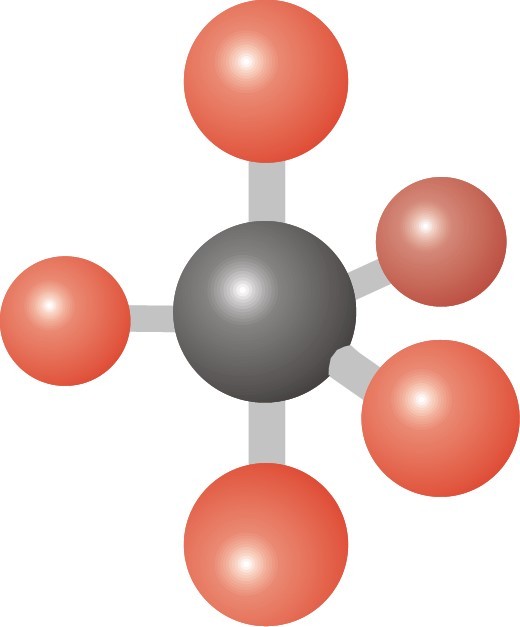
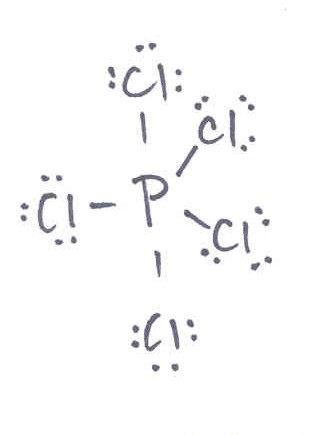
What is the molecular geometry of PCl5?

a)

trigonal bipyramidal

b)

see saw

c)

octahedral

d)

square pyramidal

41.

What is the molecular geometry of SO3?

a)

linear

b)

trigonal bipyramidal

c)

octahedral

d)

trigonal planar

42.

What is the molecular geometry of SF2?

a)

linear

b)

bent

c)

trigonal planar

d)

tetrahedral

43.
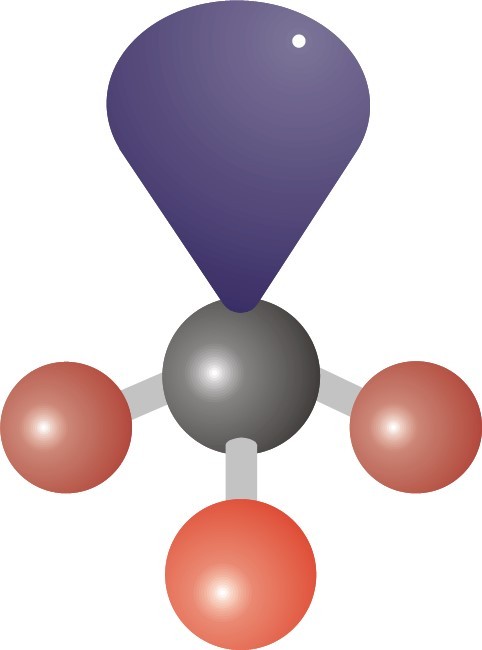
Choose the correct shape for this molecule:
a)
Trigonal planar
b)
Trigonal pyramidal
c)
Tetrahedral
d)
Linear
44.
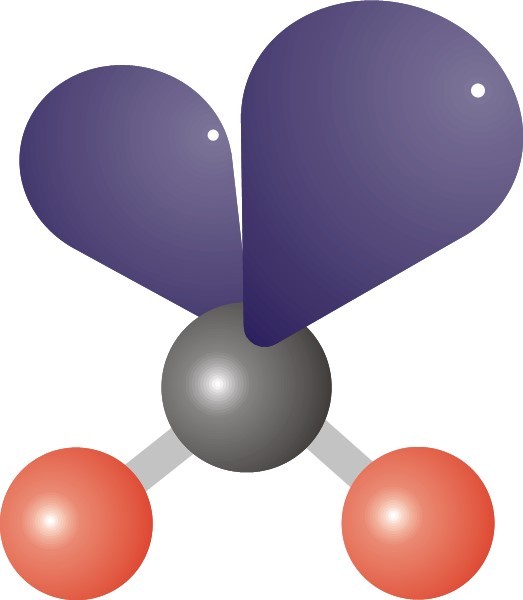
Choose the correct shape for this molecule:
a)
Bent
b)
Trigonal pyramidal
c)
Trigonal planar
d)
Linear
45.
Choose the correct shape for this molecule:
a)
Trigonal planar
b)
Trigonal pyramidal
c)
Bent
d)
Tetrahedral
46.
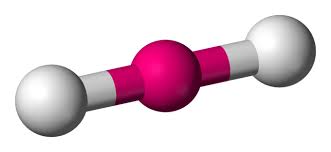
Choose the correct shape for this molecule:
a)
linear
b)
Trigonal pyramidal
c)
Bent
d)
Tetrahedral
47.
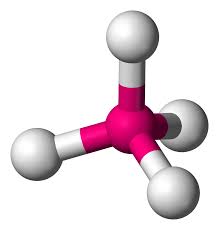
Choose the correct shape for this molecule:
a)
linear
b)
Trigonal pyramidal
c)
Bent
d)
Tetrahedral
48.
Choose the correct shape for this molecule:
a)
Bent
b)
Linear
c)
Tetrahedral
d)
Trigonal pyramidal
49.
 A lone pair is defined as
a)
A pair of bonding electrons
b)
One non-bonding electron
c)
A pair of non-bonding electrons
d)
A pair of electrons on the central atom
50.
What is the VSEPR theory used to predict?
a)
Bond Strength
b)
Polarity
c)
Molecular Shape
d)
Electronegativity
51.

Which Lewis Dot Model drawing correctly shows an O2 molecule?

a)
b)
c)
d)
52.
What is the VSEPR shape of H2S?
a)
linear
b)
trigonal planar
c)
bent
d)
tetrahedral
53.

Which type of molecular shape is shown by this molecule?

a)

trigonal pyramidal

b)

tetrahedral

c)

bent

d)

trigonal planar

54.
Low melting point and low solubility in water are general properties of ______________________ compounds
a)
ionic
b)
covalent
c)
chemical
d)
glucose
55.

Which of these Lewis structures is incorrect?

a)
b)
c)
d)
56.

Which is the correct molecular structure for carbon dioxide?

a)
b)
c)
d)
57.
What is the ELECTRONIC geometry of the following?
a)
Linear
b)
Trigonal planar
c)
Tetrahedral
d)
Trigonal Bipyramidal
58.
Which of the following molecular shapes would have a bond angle of 180 Degrees?
a)
Bent
b)
Trigonal Planar
c)
Tetrahedral
d)
Linear
59.
Which shapes are altered by unshared pairs of electrons? 
a)
Bent and Pyramidal
b)
Trigonal Planar and Bent
c)
Tetrahedram and Bipyramidal
d)
Pyramidal and Linear
60.
What molecular shape is the structure shown here? (BCl3)
a)
linear
b)
trigonal planar
c)
tetrahedral
d)
trigonal pyramidal
61.
VSEPR stands for ________ theory.
a)
Valence Structure of Electron Pyramids and Regression
b)
Varied Structures of Electrons Paired and Replaced
c)
Varied Shell Energy of Protons and Radiation
d)
Valence Shell Electron Pair Repulsion
62.
What is the measure of a tetrahedral bond angle?
a)
90 Degrees
b)
109.5 Degrees
c)
120 Degrees
d)
180 Degrees
63.
Which of the following shapes has unshared pairs of electrons on the central atom? 
a)
Bipyramidal
b)
Bent
c)
Trigonal Planar
d)
Tetrahedral
64.
The bond angle for a trigonal planar molecule is 
a)
90 Degrees
b)
109.5 Degrees
c)
120 Degrees
d)
180 Degrees
65.
How many unshared pairs of electrons will a bent molecule have? 
a)
1
b)
2
c)
3
d)
4
66.
How many unshared pairs of electrons will a pyramidal molecule have? 
a)
1
b)
2
c)
3
d)
4
67.
What is the bond angle in a bent molecule? 
a)
90
b)
105
c)
107
d)
180
68.
Who could this be? 
a)
CO2
b)
NH3
c)
H2S
d)
CH4
69.
Who could this be?
a)
H2O
b)
NH3
c)
CO2
d)
CH4
70.
A bond where electrons are NOT shared equally? 
a)
polar covalent
b)
nonpolar covalent
71.
How many electrons are shared in a triple bond?
a)
6
b)
3
c)
6 pairs
d)
5
72.
What two types of atoms make a covalent bond?
a)
2 Nonmetals
b)
1 Nonmetal and 1 Metal
c)
2 Metals
d)
2 Noble Gases
73.

In order to minimize repulsion, electron pairs around a central atom arrange themselves as _________as possible from each other.

a)

near

b)

far apart

c)

tight

d)

loose

74.

Refers to the shape of the electron

domains around a central atom. This includes both bonding electrons and

nonbonding electrons (lone pairs).

a)

Electron Domain Geometry

b)

Molecular Geometry

c)

Lewis Structure

d)

Lewis Symbol

75.

Gives the 3D shape of molecule.

a)

Electron Domain Geometry

b)

Molecular Geometry

c)

Lewis Structure

d)

Lewis Symbol

76.

Which has the strongest electron-electron repulsion?

a)

Single bonds

b)

Double bonds

c)

Triple bonds

d)

Lone pairs

77.

How many bonding electron pairs surround N in the compound NO3-?

a)

1

b)

2

c)

3

d)

4

78.
Nitrogen will form which of the following ions?
a)
N
b)
N-3
c)
N-5
d)
N+5
79.
Beryllium will ____ valence electrons when forming an ionic bond.
a)
lose 4
b)
gain 4
c)
lose 2
d)
gain 2
80.
In the chemical formula for an ionic compound, which item is written first?
a)
positive ion
b)
negative ion
c)
subscript
d)
the female
81.

Which of the following is true for ionic bonding & ionic compounds?

a)

They must be made of ions with like charges.

b)

The negative ion must be written first.

c)

Compounds must have an overall charge of zero.

d)

They are made of metals and nonmetals.

e)

The positive ion must be written first.

82.
Metals tend to 
a)
gain electrons
b)
lose electrons
83.

Which of the following pairs of elements will NOT form an ionic compound?

a)

sodium and fluorine

b)

phosphorous and aluminum

c)

potassium and magnesium

d)

strontium and oxygen

84.

In an ionic bond, the ions are held together because...

a)

the positive nucleus of each ion attracts the other ion's negatively charged electrons

b)

the ions have opposite charges

c)

as the electron moved from one atom to another it pulled the atom along with it

d)

electrons are being shared

85.

Which of the following is NOT a property of ionic compounds?

a)

They conduct electricity when molten

b)

They conduct electricity when in solution

c)

They have high boiling points

d)

They are insoluble in water

86.
Which of the following is a characteristic property of ionic compounds?
a)
They form hard, brittle crystals with characteristic shapes
b)
They have low melting points
c)
They have low boiling points
d)
They contain no charged particles
87.
In what form can an ionic compound conduct electricity?
a)
when dissolved in water
b)
as a solid
c)
as a crystal
d)
when warmed slightly
88.

Which of the following would be a property of an ionic compound?

a)

Electrically charged.

b)

Made of nonmetals.

c)

Tend to by crystalline solids at room temperature.

d)

Conducts electricity

89.
The desire for an element to have 8 atoms around it is called 
a)
Octet Rule
b)
Resonance
c)
Ionization energy
d)
Electronegativity
90.
Which of the following is a Diatomic Molecule 
a)
K2
b)
C2
c)
S2
d)
N2
91.
Which of these forces applies to all molecules
a)
London Dispersion
b)
Dipole dipole
c)
Hydrogen Bonding
d)
Covalent bonding
92.
What is a diatomic element?
a)
a metal bonded with a nonmetal
b)
2 or more nonmetals bonded together
c)
2 or more metals bonded together
d)
2 atoms of the same element bonded together
93.
What is the basis of a metallic bond?
a)
the attraction of neutral metal atoms.
b)
the attraction between protons and neutrons.
c)
the attraction between positive metal ions and interlocking electrons.
d)
the attraction between positive metal ions and free floating electrons.
94.
At room temperature, most metals are
a)
liquid
b)
solid
c)
gas
d)
an alloy
95.
What does malleable mean?
a)
able to be shaped
b)
will break easily
c)
can be used for wire
d)
is shiny
96.

What is the ability of a substance to be pulled into a wire?

a)

Malleability

b)

Ductility

c)

Conductivity

d)

Solubility

97.
Why do metals conduct
a)
They are shiny
b)
The electrons are held tightly within the lattice
c)
The electrons are delocalised and able to move
d)
The electrons are shared between two metal ions
98.
Why do metals conduct
a)
They are shiny
b)
The electrons are held tightly within the lattice
c)
The electrons are delocalised and able to move
d)
The electrons are shared between two metal ions
99.
Metallic bonding is...
a)
a type of covalent bond.
b)
a type of ionic bond.
c)
an attraction between positive ions and electrons.
100.
What is the ability of a substance to allow heat, sound, or electricity to flow through it?
a)
Malleability
b)
Ductility
c)
Solubility
d)
Conductivity
101.

Which of these are considered properties of metals? (choose ALL that apply)

a)

brittleness

b)

low melting point

c)

luster (shininess)

d)

malleability

e)

ductility

102.
I can hit a metal with a hammer without the metal shattering because of its __________.
a)
Ductility
b)
Malleability
c)
Conductivity
d)
Lustrousness
103.

Is this molecule polar or non-polar?

a)

Polar

b)

Non-polar

104.

Is this molecule polar or non-polar?

a)

Polar

b)

Non-polar

105.

Is this molecule polar or non-polar?

a)

Non-polar

b)

Polar

106.

Is this molecule polar or non-polar?

a)

Non-polar

b)

Polar

107.
In covalent bonds, electrons are ___________.
a)
transferred
b)
gained
c)
lost
d)
shared
108.
In a polar covalent bond, electrons are shared ___________.
a)
equally
b)
unequally
c)
between non-metals with similar electronegativities
d)
between a metal and a non-metal
109.
In this Lewis structure, the symbol above F means...
a)
electrons are being transferred to Fluorine
b)
electrons are less attracted to F than H
c)
electrons are more attracted to F than H
d)
Fluorine has formed a cation
110.
This is an example of a __________ bond.
a)
non-polar covalent
b)
polar covalent
c)
ionic
d)
metallic
111.
What geometry will this molecular structure have?: CCl4
a)
bent
b)
tetrahedral
c)
linear
d)
trigonal pyramidal
112.

What is the hybridization of a linear molecule?

a)

sp

b)

sp2

c)

sp3

d)

sp3d

113.

Which of the following images represents a Trigonal Planar molecular geometry?

a)
b)
c)
d)
114.

What is the hybridization of this molecule shown above

a)

sp

b)

sp2

c)

sp3

d)

sp4

115.

What is the bond angle for the CH4 molecule?

a)

120°

b)

107°

c)

109.5°

d)

90°

116.

What is the hybridization of the central atom of a bent molecule? (AB2E2)

a)

sp

b)

sp2

c)

sp3

d)

sp3d

117.
Choose the correct shape for this molecule:
a)
Trigonal planar
b)
Trigonal pyramidal
c)
Bent
d)
Tetrahedral
118.
What are all the bond angles in the linear arrangement as predicted by VSEPR theory? 
a)
90°
b)
180°
c)
120°
d)
109.5°
119.
The molecule shown in the diagram can best be classified as a
a)
polar covalent molecule
b)
nonpolar covalent molecule
c)
ionic compound
d)
nonpolar ionic compound
120.

The polarity of a bond between two elements can be best determined by

a)

The difference in electronegativity between the elements

b)

The difference in first ionization energy between the elements

c)

The number of electrons shared in the bond

d)

The difference in atomic radius between the elements

121.
Which bond is most polar?
a)
H-F
b)
H-Cl
c)
H-Br
d)
H-I
122.
The ability of an atom to attract electrons to itself is called
a)
geometry
b)
conductivity
c)
electronegativity
d)
ionization energy
123.
What kind of bond do you have: Li and Cl
a)
Non-polar covalent
b)
Polar covalent
c)
ionic
d)
James Bond
124.
What are the hybridization and the approximate bond angles in CS2?
a)
sp2, 1070
b)
sp3, 1200
c)
sp2, 1200
d)
sp, 1800
125.
Which molecule exhibits resonance? 
a)
O3
b)
BeCl2
c)
CO2
d)
NF3
126.

What is the molecular geometry for the Lewis Structure pictured above?

a)

Tetrahedral

b)

See-Saw

c)

Trigonal Bipyramidal

d)

Trigonal Pyramidal

127.

What is the molecular geometry for the Lewis Structure pictured above?

a)

Linear

b)

Bent

c)

See-Saw

d)

Square Planar

128.

What is the molecular geometry for the Lewis Structure pictured above?

a)

Trigonal Planar

b)

Tetrahedral

c)

Trigonal Bipyramidal

d)

Octahedral

129.

What is the molecular geometry for the Lewis Structure pictured above?

a)

Trigonal Planar

b)

Trigonal Pyramidal

c)

Tetrahedral

d)

See-Saw

130.

Which of the following best describes why molecules have certain geometries

a)

The unshared pairs of electrons & the bonding pairs of electrons on the central atom are experiencing repulsive forces

b)

The unshared pairs of electrons & the bonding pairs of electrons on the central atom are experiencing attractive forces

c)

The unshared pairs of electrons & the bonding pairs of electrons on the largest atom are experiencing repulsive forces

d)

The bonding pairs of electrons on the atom with the most unshared pairs are experiencing repulsive forces

131.

Which of the following bonds is least polar?

a)

C--O

b)

O--H

c)

S--Cl

d)

Br--Br

e)

I--F

132.

Which of the following atoms cannot exceed the octet rule in a molecule?

a)

N

b)

S

c)

P

d)

I

e)

all atoms must obey the octet rule

133.

Choose the electron dot formula that most accurately describes the bonding in CS2.

a)
b)
c)
d)
e)
134.

Complete the Lewis structure for the molecule shown. Then decide how many sigma and pi bonds there are in the molecule.

a)

6 sigma, 0 pi

b)

12 sigma, 2 pi

c)

12 sigma, 3 pi

d)

13 sigma, 3 pi

e)

16 sigma, 0 pi

135.

In the Lewis structure for ICl2, how many lone pairs of electrons are around the central iodine atom?

a)

0

b)

1

c)

2

d)

3

e)

4

136.

What does 'polar' mean? Choose all that apply.

a)

Atoms with 4 sets of lone pairs

b)

Molecules with an electronegativity difference under 0.4

c)

Molecules that are more electronegative on one side than another

d)

Molecules with no lone pairs

137.

If a molecule is trigonal pyramidal, how is that different from a tetrahedral?

a)

trigonal pyramidal: 1 lone pair and 3 bonds. tetrahedral: 4 bonds, no lone pairs

b)

trigonal pyramidal: 4 bonds, no lone pairs. tetrahedral: 1 lone pair and 3 bonds

c)

trigonal pyramidal: 2 lone pairs and 2 atoms. tetrahedral: 4 atoms and no lone pairs

d)

Trick question, they aren't different.

138.

Why do lone pairs affect molecular geometry?

a)

They don't affect molecular geometry.

b)

Lone pairs pull the atoms bonded to the central atom towards them

c)

Lone pairs repel other electron domains, such as bonds, away from themselves

d)

Lone pairs are made of protons, which repel the protons in the atoms around the central atom

139.

If a molecule has an electronegativity difference of 0.6, is the bond polar, nonpolar, or ionic?

a)

Polar

b)

Nonpolar

c)

Ionic

d)

None of the above

140.

If there are 2 atoms bonded around the central atom, and an unknown number of lone pairs, what is its molecular geometry?

a)

Linear

b)

Bent

c)

Trigonal Pyramidal

d)

We can't know without knowing if there are lone pairs.

141.

Depending on the symmetry in the molecules, dipole moments may cancel out or add up.

a)

True

b)

False

142.

Is this molecule polar or non-polar?

a)

Non-polar

b)

Polar

143.

Consider the molecule above. Determine the molecular geometry at each of the 2 labeled carbons.

a)

C1 = tetrahedral, C2 = linear

b)

C1 = trigonal planar, C2 = bent

c)

C1 = bent, C2 = trigonal planar

d)

C1 = trigonal planar, C2 = tetrahedral

144.

To determine the molecular geometry of a compound by using VSEPR theory, double bond and triple bonds are considered as

a)

two or three bonding pairs

b)

two bonding pairs

c)

five bonding pairs

d)

one bonding pair

145.
What is the VSEPR theory used to predict?
a)
Bond Strength
b)
Polarity
c)
Molecular Shape
d)
Electronegativity
146.
*
a)
linear
b)
trigonal planar
c)
trigonal pyramid
d)
bent of angular
147.
*
a)
trigonal pyramid
b)
linear
c)
bent
d)
angular
148.
How many lone pairs are in this molecule's structure?
a)
6
b)
2
c)
0
d)
4
149.
How many electrons are shared in a triple bond?
a)
6
b)
3
c)
6 pairs
d)
5
150.
What kind of bond occurs between the carbons in C2H2?
a)
single
b)
double
c)
triple
d)
quadruple
151.
What is the name of pairs of electrons that do not participate in bonding? 
a)
outer pair
b)
unvalenced pair
c)
lone pair
d)
inner pair
152.

This carbon atom went through ....

a)

sp hybridization

b)

sp2 hybridization

c)

sp3 hybridization

d)

dsp3 hybridization

153.

What is the hybridization of a linear molecule?

a)

sp

b)

sp2

c)

sp3

d)

sp3d

154.

Which of the following images represents a Trigonal Planar molecular geometry?

a)
b)
c)
d)
155.

What is the hybridization of PF5?

a)

sp3

b)

sp3d

c)

sp3d2

d)

sp2

156.
Which statement is TRUE, based on the diagram provided?
a)
atomic orbital overlap to produce sigma bond
b)
s orbital overlap to produce π bond
c)
s orbital overlap with s orbital to produce sigma bond
d)
p orbital overlap to produce π bond
157.
Sulfur atom undergo
a)
sp hybridization
b)
sp2 hybridization
c)
sp3 hybridization
d)
dsp3 hybridization
158.
Pi bonds are formed by 
a)
side to side overlap of s orbitals
b)
end to end overlap of s orbitals
c)
side to side overlap of p orbitals
d)
end to end overlap of p orbitals
159.
How many sigma and pi bonds does this have?
a)
1 sigma and 1 pi
b)
2 sigma and 1 pi
c)
1 sigma and 2 pi
d)
2 sigma and 2 pi
160.
How many sigma and pi bonds does this have? 
a)
3 sigma and 2 pi
b)
5 sigma and 5 pi
c)
5 sigma and 0 pi
d)
0 sigma and 5 pi
161.
How many pi bonds are there in a single bond? 
a)
0
b)
1
c)
2
d)
3
162.
Type of intermolecular force present in HF.
a)
dipole dipole
b)
dispersion
c)
H-bond
d)
ionic
163.
Type of intermolecular force present in I2, Br2, and Cl2.
a)
dipole dipole
b)
H-bond
c)
dispersion
d)
metallic
164.
Intermolecular forces are the forces
a)
within molecules
b)
between molecules
165.
Intermolecular force present in HCl?
a)
dipole dipole
b)
dispersion
c)
H-bond
d)
ionic
166.
Intermolecular force present in Cl2?
a)
dipole dipole
b)
H-bond
c)
dispersion
d)
metallic
167.
Hydrogen bonds are a form of bonding.
a)
True 
b)
False
168.

Intermolecular forces for: NH3

a)

Dispersion Force

b)

Dipole dipole

c)

Hydrogen bonding

169.

The weaker the intermolecular forces of a substance the _____________ the boiling point

a)

higher

b)

lower

170.

Which term represents an intermolecular force in a sample of water?

a)

hydrogen bonding

b)

covalent bonding

c)

metallic bonding

d)

ionic bonding