
 Worksheets
AP Biology Unit Review 1 - 3
Total questions: 100
Worksheet time: 1hrs 18mins

What is the strongest of all the bonding types?
Covalent
Ionic
Hydrogen
Metallic


Large bodies of water do not quickly fluctuate, or change, in temperature. Why?
Water is a solvent.
Water has a high heat capacity.
Water acts as a buffer.
Water is non-polar.

The three elements that make up most of all 4 types of macromolecules
Water, Oxygen, & Hydrogen
Carbon, Hydrogen, & Oxygen
Nitrogen, Hydrogen, & Oxygen
Nitrogen, Phosphorus, & Sulfur

What element is found in proteins and nucleic acids but not carbs nor lipids?
carbon
hydrogen
nitrogen
oxygen


Which of the following best summarizes the relationship between dehydration reactions and hydrolysis?
Hydrolysis only occurs in the urinary system, and dehydration reactions only occur in the digestive tract.
Hydrolysis creates monomers, and dehydration reactions break down polymers.
Dehydration reactions can occur only after hydrolysis.
Dehydration reactions assemble polymers, and hydrolysis breaks down polymers.

What are the monomers of carbohydrates?
Nucleotides
Amino Acids
Fatty Acids
Monosaccharides

What macromolecule makes up the cell membrane's lining?
Saturated Fatty acid chains
Phospholipids
Polypeptide chains
Cellulose polysaccharide Chains

Alpha helix and beta pleated sheets are part of what level of protein structure?
primary
secondary
tertiary
quaternary

Enzymes and hormones are both examples of:
proteins
lipids
nucleic acids
carbohydrates

Which term includes all others in the list?
monosaccharide
polysaccharide
starch
carbohydrate

Which biomolecule is mainly hydrocarbons and therefore very hydrophobic?
carbohydrate
nucleic acid
protein
lipid

A prokaryotic cell has which of the following?
Centrioles
Lysosomes
Plasma membrane
Mitochondria

All of the following cell components are found in prokaryotic cells EXCEPT
DNA
ribosomes
cell membrane
nuclear envelope

Contains hydrolytic enzymes associated with the intracellular digestion of macromolecules
Centriole
Lysosome
Nucleolus
Ribosome

Which structure is thought to have evolved from a photoautotrophic prokaryote?
A
B
C
D

Mitochondria are found in most eukaryotic cells and contain their own DNA and ribosomes that are similar to those typical of many prokaryotic cells. Which of the following statements is justified by these observations?
The mitochondrion is the only location in which eukaryotic cells can synthesize ATP.
An ancestral cell most likely engulfed anaerobic prokaryote in a relationship that proved beneficial for both cells.
Mitochondrial membranes provide abundant surface area for reactions because of the infoldings called cristae.
The mitochondrion plays a role in respiration, but it also stores the cell’s extra mRNA.

Site of conversion of chemical energy of glucose to ATP
A
B
C
D

Site of modification and packaging of proteins and lipids prior to export from the cell.
A
B
C
D

According to the fluid mosaic model of cell membranes, phospholipids___________________.
can shift laterally along the plane of the membranee
frequently flip-flop from one side of the membrane to the other
occur in an uninterrupted bilayer, with membrane proteins restricted to the surface of the membrane
have hydrophilic tails in the interior of the membrane

Which of the following would likely diffuse through the lipid bilayer of a plasma membrane most rapidly?
sucrose.
an amino acid.
O2.
Na+.

Which of the following statements about diffusion is true?
It is very rapid of long distances.
It requires an expenditure of energy by the cell.
It is an active process in which molecules move from a region of lower concentration to a region of higher concentration.
It is a passive process in which molecules move from a region of higher concentration to a region of lower concentration.

Which of the following membrane activities requires energy from ATP?
Facilitated diffusion of chloride ions through a chloride channel.
Movement of Na+ ions from lower concentration in a mammalian cell to a higher concentration in the extracellular fluid.
Movement of glucose molecules into a bacteria cell from a medium containing a higher concentration of glucose than inside the cell.
Movement of carbon dioxide out of a paramecium.

This egg has shrunk, what type of solution was it placed in?
hypotonic solution
hypertonic solution
isotonic solution


Which Type of solution is the middle cell placed in?
Hypertonic
Hypotonic
Isotonic
Robotonic

What is the difference between active and passive transport?
Active does not need energy and passive uses ATP (energy)
Active uses ATP (energy) and passive does not need energy
Active stores transport proteins and passive releases
Active uses hormones and passive does not

Identify three types of passive transport.
Transport proteins, Endocytosis, Exocytosis
Osmosis, gated transport, protein pump
Osmosis, simple diffusion, facilitated diffusion,
Facilitated diffusion, Endocytosis, Exocytosis

Describe the difference between rough ER and smooth ER.
Rough ER compartmentalizes protein synthesis; Smooth ER functions in detox and lipid synthesis
Rough ER functions in ribosome synthesis; Smooth ER functions in lipid synthesis
Rough ER functions in detox and lipid synthesis; Smooth ER compartmentalizes cell
Rough ER functions in lipid synthesis; Smooth ER functions in ribosome synthesis

Which organelle is a membrane-bound structure that functions in correct folding/chemical modification of proteins?
Golgi complex
Lysosome
Mitochondria
Chloroplast

Which is responsible for storage and release of macromolecules and cellular waster products. In plants, aids in turgor.
Endoplasmic Reticulum
Lysosome
Mitochondria
Vacuoles

Which of the following is the location for the light-dependent reactions?
grana/thylakoid membrane
matrix
stroma
cristae

Which of the following is the location for the Krebs cycle?
grana/thylakoid membrane
matrix
stroma
cristae

Which of the following is the location for the ATP synthesis in cellular respiration?
grana/thylakoid membrane
matrix
stroma
cristae

Describe the relationship between cell size and SA:V ratios.
As cells increase in size, the SA:V ratio increases
As cells decrease in size, the SA:V ratio decreases
As cells increase in size, the SA:V ratio decreases
Cell size has no effect on the SA:V ratio

Describe the characteristics of a membrane-bound protein.
Entire protein is hydrophilic
Entire protein is hydrophobic
Hydrophilic R group exterior cell & hydrophobic R group interior membrane
Hydrophilic R group interior membrane & hydrophobic R group interior cell
Which of the following correctly describe the movement of water?
Cell with 0.5M concentration will gain water from the 1.0M exterior solution
Cell with 0.5M concentration will gain water from the 0.5M exterior solution
Cell with 1.0M concentration will gain water from the 0.5M exterior solution
Cell with 0.5M concentration will lose water to the 0.5M exterior solution

Why is a eukaryotic cell able to be larger than a prokaryotic cell?
Membrane-bound organelles compartmentalize intracellular processes
Prokaryotic cells have a nucleus which decreases the volume of the cell
Eukaryotic cells have a nucleus which decreases the volume of the cell
Absence of membrane-bound organelles allows for enzymatic reactions.

Which structure is common to plant and animal cells?
central vacuole
chloroplast
wall made of cellulose
mitochondrion

Which of the following is major cause of the size limits for certain types of cells?
evolutionary progression in cell size; more primitive cells have smaller sizes.
the need for sufficient surface area to support the cell's metabolic needs.
limitation on the strength and integrity of the plasma membrane as cell size increases
the difference in plasma membranes between prokaryotes and eukaryotes

A patient has had a serious accident and lost a lot of blood. In an attempt to replenish body fluids, distilled water-equal to the volume of blood lost-is transferred directly into one of his veins. What will be the most probable result of this transfusion?
The patient's red blood cells will shrivel up because the blood fluid has become hypertonic compared to the cells.
The patient's red blood cells will shrivel up because the blood fluid has become hypotonic compared to the cells.
It will have no unfavorable effect as long as the water is free of viruses and bacteria.
The patient's red blood cells will swell because the blood fluid has become hypotonic compared to the cells.

Large numbers of ribosomes are present in cells that specialize in producing which of the following molecules?
glycogen
cellulose
proteins
lipids

What is a peptide bond?
Bond that holds two amino acids together.
A bond that holds hydrogen and oxygen molecules together.
A bond that holds the phosphate group of one nucleotide and a sugar of a neighboring nucleotide.
A bond that is formed by the sharing of electrons.


Each amino acid is different from the other due to....
The R group
The amino group
The carboxyl group
The central carbon

Cells must produce many different enzymes because
enzymes are quickly used up
most cellular reactions require a specific, unique enzyme
They have to have some way to use up the protein that they consume
enzymes are not very effective at speeding up reactions

What elements make up amino acids?
Carbon, hydrogen and oxygen only
Carbon, hydrogen, oxygen and nitrogen only
Carbon, hydrogen and phosphorus only
Carbon, hydrogen, nitrogen and oxygen; and sometimes also sulfur

The primary sequence of a protein refers to the:
Order of amino acids
α-Helix or β-Pleated Sheet
Interaction of subunits
Hydrogen Bonding

Some bacteria are metabolically active in hot springs because ____________
their enzymes are insensitive to temperature
they use molecules other than proteins as their main catalysts
their enzymes have high optimal temperatures
they are able to maintain an internal temperature much cooler than that of the surrounding water

Which of these is NOT true?
Enzymes can denature (change shape) when the temperature gets too high.
Enzymes can only be used once in a chemical reaction.
Extreme pH can denature enzymes.
Enzymes speed up chemical reactions.
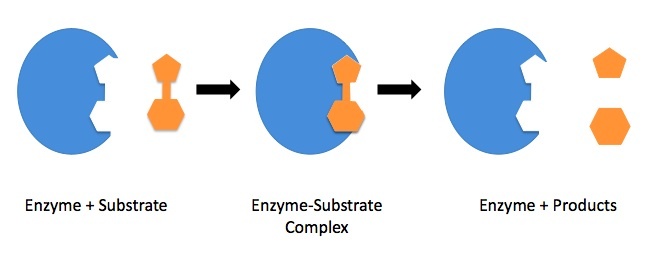
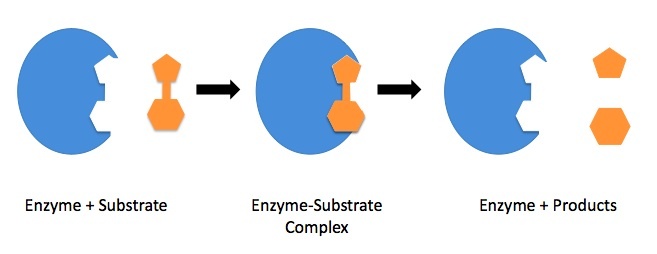
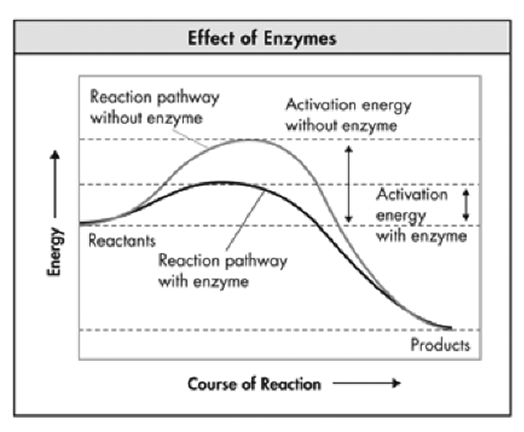
In order to increase the rate of reaction using an enzyme a scientist could.... (Choose all that apply)
Increase the amount of substrate
Decrease the temperature
Increase the temperartue
Introduce a competitive inhibitor

The part of the enzyme that the substrate bonds to is called the _____.
active site
activation energy
bond site
peptide bond
If a mutation occurs in a DNA sequence that codes for an enzyme, what is the most likely result?
There will likely be no change in the shape and function of the enzyme.
The enzyme will most likely fold in a way that makes its shape incompatible with the substrate and the enzyme will not function correctly.
The enzyme will not be produced at all.
The enzyme will have an enhanced ability to bind with the substrate.
Each enzyme only has 1 substrate that will fit its active site. What is this called?
reusability
catalysis
specificity
fragility
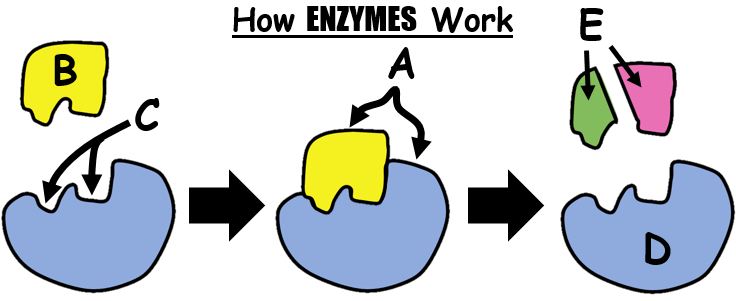
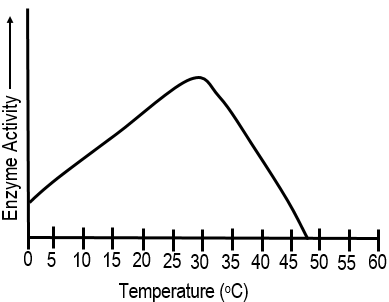
Describes the process by which an enzyme's function at the active site may be either activated or inhibited by the binding of a regulatory molecule at a separate site.
Allosteric Interactions
Feedback Inhibition
Competitive Inhibition
Noncompetitive Inhibition

The process by which a metabolic pathway is shut off by the product it produces
Allosteric Inhibition
Feedback Inhibition
Competitive Inhibition
Noncompetitive Inhibition
A molecule that binds to the enzyme at a site other than the active site, causing the enzyme to change shape and be unable to bind substrate
Allosteric Inhibition
Feedback Inhibition
Competitive Inhibition
Noncompetitive Inhibition
In an experiment, changing the pH from 7 to 6 resulted in an increase in product formation. From this we can conclude that
the enzyme's optimal pH is 6
this enzyme works best at a neutral pH
the temperature must have increased when the pH was changed to 6
the enzyme was in a more active shape at pH 6
The best way to speed up an enzymatic reaction would be
Add more substrate
Add more enzyme
Increase the temperature
Increase the salinity
An enzyme called enteropeptidase converts trypsinogen into trypsin. Trypsin increases the activity of enteropeptidase.
Positive Feedback
Negative Feedback
Competitive Inhibition
Noncompetitive Inhibition
In E.Coli, an enzyme called RelA catalyzes the formation of a molecule called alarmone. Alarmone binds to RelA at a location different than the active site and the binding of Alarmone to RelA increases the affinitiy of RelA for its substrate.
Positive Feedback
Allosteric Inhibition
Negative Feedback
Allosteric Activation
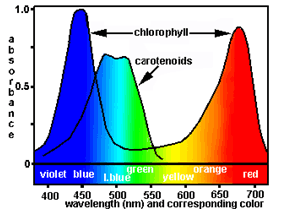

What is the primary function of the light reactions of photosynthesis?
To produce glucose
To produce NADPH and ATP
To use ATP
To produce RuBP

What is the function of NADP+?
It absorbs light
It is an electron carrier
It is a light-reflecting pigment
It acts as long-term energy storage

Which of the following molecules is not needed for the Calvin Cycle?
CO2
ATP
NADPH
H2O

The light reactions occur in the ________ and the dark reactions take place in the ________.
Chloroplast / thylakoid membrane
stroma / thylakoid
mesophyl / stomata
thylakoid membrane / stroma

Which of the following equations represents the overall chemical reaction for photosynthesis?
6O2+ 6H2O → C6H12O6+ 6O2
C6H12O6 + 6H2O→ 6O2+ 6O2
6CO2+ 6H2O→ C6H12O6+ 6O2
6O2 + 6H2O→ C6H12O6 + 6CO2

Where does the oxygen produced in the light dependent reactions of photosynthesis come from?
chlorophyll
carbon dioxide
the atmosphere
water
Carbon fixation is the process of taking inorganic carbon in ___ and incorporating it into an organic carbon compound. This occurs in the Calvin Cycle.
the soil
the water
carbon dioxide

RuBP is an important part of the Calvin Cycle. This compound combines with ___ to form a 6-carbon compound that ultimately breaks down into 2 PGA molecules.
water
NADPH
carbon dioxide
G3P

These leaf structures regulate gas flow in and out of a plant.
petioles
palisade layer
cuticle
stomata

H+ build up a gradient across the thyakoid membrane. They then flow back through _____, generating ATP.
the membrane
the stroma
ATP synthase

Glycolysis occurs in the _____.
mitochondrial matrix
inner membrane
cytoplasm
cell membrane

Glycolysis splits glucose into 2 molecules of
Acetyl CoA
pyruvate
citric acid
fructokinase

In the absence of oxygen, ____ follows glycolysis.
the link reaction
the citric acid cycle
fermentation
the calvin cycle

Chemiosmosis occurs as H+ ions move through ____ in the cristae, making ATP.
foldings
ATP synthase
protein channels

The ETC provides the energy needed to make the majority of the cell's ATP in a process known as:
chemiosmosis
substrate level phosphorylation
oxidative phosphorylation

What part of cellular respiration produces carbon dioxide?
glycolysis
the link reaction
the citric acid cycle
chemiosmosis

What produces ATP during glycolysis?
chemiosmosis
oxidative phosphorylation
substrate level phosphorylation
fermentation

Which is exergonic?
catabolism
anabolism

When will lactic acid build up in animal cells?
When there is excess carbon dioxide
When the cells produce too much ATP
When there is not enough oxygen to fuel the mitochondria
When the cells need to remove excess oxygen to avoid damaging their components.
What is the function of NAD in cellular respiration?
It catalyzes the conversion of glucose into ATP
It provides inorganic phosphate needed by ATP synthase
It acts as an electron and proton acceptor to carry energy to the electron transport chain
It is the coenzyme needed to convert glucose into pyruvate

