
 Worksheets
PSB Final Exam Review
Total questions: 83
Worksheet time: 1hrs 16mins
Why does a crumpled piece of paper land before a flat sheet of paper?
Gravity exerts more force on the crumpled paper.
There is more air resistance on the flat paper
The crumpled paper is heavier
The crumpled paper is lighter
Which is NOT an action/reaction force pair?
the forces between a bat and ball
the force of gravity between a falling ball and Earth
the force of propulsion and the force of gravity on an airplane
the forces between a rabbit and the ground
Why does a ball thrown level to the ground move downward?
There is no force on the ball.
A force pulls ball in the direction it is thrown.
Gravity pulls ball toward the ground.
Forces pull on the ball in both directions
Air resistance causes the speed of a falling object to...
increase.
decrease.
remain unchanged.
become zero.
A feather is in free fall when the force of gravity...
is greater than the force of air resistance.
is less than the force of air resistance.
is equal to the force of air resistance.
is the only force acting on it.
A sled sliding on a flat, icy surface with a constant velocity is best described by...
Newton's 1st Law of Motion
Newton's 2nd Law of Motion
Newton's 3rd Law of Motion
A rocket under constant force, whose acceleration increases as its mass decreases, illustrates...
Newton's 1st Law of Motion
Newton's 2nd Law of Motion
Newton's 3rd Law of Motion


Distance divided by time is how you find
speed
velocity
displacement
motion
Displacement is
position of object
final position minus initial position
distance divided by time
initial position plus final position

What is the creature's final displacement?
23 m
9 m
-9 m
-23 m
An astronaut travels at a speed of 400 m/s for 250 seconds, what is the total distance he traveled?
0.625 m
100,000 m
1.6 m
650 m
How many gallons are in a pool that holds 758,000 Liters?
(1 gallon = 3.79 Liters)
2.00 x 10⁵ gallons
200,000. gallons
200,000 gallons
2 gallons
0.4000 L to mL
400
40 mL
400L
400mL

When the air is released from a balloon, the air moves in one direction, and the balloon moves in the opposite direction. Which law best explains the motion of the balloon?
Newton's Law of Inertia (1st Law)
Newton's Law of F=ma (2nd Law)
Newton's Law of Force Pairs (3rd Law)
Newton's Law of Biology

What is the definition of a force?
Net force equal 0N and there is no change in the object's motion
the overall force acting on an object after all forces are combined
a push or a pull that acts on an object
The force does not equal 0N, the object accelerates
What is the definition of net force?
a push or a pull that acts on an object
Net force equal 0N and there is no change in the object's motion
the overall force acting on an object after all the forces are combined
The force does not equal 0N, the object accelerates

What is the magnitude and direction of the force in the free body diagram shown?
70 N right
70 N left
50 N right
50 N left
What do we call a force that causes an object to accelerate?
net force
moving force
acceleration force
unbalanced force

What is the magnitude and direction of the force in the free body diagram shown?
20 N, no change in motion
20 N right
20 N left
0 N , no change in motion

What is the magnitude and direction of the force in the free body diagram shown?
5 N down
0 N, no change in movement
15 N up
15 N down

What is the magnitude and direction of the force in the free body diagram shown?
35 N right
17 N right
11 N right
5 N right

Is the object in equillibrium?
Yes
No
Not enough information

Is the object in equillibrium?
Yes
No
Not enough information
Your car has a mass of 2500 kg and a force of 5000 N. How fast will it accelerate?
20 m/s2
0.5 m/s2
2 m/s2
120 N
If an object was accelerating at 5 m/s2, and a force of 10 newtons was required to accelerate it, what was the object's mass?
50 kg
2 kg
0.5 kg
5 kg
Two factors that determine work are
force
acceleration
mass
distance
velocity
units of force are
newtons
grams
joules
meters
units for work are
newtons
joules
meters
seconds
if you push a cart with a force of 60 N for 2 m... how much work have you done
120 J
30 J
120 N
30 N

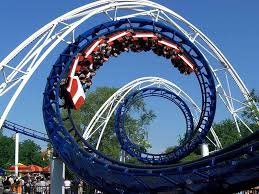
At which point of the roller coaster is potential energy the greatest?
W
X
Y
Z
A golf pro swings his driver with a mass of 0.75 kg at a velocity of 60 m/s. What is the kinetic energy of the club?
22.5 J
It doesn't have kinetic energy-it has potential energy.
2,700 J
1,350 J
What is the mass of a ball has a kinetic energy of 450 J, what must it mass be if it is traveling through the air at 30 m/s?
0.25 kg
15 kg
1 kg
0.50 kg
An 2 kg apple is hanging in a tree, 10 ft off the ground. What is the gravitational potential energy (gravity = 9.8 m/s2) of the apple?
960.4 J
98 J
1920.8 J
196 J
What is a non renewable energy source.
Solar Power
Wind
Natural Gas
Tidal
What is a renewable energy source.
Coal
Solar Power
Nuclear Power
Natural Gas
It takes over millions of years for fossil fuels to form underground.
True
False
Select all the renewable energy sources.
wind
nuclear
geothermal
moving water
If an object is sitting still in a position above the ground it has
Kinetic energy
Chemical potential Energy
Gravitational potential energy
Thermal energy
What causes objects to change, move or do work?
Chemicals
Falling objects
Heat
Energy

Another name for stored energy is
kinetic energy
potential energy
light energy
sound energy

The picture shows what type of transformation
Electrical to mechanical
light to electric
electrical to light
light to light

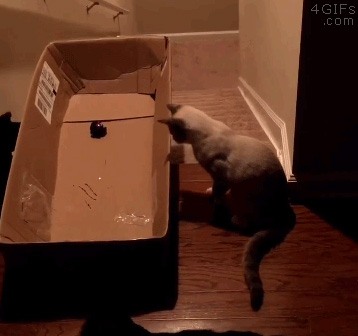
What type of energy transfer is showed in the image
potential to kinetic
electrical to potential
electrical to heat
heat to electrical




The graph represents the motion of a car over 10 seconds. What is the average speed of the car during the first 4 seconds?
.4 m/s
2.5 m/s
10 m/s
40 m/s
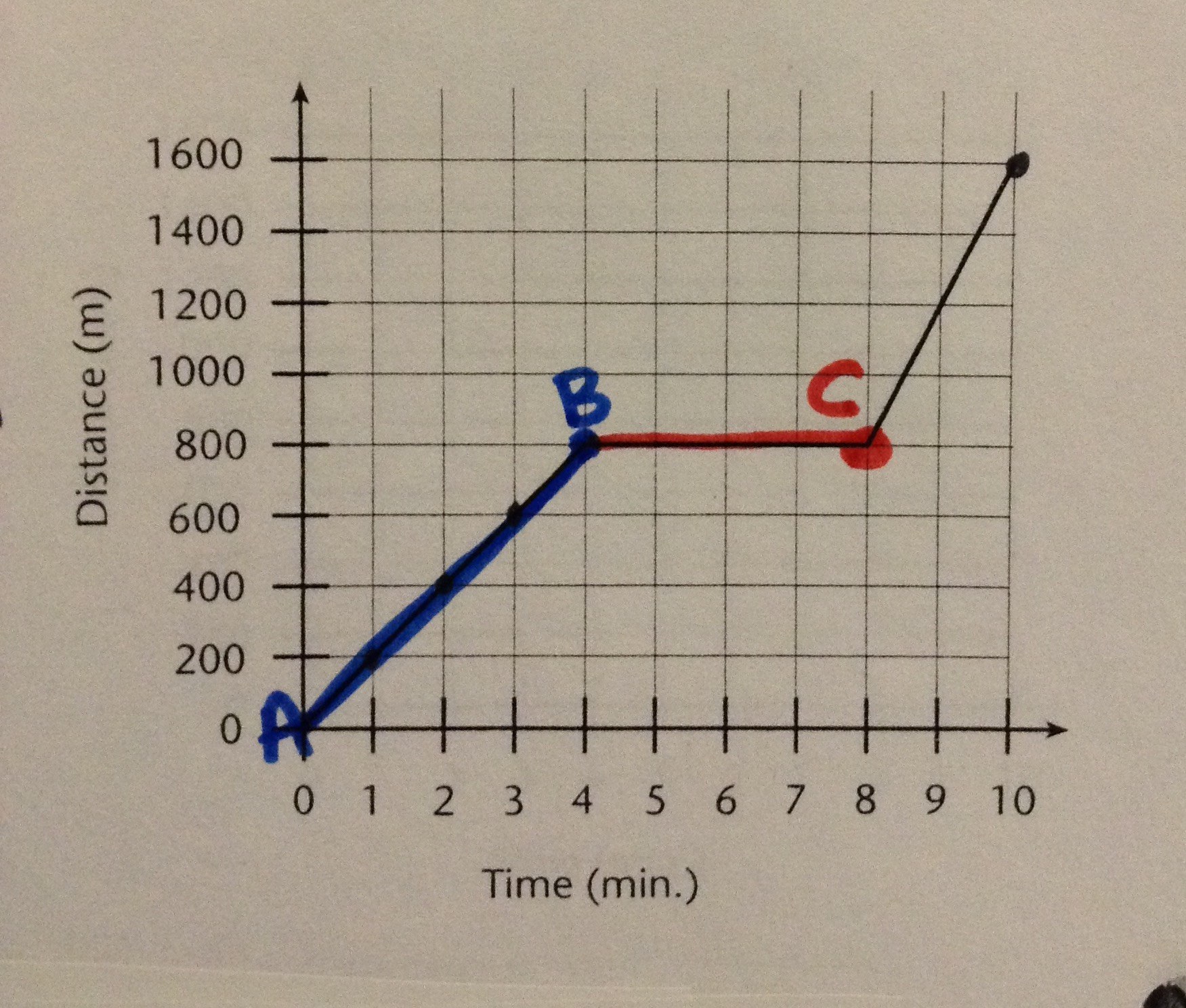
What is occurring from point A to point B?
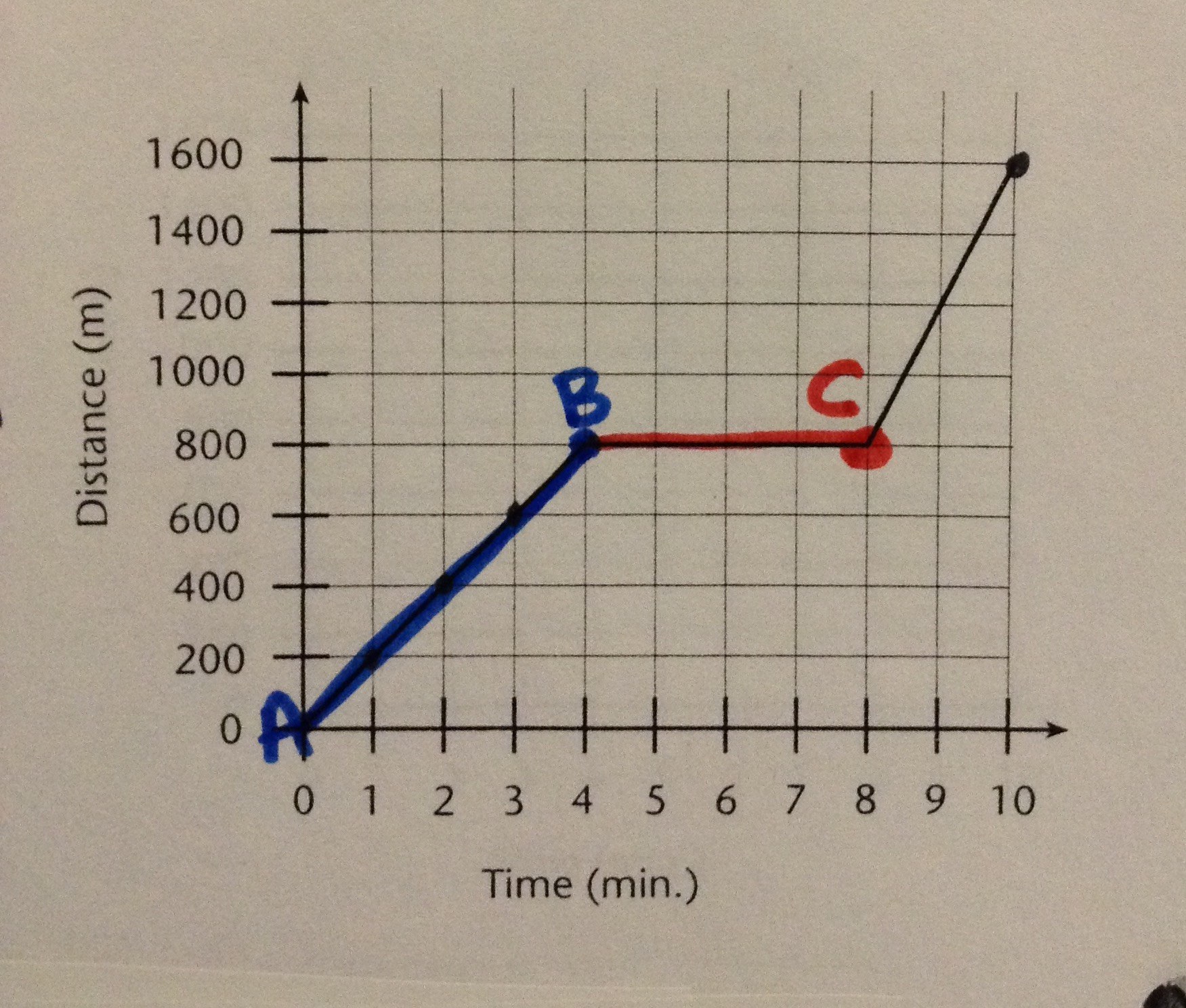
What was occurring from point B to point C?

What is the velocity at 12.5 seconds?
0 m/s
2 m/s
10 m/s
20 m/s
What is the acceleration during interval A?
0 m/s/s
2 m/s/s
10 m/s/s
20 m/s/s
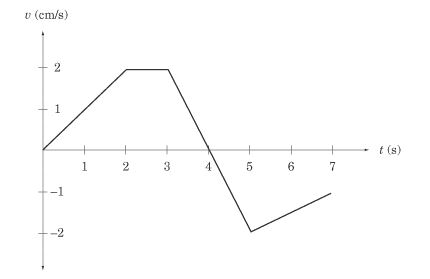
What is happening between 2 and 3 seconds?
The object is not moving.
The object is not accelerating.
The object is slowing down.
The object is speeding up.

What is happening between 3 seconds and 4 seconds?
The object is moving in a negative direction.
The object is returning to its starting position.
The object is slowing to a stop.
The object is changing direction.

Describe the object’s motion.
acceleration
stopped
Constant Speed
Slowing Down
Moving Backwards

Describe the object’s motion.
acceleration
stopped
Constant Speed
Slowing Down
Moving Backwards

During which segment is the object moving at the slowest speed?
A
C
D
During which segment is the object moving at the fastest speed?
A
B
C
D

Which of the following would produce the most power?
A mass of 10 kilograms lifted 10 meters in 10 seconds
A mass of 10 kilograms lifted 10 meters in 5 seconds
A mass of 5 kilograms lifted 10 meters in 5 seconds
A mass of 5 kilograms lifted 5 meters in 10 seconds
Find the distance between two objects if the mass of one object is 6.6 x 10⁵ kg and the mass of the other object is 4.6 x 10⁵ kg. The Force of gravity is 102 N
5.36 x 10⁻⁹ m
0.45 m
0.20 m
6.14 x 10⁻⁴ m
What is the frictional force on a 25-N object sliding along a horizontal surface at constant speed if the coefficient of kinetic friction is 0.40?
10 N
25 N
4.0 N
8.0 N
What is the normal force exerted by the ground on a 65-kg metal bar?
65 N
640 N
-65 N
-640 N

