
 Worksheets
Earth Science Trivia
Total questions: 90
Worksheet time: 56mins
Why is the Inner Core solid?
Extreme Heat
It's under a lot of pressure
All the layers are solid
It's made of rock
Which layer of the Earth is made of melted metals and is the Earth's magnetic field?
outer core
inner core
mantle
crust

What is the thinnest layer of the earth?
mantle
inner core
crust
outer core

The thickest layer of the earth is the mighty, molten
crust
mantle
inner core
outer core


The lithosphere combines what two layers?
Athenosphere & Crust
Crust & Upper Mantle
Mantle & Athenosphere

Living things can survive on this layer...
Upper Mantle
Lower Mantle
Crust
Outer Core

This layer is the MOST dense and under the MOST pressure.
Crust
Mantle
Outer Core
Inner Core
This layer is the LEAST dense!
Crust
Upper Mantle
Outer Core
Inner Core

This layer includes the Upper Mantle and Crust!
Lithosphere
Asthenosphere
Mesosphere
Core

If something sinks, it is _______ dense than the air.
LESS
MORE
Equal

The Earth's crust is MORE dense than the mantle.
True
False

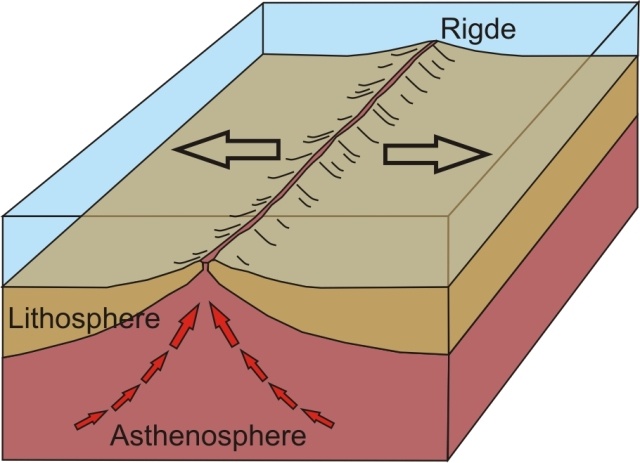


New oceanic crust (sea floor) is created at this boundary.
Divergent Oceanic
Divergent Continental
Convergent Oceanic
Transform

The process where oceanic crust slides under another plate and is melted is called ___________.
seafloor spreading
subduction
continental drift
recycling
Why is the Inner Core solid?
Extreme Heat
It's under a lot of pressure
All the layers are solid
It's made of rock
Which layer of the Earth is made of melted metals and is the Earth's magnetic field?
outer core
inner core
mantle
crust

Which picture shows material that is more dense?
The picture of the left
The picture on the right
This occurs in the mantle and moves Earth's tectonic plates around the globe.
Melted metals
wind
ocean currents
convection currents

Most of Earth's surface is covered with water. Only 2.5% of Earth's global water is freshwater. Of all the fresh water on Earth, 78% is frozen. Where is most of Earth's water found?
oceans
lakes
Where are most of the Earth's freshwater located?
in rivers and streams
in ice caps and glaciers
Approximately what percent of earth water is saltwater?
89%
97%
Which represents the distribution of water on Earth?
3% freshwater, 97% salt water
97% freshwater, 3% salt water


Precipitation means...
water vapor cooling to form clouds
water running downhill
water falling from the sky
water heating up and rising as gas
Runoff means...
water vapor cooling to form clouds
water running downhill
water falling from the sky
water heating up and rising as gas
Condensation means...
water vapor cooling to form clouds
water running downhill
water falling from the sky
water heating up and rising as gas

Evaporation means...
water vapor cooling to form clouds
water running downhill
water falling from the sky
water heating up and rising as gas
During evaporation water changes from ...
water vapor (gas) to liquid
liquid to water vapor (gas)
water vapor (gas) to solid ice
During condensation water changes from ....
solid ice to liquid water
liquid water to water vapor (gas)
water vapor (gas) to liquid water drops
Liquid water turns into gas and rises into the sky in....
precipitation
condensation
evaporation
Water falls from the sky in...
evaporation
condensation
precipitation
_____________________ is the step of the water cycle where the Sun heats up liquid water in a puddle and turns it into water vapor gas.
precipitation
evaporation
runoff

What is the source of the moon's light?
Earth
the sun
the moon
Mars
What causes the phases of the moon?
Earth's movement around the sun
the moon's movement around Earth
Earth's movement around the moon
the sun's movement around the moon
When the moon is lined up exactly between the sun and Earth, it is called a ______ ______.
The moon phase cycle repeats about every
365 days
20 days
29 days
15 days

What type of eclipse is this an example of?
Lunar Eclipse
Solar Eclipse
What covers 70% of the earth's surface
Ocean
Rivers
Lakes
Ponds
As depth increases..........
Things become shallow
temperature decreases, pressure increases, and light decreases
It is more salty
An Ocean Current
Flat, deep, and smooth part of the ocean floor. Cold temperatures are found here.
Continental Shelf
Abyssal Plain
Continental Slope
Seamounts
Amount of salt found in water
Photic Zone
Gulf Stream
Photosynthesis
Salinity
Sharp underwater hill connecting the continent to the ocean floor?
Ocean
Coral Reef
Plankton
Continental Slope
Hawaii was formed by these...
Volcano Islands
Mid-Ocean Ridges
Trenches
Abyssal Plains
Choose the percentage the represents how much WATER covers the Earth's surface.
97%
50%
70%
3%
Choose the percentage the represents how much SALT WATER makes up the water covering Earth's surface.
3%
97%
70%
25%
Choose the definition for transpiration
Water evaporating from the ocean and becoming water vapor
Water evaporating from the a plant and becoming water vapor
Water condensing in the cooler atmosphere and becoming precipitation
Water that enters the ground
What is the process of breakdown or dissolution of minerals and/or rocks on Earth?
Erosion
Weathering
Deposition

How can erosion, which formed this mesa, lead to the formation of other land-forms?
by the deposition of eroded material
by the removal of rocky material
by the creation of additional rocky material
by the transformation of eroded material

Geologists have classified rocks into three major groups of rocks which are:
inorganic, organic and chemical rocks
igneous, sedimentary and metamorphic rocks
metamorphic, chemical and non chemical rocks
sedimentary, inorganic and igneous rocks
Any rock that forms as a result of heat and pressure is a:
chemical rock
igneous rock
sedimentary rock
metamorphic rock
A naturally occurring solid that can form by inorganic processes and that has a crystal structure and a definite chemical composition.
It´s a rock
It´s a crystal
It´s a mineral
It´s a substance

What are the inner planets mostly made of?
gas
liquid
rock
fire
What are the outer planets mostly made up of?
rock and sand
fire and ice
gas and liquid/ice
liquid and solid

Is this a picture of an asteroid or a comet? How do you know?
Comet. It is a chunk of rock and ice that has a tail of light that trails behind it.
Asteroid. It is a chunk of rock that orbits the sun.
Which is the correct order of the planets in our solar system, starting from the sun?
Mars, Earth, Venus, Mercury, Uranus, Saturn, Neptune, and Jupiter
Mercury, Venus, Earth, Mars, Jupiter, Saturn, Uranus, and Neptune
What is a terrestrial planet?
a small rocky planet
a planet that has a deep, massive atmosphere

This was once in space, but now it is on Earth. What is it called?
asteroid
meteoroid
meteor
meteorite
What would happen to Earth if there were no gravity?
Earth would crash into the sun
Earth would fly out to space
Earth would collapse
Earth would orbit the moon
Holds the Earth and other planets in orbit around the Sun.
The Sun's gravitational force
The moon's gravitational force
The Earth's gravitational force
The lack of gravitational force

When you travel to a planet, like Jupiter, where the force of gravity is greater than on Earth, _____
You will "weigh more" than on Earth
You will "weigh less" than on Earth
You will have "less mass" than on Earth
You will have "more mass" than on Earth
The more distance between two objects, the __________ gravity they will have.
more
less
When a basketball player jumps into the air_________will keep them up in the air before gravity brings them back down?
Gravity
Inertia
Orbit
Air

