wayground logo

Free Printable Worksheets

Font size

S
M
L
XL
Worksheets

5th Grade Final Review

Total questions: 92

Worksheet time: 1hrs 27mins

Name
Class
Date
1.
A series of steps used by scientists to solve a problem or answer a question. 
a)
scientific method
b)
recipe
c)
data collection
d)
metric system
2.

What are earth's three main layers?

a)

Core, mantle, and surface

b)

Core, mantle, and crust

c)

Inner core, outer core, and mantle

d)

Upper mantle, lower mantle, and crust

3.
What layer of the Earth is liquid?
a)
Mantle
b)
Outer Core
c)
Inner Core
d)
Crust
4.
The thickest layer of the Earth that contains hot solid rock is called __________?
a)
Core
b)
Mantle
c)
Magma
d)
Crust
5.

What is the mantle made of?

a)

liquid nickel and iron

b)

solid iron and nickel

c)

cold rock

d)

hot rock that can bend

6.
Identify C
a)
Crust
b)
Mantle
c)
Outer Core
d)
Inner Core
7.
Identify D
a)
Crust
b)
Mantle
c)
Outer Core
d)
Inner Core
8.
The layer we live on:
a)
Oceanic Crust
b)
Continental Crust
c)
Lithosphere
d)
Asthenosphere
9.
The lithosphere and asthenosphere:
a)
Upper Mantle
b)
Lower Mantle
c)
Outer Core
d)
Inner Core
10.
Earth's only liquid layer:
a)
Upper Mantle
b)
Lower Mantle
c)
Outer Core
d)
Inner Core
11.
Layer that "flows," but is still solid:
a)
Oceanic Crust
b)
Continental Crust
c)
Lithosphere
d)
Asthenosphere
12.
Which explains that the continents were once joined together and over time they broke up and then drifted apart?
a)
Plate Tectonic Theory
b)
Continental Drift 
13.
Which of these explains that Earth's outer layer is broken into large slowly moving pieces? 
a)
Plate Tectonic Theory
b)
Continental Drift 
14.
This boundary is described by two plates moving away from eachother along the edges and separating. The resulting gap allows magma to rise and create new crust, forming new lithosphere. 
a)
Convergent Boundary 
b)
Divergent Boundary  
c)
Transform Boundary
15.
This boundary is described as two plates moving past eachother ALONG THE EDGES horizontally.  These boundaries will get stuck or lock against eachother causing earthquakes when they slip and release. 
a)
Convergent Boundary
b)
Divergent Boundary
c)
Transform Boundary
16.
This boundary is described as moving toward one another  When the plates are both continental plates the will crumple up and form a mountains. When they are continental and oceanic plates, subduction occurs  and earthquakes and volcanoes form. 
a)
Convergent Boundary
b)
Divergent Boundary
c)
Transform Boundary
17.
Volcanoes that have recently erupted are known as:
a)
Extinct Volcano
b)
Dormant Volcano
c)
Active Volcano
d)
What's a volcano?
18.
volcano that has erupted in the last 2000 years but not recently is known as....
a)
Dormant
b)
Active
c)
Extinct
d)
Angry
19.
What is the opening that extends from the magma chamber to the top of the volcano called?
a)
magma
b)
lava
c)
vent 
d)
crater
20.

A bowl shaped area that may form at the top of a volcano around the central vent

a)

crater

b)

vent

c)

tube

d)

leftovers

21.

where quake begins below surface

a)

elastic rebounding

b)

focus

c)

epicenter

d)

fault

22.

How is this plate moving?

a)

more on top of the other

b)

bumping together

c)

move away from each other

d)

slide against each other

23.

How are these plates moving?

a)

move away from each other

b)

bumping together

c)

slide against each other

d)

more on top of another

24.

How are these plates moving?

a)

slide against each other

b)

move away from each other

c)

more on top of another

d)

bumping together

25.

Weathering is the process of -

a)

Moving sediment from one place to another

b)

Dropping or leaving sediment in a location

c)

Breaking down rocks into sediment

26.

Ice wedging is an example of -

a)

Physical weathering

b)

Chemical weathering

c)

Both physical AND chemical weathering

27.

Over millions of years, weak carbonic acid can dissolve limestone to form -

a)

Cracks in rocks

b)

Caves and caverns

c)

Mountains and cliffs

28.
What is likely to cause cracks on the sidewalk?
a)
Repeated freezing and thawing of water
b)
Tree roots or plant roots growing bigger
c)
Both and A and B
d)
Neither A or B 
29.

_____________________ is the movement of soil and rock by wind, water, ice, and gravity.

a)

Weathering

b)

Erosion

c)

Deposition

30.
What type of weathering is it when acid rain breaks down and changes the rock.
a)
chemical weathering 
b)
physical or mechanical weathering
c)
erosion
d)
Deposition
31.

The THREE main types of rocks on earth are named . . .

a)

eggneous, sedamentary, metamorfic

b)

igneous, sedimentary, metamorphic

c)

igneus, sedamantary, metemorphic

d)

igneaus, sadimentary, matemorfic

32.

I am the main type of rock that is created from hot lava that cools. What type of rock am I?

a)

metamorphic

b)

sedimentary

c)

igneous

33.

I am the main type of rock that is created from layers of sediment. What type of rock am I?

a)

metamorphic

b)

sedimentary

c)

igneous

34.

I am the main type of rock that has been changed by extreme heat or pressure. What type of rock am I?

a)

metamorphic

b)

sedimentary

c)

igneous

35.
What process is used to form sedimentary rocks?
a)
Lava cools and hardens to form a rock.
b)
Weathering, Erosion, Deposition, Compaction, Cementation
c)
Extreme heat and pressure from inside the Earth turn rocks into new rocks.
d)
Magma trapped under the Earth's surface cools and solidifies.
36.
The cooled and hardened magma from volcanoes form what rocks?
a)
igneous
b)
sedimentary
c)
metamorphic 
d)
fossils
37.
A never ending process by which rocks are changed from one type to another.  
a)
weathering and erosion
b)
rock cycle
c)
heat and pressure
d)
pressing and cementing
38.
1. What will happen if an igneous rock is put under an extreme amount of heat and pressure?
a)
it will melt into lava
b)
it will weather and erode
c)
it will become a metamorphic rock
d)
it will become a sedimentary 
39.
The color of a mineral in powder form is called the mineral's 
a)
hardness
b)
specific gravity
c)
luster
d)
streak
40.
How light reflects off of a mineral is called the mineral's 
a)
luster
b)
streak
c)
cleavage
d)
fracture
41.
Diamond has a hardness of ___ on Mohs Hardness Scale.
a)
1
b)
5
c)
8
d)
10
42.
What is the most common gas in the atmosphere?
a)
nitrogen
b)
oxygen
c)
water vapor
d)
carbon dioxide
43.
What is the correct order of earth's atmospheric layers from bottom to top?
a)
Stratosphere, Mesosphere, Troposphere, Thermosphere, Exosphere.
b)
Stratosphere, Troposphere, Mesosphere, Thermosphere, Exosphere.
c)
Stratosphere, Troposphere, Thermosphere, Mesosphere, Exosphere.
d)
Troposphere, Stratosphere, Mesosphere, Thermosphere, Exosphere.
44.
What is the atmospheric layer closest to the surface?
a)
troposphere
b)
stratosphere
c)
mesosphere
d)
thermosphere
45.
In which layer do virtually all weather phenomena take place?
a)
troposphere
b)
mesosphere
c)
stratosphere
d)
thermosphere
46.
What is the outer most main layer of Earth's atmosphere?
a)
Thermosphere
b)
Troposphere
c)
Stratosphere
d)
Mesosphere
47.
A ______ is a large storm that forms over warm ocean water with very strong winds that blow in a circular pattern around the center, or eye of the storm.
a)
hurricane
b)
thunderstorm
c)
tornado
d)
blizzard
48.
A _______ is a rotating column of air that extends from the clouds of a thunderstorm to the group and has winds spinning at very high speeds.
a)
hurricane
b)
tornado
c)
thunderstorm
d)
blizzard
49.
Most of the damage caused by a tornado is the result of what?
a)
high winds
b)
flooding
c)
heavy rain
d)
failing hail
50.

A hurricane rotates around the center of the storm, which is also known as...

a)

the "eye"

b)

the "calm"

c)

the "funnel"

51.

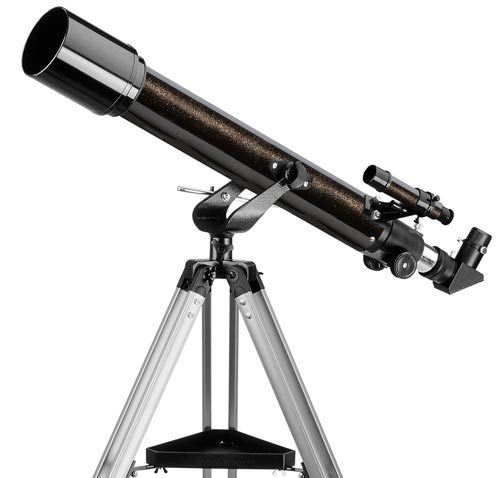
A refracting telescope uses _______ to focus light.

a)

Lenses

b)

Mirrors

c)

Lasers

d)

Water

52.

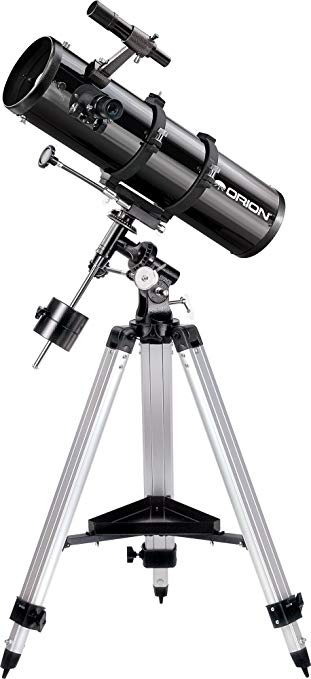
Reflecting telescopes use _______ to focus light.

a)

Lenses

b)

Glass

c)

Mirrors

d)

Lasers

53.
The name of our galaxy is the
a)
Andromeda
b)
Milky Way
c)
Magellan
d)
Whirlpool
54.
The Milky Way is shaped like a
a)
ellipse
b)
spiral
c)
double spiral
55.
What type of galaxy is this?
a)
Spiral
b)
Elliptical
c)
Irregular 
d)
Irrational
56.
What type of galaxy is this?
a)
Spiral
b)
Elliptical
c)
Irregular
d)
Irrational
57.
What type of galaxy has no defined pattern or shape?
a)
Spiral 
b)
Elliptical
c)
Irregular
d)
Constellation
58.

If our Sun died out, what would it become?

a)

Pulsar

b)

White dwarf

c)

Black hole

d)

Neutron Star

59.

Most stars are?

a)

Red giants

b)

White dwarfs

c)

Main sequence

d)

Supergiants

60.

What type of stars are the hottest?

a)

yellow

b)

white

c)

red

d)

blue

61.

What do Super-giants form?

a)

red giants

b)

white dwarfs

c)

supernova

d)

planetary nebula

62.

Where are stars "born"?

a)

from the sun

b)

in a nebula

c)

in a supernova

d)

in a white dwarf

63.

A_________________ is so massive that light can't even escape. What am I?

a)

Black Hole

b)

Supernova

c)

Super giant

d)

White giant

64.

When a medium mass star begins to run out of fuel, what does it become?

a)

mad star

b)

red dwarf

c)

red giant

d)

supergiant

65.

The brightness of a star depends on?

a)

its size

b)

its temperature

c)

its distance from earth

d)

All of the options

66.

Which is found in the belt between Mars and Jupiter

a)

Comets

b)

Asteroids

c)

Meteors

d)

Stars

67.

A meteorite is DIFFERENT from a comet mainly because

a)

has a tail of ice and gas

b)

is found in orbit between Jupiter and Mars

c)

enters the Earth's atmoshere

d)

has a nucleus made of rock and snow.

68.
Sometimes I am called a "dirty snowball". I have a hydrogen cloud, coma, and a nucleus. I am invisible except when near the sun. What am I?
a)
Asteroid
b)
Star
c)
Meteor
d)
Comet
69.

These are composed mainly of rock and metal.

a)

comets and stars

b)

stars and meteors

c)

asteroid and meteors

d)

comets and asteroid

70.

I am a rock entering a planet's atmosphere.

a)

meteor

b)

moon

c)

asteroid

d)

comet

71.

The shape of comet's paths are ________________.

a)

circular

b)

elliptical

c)

irregular

72.
a dark spot on the photosphere of the sun
a)
corona
b)
solar flare
c)
sunspot
d)
magnitude
73.
a brief burst of energy from the sun’s photosphere
a)
corona
b)
solar flare
c)
solar wind
d)
photosphere
74.
the sun’s atmosphere
a)
corona
b)
universe
c)
photosphere
d)
solar flare
75.
the visible surface of the sun
a)
galaxy
b)
universe
c)
corona
d)
photosphere
76.
the distance light travels in one Earth year; about 9.5 trillion km
a)
galaxy
b)
universe
c)
light-year
d)
corona
77.
a group of stars, gas, and dust
a)
galaxy
b)
universe
c)
light-year
d)
corona
78.
Identify part 1.
a)
corona
b)
photosphere
c)
core
d)
radiation zone
79.
Identify part 3.
a)
corona
b)
convection zone
c)
core
d)
radiation zone
80.
Identify part 2.
a)
corona
b)
convection zone
c)
core
d)
radiation zone
81.

Topsoil is dark in color because it...

a)

undergoes a lot of chemical weathering.

b)

has a large amount of organic material.

c)

is full of dark rocks.

d)

contains a lot of worms.

82.

Horizon A is also known as...

a)

Top soil

b)

Bedrock

c)

Subsoil

d)

Organic material

83.

The B Horizon is known as

a)

Parent Rock

b)

Top soil

c)

Bedrock

d)

Subsoil

84.

Only 3% of the water on Earth is freshwater. About 60% of that water is not available for man's use. Why is this?

a)

It is frozen

b)

It is polluted

c)

It is too salty

d)

It is in aquifers

85.

Approximately what percent of the Earth’s water is salt water?

a)

97%

b)

71%

c)

1%

d)

3%

86.
Where is most of the freshwater found on Earth?
a)
lakes
b)
glaciers
c)
oceans
d)
rivers
87.
Which represents the distribution of water on Earth?
a)
3% freshwater, 97% salt water
b)
97% freshwater, 3% salt water
c)
71% freshwater, 29% salt water
d)
29% freshwater, 71% salt water
88.

Due to the fact that plants can make their own food using photosynthesis, what are plants considered in food chains?

a)

omnivores

b)

consumbers

c)

producers

d)

carnivores

89.

What would a rabbit be considered in a food chain if it ONLY EATS PLANTS?

a)

herbivore

b)

omnivore

c)

carnivore

d)

producer

90.

What would a lion be considered in a food chain if they ONLY EAT MEAT?

a)

producer

b)

herbivore

c)

carnivore

d)

omnivore

91.

Which choice below shows the correct order of a food chain?

a)

sun -> rabbit -> tomato plant -. decomposer -> hawk

b)

tomato plant -> decomposer -> sun -> rabbit -> hawk

c)

sun -> tomato plant -> rabbit -> hawk -> decomposer

92.

What is the difference between the biotic and abiotic factors?

a)

Biotic factors are living things and abiotic factors are nonliving things.

b)

Biotic factors are nonliving things and abiotic factors are living things.