wayground logo

Free Printable Worksheets

Font size

S
M
L
XL
Worksheets

Honors Chemistry B Post-Test 20-21

Total questions: 68

Worksheet time: 58mins

Name
Class
Date
1.

What is the name of the following compound: CuBr2

a)

copper bromine

b)

copper bromide

c)

copper (I) bromide

d)

copper (II) bromide

2.

What is the name of the following compound: K2SO4

a)

potassium sulfur

b)

potassium sulfate

c)

potassium (I) sulfate

d)

potassium (II) sulfide

3.

What is the what charge of manganese in the compound: Mn2O3

a)

+1

b)

+2

c)

+3

d)

-3

4.

What is the what charge of lead in the compound: lead (IV) iodide

a)

+1

b)

+4

c)

+6

d)

-1

5.

Which is the correct formula for the compound: Calcium Oxide

a)

CaO

b)

CaO2

c)

Ca2O

6.

Which is the correct formula for the compound: Barium Hydroxide

a)

BaOH

b)

Ba(OH)2

c)

BaOH2

d)

Ba2OH

7.

Name the ionic compound SnSe2

a)

Tin diselenide

b)

Tin (IV) Selenide

c)

Tin selenide

d)

Tin (II) triselenide

8.

Which of the following combinations would need roman numerals in the name?

a)

potassium + fluorine

b)

beryllium + oxygen

c)

boron + iodine

d)

gold + oxygen

9.

If I gain electrons I become

a)

Positive because I've added to my atom

b)

negative because I've added electrons

c)

same because i'm balanced

d)

equal because now I have electrons

10.

How many valence electrons does Oxygen (O) have?

a)

6

b)

8

c)

15

d)

16

11.
What is the name of the following compound?
S6O3
a)
sulfurehexa trioxide
b)
hexasulfur trioxide
c)
hexasulfide trioxide
d)
trioxygen hexasulfide
12.

P2O5

a)

Phosphorus Oxide

b)

Pentaphosphorus Dioxide

c)

Diphosphorous pentoxide

d)

Phosphoric Oxygen

13.

This type of compound can be a solid, liquid or gas at room temperature

a)

molecular

b)

ionic

c)

both ionic and molecular

14.

This type of compound contains a non metal element

a)

molecular

b)

ionic

c)

both ionic and molecular

15.
What is the basis of a metallic bond?
a)
the attraction of neutral metal atoms.
b)
the attraction between protons and neutrons.
c)
the attraction between positive metal ions and interlocking electrons.
d)
the attraction between positive metal ions and free floating electrons.
16.
There are more metals than non metals in the periodic table.
a)
True
b)
False
17.
What does malleable mean?
a)
able to be shaped
b)
will break easily
c)
can be used for wire
d)
is shiny
18.
Why do metals conduct
a)
They are shiny
b)
The electrons are held tightly within the lattice
c)
The electrons are delocalised and able to move
d)
The electrons are shared between two metal ions
19.

Why are metals malleable?

a)

They are shiny

b)

The electrons are held tightly within the lattice structure making it strong

c)

The electrons are delocalized and able to move between the atoms

d)

The electrons are shared between two metal ions and this holds the atoms together

20.
According to the octet rule most elements need _______ valence electrons.
a)
2
b)
8
c)
6
d)
18
21.
Hydrogen needs _____ electrons in its valence shell to be stable.
a)
4
b)
6
c)
8
d)
2
22.
If electrons are shared unequally then the bond is....
a)
Non-polar covalent
b)
Ionic
c)
Non-polar ionic
d)
Polar covalent
23.
Metals and nonmetals form which kind of bond?
a)
Polar covalent
b)
Ionic
c)
Non-polar covalent
d)
Metallic
24.
How strongly an atom attracts electrons is called....................
a)
Ionization energy
b)
Electronegativity
c)
Electricity
d)
Nuclear force
25.
A molecule of methane has what shape?
a)
Tetrahedral
b)
Triangular
c)
Pyramidal
d)
Octahedral
26.

Which image could be a representation of NH3?

a)

A

b)

B

c)

C

27.
How many electrons should Beryllium have around its Lewis dot model?
a)
1
b)
2
c)
3
d)
4
28.
How many electrons should Silicon have around its Lewis dot model?
a)
1
b)
2
c)
3
d)
4
29.

Which is the correct molecular structure for carbon dioxide?

a)
b)
c)
d)
30.

What type of bond would form between O and H?

a)

Polar Covalent

b)

Non-Polar Covalent

c)

Ionic

31.

What type of bond would form between O and O?

a)

Polar Covalent

b)

Non-Polar Covalent

c)

Ionic

32.

What type of bond would form between Li and O?

a)

Polar Covalent

b)

Non-Polar Covalent

c)

Ionic

33.

The bond between C and Cl is polar covalent. That means

a)

there is a pair of electrons shared equally between them

b)

there is a pair of electrons shared unequally between them

c)

an electron will be stolen from one and given to the other

34.

The bond between Hand F is ionic. That means

a)

there is a pair of electrons shared equally between them

b)

there is a pair of electrons shared unequally between them

c)

an electron will be stolen from one and given to the other

35.

The bond between K and N is ionic. Which atom will steal the electrons from the other?

a)

K will steal electrons from N and become (+)

b)

K will steal electrons from N and become (-)

c)

N will steal electrons from K and become (+)

d)

N will steal electrons from K and become (-)

36.

What type of bond contains atoms with "partial" charges?

a)

Polar Covalent

b)

Non-Polar Covalent

c)

Ionic

37.
Choose the correct shape for this molecule:
a)
Trigonal planar
b)
Trigonal pyramidal
c)
Tetrahedral
d)
Linear
38.
Choose the correct shape for this molecule:
a)
Trigonal planar
b)
Trigonal pyramidal
c)
Bent
d)
Linear
39.
Choose the correct shape for this molecule:
a)
Bent
b)
Trigonal pyramidal
c)
Trigonal planar
d)
Linear
40.

What is the molecular shape of the following?

a)

Hexahedral

b)

Square Pyramid

c)

Octahedral

d)

T-Shape

41.
What is the molarity of 4 grams of sodium chloride in 3,800 mL of solution?
a)
0.018 M
b)
0.018 mol
c)
1.052 M
d)
1.052 mol
42.
The ___ is the thing being dissolved
a)
solute
b)
solvent
43.
What is the formula for molarity?
a)
moles/grams
b)
moles/kilograms
c)
moles/milliliters
d)
moles/liters
44.
How many L are required to make 3.5 M hydrochloric acid using 1.1 moles? 
a)
3.18 L
b)
0.31 L
c)
3.85 L
d)
4.6 L
45.
If you have 0.045 L of 0.465 M potassium bromide. How many moles of potassium bromide are present?
a)
20.9 mol
b)
0.021 mol
c)
0.02 mol
d)
0.0209 mol
46.

How much KNO3 solute is saturated at 40 degrees?

a)

75

b)

55

c)

65

d)

85

47.

How much C12H22O11 solute is saturated at 40 degrees?

a)

240

b)

220

c)

230

d)

250

48.

How much Ce2(SO4)3 solute is saturated at 80 degrees?

a)

20

b)

15

c)

30

d)

2

49.
According to Bronsted-Lowry acid base theory, an acid is a.....
a)
Proton donor
b)
Proton acceptor
c)
Produces H+ when added to water
d)
Made of H+
50.
Which reactant in the following equation is a Bronsted acid?
a)
ammonium
b)
ammonia
c)
hydroxide
d)
water
51.
What is the conjugate acid in the following equation?
a)
PO43- 
b)
HNO3 
c)
NO3- 
d)
HPO42-
52.
What is the conjugate base in the following reaction?
a)
HCO3- 
b)
HCl
c)
 H2CO3 
d)
Cl-
53.

According to Brønsted-Lowry acid base theory, a base ___.

a)

is a proton donor

b)

is a proton acceptor

c)

produces OH- when added to water

d)

has a bitter taste

54.
A(n) ______ is a substance with a pH less than 7
a)
Acid
b)
Alkaline
c)
Base
d)
Buffer
55.

For a solution, pH + pOH =

a)

7

b)

14

c)

1.0 x 10⁻¹⁴

d)

-log (1.0 x 10 -14)

56.

The pH of a solution is 8.43. What is the [H3O+]concentration?

a)

3.7 x 10 -9

b)

1.0 x 10-8.43

c)

2.7 x 10⁻⁶

d)

1.0 x 10⁻¹⁴

57.

If the [H3O+] of a solution is 1 x 10⁻³ M, the pH is

a)

11

b)

-3

c)

3

d)

1

58.

If the [H3O+] of a solution is 6.8 x 10⁻⁸ M, the pH is

a)

7.17

b)

3.2 x 10⁻⁵

c)

7.2

d)

7.62

59.

If the [H3O+] of a solution is 9.3 x 10⁻³ M, the pOH of the solution will be

a)

2.03

b)

1.02

c)

11.97

d)

12.98

60.

Which substance is amphoteric as shown in the picture?

a)

H2O

b)

HSO3-

c)

H2SO3

d)

H3O+

61.

Name this compound

a)

decane

b)

nonane

c)

octane

d)

heptane

62.
How many carbon atoms are in propane
a)
1
b)
2
c)
3
d)
4
63.
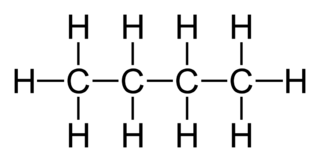
How many hydrogen atoms are in butane
a)
4
b)
6
c)
8
d)
10
64.
Name this alkane
a)
Methane
b)
Ethane
c)
Propane
d)
Butane
65.
Name this alkane
a)
Methane
b)
Ethane
c)
Propane
d)
Butane
66.
The molecular formula for Heptane is
a)
C4H10
b)
C8H18
c)
C5H12
d)
C7H16
67.
Hydrocarbons are compounds that contain
a)
Carbon, only
b)
Carbon and Hydrogen, only
c)
Carbon, Oxygen, and Hydrogen, only
d)
Carbon, Oxygen, Hydrogen, and Nitrogen, only
68.

What is the name of this hydrocarbon?

a)

4 ethyl 5,6 dimethyl heptane

b)

2,3 dimethyl 4 ethyl heptane

c)

4 ethyl 2,3 dimethyl heptane

d)

5 propyl hexane