wayground logo

Free Printable Worksheets

Font size

S
M
L
XL
Worksheets

Grade 7 Extra Credit

Total questions: 96

Worksheet time: 5hrs 40mins

Name
Class
Date
1.

______________________ is a type of force that keeps objects in motion or slows them down.

a)

force

b)

gravity

c)

energy

d)

friction

2.

A push or pull of an object is called __________________.

a)

force

b)

gravity

c)

energy

d)

friction

3.

A push or pull of an object is called __________________.

a)

force

b)

gravity

c)

energy

d)

friction

4.

_____________________ is a force that tries to pull two objects together.

a)

force

b)

energy

c)

gravity

d)

friction

5.

The ability to do work is called ___________________.

a)

force

b)

gravity

c)

energy

d)

friction

6.

Which of these is an example of work?

a)

sitting in a chair

b)

kicking a soccer ball

c)

sleeping

d)

reading a paper

7.

Which force is shown in this picture?

a)

push

b)

pull

c)

gravity

d)

friction

8.

Which force is shown in the picture?

a)

push

b)

pull

c)

gravity

d)

friction

9.

Which force is shown in the picture?

a)

push

b)

pull

c)

gravity

d)

friction

10.

Which force is shown in the picture? (look at he brakes being used on the roller blades)

a)

push

b)

pull

c)

gravity

d)

friction

11.

To make an object move you must first apply ---

a)

an opposing force

b)

an unbalanced force

c)

a stationary force

d)

a vertical force

12.

a force is best defined as ---

a)

the application of weight

b)

a push or pull that is exerted on matter

c)

the flow of electric charges

d)

a bond in which electrons are shared

13.

Which law explains the relationship among mass, force and acceleration?

a)

Universal Law of Gavitation

b)

Newton's First Law of Motion

c)

Newton's Second Law of Motion

d)

Newton's Third Law of Motion

14.

Which of these would be different for an object if measured on the Earth and on the Moon?

a)

Mass

b)

Weight

c)

Volume

d)

Density

15.

Which setup below would require the least force to lift a 100-gram mass a distance of 10 centimeters?

a)
b)
c)
d)
16.

Which of the following situations is an example of Newton's third law of motion?

a)

A boy jumping on a trampoline

b)

A boy falling forward when a bus stops

c)

A chair sitting on the floor

d)

An apple falling from a tree

17.

In a head-on collision, a person who is not wearing a seat belt continues to move forward at the original speed of the car because of -

a)

weight

b)

mass

c)

gravity

d)

inertia

18.
What subject is attracted to a magnet?
a)
Silver
b)
Water
c)
Metal
d)
Iron
19.
a)
A push away
b)
A pull towards
c)
No Force
20.
Which statement is true?
a)
All Magnets have a North and South Pole
b)
All magnets can attract large objects
c)
Magnets can not pull through Solids.
d)
All Magnets have the Same shape and Size
21.
Which of these materials will a Magnet Attract?
a)
Plastic
b)
Iron
c)
Rubber
d)
Wood
22.
The South end of a Magnet will...
a)
Repel to a Copper Nail
b)
Repel to the North End of another Magnet
c)
Repel to the South end of another Magnet
23.
Mr.  Novales makes a mixture of four solid materials.  Which of these 4 materials will a bar magnet be able to pull out?
a)
Rubber
b)
Sand
c)
Sugar
d)
Iron Fillings
24.
Looking at the drawing. If you tried to move these 2 magnets closer together, what would you feel?
a)
Push Away
b)
Pull Closer together
c)
No Force
d)
Let the Force be with YOU
25.
The AREA around a magnet where you feel a pulling force.
a)
Gravity
b)
Magnetic Field
c)
Magnetism
26.
The Earth is the Largest Magnet of All.
a)
True
b)
False
27.
Magnets are _____ to objects that contain Iron, Nickel, Cobalt or Steel
a)
Attracted
b)
Repelled
28.
What is Magnetism?
a)
A Tesla car
b)
An Electric Magnet
c)
A Force where objects are attracted to each other or repelled
d)
A magical force
29.

In which part of a magnet is the magnetic force strongest?

a)

In the Center

b)

At the Poles

c)

In the middle

d)

At the North Pole only

30.

What will happen when two like poles of magnets put together?

a)

The attract each other

b)

They repel each other

31.

What do you call the group of objects that are not attracted to magnets?

a)

Opaque objects

b)

Non-magnetic objects

c)

Magnetic objects

d)

Translucent objects

32.
This is a picture of a simple electromagnet. How can the electromagnet be made stronger?
a)
Add more coils of wire to the nail.
b)
Use a smaller battery.
c)
Reverse the poles of the magnet.
d)
Remove all the coils and the nail.
33.
How are electromagnets different from magnets?
a)
magnets can be turned on/off
b)
you can turn an electromagnet on/off
c)
magnets are more powerful
d)
magnets have a North and South pole
34.
Surrounding every magnet is a __________  __________.
a)
magnetic field
b)
electrical current
c)
another magnet
35.
What would increase the strength of an electromagnet?
a)
Increasing the amount of current flowing through the wire.
b)
Inserting a wooden core inside the coil
c)
Changing the direction of the current
d)
Decreasing the number of coils of wire
36.
Energy due to motion is ____________ energy. 
a)
Potential 
b)
Energy
c)
Kinetic
d)
Friction
37.
The faster an object moves, the ________ kinetic energy it has. 
a)
more
b)
less
c)
none of the above
d)
all of the above 
38.
__________ is stored energy. 
a)
Potential
b)
Kinetic
c)
None of the above 
d)
All of the above 
39.
Gravitational potential energy depends on the ________ and ________ of the object. 
a)
Height and mass
b)
Friction and movement
c)
Mass and Movement
d)
Height and Friction 
40.
What kind of energy is in a rock at the edge of a cliff?
a)
Potential
b)
Kinetic
41.
What kind of energy is in a moving skateboard?
a)
Potential
b)
Kinetic
42.
What kind of energy is in a person climbing a ladder?
a)
Potential
b)
Kinetic
c)
Both
43.
What kind of energy is in a waving hand?
a)
Potential
b)
Kinetic
44.
What kind of energy is in a stretched rubber band?
a)
Potential
b)
Kinetic
45.
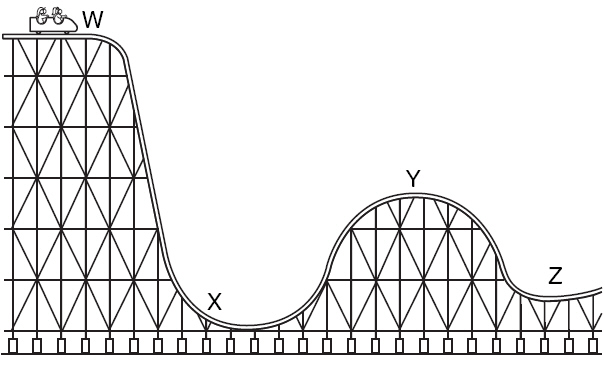
At which point is potential energy greatest?
a)
W
b)
X
c)
Y
d)
Z
46.
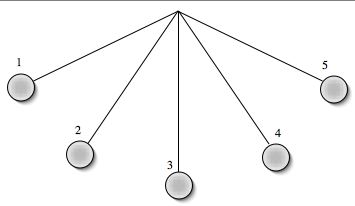
When a pendulum swings, at which point is kinetic energy highest?
a)
1
b)
2
c)
3
d)
4
47.
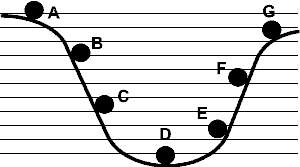
Which point has the most potential energy?
a)
G
b)
f
c)
b
d)
a
48.
Food has _________ energy. 
a)
Potential 
b)
Kinetic 
c)
None of the above 
d)
All of the above 
49.
Where would a person have to be located to have the minimum gravitational potential energy?
a)
up on the roof
b)
down in the basement
c)
in the middle
d)
outside
50.
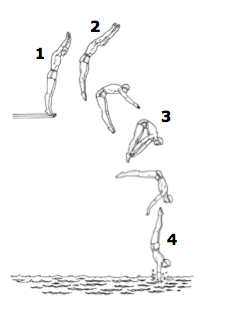
2. The diagram to the right represents a diver’s motion from the top of a high diving board into a pool of water. At what point does the diver have the greatest kinetic energy and the least potential energy?
a)
1
b)
2
c)
3
d)
4
51.

Which of the Earth's systems contains mountains?

a)

biosphere

b)

geosphere

c)

atmosphere

d)

hydrosphere

52.

Water moves back and forth between Earth's surface and the air. How does liquid water move from the air to the ground?

a)

boiling

b)

evaporation

c)

melting

d)

precipitation

53.

The ocean is part of which of Earth's systems?

a)

atmosphere

b)

geosphere

c)

biosphere

d)

hydrosphere

54.

What are the effects of putting salt on the roads to melt ice?

a)

animals may die

b)

water sources become contaminated

c)

plants may die

d)

all of the above

55.

Movement of air. Can be used to produce

electricity.

a)

water

b)

sun

c)

wind

d)

oil

56.

Choose the component below that is part of the Geosphere

a)

rock

b)

water

c)

oxygen

d)

plants

57.

Scientists know that Earth's continents have changed position throughout history. This means that the shape of the continents' shores have changed as well. This is an example of which two Earth systems interacting?

a)

biosphere and geosphere

b)

biosphere and atmosphere

c)

geosphere and atmosphere

d)

geosphere and hydrosphere

58.

Scientists know that Earth's continents have changed position throughout history. This means that the shape of the continents' shores have changed as well. This is an example of which two Earth systems interacting?

a)

biosphere and geosphere

b)

biosphere and atmosphere

c)

geosphere and atmosphere

d)

geosphere and hydrosphere

59.

Which source of water is there the most of any time in the water cycle?

a)

frozen ice

b)

water vapor

c)

liquid salt water

d)

liquid fresh water

60.

How many moons does planet earth have ?


Cuantas lunas tiene planeta tierra ?

a)

79

b)

1

c)

82

d)

74

61.
Which planet has the largest continuous hurricane?
a)
Earth
b)
Mars
c)
Jupiter
d)
Saturn
62.
Which of the following is not true?
Planets closer to the sun...
a)
are hotter
b)
revolve slower
c)
have less moons
d)
are smaller
63.
The inner and outer planets are divided by...
a)
The asteroid belt
b)
The oort cloud
c)
The kuiper belt
d)
a fraction
64.
Which planet has very visible rings?
a)
Jupiter
b)
Saturn
c)
Earth
d)
Neptune
65.
What does the word terrestrial mean?
a)
Warm planets
b)
planets with moons
c)
planets with ailens
d)
Rocky planets
66.
Compared to the inner planets, the outer planets are...
a)
larger
b)
warmer
c)
denser
d)
better
67.
Which planet is known for it's red, rust covered surface?
a)
Venus
b)
Mercury
c)
Mars
d)
Jupiter
68.
Which is the hottest planet?
a)
Mercury
b)
Venus
c)
Earth
d)
Neptune
69.
How many planets are there?
a)
7
b)
8
c)
9
d)
10
70.
A snake 
a)
ecosystem 
b)
organism 
c)
population 
71.
snakes, mice, small birds, crickets, hawks, cactus, tumbleweed
a)
organism
b)
community
c)
population 
72.
the entire Earth 
a)
biosphere 
b)
community 
c)
ecosystem 
73.
plants, rocks, air, sunlight, water, 
a)
ecosystem 
b)
population 
c)
community 
74.
all the snakes in the area 
a)
organism 
b)
ecosystem 
c)
population 
75.
a bird 
a)
abiotic 
b)
biotic 
76.
the sun 
a)
abiotic 
b)
biotic 
77.
soil 
a)
abiotic 
b)
biotic 
78.
a dead plant 
a)
abiotic 
b)
biotic 
79.
Stevenson school 
a)
organism 
b)
community 
c)
population 
80.
What are plants called in a food chain?
a)
Producers
b)
Consumers
c)
Decomposers
d)
Scavengers
81.
What are animals called in a food chain?
a)
Producers
b)
Consumers
c)
Decomposers
d)
Plants
82.
What are the organisms that break down dead stuff?
a)
Producers
b)
Consumers
c)
Decomposers
d)
Organisms
83.
What are the organisms that break down dead stuff?
a)
Producers
b)
Consumers
c)
Decomposers
d)
Organisms
84.
Where does the energy start in this food chain?
a)
Plant
b)
Sun
c)
Deer
d)
Wolf
85.
What is the role of a producer?
a)
Use sunlight to make food
b)
Gain energy from eating other organisms
c)
Keep other species from overpopulating
d)
Breaking down dead stuff 
86.
What is the role of decomposers in a food chain?
a)
Use sunlight to make food
b)
Eat other organisms to gain energy
c)
Make the food for the whole food chain
d)
Break down dead organisms and add nutrients to the soil
87.
Which of these organisms would receive energy from the snake?
a)
Plant
b)
Rabbit
c)
Mouse
d)
Hawk
88.
Which type of consumer eats plants only?
a)
Herbivores
b)
Omnivores
c)
Carnivores
d)
Scavengers
89.
Which type of consumer eats meat only?
a)
Producers
b)
Herbivores
c)
Carnivores
d)
Omnivores
90.
Which type of consumer eats meat and plants?
a)
Herbivores
b)
Carnivores
c)
Omnivores
d)
Plants
91.
Which of the following is a producer?
a)
Maple tree
b)
Sunfish
c)
Bunny
d)
Bear
92.
Producers get their energy from the ______.
a)
water
b)
Sun
c)
eating animals
d)
eating plants
93.
Where does the energy start in this food chain?
a)
Plant
b)
Sun
c)
Deer
d)
Wolf
94.

Click on the image to make it larger-- Choose all that apply: The hawk gets energy from...

a)

mouse

b)

rabbit

c)

wildflowers

d)

snake

95.

A ____________________ shows how energy is passed from one living thing to another...

a)

ecosystem

b)

food chain

c)

habitat

96.

A ____________________ shows the competition in food chains

a)

Environment

b)

Food Web

c)

Ecosystems