wayground logo

Free Printable Worksheets

Font size

S
M
L
XL
Worksheets

Chemistry EOY Exam - Form 3

Total questions: 85

Worksheet time: 1hrs 25mins

Name
Class
Date
1.

What is the atomic number?

a)

the number of protons in the nucleus

b)

the number of protons and neutrons in the nucleus

c)

the number of neutrons in the nucleus

d)

the number of protons in the energy levels

2.

What is the mass number?

a)

the number of protons in the nucleus

b)

the number of protons and neutrons in the nucleus

c)

the number of neutrons in the nucleus

d)

the number of protons and electrons in the atom
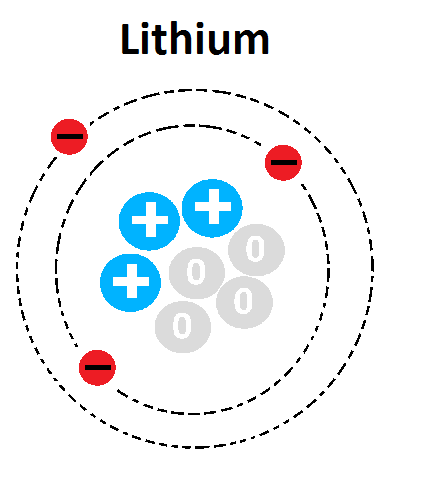
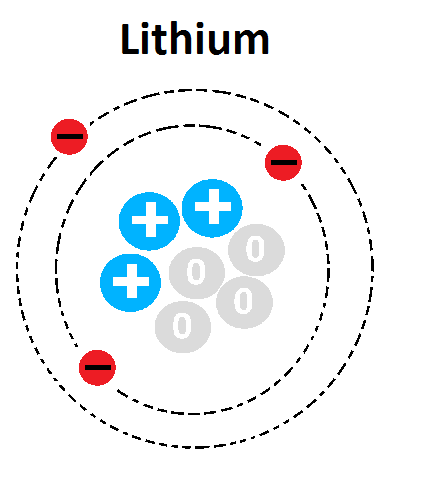
3.

What is the atomic number of this atom?

a)

1

b)

3

c)

4

d)

7

4.

What is the mass number of this atom?

a)

1

b)

3

c)

4

d)

7

5.
Most of the mass in an atom is made up of _____________________?
a)
protons and electrons
b)
protons and neutrons
c)
neutrons and electrons
d)
electrons and quarks
6.
In order for an atom to be neutral what has to be true?
a)
The atom has more protons than neutrons
b)
The atom has more neutrons than protons
c)
The atom has the same number of protons and neutrons
d)
The atom has the same number of protons and electrons
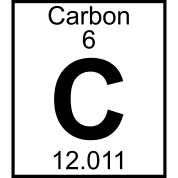
7.
What does the C represent?
a)
atomic mass
b)
atomic number
c)
element name
d)
chemical symbol 
8.

What does the 6 represent?

a)

Atomic mass

b)

atomic number

c)

chemical symbol

d)

element name

9.
How is the number of neutrons in the nucleus of an atom calculated?
a)
Add the number of e- and p+ together
b)
Subtract the number of e- from p+
c)
Subtract the number of p+ from the mass number
d)
Add the mass number to the number of e-
10.
What subatomic particles would you find in the nucleus of an atom?
a)
Protons only
b)
Protons and Neutrons
c)
Neutrons and Electrons
d)
Protons and Electrons 
11.
Which subatomic particles contribute the most to the mass of an atom?
a)
Protons, Neutrons, Electrons
b)
Protons only
c)
Protons and Electrons
d)
Protons and Neutrons
12.
If an atom has 12 positively charged subatomic particles, which of the following must it also have to be considered a neutral atom?
a)
12 neutrons
b)
12 electrons
c)
12 protons
d)
24 protons and neutrons
13.

An atom has 10 protons, 15 neutrons and 10 electrons what is its mass number.

a)

20

b)

10

c)

35

d)

25

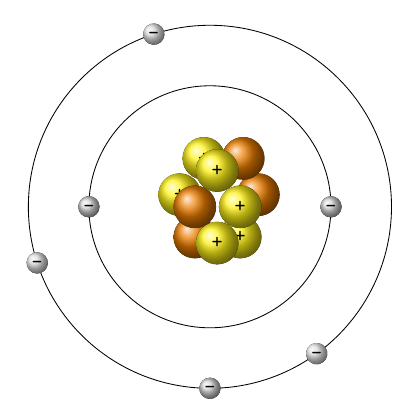
14.

How many electrons does this atom have?

a)

2

b)

4

c)

6

d)

10

15.
The atomic number of an element that has 9 protons, 9 electrons, and 10 neutrons is _____.
a)
9
b)
10
c)
19
d)
28
16.
An element with a mass number of 11 and an atomic number of 5 has how many neutrons?
a)
11
b)
5
c)
6
d)
16
17.
Where is most of the mass in an atom located?
a)
in the nucleus
b)
in the protons
c)
in the neutrons
d)
in the electrons
18.
An atom has an atomic number of 15 and a mass number of 31. How many protons are there in the atom?
a)
15
b)
31
c)
16
d)
47
19.
What is the atomic number of the atom pictured? 
a)
9
b)
10
c)
18
d)
19
20.

Which of the following determines the identity of an element?

a)

number of protons

b)

atomic mass

c)

number of neutrons

d)

number of shells

21.

Isotopes of an element have a different number of...

a)

Protons

b)

Neutrons

c)

Electrons

d)

Mass

22.

Potassium-39 has how many neutrons?

a)

19

b)

18

c)

20

d)

21

23.

Nickel-59 has how many neutrons?

a)

30

b)

31

c)

32

d)

33

24.

76 protons and 114 neutrons

a)

Osmium-114

b)

Osmium-76

c)

Osmium-190

d)

Osmium-190.23

25.

12 protons and 13 neutrons

a)

Mg-12

b)

Mg-13

c)

Mg-25

d)

Mg-24.305

26.

9 protons and 9 neutrons

a)

Fluorine-18

b)

Fluorine-9

c)

Fluorine-16

d)

Fluorine-18.998

27.

Rubidium has two common isotopes, 85Rb and 87Rb. If the abundance of 85Rb is 72.2% and the abundance of 87Rb is 27.8%, what is the average atomic mass of rubidium?

a)

85.468 amu

b)

37 amu

c)

85.6 amu

d)

86.4 amu

28.

There are two primary isotopes found in any sample of copper: copper-63 and copper-65. The isotope 65Cu composes 69.2% of the sample and 63Cu comprises the other 30.8%. Based on this data, what is the atomic mass of copper?

a)

29 amu

b)

63.546 amu

c)

64.4 amu

d)

63.6 amu

29.

How do you calculate mass number?

a)

Mass x percent

b)

Protons + Electrons

c)

Protons + Neutrons

d)

Neutrons + Protons + Electrons

30.
How many electrons does Si contain? (click to see image)
a)
14
b)
28
c)
2
d)
4
31.
How many electrons can the first energy level hold?
a)
1
b)
2
c)
8
d)
0
32.

The atomic number tells you...

a)

the number of protons

b)

the number of neutrons

c)

the number of electrons

33.

How many electrons can the third shell have?

a)

Two

b)

Eight

c)

Five

d)

Three

34.

What is the electronic configuration of Lithium?

a)

2.8.8

b)

2.2.2

c)

2.8.5

d)

2.1

35.

Haw many maximum electrons can be present in the "M" shell of an atom?

a)

2

b)

8

c)

18

d)

32

36.
How many electron shells/levels does this atom have?
a)
1
b)
2
c)
3
d)
4
37.
The atomic number of an element that has 9 protons, 9 electrons, and 10 neutrons is _____.
a)
9
b)
10
c)
19
d)
28
38.

The electronic configuration of Ca is?

a)

2,8,8,2

b)

2,8,8,8,8,6

c)

2,8,8

39.
FIND THE ELECTRONIC CONFIGURATION OF Cl (At no = 17)
a)
2,8,7
b)
2,8,8
c)
2,8,6
d)
2,8
40.
Ar (18)
a)
2,8,7
b)
2,8,8
c)
2,8,6
d)
2,8,5
41.
If a substance has a pH of 10 it is considered
a)
Acidic
b)
Basic
c)
Neutral
42.
Acids produce _________ ions when they break down or dissocciate. 
a)
Hydroxide (OH-)
b)
Water
c)
Chlorine (Cl-)
d)
Hydrogen (H+)
43.
Bases release ____________ ions when they break down or dissociate. 
a)
Hydrogen (H+)
b)
Hydroxide (OH-)
c)
Chlorine (Cl-)
d)
no
44.
Water is neutral because the number of hydrogen and hydroxide ions is _________.
a)
the same
b)
different
45.
A(n) ______ is a substance with a pH less than 7
a)
Acid
b)
Alkaline
c)
Base
d)
Buffer
46.
A(n) _______ is a substance with a pH greater than 7.
a)
Base
b)
Acid
c)
Buffer
d)
Water
47.
H2SO3
a)
sulfuric acid
b)
hydrosulfuric acid
c)
sulfurous acid
d)
persulfuric acid
48.
HF
a)
flouric acid
b)
hydrofluoric acid
c)
fluorate acid
d)
hydrogen fluoridic acid
49.
HI
a)
iodic acid
b)
hydroiodic acid
c)
iodous acid
d)
hypoiodous acid
50.
hydrochloric acid
a)
HClO3
b)
HClO2
c)
HClO
d)
HCl
51.
nitrous acid
a)
H2NO3
b)
HNO3
c)
HNO2
d)
H2NO2
52.
Select the name for the following acid: H3PO4
a)
Phosphoric acid
b)
Phosphorous acid
c)
Hydrophosphoric acid
53.
An acid is substance that turns litmus paper into
a)
red
b)
blue
c)
purple
d)
yellow
54.
Values from 0-14 that determine the acidity of a solution
a)
Molarity
b)
Electronegativity
c)
pH scale
d)
Solubility
55.
When using pH paper, the pH of a solution can be determined by looking at the _______ of the paper.
a)
texture
b)
color
c)
length
d)
mass
56.
Which property is not characteristic of a base? 
a)
It reacts with a carbonate to form carbon dioxide 
b)
It reacts with an acid to form a salt. 
c)
It reacts with an ammonium salt to form ammonia. 
d)
It turns universal indicator paper blue. 
57.
Which equation for the reaction between sodium carbonate and dilute hydrochloric acid is correct? 
a)
Na2CO3(s) + HCl(aq) → NaCl(aq) + CO2(g) + H2O(I)  
b)
Na2CO3(s) + HCl(aq) → Na2Cl(aq) + CO2(g) + H2O(I)  
c)
Na2CO3(s) + 2HCl(aq) → NaCl(aq) + CO2(g) + H2O(I)  
d)
Na2CO3(s)+ 2HCl(aq) → 2NaCl (aq) + CO2(g) + H2O(I)  
58.
Which substance is the most acidic? 
a)
A
b)
B
c)
C
d)
D
59.
The graph shows how the pH of soil in a field changes over time.
At which point was the soil neutral?
 
a)
A
b)
B
c)
C
d)
D
60.
Which type of reaction always forms a salt and water? 
a)
exothermic 
b)
neutralisation 
c)
oxidation 
d)
polymerisation 
61.

Electron shells can be thought of as which vegetable?

a)

Carrot

b)

Sweet potato

c)

Capsicum

d)

Onion

62.

Electron shells are numbered 1, 2, 3, 4. Their corresponding lettered shells are:

a)

N, O, P, Q

b)

K, L, M, N

c)

L, M, N, O

d)

A, B, C, D

63.

In ascending order, the maximum number of electrons each shell can hold is

a)

2, 8, 8, 32

b)

2, 8, 18, 32

c)

2, 6, 8, 32

d)

2, 3, 4, 5

64.

An ion is

a)

Also a compound

b)

An atom that has gained or lost an electron

c)

An atom that has only gained electrons

d)

An atom where the number of protons=electrons

65.

Cations

a)

Gain electrons, has an overall positive charge

b)

Lose electrons, has an overall positive charge

c)

Lose electrons, has an overall negative charge

d)

Gain electrons, has an overall negative charge

66.

Anions

a)

Gain electrons, has an overall positive charge

b)

Lose electrons, has an overall positive charge

c)

Lose electrons, has an overall negative charge

d)

Gain electrons, has an overall negative charge

67.

Which of the following is an anion?

a)

Lithium

b)

Magnesium

c)

Iodide

d)

Silver

68.

A Beryllium atom that has lost 2 electrons would look like

a)

Be2+

b)

B2-

c)

B2+

d)

Be2-

69.

The cation Rb+ has

a)

Had nothing happen to it

b)

Gained 1 electron

c)

Lost 1 electron

d)

Become negative

70.

Describe the anion S2-

a)

Silicon that gained 2 electrons

b)

Sulfide that gained 2 electrons

c)

Sulfur that gained 2 electrons

d)

Strontium that gained 2 electrons

71.
A charged particle that has gained or lost electrons is called a _____.
a)
molecule
b)
ion
c)
isotope
d)
element
72.
A cation is a ____ ion.
a)
negative
b)
positive
c)
neutral
d)
ficticious
73.
A anion will be a ____ ion.
a)
negative
b)
positive
c)
neutral
d)
ficticious
74.
Nitrogen will form which of the following ions?
a)
N
b)
N-3
c)
N-5
d)
N+5
75.
Beryllium will ____ valence electrons when forming an ionic bond.
a)
lose 4
b)
gain 4
c)
lose 2
d)
gain 2
76.
In the compound aluminum oxide, which is the cation?
a)
Al+3
b)
Al
c)
O-2
d)
O
77.
The desire for an element to have 8 atoms around it is called 
a)
Octet Rule
b)
Resonance
c)
Ionization energy
d)
Electronegativity
78.
How many Valence Electrons are on Oxygen
a)
2
b)
7
c)
6
d)
1
79.
Which of the following elements wants to bond 3 times
a)
Oxygen
b)
Phosphorous
c)
Fluorine
d)
Germanium
80.
Which of the following is a Diatomic Molecule 
a)
K2
b)
C2
c)
S2
d)
N2
81.
What is the formula for this Compound
a)
PCl
b)
PCL5
c)
PCl5
d)
Phosphorous Penta Chloride
82.
A polar bond is one that
a)
Has an electronegativity difference greater than 0.7
b)
Has an electronegativity difference greater than 0.5
c)
Has an electronegativity difference less that 0.5
d)
Has an electronegativity difference less than 0.7
83.
Which of these would be covalently bonded
a)
Fr and K
b)
Sc and O 
c)
F and Cl
d)
He and Pt
84.

Which of the following is NOT an acid?

a)

HCl

b)

CH3COOH

c)

C2H6

d)

H2SO4

85.

Acids have _______________ taste

a)

Sour

b)

Sweet

c)

Bitter