wayground logo

Free Printable Worksheets

Font size

S
M
L
XL
Worksheets

GE-10 Final Examination

Total questions: 63

Worksheet time: 47mins

Name
Class
Date
1.

Which item should you NOT put in your compost pile?

a)

food scraps

b)

leaves

c)

wood chips

d)

plastic

2.
Why are non-biodegradable plastics a problem in the environment?
a)
They do not decompose or break down naturally
b)
They leak toxic chemicals
c)
They are filling up lakes and ponds
d)
They contain poisons for wildlife
3.
What is the collection of materials that can be broken down and reprocessed to make new items?
a)
composting
b)
incineration
c)
leachate
d)
recycling 
4.
Which category produces the greatest amount of waste?
a)
Industrial
b)
Municipal
c)
Hazardous
d)
Litter
5.
In what category of waste do paint, household cleaners, medical waste, and solvents belong?
a)
hazardous
b)
compost
c)
municipal solid
d)
industrial
6.

The recovering of materials for use in other purpose

a)

Reduce

b)

Reuse

c)

Recycle

7.

Making waste beneficial

a)

Reuse

b)

Reduce

c)

Recycle

8.

The process of dividing garbage and waste products in an effort to reduce, re-use and recycle materials

a)

Waste Segregation

b)

Waste Disposal

c)

Composting

9.

What are the most common sources of energy used in automobiles?

a)

Wood and coal

b)

Petroleum and diesel

c)

LPG and cow dung

d)

Natural gas and coal

10.
What are fossil fuels?
a)
complex hydrocarbon compounds
b)
mixtures of gaseous hydrocarbons located under the surface of the Earth
c)
a nonrenewable energy resource formed the remains of organisms that lived long ago
11.

Which fossil fuel is the remains of ancient plants?

a)

Coal

b)

Petroleum

c)

Natural Gas

12.

Gasoline comes from which fossil fuel?

a)

Coal

b)

Petroleum

c)

Natural Gas

13.

Which is not an environmental impact of using fossil fuels?

a)

Global Warming

b)

Acid Rain

c)

Oil Spill

d)

Rapid Population Growth

14.
This is the cleanest burning of the fossil fuels:
a)
Natural Gas
b)
Coal
c)
Petroleum
d)
Shale
15.
You find a rock in which the grains are arranged in parallel bands of white and black crystals.  The rock is probably a(n)
a)
Igneous rock
b)
Sedimentary rock
c)
Metamorphic rock
d)
Extrusive rock
16.
The three groups of rocks are classified by
a)
How they form
b)
Color
c)
Grain size
d)
Chemical Composition
17.
Fossils are only found in
a)
Sedimentary rocks
b)
Foliated Metamorphic rocks
c)
Igneous Rocks
d)
Nonfoliated Metamorphic rocks
18.

The process by which water, wind, ice, and changes in temperature BREAK DOWN rock into fragments called sediments.

a)

Deposition

b)

Erosion

c)

Weathering

d)

Igneous Rock

19.
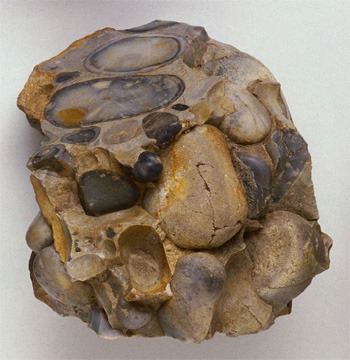
This rock was formed by smaller pieces of rock that settled at the bottom of a lake millions of years ago. What type of rock is this?
a)
Sedimentary
b)
Igneous
c)
Metamorphic
20.
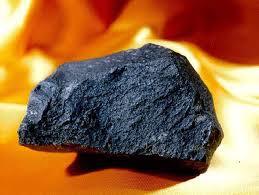
This rock was found near the mouth of a volcano. What type of rock is this?
a)
Sedimentary
b)
Igneous
c)
Metamorphic
21.

Which zones are polar zones?

a)

Zones A and B

b)

Zones A and E

c)

Zones E and D

d)

Zones A, E, and C

22.

Which zone is the tropical zone?

a)

Zone B

b)

Zone C

c)

Zone D

d)

Zone E

23.

Possible human solutions for limiting global warming and climate change are...

a)

being more energy-efficient

b)

using renewable sources of energy

c)

removing carbon from fossil fuel emissions

d)

all of the above

24.
Which of the following is contributing to an increase in carbon dioxide in the atmosphere?
a)
deforestation
b)
photosynthesis
c)
oceans
d)
all of the above
25.

Which climate feedback only takes days to form?

a)

water vapor

b)

ocean circulation

c)

Peat

d)

Permafrost

26.

Global sea level has risen by about 8 inches since reliable record keeping began in 1880. It is projected to rise another 1 to 8 feet by 2100. This is the result of added water from melting land ice and the expansion of seawater as it warms.


According to the passage, where is all the water coming from?

a)

melting glaciers and record snowstorms

b)

record rainfall and water formation

c)

warming ocean water and melting glaciers

27.

As air is warmed, the molecules

a)

move faster and it becomes more dense

b)

move faster and it becomes less dense

c)

move slower and it becomes more dense

d)

move slower and it becomes less dense

28.

What does this symbol mean if found as a label on a substance?

a)

Flamable

b)

Flammable

c)

Set this on fire

29.

What does this symbol stand for?

a)

Flammable

b)

Toxic

c)

Deadly

30.

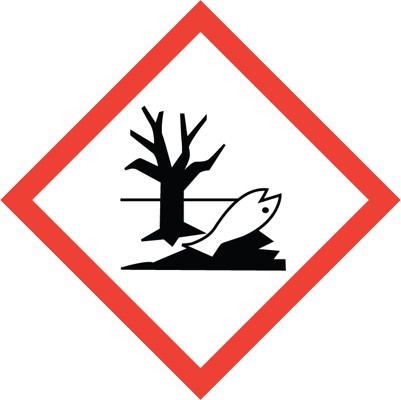
This symbol tell us the chemical it is labelling is:

a)

Harmful to the environment

b)

Dangerous

c)

Poisonous

31.

Produced by plants and evaporation of gasoline when refueling

a)

aerosols

b)

volatile carbon compounds

c)

sulfur dioxide

d)

NOCS

32.
What is air pollution?
a)
Any harmful substance that builds up in the air 
b)
pollen, dust, gases
c)
industrial pollution
d)
chemicals in the water
33.
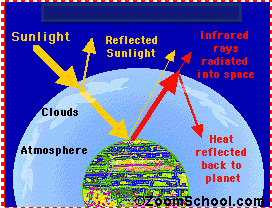
What does this diagram illustrate?
a)
Ozone Layer
b)
The Greenhouse Effect
c)
Ultraviolet Radiation
d)
Layers of the atmosphere
34.

Ozone depletion is caused by

a)

nitrous oxide.

b)

carbon dioxide.

c)

chlorofluorocarbons.

d)

methane.

e)

all of the above.

35.

Which act protects fish, shellfish, and wildlife in rivers, lakes, streams, and oceans, from pollutants?

a)

Toxic Substances Control Act

b)

ESA: Endangered Species Act

c)

CITES

d)

Clean Water Act

36.

Designed to protect the ozone layer by phasing out substances responsible, such as CFCs.

a)

Montreal Protocol

b)

Kyoto Protocol

c)

Stockholm Agreement

d)

CITES

37.
What does it mean when an animal is extinct?
a)
Something once lived but no longer exists.
b)
Animals that is at risk of extinction.
c)
Place that protects animals at risk.
38.
An endangered species is
a)
One whose numbers are so small that it is at risk of extinction
b)
One whose not been spotted after many years.
c)
One whose numbers are abundant.
39.
What is a habitat?
a)
It is an artificial area where wildlife lives.
b)
 It is any natural region where wildlife lives undisturbed
c)
It is a protected region created by people to save wildlife.
40.
Environmental factors that keep a population from increasing. 
a)
Carrying Capacity
b)
Limiting Factors
41.

What is the main cause of extinction of tigers?

a)

hunting

b)

climate change.

c)

disease

d)

building of new homes

42.
Water that collects in spaces and cracks in rocks and soil underground.
a)
well
b)
aquifer
c)
groundwater
d)
irrigation
43.
Rainwater that flows over land without sinking into the soil.
a)
runoff
b)
spring
c)
groundwater
d)
aqueduct
44.

Which of the following sectors utilize most of the surface and ground water?

a)

domestic use

b)

agriculture

c)

hydroelectricity

d)

industries

45.

Less than 3% of the water on earth is

a)

salt water

b)

freshwater

c)

ice

d)

polluted

46.

How can we help prevent water pollution? (There is more than one answer.)

a)

Use less detergents

b)

Do not pour grease down the drain

c)

Allow farm waste to wash off into the lakes.

d)

Use less fertilizers on yards and crops

47.
A frog eats a fly. The frog and fly are demonstrating ________.
a)
mutualism
b)
competition
c)
predator/prey
d)
parasitism
48.
The crocodile and bird have a _______________ relationship.  The crocodile benefits by having its teeth cleaned.  The bird benefits by gaining food and protection.  Both animals benefit from this relationship.
a)
parasitism
b)
predator and prey
c)
mutualism
d)
commensalism
49.
A tapeworm and a cat have this type of relationship.
a)
mutualism
b)
parasitism
c)
commensalism
d)
competition
50.
Barnacles create home sites by attaching themselves to whales. This neither harms nor benefits the whales.  What kind of relationship is this?
a)
Mutualism 
b)
Parasitism 
c)
Commensalism 
51.

Why does residual waste management need to done properly ?

a)

To reduce cost

b)

To reduce bad environmental effects

c)

To grow the cities

d)

To increase the waste

52.

The following statements about waste management are true EXCEPT ONE. Which is

it?

a)

Waste management is about throwing of garbage or any unused materials in the garbage truck.

b)

Waste management applies to making waste materials useful.

c)

Waste management includes the activities and actions required to manage waste from different types .

d)

This includes the collection, transport, treatment and disposal of waste, together with monitoring and regulation of the waste management process.

53.

Which of the following should be done in disposing rotten vegetables and fruit

peelings?

a)

Burn them.

b)

Put them in a compost pit

c)

Throw them away anywhere

d)

Collect them and sell to the junk shop.

54.

Dina has plenty of used plastic containers at home. How should she manage those

materials?

a)

bury them

b)

throw them into the river

c)

storing them on one corner of the house

d)

reuse it as flowers or vegetables' pot

55.
Increase in which gas is primarily responsible for increased global warming?
a)
Carbon dioxide
b)
Water vapor
c)
Methane
d)
Nitric oxides
56.
What absorbs ultraviolet rays in the atmosphere?
a)
troposphere
b)
stratosphere
c)
ozone layer
d)
greenhouse gases
57.
CFCs alter the natural formation of ozone by: 
a)
breaking up ozone and reducing the amount of O2 needed to form ozone
b)
bonding with O3 
c)
preventing UV radiation to strike ozone 
58.
What is the greenhouse effect?
a)
warming of the earth due to gases in our atmosphere.
b)
cooling of the earth due to gases in our atmosphere
59.

Air pollution caused by smoke and gases

a)

Smog

b)

Pollution

c)

Renewable Resources

d)

Nonrenewable Resources

60.

Which are Renewable Resources?

a)

Fossil Fuels

b)

Windmills

c)

Nuclear Energy

d)

Solar

61.

What type of resources are these?

a)

Renewable

b)

Nonrenewable

62.
The main human activity that releases greenhouse gases is
a)
using bottled water
b)
burning fossil fuels
c)
texting on cellphones
d)
eating meat
63.
How can global warming cause sea levels to rise? Choose the best answer.
a)
by causing it to rain more often
b)
by melting glaciers and ice caps
c)
by increasing the number of undersea volcanic eruptions
d)
by creating bigger and more powerful hurricanes