wayground logo

Free Printable Worksheets

Font size

S
M
L
XL
Worksheets

Matter

Total questions: 112

Worksheet time: 2hrs 44mins

Name
Class
Date
1.
Something that takes up space and has mass.
a)
volume
b)
matter
c)
mass
d)
density
2.
What are the three states of matter?
a)
solid, volume, mass
b)
density, volume, mass
c)
solid, liquid, gas
d)
density, gas, volume
3.
__________ are the building blocks of life.
a)
solids
b)
gases
c)
atoms
d)
nutrients
4.
I am the smallest whole particle of matter. 
a)
atom
b)
compound
c)
molecule
d)
mixture
5.
I am 2 or more elements chemically bonded.
a)
atom
b)
molecule
c)
compound
d)
mixture
6.
A pure substance that cannot be broken down into any other substance by chemical or physical means. There are about 100 of us shown in the Periodic Table
a)
compound
b)
mixture
c)
molecule
d)
element
7.
A state of matter that has a definite volume and shape.
a)
solid
b)
liquid
c)
gas
d)
matter
8.
A watermelon has more matter than a grape, so it has more
a)
mass
b)
eat
c)
solid
d)
greater
9.
Solids have a definite _______________.
a)
smell
b)
shape
c)
picture
d)
sound
10.
What is the measure of gravity on an object?
a)
matter
b)
mass
c)
weight
d)
volume
11.

Which example is a compound?

a)

N2

b)

O2

c)

Cu

d)

H2O2

12.
Salt has a chemical formula of NaCl.  Salt is a...
a)
Compound
b)
Element
c)
Mixture
d)
None of the Above
13.
A combination of substances that are not chemically combined is called a(n)____________. 
a)
mixture
b)
compound
c)
physical
14.
Mixtures are separated through ___________changes.
a)
mixture
b)
compound
c)
physical
15.
This state of matter does not have a definite size or shape.
a)
gas
b)
toys
c)
solid
d)
milk
16.
Which state of matter has particles that are tightly packed?
a)
liquid
b)
gas
c)
solid
17.
The ability to move, work or cause a change in matter is...
a)
mass
b)
volume
c)
energy
d)
density
18.
What is the difference between mass and weight?
a)
Mass is the total matter in an object, and weight is the downward pull of an object.
b)
Mass is the downward pull of gravity on an object, and weight is the total matter making up an object.
c)
Mass is Batnan, Weight is Spider-Cam
d)
I don't know 😭
19.
Iron + oxygen = rust is an example of a ___________.
a)
physical property/change
b)
chemical property/change
c)
mass
d)
volume
20.
Which liquid has the greatest density?
a)
lamp oil
b)
karo syrup
c)
water
d)
honey
21.

As temperature increases, the particles ___________________.

a)

slow down and huddle closer together

b)

speed up and spread out

22.
What kind of properties can only be observed when a substance changes into a different substance?
a)
physical properties
b)
chemical properties
23.
Which type of property is the ability to conduct electricity?
a)
physical property
b)
chemical property
24.
Example of a physical property
a)
magnetism
b)
reactivity with oxygen
c)
flammability
d)
non-reactive
25.
Properties that can be observed without changing the identity of the substance.
a)
Physical
b)
Chemical
26.
Example for physical property
a)
odor
b)
burns in air
c)
reacts with water to create hydrogen gas
d)
rust
27.
Example for chemical property
a)
color
b)
hardness
c)
toxicity
d)
solubility
28.
Example for physical property
a)
melting point
b)
flammability
c)
reactivity 
d)
combustion
29.
Example for chemical property
a)
malleability
b)
texture
c)
combustion
d)
sour taste
30.
Which of the following is a sign that a chemical reaction has occurred?
a)
change in shape
b)
melting
c)
formation of a gas
d)
dissolving
31.
A solid piece of chocolate is melted and changed to liquid form. Which property of the piece of chocolate will remain the same?
a)
Texture
b)
Temperature
c)
Shape
d)
 Mass
32.
Which of the following is NOT an example of a physical change?
a)
crumpled paper
b)
pencil sharpening
c)
shrunken clothing
d)
rust
33.
Fizzing, foaming, and burning are all examples of
a)
Chemical change
b)
Physical change
34.
A copper penny turning greenish after a few years is an example of ...
a)
Chemical Change
b)
Physical Change
35.
A change in which NEW substances are formed.
a)
Chemical change
b)
Physical change
c)
Casual change
d)
Formal change
36.
Which of the following is NOT an example of chemical change?
a)
sour milk
b)
burning wood
c)
breaking a pencil
d)
rust
37.
A change in phase ...
a)
Chemical Change
b)
Physical Change
38.
Physical properties are
a)
properties that can be observed without changing the identity of the substance
b)
properties that describe how a substance changes into a completely different substance
39.
True or False: a physical change may produce a new substance.
a)
True
b)
False
40.
Which type of property is the ability to conduct electricity?
a)
physical property
b)
chemical property
41.
What kind of properties can only be observed when a substance changes into a different substance?
a)
physical properties
b)
chemical properties
42.

Example for chemical property

a)

color

b)

volume

c)

reactivity with oxygen

d)

mass

43.
Is glass breaking a chemical or phyiscal change?
a)
chemical
b)
physical
44.
Is milk going sour a physical or chemical change?
a)
Physical 
b)
Chemical
45.
Is making orange juice a physical or chemical change?
a)
Physical 
b)
Chemical
46.

This image shows what happens when methane gas (CH4) is burned (reacts with oxygen O2). Which of the following is a reactant?

a)

Methane (CH4)

b)

Water (H2O)

c)

Carbon dioxide (CO2)

d)

none of the above

47.

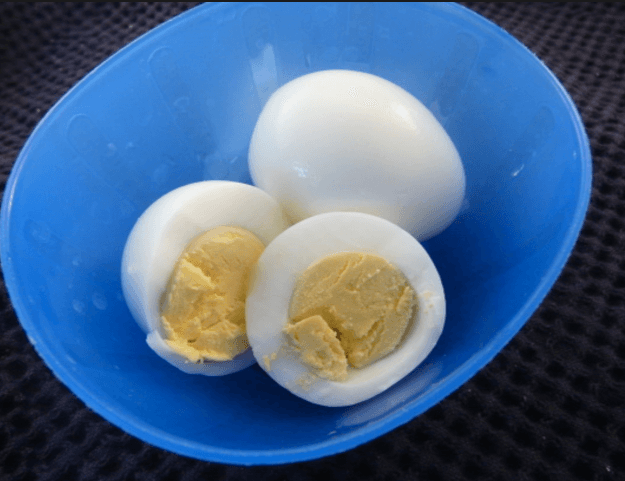
Hard-boiled eggs are the a result of a chemical change because

a)

the eggs are the same size before vs after.

b)

the eggs have different properties (smell, taste, color) before vs after.

c)

the eggs weigh the same before vs after.

d)

the eggs went through a phase change.

48.

Blending together ingredients into a smoothie is what kind of change?

a)

chemical change

b)

physical change

c)

both types of changes

d)

none of these

49.

Any time something burns, it is going through a

a)

chemical change

b)

physical change

50.

A mixture is the result of a physical change because...

a)

The parts can be separated

b)

A new substance is made

c)

There is a chemical reaction

d)

One part of the mixture disappears

51.

The end results of a chemical reaction are called

a)

products

b)

reactants

c)

explosion

d)

a pile of goo

52.

The substances that go into a chemical reaction are called

a)

reactants

b)

products

c)

molecules

d)

mixtures

53.

This image shows what happens when methane gas (CH4) is burned (reacts with oxygen O2) to produce carbon dioxide and water. Which of the following is a product?

a)

methane (CH4)

b)

oxygen (O2)

c)

carbon dioxide (CO2)

d)

none of the above

54.

This image shows what happens when methane gas (CH4) is burned (reacts with oxygen O2). This represents a chemical change because

a)

there is only one carbon atom.

b)

the products and reactants are made of atoms and molecules.

c)

there are the same number of atoms before and after.

d)

the atoms have rearranged to form new molecules.

55.
What are the products of the chemical reaction pictured?
a)
CH4 and CO2
b)
CH4 and O2
c)
CO2 and H2O
d)
O2 and H2O
56.
Consider the chemical equation CH4 + 2 O2 → CO2 + 2 H2O. In this equation, CH4 is a
a)
product
b)
reactant
c)
displacement
57.
What is the left part of a chemical equation called?
H2 + O → H2O
a)
Reactants
b)
Products 
c)
Yields 
d)
Chemical Equation 
58.
What is the right part of a chemical equation called?
H2 + O H2O
a)
Reactants
b)
Products 
c)
Yields 
d)
Chemical Equation 
59.
2H2 + O2 ----> 2H2O What is the product?
a)
------>
b)
2H2O
c)
2H2+ O2
60.
In the reaction methane + oxygen turns into carbon dioxide + water, the methane and oxygen are called _______________.
a)
reactants
b)
products
c)
neutrals
d)
energizers
61.
The reactants are on the left side of the chemical equation.
a)
True
b)
False
62.
Which of the following is an example of a physical change?
a)
The surface of a copper penny changing color after being in a drawer for years
b)
Melted butter becoming a solid when placed in the refrigerator
c)
A car rusting when exposed to the air and rain
d)
Bread toasting
63.
Chemistry is
a)
a characteristic of a substance that can be observed without changing the substance into another substance.
b)
the study of matter and how matter changes.
c)
anything that has mass and takes up space.
d)
a rapid reaction between oxygen and a substance called a fuel.
64.
CaCO3 represents a chemical
a)
Symbol
b)
Formula
c)
Subscript
d)
Reaction
65.
The only sure evidence for a chemical reaction is
a)
the formation of a gas.
b)
a color change.
c)
the production of one or more new substances.
d)
changes in properties.
66.
In chemical reactions, what does the principle of conservation of mass mean?
a)
Matter is not created or destroyed.
b)
The total mass of the reactants is greater than the total mass of the products.
c)
The total mass of the reactants is less than the total mass of the products.
d)
Matter is not changed.
67.
Which of the following is NOT a physical property?
a)
flexibility
b)
flamability
c)
melting point
d)
ability to conduct electricity
68.
A physical change can best be demonstrated by
a)
burning an index card
b)
leaving the index card unchanged
c)
cutting the index card in half
d)
bleaching the index card
69.
Element or Compound?
H2SO4
a)
Element
b)
Compound
70.
Element or Compound?
Oxygen
a)
Element
b)
Compound
71.
Element or Compound?
Salt (NaCl)
a)
Element
b)
Compound
72.

Which of the following represents an element?

a)

H2O

b)

H2

c)

NaCl

d)

CaCO3

73.

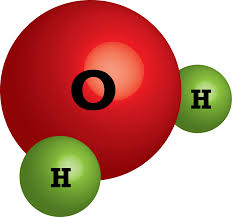
How many different elements are in this compound?

a)

1

b)

2

c)

3

d)

4

74.

How many elements are in C6H12O6?

a)

1

b)

2

c)

3

d)

4

75.

How many atoms of Hydrogen are in this compound

a)

1

b)

2

c)

3

d)

4

76.

Choose which one is a physical property

a)

Flammability

b)

Solubility

c)

Water Reaction

d)

Magic

77.

The melting point of a substance is the temperature at which the substance changes from a solid to

a)

Gas

b)

Liquid

c)

Solid

d)

Plasma

78.

Choose the one that is a chemical property

a)

Magnetism

b)

Size

c)

Color

d)

Reactivity with water

79.

Flammability is the ability of a substance to _________

a)

Burn

b)

Transfer heat

c)

Transfer electricity

d)

Cook

80.

The characteristics of a substance depends on its size.

a)

True

b)

False

81.

What effect does observing the physical properties of a substance have on the substance?

a)

Measuring physical properties changes the chemical identity of the substance

b)

Observing physical properties has no effect on the substance

c)

It makes to substance develop a deep seeded distrust of humans

d)

The substance will undergo an exothermic reaction

82.

Which of the following statements is accurate?

a)

After observing a chemical property, the substance remains the same as before

b)

All metals have the same physical properties

c)

When you see water turn into steam, you have observed a chemical property

d)

A physical property can change without causing a change in the chemical identity of the substance

83.

Safety goggles should only be used when working with

a)

an open flame

b)

chemicals

c)

using a mechanical device

d)

all the answers are correct

84.

Sandals are permitted during laboratory experiments.

a)

True

b)

False

85.

Three main rules when working with open flames

a)

tie back long hair

b)

wear gloves

c)

wear goggles

d)

secure loose clothing

86.

Using chipped glassware is permitted during the labs.

a)

True

b)

False

87.

You only have to wash your hands when completing the lab when you are using chemicals.

a)

True

b)

False

88.

If chemicals comes in contact with your skin or eyes, you should rinse the area water for ___________ minutes.

a)

10

b)

5

c)

15

d)

2

89.

Unused chemical should be returned to original containers.

a)

True

b)

False

90.

In case of a fire, you should

a)

turn off all gas

b)

unplug appliances

c)

take your backpack with you

d)

walk to the designated area.

91.

When is it appropriate to use the safety shower?

a)

Upon exposure to small amounts of chemicals

b)

If you are on fire

c)

large chemical spills

d)

only when directed by the teacher

92.

Always pour acid into water

a)

True

b)

False

93.

End of class procedures

a)

Turn off appliances, water and gas

b)

Return all materials to the appropriate place.

c)

Disposal of chemicals as directed by the teacher.

d)

Clean your area

e)

Wash your hands

94.
What does this tool measure?
a)
weight
b)
mass
c)
density
d)
volume
95.
 The following footwear is best in the laboratory. 
a)
shoes appropriate for the weather
b)
open-toed shoes
c)
closed-toed shoes
d)
sandals
96.
Which of the following items is necessary in a laboratory for safety purposes?
a)
Triple-beam balance
b)
Metric ruler
c)
Computer Monitor
d)
Fire extinguisher
97.
Which of the following would be safe to do during a lab activity?
a)
Running in the classroom
b)
Leaving a water spill on the floor
c)
Touching hot surfaces
d)
Following lab rules
98.
What is this science tool?
a)
thermometer
b)
hand lens
c)
graduated cylinder
d)
beaker
99.
I may get the science supplies I need for an experiment..
a)
when I think it is safe
b)
when the teacher gives me permission
c)
when the supplies are out and ready to use
d)
whenever I want
100.
When may a student perform an experiment in the science lab without teacher supervision?
a)
When the student has read the complete experiment
b)
When the student has the necessary supplies
c)
When another teacher gives permission
d)
Never
101.
What tool is used to measure temperature?
a)
meter stick
b)
thermometer
c)
balance
d)
spring scale
102.
What does this graduated cylinder measure?
a)
mass
b)
volume
c)
weight
d)
length
103.
You may eat or drink in the science laboratory...
a)
after you have washed your hands.
b)
on the days you are not doing a lab.
c)
only from the beakers.
d)
at no time unless given teacher approval.
104.
What should you do if a glass breakage occurs?
a)
Touch it to see if it is safe?
b)
Run out of the classroom
c)
Immediately tell your teacher
d)
Leave without telling anyone
105.
If you are not sure what to do during a lab activity:
a)
guess
b)
change lab partners
c)
ask a teacher
d)
just sit quietly and do nothing
106.
What is this science tool?
a)
sun glasses
b)
safety goggles
c)
hand lenses
d)
beaker
107.
While performing an experiment in the lab you read that you will be working with an open flame, glass beakers, and water.  What are the correct pieces of safety equipment you must be wearing?
a)
gloves, goggles
b)
goggles, gloves, apron
c)
apron, goggles
d)
gloves, apron
108.
All chemicals in the lab are to be considered dangerous
a)
True
b)
False
109.
 Horseplay or practical jokes in the laboratory are 
a)
okay if you are working alone
b)
not dangerous
c)
okay
d)
always against the rules
110.
You have accidentally broken a test tube and spilled a chemical on the table. Which of the following best explains what you should do?
a)
Quickly dispose of the glass, wipe up the spill with the nearest cloth, and hope nobody notices.
b)
Throw the glass into the nearest trash bin and let the spill air-dry.
c)
Use water and paper towels to clean up the spill; place the broken test tube in the disposal container specified for sharp objects.
d)
Caution your lab partners to avoid the area while you inform the teacher of the small accident.
111.
 If a lab experiment is not completed, you should 
a)
make up some results
b)
come in during lunch and finish while eating lunch
c)
sneak in after school and work alone
d)
discuss the issue with your instructor
112.
When you finish working with chemicals, biological specimens, and other lab substances, always 
a)
wipe your hands on your clothes
b)
wipe your hands on a towel
c)
wash your hands thoroughly with soap and water
d)
treat your hands with skin lotion