wayground logo

Free Printable Worksheets

NEW

Font size

S
M
L
XL
Worksheets

Biology EOY Quarterly Assessment

Total questions: 72

Worksheet time: 1hrs 28mins
Name
Class
Date
1.
Enzymes catalyze reactions by ___________ Activation Energy.
a)
Increasing
b)
Decreasing
2.
An experiment is performed on plants to see how different liquids affect plant growth. Each plant in the experiment is given a different liquid; water, apple juice, or milk. Each plant has the same amount of soil, sunlight, and listens to the same music. In this investigation, the independent variable is ...
a)
The type of plant
b)
The amount of sunlight
c)
The type of music
d)
The type of liquid
3.
The amount of energy that usually transfers from one trophic level to the next...
a)
10%
b)
20%
c)
80%
d)
50%
4.

Which of the following converts food into energy for the cell?

a)

vacuole

b)

mitochondria

c)

cytoplasm

d)

cell membrane

5.
What is something that prokaryotic and eukaryotic cells have in common?
a)
They have a nucleus. 
b)
They are multi-cellular. 
c)
They have DNA. 
d)
They have organelles that are membrane-bound.
6.
Active transport does not require energy.
a)
True 
b)
False 
7.
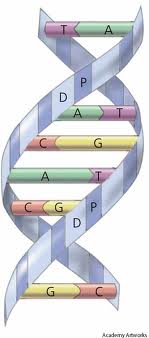
Which 2 molecules forms the sides (backbone) of the DNA ladder?
a)
deoxyribose and adenine
b)
deoxyribose and a hydrogen bond
c)
sugar and the nucleus
d)
deoxyribose (sugar) and phosphate
8.

The light independent reactions (Calvin Cycle) of photosynthesis happen where?

a)

stroma of chloroplast

b)

mitochondrial matrix

c)

stem

d)

thylakoid membrane

9.
In this image, the cell is using which type of molecular transport?
a)
Osmosis
b)
Diffusion 
c)
Endocytosis
d)
Exocytosis 
10.
What are the two reactants of cellular respiration?
a)
C6H12O6 & 6CO2
b)
6 CO2 & 6H2O
c)
C6H12O& 6O2
d)
6CO2 & 6O2
11.
Name structure #5.
a)
rough ER
b)
nucleus
c)
vesicle
d)
cytoplasm
12.
How do enzymes increase the speed of chemical reactions?
a)
reducing the number of products   
b)
reducing the activation energy
c)
increasing the temperature of the cell
d)
increasing the concentration of reactants 
13.
Which of these is NOT true?
a)
Enzymes can denature (change shape) when the temperature gets too high.
b)
Enzymes can only be used once in a chemical reaction. 
c)
Extreme pH can denature enzymes.
d)
Enzymes speed up chemical reactions. 
14.
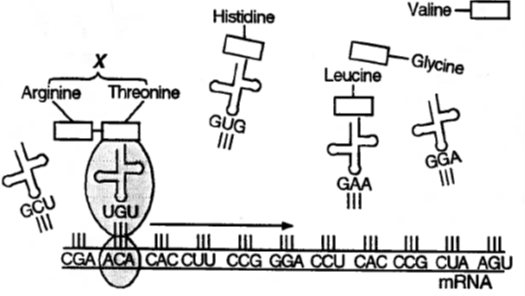
What process is going on in this photo? 
a)
Transcription 
b)
Translation 
c)
Replication 
d)
All the above 
15.
This picture represents which type of cellular transport?
a)
passive transport
b)
endocytosis
c)
exocytosis
d)
osmosis
16.
The cell below is in a _________ solution.
a)
Hypotonic
b)
Hypertonic
c)
Isotonic
17.
Which of these is not a way in which biotechnology can benefit agriculture?
a)
increase crop population
b)
reducing the loss of crops to insects
c)
producing better-tasting fruits
d)
improving farm machinery
18.
What two products does a plant make during photosynthesis?
a)
Water and Glucose
b)
Oxygen and Glucose
c)
Oxygen and Water
d)
CO2 and Glucose
19.

What is the role of the pioneer species in Primary Succession?

a)

To kill any remaining organisms from before the disturbance

b)

To break down rock and rebuild soil

c)

To provide food for large animals

d)

To put fresh oxygen into the air

20.

What are some abiotic factors that could be limiting factors in the Iowa River ecosystem?

a)

Temperature, fertilizer runoff from fields, drought or flood

b)

Invasive species, floods

c)

Temperature, predators, droughts, floods, over fishing

21.
An offspring will receive how many alleles from each parent to determine a specific trait?
a)
one
b)
two
c)
three
d)
five
22.
G = green, g = yellow
The genotype for a yellow plant is...
a)
GG
b)
Gg
c)
gg
d)
all of the choices result in yellow
23.
All of the living and nonliving things in an area that interact with each other are called a/an ______.
a)
community
b)
habitat
c)
population
d)
ecosystem
24.

In the graph to the right, what is the population of deer at the carrying capacity of the environment?

a)

3

b)

7

c)

70

d)

40

25.
What does the graph represent?
a)
Emigration
b)
Exponential growth
c)
Immigration
d)
Logistic Growth
26.
Provides support and protection for the cell, while also controlling the movement of materials in and out of the cell.
a)
Cellular Membrane
b)
Nucleus
c)
Ribosomes
d)
Vacuole
27.
What type of transport is illustrated?
a)
facilitated diffusion
b)
active transport
c)
diffusion
d)
osmosis
28.
What will most likely be the result if all of the mitochondria are removed from a plant cell? 
a)
It will be unable to carry out respiration. 
b)
It will lose water through osmosis. 
c)
It will break down the ribosomes in the cell. 
d)
It will be unable to photosynthesize
29.
Fruit fly body cells have 8 chromosomes. After mitosis, you would expect a resulting fruit fly daughter cell to have ...
a)
16 chromosomes.
b)
46 chromosomes.
c)
8 chromosomes.
d)
4 chromosomes.
30.
Structure B is pointing to the _____. 
a)
chromosome
b)
centromere
c)
DNA
d)
chromatid
31.

In which cell below would a student likely observe a cell plate during mitosis?

a)

rat muscle cell

b)

alligator stomach cell

c)

onion root cell

d)

human lung cell

32.

What is the purpose of strand "A"?

a)

To carry amino acids to the ribosome

b)

To carry the genetic information to the cytoplasm

c)

To serve as a template for the synthesis of mRNA

33.
Replicate the following strand of DNA: 
AATCATGGA
a)
AATCATGGA
b)
TTAGTACCT
c)
UUAGUACCU
d)
GGATAUCUA
34.

Some marine worms and mollusks go through similar larval stages during development. Which can be inferred about their relationship?

a)

They share a common ancestor

b)

The mate with each other

c)

They compete for a habitat

d)

The share the same food source

35.

Which statement best describes natural selection?

a)

As the weather changes, organisms that are able to find shelter need less energy to live.

b)

Organisms that eat only plants need less food than organisms that eat animals.

c)

Organisms better adapted to their environment are more likely to reproduce and pass on their traits to their offspring.

d)

Small organisms are more likely to survive than larger organisms.

36.

Which molecules are joined together to make proteins?

a)

fatty acids

b)

nucleic acids

c)

amino acids

d)

acetic acids

37.

Which word equation best represents the process of cellular respiration?

a)

carbon dioxide + glucose → oxygen + water

b)

carbon dioxide + water → glucose + oxygen

c)

glucose + oxygen → carbon dioxide + water

d)

oxygen + water → carbon dioxide + glucose

38.
The stages of the cell cycle are shown in random order below.  Starting with prophase, sequence the diagrams to show the stages of mitosis.  
                       
a)
5-3-1-2-4
b)
3-1-4-2-5
c)
4-1-2-5-3
d)
2-3-1-5-4
39.
What must occur during the cell cycle to ensure proper division of the chromosomes?  
a)
The cell must grow in size
b)
The mitochondria must divide 
c)
The DNA of the cell must replicate
d)
The cell membrane must dissolve
40.

What do both prokaryotic and eukaryotic cells contain?

a)

membrane-bound organelles

b)

linear chromosomes

c)

cytoplasm

d)

a nucleus

41.
All bacteria are 
a)
eukaryotic.
b)
prokaryotic.
c)
eukaryotic and multicellular.
d)
prokaryotic and unicellular.
42.
What is cell specialization or differentiation?
a)
The process where unspecialized cells become different in structure and function.
b)
When DNA controls the cell cycle.
c)
The ability of cells to make more cells.
d)
The ability of cells to maintain homeostasis.
43.
In what way is the DNA of a nerve cell different from the DNA of a muscle cell?
a)
The DNA is the same but each cell contains different genes
b)
The DNA is the same but different genes are turned on in each cell
c)
Each cell has its own unique DNA
d)
The DNA is different, but each cell contains the same genes
44.
Which is true about Embryonic Stem Cells.
a)
They no longer do mitosis, their cell type is set and can not change
b)
They are limited to the type of cell they can become
c)
They can become any cell type in the body
d)
They are found in adults
45.
Eukaryotic cells store their genetic information(DNA) in __________.
a)
Chromosomes
b)
Centromeres
c)
karyotypes
d)
Proteins
46.
What do monomers do?
a)
Bonds to make a Polymer
b)
Creates Protiens
c)
Stores energy
d)
Splits to make more cells
47.
What are the bases that can be found in DNA?
a)
adenine, thymine, uracil, cytosine
b)
thymine, cytosine, phosphate, guanine
c)
cytosine, guanine, adenine, thymine
d)
guanine, thymine, uracil, cytosine
48.
How is do RNA and DNA differ?
a)
DNA contains adenine, RNA contains thymine
b)
DNA contains a sugar and RNA does not
c)
DNA is double stranded, RNA is single stranded
d)
DNA is found in the cytoplasm, RNA is only in the nucleus
49.
The synthesis of a protein from an mRNA template is called ____________.
a)
transcription
b)
replication
c)
translation
d)
synthesis
50.
The synthesis of an RNA strand from a DNA template is called __________.
a)
transcription
b)
replication
c)
translation
d)
synthesis
51.
This organelle would NOT be found in animal cells.
a)
cell membrane
b)
nucleus
c)
lysosome
d)
chloroplast
52.
This organelle contains enzymes that help digest and break down unwanted cellular materials.
a)
Golgi body
b)
lysosome
c)
endoplasmic reticulum
d)
vacuole
53.
What is the name and importance of the molecule shown in the picture?
a)
fatty acid tail; makes up the fat found in butter
b)
phospholipid; makes up cellular membranes
c)
triglyceride; makes up animal lard
d)
cellulose; makes up the cell walls of plants
54.
Which statement most correctly describes the difference between viruses and a bacteria?
a)
Bacteria are pathogens and viruses are not.
b)
Bacteria have a nucleus and viruses do not.
c)
Bacteria can spread throughout the body and viruses cannot.
d)
Bacteria are living and viruses are not.
55.
What is the movement of molecules or solutes from an area of high concentration to an area of low concentration?
a)
osmosis
b)
active transport
c)
merging
d)
diffusion
56.
Which process produces the most variation within a species? 
a)
Asexual reproduction
b)
Sexual reproduction
c)
mitosis
d)
cloning
57.
How does the amount of energy resulting from fermentation compare with that of aerobic respiration? 
a)
Aerobic respiration results in less energy.
b)
Aerobic respiration results in more energy.
c)
Each process results in equal amounts of energy.
d)
Each process results in variable amounts of energy.
58.
The males of a bird species do a “dance” and “sing a song” each spring. What is the main purpose of these behaviors? 
a)
to scare off young birds
b)
to imprint young birds
c)
to clean their feathers
d)
to attract female birds
59.
The yucca plant releases a strong scent at night when the yucca moth is active. The yucca moth, attracted by the scent, gathers pollen from the yucca flower. The yucca moth then deposits her eggs and the pollen on another plant. This ensures that the plant will be cross-pollinated and that the yucca moth larvae have a steady food supply. Which relationship does this BEST illustrate?
a)
commensalism
b)
mutualism
c)
parasitism
d)
predation
60.
When an egg is fertilized by sperm a ____ is created.
a)
embryo
b)
fetus
c)
zygote
d)
baby
61.
During meiosis, homologous chromosomes undergo  ______ causing genetic variation (gene recombination).
a)
crossing over
b)
independent assortment
c)
mutations
d)
replication
62.
_____ results in blending of traits.
a)
Codominance
b)
Incomplete Dominance
c)
Incomplete Recessive
d)
Polygenic Traits
63.
_____ is the expression of two traits.
a)
Codominance
b)
Incomplete Dominance
c)
Incomplete Recessive
d)
Polygenic
64.
How many generations are shown in this pedigree?
a)
1
b)
2
c)
3
d)
4
65.
What do half colored symbols represent?
a)
The individual is a carrier (heterozygous).
b)
The individual expresses the trait.
c)
The individual has both recessive alleles.
d)
The individual has both dominant alleles.
66.
How many people in this whole pedigree have the trait/disease?
a)
2
b)
3
c)
4
d)
6
67.
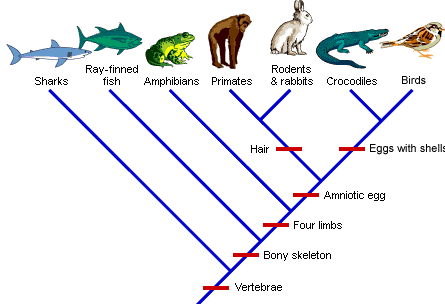
According to this cladogram, sharks are MOST closely related to which organism? 
a)
Amphibians
b)
Ray finned fish
c)
Crocodiles
d)
Birds
68.

Which species is most closely related to species C?

a)

A

b)

B

c)

D

69.

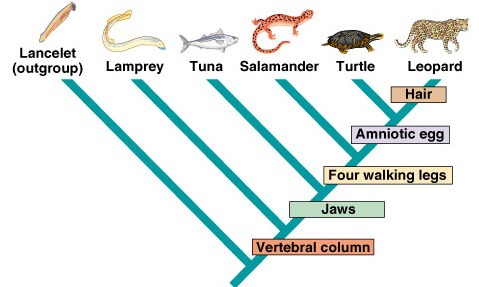
Which is the newest trait?

a)

Amniotic egg

b)

Walking legs

c)

Jaws

d)

Hair

70.

What is this a picture of?

a)

Pedigree

b)

Cladogram

c)

Family Tree

d)

Oak Tree

71.

Something that has never shown the characteristics of life and never will:

a)

dormant

b)

nonliving

c)

living

d)

dead

72.

The following are all characteristics of life EXCEPT:

a)

grow

b)

use energy

c)

eliminate waste

d)

breathe