wayground logo

Free Printable Worksheets

Font size

S
M
L
XL
Worksheets

HBio Unit 1 Science Skills

Total questions: 95

Worksheet time: 4hrs 25mins

Name
Class
Date
1.

An observation that cannot be described or expressed in numbers.

a)

inferring

b)

qualitative observation

c)

scientific investigation

d)

Quantitative observation

2.

Noticing that a bird is blue is a _____________ observation.

a)

qualitative

b)

quantitative

3.
What is a Claim?
a)
Living things need water.
b)
The supporting details
c)
Fake news
d)
The writer's position or stance, it answers the question
4.
Evidence is the....
a)
HOW you know
b)
Statistic or measurement
c)
WHY you know
d)
ANYTHING you know
5.
The reasoning is... 
a)
EVERYTHING you know
b)
WHY you know
c)
WHAT you know
d)
HOW you know
6.
What is a factor that can change in an experiment?
a)
Claim
b)
Variable
c)
Scientific Inquiry
d)
Hypothesis
7.
What is the justification that connects the evidence to the claim? The process of drawing a conclusion on the basis of evidence
a)
Recognizing
b)
Responding
c)
Regulating
d)
Reasoning
8.
What is the independent variable in this graph?
a)
Hours worked
b)
Dollars earned
c)
Total income
d)
Dollars earned per hour
9.
The vertical axis on a graph in also known as _____
a)
X
b)
A
c)
Y
d)
B
10.
The dependent variable goes on which axis line on a graph?
a)
x
b)
a
c)
s
d)
y
11.
What is a hypothesis?
a)
An observation
b)
A bar graph
c)
Facts
d)
A prediction of what will happen 
12.

A group of pupils wanted to find out if caffeine increases your reaction speed. What is the independent variable?

a)

amount of caffiene

b)

reaction speed

c)

time between drinking and measuring

13.

A group of pupils wanted to find out if caffeine increases your reaction speed. What is the control variable?

a)

amount of caffiene

b)

reaction speed

c)

time between drinking and measuring

14.

Cell X is from a plant cell. Under a microscope, we can see that cell X has chloroplasts. Chloroplasts are organelles found only in plants, which allow plants to convert sunlight into sugars. Which is a reasoning statement?

a)

Cell X is from a plant cell.

b)

Under a microscope, we can see that cell X has chloroplasts.

c)

Chloroplasts are organelles found only in plants, which allow plants to convert sunlight into sugars.

d)

All statements provide reasoning.

15.

What can you infer about the temperature for E.coli bacterial growth?

a)

E. coli does not grow well at low and high temperatures.

b)

E coli will continue to grow at very high temperatures.

c)

E.coli grows best at very low temperatures

d)

E.coli grows best at very high temperatures.
16.
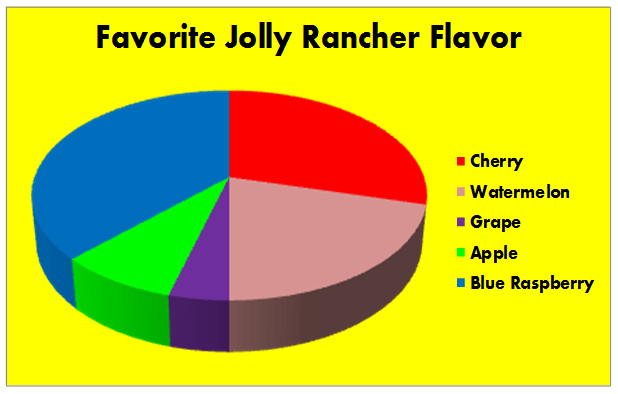
According to this graph, what is the most popular flavor of Jolly Rancher?
a)
Cherry
b)
Grape 
c)
Blue Rasberry
d)
Watermelon
17.
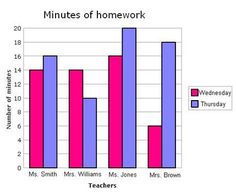
Which day had more minutes of homework?
a)
Wednesday
b)
Thursday
c)
Friday
d)
Ms. Jones
18.

What is a variable?

a)

something used to compare the parts of a whole

b)

Something that is useful for displaying data or information that changes over time

c)

Any display of information in tabular form, with rows and or columns named

d)

Any factor, trait, or condition that can exist in differing amounts or types

19.
a)

The cooler the temperature, the louder the crickets chirp.

b)

The crickets cannot chirp at temperatures lower than 10 degrees C.

c)

The warmer the temperature, the more often crickets chirp.

d)

The temperature and the chirping of crickets are not related.

20.

Determine which bar graph matches the table

a)
b)
c)
21.

What is the general trend of this line graph?

a)

The more you mow, the more money you make

b)

The more you mow, the less money you make

c)

You make the same amount of money regardless of how long you mow

22.
What would be the best scale for this data?
Days
      Cm
  1            1.0
  2            3.5
  3            5.0
  4            8.5
a)
count by fives to 10
b)
count by tens to 100
c)
count by ones to 5
d)
count by ones to 10
23.
What is the control for the experiment? 
a)
the thing being tested
b)
the normal situation
c)
what we measure in the end
d)
what we change 
24.
Which would go on the y-axis?
a)
Time
b)
# of Bacteria 
25.
What unit measures mass
a)
grams (g)
b)
centimeters (cm)
c)
kilometers (km)
d)
liters (L)
26.
What unit would I use to measure a liquid?
a)
milliliters (mL)
b)
grams (g)
c)
centimeters (cm)
d)
pounds (lbs)
27.
What unit would I use to measure a solid
a)
milliliters (mL)
b)
grams (g)
c)
kilometers (km)
d)
pounds (lbs)
28.

The diagram shows the condition of a tree. Which of the following is the reasonable inference for the tree ?


Rajah menunjukkan keadaan sepohon pokok. Manakah inferens yang munasabah bagi pokok itu?

a)

The tree is responding to the touch

Pokok itu bergerak balas terhadap sentuhan

b)

The tree did not get enough water

Pokok itu tidak mendapat cukup air

c)

The tree become wilt

Pokok itu menjadi layu

d)

The tree is growing

Pokok itu sedang membesar
29.
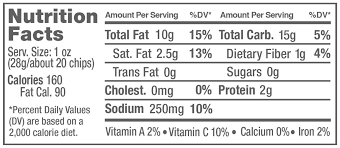
Based on the label, how many chips are in 1 serving of this bag of potato chips?
a)
20 chips
b)
28 chips
c)
160 chips
d)
90 chips
30.
What is special about graduated cylinders?
a)
They hold large quantities of liquid safely
b)
They measure small amounts very accurately. We use them when precision is important.
c)
They allow us to examine the liquid, we use them when looking for suspended solids.
d)
They are easily heated. We use graduated cylinders to heat liquids
31.
Evidence is ___________________
a)
A statement or conclusion that answers a question
b)
Scientific data that supports the claim
c)
A justification that connects the claim to the evidence
d)
Not vital when using an argument
32.
Air is matter. We found that the weight of the ball increases by .5lbs each time we pumped more air into it. This shows that air has weight, one of the characteristics of matter.
Which sentence is the claim?
a)
Air is matter.
b)
We found that the weight of the ball increases by .5lbs each time we pumped more air into it.
c)
This shows that air has weight, one of the characteristics of matter.
33.
Air is matter. We found that the weight of the ball increases by .5lbs each time we pumped more air into it. This shows that air has weight, one of the characteristics of matter.
Which sentence is the evidence?
a)
Air is matter.
b)
We found that the weight of the ball increases by .5lbs each time we pumped more air into it.
c)
This shows that air has weight, one of the characteristics of matter.
34.
Air is matter. We found that the weight of the ball increases by .5lbs each time we pumped more air into it. This shows that air has weight, one of the characteristics of matter.
Which sentence is the reasoning?
a)
Air is matter.
b)
We found that the weight of the ball increases by .5lbs each time we pumped more air into it
c)
This shows that air has weight, one of the characteristics of matter.
35.
Students should not be required to do community service.
a)
Evidence statement
b)
Claim statement
c)
Reasoning statement
36.
What is a good description for claim?
a)
Any statement
b)
A statement that answers a question
c)
A question
d)
A piece of evidence
37.
What is a good definition for evidence?
a)
A statement that answers a question
b)
All data and facts
c)
Data/facts that support your claim
d)
Reasoning that justifies your evidence
38.

What is an example of evidence?

a)

Football players are 33% more likely to get injured than baseball players.

b)

Football is more dangerous than baseball.

c)

Baseball is a fun sport.

39.

Information gathered from watching a plant grow 2cm in a week is called what?

a)

Variables

b)

Data

c)

Hypothesis

d)

Theory

40.

Science is all of the following EXCEPT:

a)

A way of learning about the world

b)

Provides explanations of the natural world

c)

Never changes

d)

Knowledge gained through studies

41.

After scientists state a problem question, they want to know as much about the topic as possible. What is the next step in the scientific method AFTER they write a problem question?

a)

research the topic

b)

make observations

c)

perform an experiment

d)

form a conclusion

42.
Different types of  bushes are kept in a greenhouse to see which will produce the most flowers. The independent variable in this experiment is the
a)
greenhouse
b)
types of bushes
c)
oxygen
d)
carbon dioxide
43.
A student wants to test the effects of type of exercise on heart rate.  What is the dependent variable?
a)
heart rate
b)
type of exercise
c)
amount of exercise
d)
time of day exercise occurs
44.

How many independent (manipulated) variables does an experiment have?

a)

0

b)

1

c)

between 1 and 5

d)

2

45.
A control is a group of subjects that
a)
does not receive the independent variable
b)
does not receive the dependent variable
c)
run the experiment
d)
increase the effect of the outside variables on the experiment
46.
A scientific ____________ is a statement that describes what always happens under certain conditions in nature.
a)
law
b)
theory
c)
method
d)
variable
47.
A scientific ____________ is a broad explanation for events that is widely accepted as true.
a)
law
b)
theory
c)
observation
d)
method
48.
People have 206 bones. 
The tiniest bone is inside the ear. It is 3 millimeters long. It is called the stapes, or stirrup.
a)
Fact
b)
Theory
c)
Law
49.
The EARTH is made of the following CHEMICAL ELEMENTS:
oxygen 46.6 %
aluminum 8.1 %
iron 5%
sodium 2.8 %
a)
Fact
b)
Theory
c)
Law
50.
Evolution is the widely held notion that all life is related and has descended from a common ancestor: the birds and the bananas, the fishes and the flowers
 -- all related That is, complex creatures evolve from more simplistic ancestors naturally over time.
a)
Fact
b)
Theory
c)
Law
51.
New cells are formed from other existing cells, and that the cell is a fundamental unit of structure, function and organization in all living organisms.
a)
Fact
b)
Theory
c)
Law
52.
The Sun, composed mostly of helium and hydrogen, has a surface temperature of 6000 degrees Celsius.
a)
Fact
b)
Theory
c)
Law
53.
An observation that has been repeatedly confirmed, and for all practical purposes is accepted as “true.”
a)
Fact
b)
Theory
c)
Law
d)
Hypothesis
54.
A testable statement about the natural world that can be used to build more complex inferences and explanations. To be a hypothesis, a statement must contain a possible explanation.
a)
Fact
b)
Theory
c)
Law
d)
Hypothesis
55.
In science, a well-substantiated explanation of some aspect of the natural world that can incorporate facts, laws, inferences, and tested hypotheses.
a)
Fact
b)
Theory
c)
Law
d)
Hypothesis
56.
You observe that, upon waking up each morning, your trashcan is overturned and trash is spread around the yard. You propose that raccoons are responsible. Is this fact, a law, a theory, or a hypothesis?
a)
Fact
b)
Law
c)
Theory
d)
Hypothesis
57.
Kalinda was trying to explain to her friend the difference between a theory and a law in science.  She used the theory of plate tectonics and the law of superposition as examples.  Kalinda explained the difference by using nonscientific language.  Which statement did Kalinda use to correctly describe the difference between a theory and a law in science?
a)
A theory describes a natural event, while a law explains it.
b)
A theory explains a natural event, while a law predicts it.
c)
A theory explains a natural event, while a law describes it.
d)
A theory predicts a natural event, while a law explains it.
58.
Scientists all over the world are sure that all matter is made of atoms.  All of their investigations point to the fact that this is true.  Unfortunately, there is no way to know 100% for sure if atoms are real.  This means that the idea of atoms is a _________.
a)
question
b)
hypothesis
c)
theory
d)
law
59.
Joe tells Mai his theory about why sea turtles nest on the beach instead of in the ocean.  He says, “The turtle eggs would sink to the bottom of the ocean, and the baby turtle would drown.”  Joe says his uncle, a fisherman, told Joe this information.  Mai tells Joe that his theory is not scientific.  Why does Joe’s idea not meet the requirements to be a scientific theory?
a)
Joe’s idea is already a scientific law.
b)
Joe’s idea is not supported by scientific evidence.
c)
Joe’s idea is a good guess that can be tested by experiments.
d)
Joe and his uncle are not scientists.
60.
 The melting point of water is 0 °C (32 °F).  
The freezing point of water is the same as the melting point which is 0 °C (32 °F). 
a)
Fact
b)
Theory
c)
Law
61.

What does pH stand for?

a)

purple hair

b)

potential Hydrogen

c)

perfect Hydrogen

d)

phosphorous Hydrogen

62.

What is the range of the pH scale?

(a)  

63.

The pH scale is used to know what?

a)

Your temperature

b)

Know one knows

c)

The colors of acids and bases

d)

The strength of acids and bases

64.

Acids have a pH of _______________.

a)

below 7

b)

above 7

c)

exactly 7

65.

Bases have a pH of _______________.

a)

below 7

b)

above 7

c)

exactly 7

66.

Neutral solutions have a pH of _______________.

a)

below 7

b)

above 7

c)

exactly 7

67.

Which one of the following is NOT a property of acids.

a)

Tastes sour

b)

Corrodes metals

c)

Conduct electricity

d)

Turns red litmus paper blue

68.

Which one of the following is NOT a property of basic solutions?

a)

Feels soapy/slippery

b)

Tastes sour

c)

Conducts electricity

d)

Turns red litmus paper blue

69.

Which one of these substances will have a NEUTRAL pH?

a)

Lemon juice

b)

Coffee

c)

Bleach

d)

Water

70.

How do acid base indicators work?

a)

They change smell in different pH values

b)

They change temperature in different pH values

c)

They do not do anything in different pH values

d)

They change color in different pH values

71.

Is the following substance an acid or a base? Ca(OH)2

a)

Acid

b)

Base

72.

Is the following substance an acid or a base? H2(SO4)

a)

Acid

b)

Base

73.

Is the following substance an acid or a base? KOH

a)

Acid

b)

Base

74.
What word describes when water is attracted to other substances?
a)
cohesion
b)
adhesion
c)
capillary action
d)
surface tension
75.
What two elements make up water?
a)
Helium and oxygen
b)
Hydrogen and oxygen
c)
helium and carbon
d)
oxygen and carbon
76.
Attractions between the negative Oxygen atom of one water molecule and the positive Hydrogen atom of another water molecule are called
a)
Covalent bonds
b)
Ionic bonds
c)
Polar bonds
d)
Hydrogen bonds
77.
Why does ice float?
a)
As water freezes, it expands and its density decreases.
b)
As water freezes, it takes up more hydrogen from the atmosphere, causing it to have a greater buoyancy.
c)
As water freezes, air becomes trapped between the hydrogen bonds of water molecules.
d)
As water freezes, it takes up more oxygen from the atmosphere, causing it to have a greater buoyancy.
78.
Water is a universal solvent because it...
a)
It can be found anywhere
b)
It freezes when it gets cold
c)
floats when frozen
d)
Dissolves most substances
79.
Which of the following is LEAST likely to dissolve in water?
a)
nonpolar fats and oils
b)
polar sugar molecules
c)
salt made of a positive sodium ion and a negative chloride ion
d)
all of the substances will dissolve easily in water
80.
Large bodies of water, such as lakes and oceans, do not quickly fluctuate in temperature. What is the reason for this phenomenon?
a)
Water is an acid.
b)
Water is a versatile solvent.
c)
Water has a high heat capacity.
d)
 Water acts as a buffer.
81.
 Small insects can walk across the surface of calm water. Their feet push the surface of the water down slightly, somewhat like a person walking across a trampoline, but they do not break the surface. What is the best explanation for why this happens?
a)
The insects are light enough so that they do not break the hydrogen bonds holding the water molecules together
b)
The insects actually use their wings to hover slightly above the water's surface and they only skim it with their feet
c)
The insects' feet are non-polar, so they are repelled by the polar water molecules and are pushed away from the water's surface
d)
The insects are small enough to see the individual water molecules, so they are able to step carefully from one molecule to the next
82.
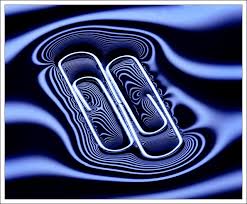
The tightness across the surface of water that enables paper clips to float is ____________.
a)
adhesion
b)
capillary action
c)
surface tension
d)
polarity
83.
Which statement explains why water molecules stick together?
a)
both sides are negative
b)
one side has a positive charge and the other side has a negative charge
c)
one side has a negative charge adn the other side has a neutral charge
d)
both sides are positive
84.
When a molecule has an opposite electrical charge on each end, it is known as what?
a)
cohesion
b)
polar molecule
c)
hydrogen bond
d)
solution
85.
Water beads up on the surface of a penny because of what property?
a)
Adhesion
b)
High Surface Tension
c)
Universal Solvent
d)
Changes in Density
86.
The smallest basic unit of matter is the
a)
molecule.
b)
atom.
c)
compound.
d)
cell.
87.

Atoms in molecules share pairs of electrons when they form

a)

covalent bonds.

b)

ionic bonds.

c)

hydrogen bonds.

d)

polymers.

88.

Atoms transfer electrons when they form

a)

covalent bonds.

b)

ionic bonds.

c)

hydrogen bonds.

d)

polymers.

89.

What is cohesion?

a)

The ability of a molecule to "stick" to itself

b)

The ability of a molecule to "stick" to other molecules

c)

Large amounts of energy are required to change the temperature of a substance

d)

A well-organized and efficient team

90.

What do the green bonds represent?

a)

Covalent Bond

b)

Hydrogen Bond

c)

Ionic Bond

91.

What characteristic is shown in the image?

a)

Polarity

b)

Hydrogen Bonds

c)

Cohesion

d)

Adhesion

92.

This individual is ice fishing. They cut through the top layers of ice to reach the water and fish below. What property of water allows for this to happen?

a)

Expansion Upon Freezing

b)

Universal Solvent

c)

Ability to Moderate Temperature

d)

Cohesive Behavior

93.

What property of water allows for water to act as a temperature regulator for the world?

a)

Cohesive Behavior

b)

Expansion Upon Freezing

c)

High Specific Heat

d)

Universal Solvent

94.

Sweating is an example of what property of water?

a)

Ability to Moderate Temperature

b)

Expansion Upon Freezing

c)

Cohesive Behavior

d)

Universal Solvent

95.

Blood functions as a transport mechanism to take nutrients and oxygen to all cells in the body. What property of water allows for this to occur?

a)

Expansion Upon Freezing

b)

Universal Solvent

c)

Cohesive Behavior

d)

Ability to Moderate Temperature