wayground logo

Free Printable Worksheets

Font size

S
M
L
XL
Worksheets

AP Chemistry Unit 0 Review

Total questions: 118

Worksheet time: 2hrs 48mins

Name
Class
Date
1.
How many sig. fig. are in the number below:
350.540
a)
4
b)
5
c)
6
d)
7
2.
How many sig. fig. are in the number below:
0.0005
a)
1
b)
2
c)
3
d)
4
3.
Which measurement contains 3 sig figs?
a)
200 mL
b)
20.0 mL
c)
0.02 mL
d)
0.020mL
4.
Round 1047.78 to three sig figs
a)
104
b)
105
c)
1050
d)
1050.00
5.
How many Significant Figures in the number below?
4,500
a)
3
b)
4
c)
2
d)
1
6.
Solve. Round using SigFig math rules.
12.5-mL + 20.05-mL + 2.69-mL
a)
35-mL
b)
35.2-mL
c)
35.24-mL
d)
35.240-mL
7.
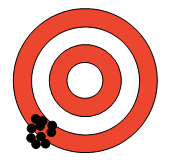
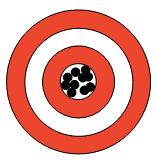
Describe the accuracy and precision of the image
a)
Accurate and Precise
b)
Accurate and not precise
c)
Not Accurate and Precise
d)
not accurate and not precise
8.
How many sig figs are in 0.0045670?
a)
8
b)
4
c)
5
d)
7
9.
Describe the accuracy and precision of the image
a)
Accurate and Precise
b)
Accurate and not precise
c)
Not Accurate and Precise
d)
not accurate and not precise
10.
Describe the accuracy and precision of the image
a)
Accurate and Precise
b)
Accurate and not precise
c)
Not Accurate and Precise
d)
not accurate and not precise
11.

What is the length?

a)

7

b)

7.7

c)

7.70

d)

7.700

12.

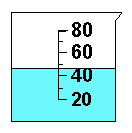
What is the volume?

a)

50

b)

45

c)

45.0

d)

40.5

13.

WHAT IS THE VOLUME?

a)

36

b)

36.5

c)

37.0

d)

36.0

14.

What is the answer? 6.569 + 147

a)

153.569

b)

154

c)

150

d)

153.6

15.

What is the answer? 12.50 * 2.0

a)

25

b)

25.0

c)

21

d)

20

16.
Solve. Round using SigFig math rules.
98.7°C - 97.25°C 
a)
1°C
b)
1.4°C
c)
1.45°C
d)
1.450°C
17.

0.001 s + 9.234 s = ?

a)

0.9234 s

b)

9.235 s

c)

9.24 s

d)

10 s

18.

33 g - 2.1 g = ?

a)

31.9 g

b)

31 g

c)

30.9 g

d)

30 g

19.
Solve & Round to Correct Sig Figs.
100 / 2 = 
a)
50
b)
50.
c)
50.0
d)
50.00
20.
Calculate 1.23 m x 0.89 m and give your answer with the appropriate number of significant figures.
a)
1.0 m2
b)
1.1 m2
c)
1.0947 m2
d)
1.09 m2
21.
a)
Student A
b)
Student B
c)
Student C
d)
Cannot be determined
22.
It is a measure of how close measurements come to each other when they are made in the same way
a)
Accuracy
b)
Precision
c)
Error
d)
Extrapolation
23.

How close a measurement is to the accepted value is called..

a)

Accuracy

b)

Precision

c)

Significant

d)

Estimate

24.
This bullseye demonstrates...
a)
High Accuracy & High Precision
b)
High Accuracy & Low Precision
c)
Low Accuracy & High Precision
d)
Low Accuracy & Low Precision
25.
?
a)
High Accuracy & High Precision
b)
High Accuracy & Low Precision
c)
Low Accuracy & High Precision
d)
Low Accuracy & Low Precision
26.
volume?
a)
48 mL
b)
48.2 mL
c)
48.25 mL
d)
4 mL
27.
A set of data are all close to each other, and they are close to the actual value.  This set of data can be described as...
a)
accurate
b)
precise
c)
both precise and accurate
28.

Which Student is the most Precise?

a)

Alex

b)

Shandra

c)

Luis

29.
This image is an example of...
a)
precision ONLY
b)
accuracy ONLY
c)
BOTH precision and accuracy
d)
NEITHER precision and accuracy 
30.
What coefficient should be used to make the following equation balanced?
N2+O2--> _NO 
a)
1
b)
2
c)
3
d)
4
31.

Which equation is balanced?

a)

PbO2 + 2H2

b)

SO2 + H20 --> H2SO4

c)

2Na + 2H2O --> 2NaOH + H2

32.
How many HCl molecules do you need to balance this equation? 
Mg +  __HCl --->  MgCl2 + H2
a)
1
b)
2
c)
3
d)
4
33.

What law governs the balancing of chemical equations?

a)

Law of Energy

b)

Law of Conservation of Matter/Mass

c)

Law of Gravity

d)

Law of Matter Movement

34.
What is the total number of atoms present in 5Na3PO4
a)
5
b)
40
c)
55
d)
8
35.

Balance this equation

_Al +_HCl --> _H2 +_AlCl3

a)

2,6,3,2

b)

it's already balanced

c)

4,12,3,4

d)

2,1,4,5

36.

What are the coefficients that would properly balance this equation?

__Ca + __H2O --> __Ca(OH)2 + __H2

a)

2,1 --> 2,1

b)

1,2 --> 1,1

c)

1,2 --> 2,4

d)

1,2 --> 2,1

37.

What are the coefficients that would properly balance this equation?

__AgNO3 + __H2S --> __Ag2S+ __HNO3

a)

2,1 --> 1,2

b)

1,2 --> 1,1

c)

1,2 --> 1,2

d)

1,2 --> 2,1

38.

What are the coefficients that would properly balance this equation?

__Al + __O2--> __Al2O3

a)

4,1 --> 2

b)

4,3 --> 4

c)

3,4 --> 1

d)

4,3 --> 2

39.

Determine the coefficients to make the following equation balanced?

__N2 + __O2--> __NO

a)

1, 1, 1

b)

1, 1, 2

c)

2, 2, 2

d)

1, 2, 2

40.
Which number should go in the blank?
Mn + _ HNO3 → Mn(NO3)2 + H2
a)
1
b)
2
c)
3
d)
0
41.
Combining substances to form a new substance
a)
Displacement
b)
Synthesis
c)
Decomposition
d)
Oxidation
42.
Breaking down a substance into simpler substances
a)
Displacement
b)
Synthesis
c)
Decomposition
d)
Oxidation
43.
Switching one substance for another
a)
Displacement
b)
Synthesis
c)
Decomposition
d)
Oxidation
44.
What type of reaction is the equation C + O→ CO2?
a)
Synthesis Reaction
b)
Decomposition Reaction
c)
Single Displacement Reaction
d)
Double Displacement Reaction
45.
What type of reaction is the equation 2NaCl →2Na +Cl2?
a)
Synthesis Reaction
b)
Decomposition Reaction
c)
Single Displacement Reaction
d)
Double Displacement Reaction
46.
Cu + 2Ag(NO3) → 2Ag + Cu(NO3)
a)
Synthesis Reaction
b)
Decomposition Reaction
c)
Single Displacement Reaction
d)
Double Displacement Reaction
47.
Ca3(PO4)2 + 3 H2SO4 + 3 CaSO4 + 2 H3(PO4)
a)
Synthesis Reaction
b)
Decomposition Reaction
c)
Single Displacement Reaction
d)
Double Displacement Reaction
48.
Consider the chemical equation CH4 + 2 O2 → CO2 + 2 H2O. In this equation, CH4 is a
a)
product
b)
reactant
c)
displacement
49.
Which generalized equation represents a synthesis reaction?
a)
A + BC → AC+ B
b)
A + B → AB
c)
AB → A + B
50.
Which generalized equation represents a single displacement reaction?
a)
A + BC → AC+ B
b)
A + B → AB
c)
AB → A + B
51.
What is the name of CuCl2
a)
copper (II) chloride
b)
copper chloride
c)
copper monochloride
d)
copper (I) chloride
52.
Name the compound S2F8
a)
sulfur (II) fluoride
b)
disulfur octafluoride
c)
sulfur fluorine
d)
sulfur octafluoride
53.

What is Ca3N2 called?

a)

calcium nitride

b)

calcium (II) nitride

c)

calcium nitrogen

d)

tricalcium dinitride

54.
Give the name for the polyatomic ion PO43- 
a)
phosphorous tetraoxide
b)
phosphorous oxide
c)
phosphorous (III) oxygen
d)
phosphate
55.
How would you say Ni3P2?
a)
nickel (II) phosphide
b)
nickel phosphide
c)
trinickel diphosphide
d)
nickel phosphorous
56.
Write the name for Mn(CO3)2 
a)
manganese (IV) carbonate
b)
manganese (II) carbonide
c)
manganese dicarbonate
d)
manganese carbonate
57.
What is the name for VF3?
a)
vanadium trifluoride
b)
vanadium fluorine
c)
vanadium (III) fluorine
d)
vanadium (III) fluoride
58.
What is the name for SrO?
a)
strontium monoxide
b)
strontium oxide
c)
strontium (II) oxide
d)
strontium oxygen (II)
59.
Name: PI3
a)
phosphorous (III) iodide
b)
monophosphorous iodide
c)
phosphorous triiodide
d)
phosphide
60.
CaCO3 is called... 
a)
calcium carbonate
b)
calcium carbon oxide
c)
calcium monocarbonate
d)
calcium (II) carbonate
61.

Formula for barium sulfide

a)

B2S3

b)

BaS

c)

Ba2S

d)

BaS2

62.

Name for NaH

a)

sodium hydrogen

b)

potassium hydride

c)

sodium hydride

d)

potassium hydrogen

63.

Name for PBr2

a)

phosphorus bromide

b)

phosphorus dibromide

c)

phosphorus dibromine

d)

phosphorus bromine

64.

Name for LiOH

a)

lithium hydrogen oxide

b)

lithium hydroxide

c)

lithium (II) hydroxide

d)

lithium (I) hydroxide

65.

Oxidation # for underlined particle:

Li2SiO3

a)

(I)

b)

(II)

c)

(III)

d)

(IV)

66.
What precipitate forms when you mix lead (II) nitrate with sodium chloride?
a)
sodium nitrate 
b)
lead (II) chloride 
c)
sodium lead
d)
chloride nitrate 
67.
Which is the correct net ionic equation for the reaction of AgNO3 and CaCl2?
a)
Ca2+(aq) +  2Cl- (aq) → CaCl(s)
b)
Ag+(aq)  +  Cl- (aq) → AgCl(s)
c)
Ag +  Cl  →  AgCl
d)
Ag+  +  Ca2+   →Ag2Ca (s)
68.
Which of the following does NOT form a precipitate?
a)
Pb(NO3)2(aq) + 2KI(aq) 
b)
Sr(NO3)2 (aq) + K2SO4(aq) →
c)
AgNO3(aq) + Na2S(aq) →
d)
 Pb(NO3)2(aq) + AgNO3(aq) →
69.
What is oxidation number of P in K3PO4?
a)
+1
b)
+5
c)
-2
d)
0
70.
What is oxidation number of Cr in Cr2O72-?
a)
-2
b)
+2
c)
+6
d)
+12
71.
What are the spectator ions in the reaction of sodium chloride with silver nitrate?
a)
silver and nitrate
b)
sodium and chloride
c)
sodium and nitrate
d)
silver and chloride
72.
In this equation,
CuCl2 + NaOH  → Cu(OH)2 + NaCl
Which product is insoluble?
a)
copper(II) hydroxide
b)
sodium chloride
c)
sodium hydroxide
d)
copper(II) chloride
73.
Which of these results in the formation of a precipitate?
a)
AgNO3(aq)  +  NaOH(aq)→
b)
BaNO3(aq)  +  CaCl2(aq)→
c)
NaNO3(aq)  +  KOH(aq)→
d)
More than one of these form precipitates
74.

A homogeneous mixture is the same thing as...

a)

a solution

b)

a heterogeneous mixture

c)

a compound

d)

an element

75.
What does it mean to dilute a solution?
a)
lower the concentration of solute per solvent
b)
increase the concentration of solute per solvent
76.
What is a solvent
a)
the liquid in which a solute is dissolved to form a solution.
b)
Another word for solution
c)
A thing that make drinks turn colors
d)
Its a metal molecole
77.

Which substance is least soluble at 0 ºC?

a)

KI

b)

KNO3

c)

KClO3

d)

Ce2(SO4)3

78.
Solution where more solute can still be dissolved at the given temperature. 
a)
Saturated
b)
Unsaturated
c)
Supersaturated
d)
Homogeneous solution
79.
Describe a solute.
a)
part of solution present in largest amount
b)
the substance that gets dissolved
c)
the substance that does the dissolving
d)
surrounds and breaks apart
80.
What is a precipitate?
a)
an insoluble reactant formed during a chemical reaction
b)
an insoluble product formed during a chemical reaction
c)
a soluble solvent in a saturated solution
d)
a soluble solute in a saturated solution
81.
What will allow more solute to be dissolved in a solvent.
a)
adding more solute
b)
stiring
c)
cooling solution
d)
heat
82.
State whether the following compound is soluble or insoluble.  calcium carbonate CaCO
a)
soluble
b)
insoluble
83.
State whether the following compound is soluble or insoluble. potassiun bromide KBr
a)
Soluble
b)
Insoluble
84.
State whether the following compound is soluble or insoluble. Zinc hydroxide Zn(OH)2
a)
Soluble 
b)
Insoluble
85.
State whether the following compound is soluble or insoluble. iron(ii) sulfide FeS
a)
soluble
b)
insoluble
86.
State whether the following compound is soluble or insoluble. Silver iodide AgI
a)
Soluble 
b)
Insoluble 
87.
State whether the following compound is soluble or insoluble. Zinc  carbonate ZnCO3 
a)
Soluble 
b)
Insoluble 
88.
State whether the following compound is soluble or insoluble.Potassium hydroxide KOH
a)
Soluble 
b)
Insoluble
89.
State whether the following compound is soluble or insoluble.Silver acetate AgC2H3O2
a)
Soluble 
b)
Insoluble
90.
State whether the following compound is soluble or insoluble.nickel chloride NiCl2
a)
Soluble 
b)
Insoluble
91.
State whether the following compound is soluble or insoluble.Lead iodide PbI2
a)
Soluble
b)
Insoluble
92.
State whether the following compound is soluble or insoluble.Ammonium nitrate NH4NO3
a)
soluble
b)
insoluble
93.

This is used to pour dry materials into another container

a)

scoop

b)

funnel

c)

bunsen burner

d)

goggles

94.

This is used to pour lab materials into an object with a small opening

a)

scoop

b)

funnel

c)

bunsen burner

d)

goggles

95.

This is used to produce flame for science experiments

a)

scoop

b)

funnel

c)

bunsen burner

d)

goggles

96.

This is used to clean chemicals or debris (stuff) out of your eyes

a)

test tube holder

b)

eye wash

c)

eye dropper

d)

lab apron

97.

This is used to store and mix chemicals during an experiment

a)

fire extinguisher

b)

thermometer

c)

beaker

d)

tongs

98.

This is used to clean test tubes

a)

test tube brush

b)

ruler

c)

forceps

d)

test tube

99.

This is used to hold and mix chemicals

a)

test tube brush

b)

ruler

c)

forceps

d)

test tube

100.

This is used to find the mass of an object

a)

graduated cylinder

b)

inference

c)

observation

d)

triple beam balance

101.

This is used to find the volume of a liquid

a)

graduated cylinder

b)

inference

c)

observation

d)

triple beam balance

102.

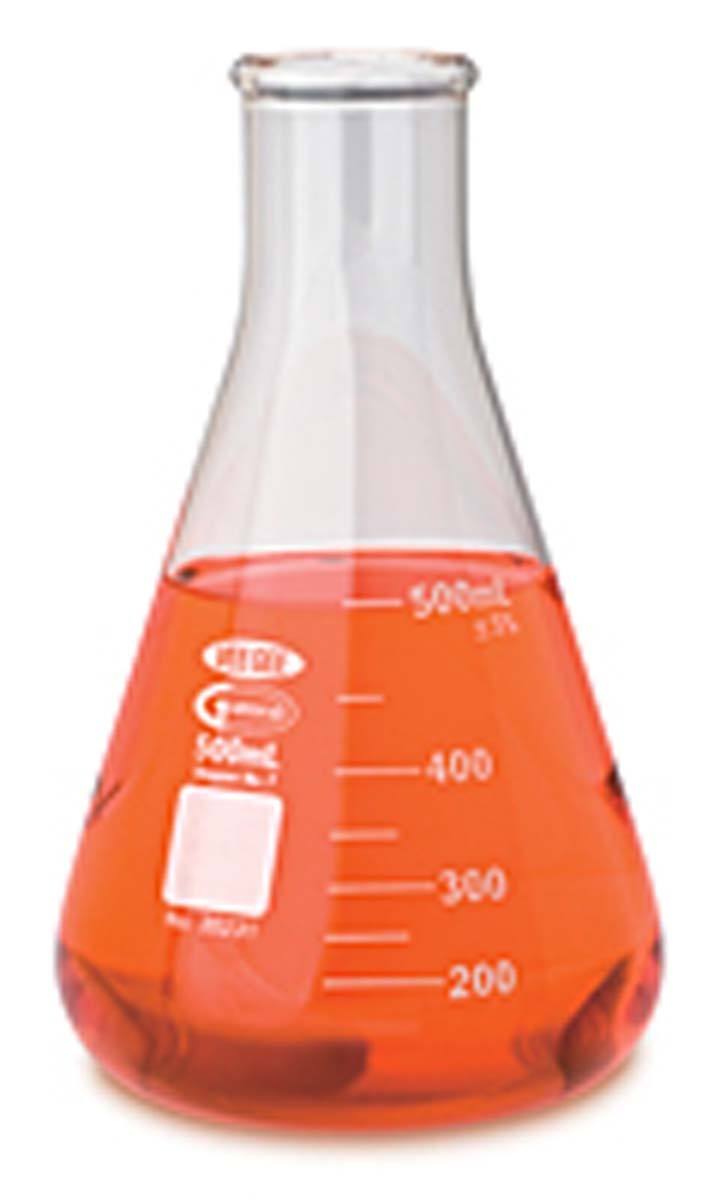
What is used to swirl, mix, or store chemicals?

a)

Beaker

b)

Flask

c)

Test Tube

d)

Graduated Cylinder

103.
What is used to measure the volume of liquids more precisely in milliliters?
a)
Beaker
b)
Flask
c)
Graduated Cylinder
d)
Test tubes
104.

What is used to transfer small amounts of liquid?

a)

Graduated Cylinder

b)

Medicine Dropper/Pipette

c)

Beaker

d)

Flask

105.

This is used to pour dry materials into another container

a)

scoop

b)

funnel

c)

bunsen burner

d)

goggles

106.

What is 4cm in mm?

a)

0.4

b)

4

c)

400

d)

40

107.

What is 300cm in metres?

a)

3

b)

30

c)

0.3

d)

0.03

108.

What is 4000g in kg?

a)

400

b)

40

c)

0.4

d)

4

109.

what is 6250mg in g?

a)

6.25

b)

62.5

c)

625

d)

0.625

110.

What is 435mm in cm?

a)

4.35

b)

43.5

c)

0.435

d)

435

111.
Which lists metric units, in order, from smallest to largest?
a)
milligram, centigram, gram
b)
kilogram, gram, centigram
c)
decagram, hectogram, milligram
d)
kilogram, hectogram, decagram
112.
What is the SI base unit for volume?
a)
gram
b)
meter
c)
liter
d)
foot
113.
What does kilo mean?
a)
thousand
b)
hundred
c)
ten
d)
ten thousand
114.

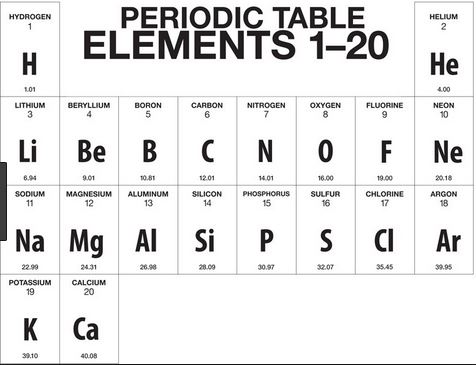
How many valence electrons does Hydrogen Have?

a)

1 Valence electron

b)

2 Valence electron

c)

3 Valence electron

d)

4 Valence electron

e)

5 Valence electron

115.

How many valence electrons does Helium Have?

a)

1 Valence electron

b)

2 Valence electron

c)

3 Valence electron

d)

4 Valence electron

e)

5 Valence electron

116.

How many valence electrons does Magnesium Have?

a)

1 Valence electron

b)

2 Valence electron

c)

3 Valence electron

d)

4 Valence electron

e)

5 Valence electron

117.

How many valence electrons does Phosphorus Have?

a)

1 Valence electron

b)

2 Valence electron

c)

3 Valence electron

d)

4 Valence electron

e)

5 Valence electron

118.

How many valence electrons does Potassium Have?

a)

1 Valence electron

b)

2 Valence electron

c)

3 Valence electron

d)

4 Valence electron

e)

5 Valence electron