
 Worksheets
Unit 1 Matter Review
Total questions: 42
Worksheet time: 32mins
Adam analyses a sample of a substance. He concludes that it consists of more than one type of atom chemically combined. What does the substance represent
an element
a compound
a heterogeneous mixture
a homogeneous mixture
A student leaves a bowl of ice cream on a table, where it turns to a liquid. The student places the liquid ice cream back into the freezer overnight. How do the motion of the particles in the ice cream change when it is placed in the freezer?
the particles slow down and move closer together
the particles speed up and move closer together
The particles slow down and move farther apart
the particles speed up and move farther apart
Which statement best describes a gas?
a gas has particles that are close together but can slide past one another
a gas has particles that have large distances between them and move freely
a gas has particles that are close together but move freely
a gas has particles that have not space between them and do not move
A substance is examined under a high power electron microscope. The substance is found to contain only one type of atom. What is this substance?
compound
element
mixture
solution

A student sketches the particles of a particular substance in the three states of matter. Which state of matter is shown by each sketch.
A is solid, B is liquid, and C is gas
A is gas, B is solid, and C is liquid
A is liquid, B is gas, and C is solid
A is liquid, B is solid, and C is gas

A student is examining three diagrams that show particle arrangements in a solid, liquid, and gas. Which sequence of particle diagrams represents decreasing kinetic energy of particles?
Q--R--S
S--Q--R
R--S--Q
R--Q--S
Which particle diagram can be classified as a compound?


Oxygen (O) is an example of a(n) _________________.
homogenous mixture
heterogenous mixture
element
compound

Baking a cake is an example of a _______________ change.
physical
chemical
mechanical
dense

Maxine poured two different substances together in a glass beaker. Below are her observations both before and after she mixed these substances. Maxine makes a claim that a new substance formed as a result of mixing these two substances. What evidence from the data best supports this argument?
The new substance had different properties.
The new substance remained the same color.
The new substance stayed the same temperature.
There is no evidence to support Maxine’s claim.
When a chemical change occurs, the substances you start and finish with have
the same chemical properties
different chemical properties

Which particle diagram represents a mixture of element X and element Z, only?


The dogs were small.
Qualitative
Quantitative
The parrots range from bright green to dark red.
Qualitative
Quantitative
The study of the composition, structure, and properties of matter and the changes it undergoes.
Chemistry
Physics
Biology
Social Science
The study of carbon containing compounds.
Organic Chemistry
Inorganic Chemistry
Physical Chemistry
Biochemistry
The study of compounds that do not contain carbon.
Organic Chemistry
Inorganic Chemistry
Biochemistry
Analytical Chemistry
The study of the properties and changes in matter and their relation to energy.
Physical Chemistry
Biochemistry
Organic Chemistry
Inorganic Chemistry
The identification of the components and composition of materials refers to___________________________
Biochemistry
Physical Chemistry
Organic Chemistry
Analytical Chemistry
The study of substances and processes occurring in living things.
Biochemistry
organic Chemistry
inorganic Chemistry
Applied Chemistry
The use of mathematics and computers to understand the principles behind observed chemical behavior and to design and predict the properties of new compounds.
Theoretical Chemistry
Biochemistry
Inorganic Chemistry
Organic Chemistry


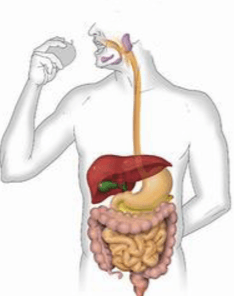
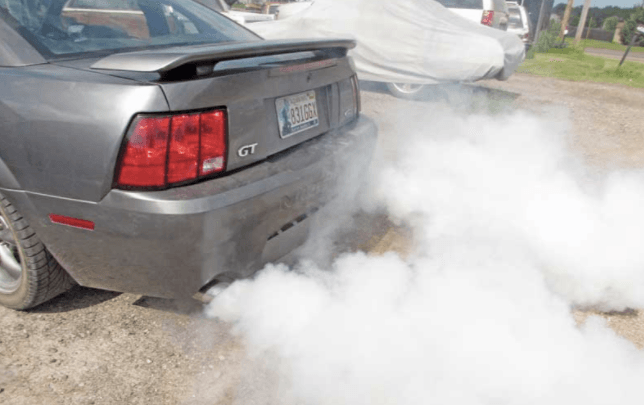
Which of the following observations would indicate a chemical change has happened? Select ALL correct answers.
a solid precipitate forms
heat energy is released
breaks into smaller pieces
folded in half
a gas is produced
Bubbles form when water boils. Is this evidence of chemical change?
Yes, because water is changing.
Yes, because the water is reacting.
No, because the vapor is still water.
No, because water doesn't react with anything.
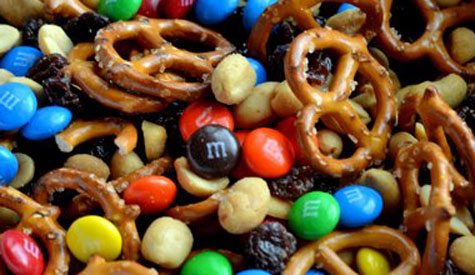
H2 + O → H2O


The melting point of the sample is
-60 ºC
-100 ºC
60 ºC
100 ºC

