wayground logo

Free Printable Worksheets

NEW

Font size

S
M
L
XL
Worksheets

classification

Total questions: 53

Worksheet time: 2hrs 46mins
Name
Class
Date
1.
Tigers, Jellyfish, Gorillas and Sponges are all part of kingdom _______.
a)
Animalia
b)
Plantae
c)
Fungi
d)
Bacteria
2.
The scientific name for an organism is made from the:
a)
class and family name
b)
genus and species name
c)
domain and kingdom name
d)
kingdom and phylum name
3.
The 8 levels of classification, most broad to most specific.
a)
Domain, Genus, Family, Order, Class, Phylum, Kingdom, Species
b)

Species, Genus, Family, Order, Class, Phylum, Kingdom, Domain

c)
Domain, Kingdom, Phylum, Class, Order, Family, Genus, Species
d)
Domain, Kingdom, Species, Phylum, Family, Order, Class, Genus
4.
Who first proposed binomial nomenclature as a way of classifying organisms?
a)
Carolus Linnaeus
b)
Thomas Jefferson
c)
Charles Darwin
d)
Albert Einstein 
5.
Which of the following does not belong in the Fungi Kingdom? 
a)
Yeast
b)

Amoeba

c)
Mold
d)
Mushroom
6.
What is the genus name here:
Canis lupus
a)
Canis
b)
lupus
7.

To put similar organisms into groups

a)

taxonomy

b)

classification

c)

dichotomous key

d)

phylum

8.

the largest classification category

a)

Kindgom

b)

Phylum

c)

Order

d)

Species

9.

the smallest, most specific classification category

a)

Genus

b)

Phylum

c)

Order

d)

Species

10.

Kingdom can be divided into ...

a)

Domain

b)

Phylum

c)

Order

d)

Species

11.

Which of the following is the correct way to show the scientific name for tiger?

a)

Panthera Tigris

b)

Panthera tigris

c)

panthera Tigris

d)

panthera tigris

12.

What is binomial nomenclature?

a)

system of 3 names

b)

system of 2 names

c)

the names of the kingdoms

d)

the levels of classification

13.

What two levels make up a scientific name?

a)

genus and order

b)

genus and species

c)

domain and kingdom

d)

family and genus

14.

What level comes after order?

a)

genus

b)

kingdom

c)

family

d)

species

15.

What level comes before class?

a)

phylum

b)

domain

c)

order

d)

family

16.

The 4 eukaryote kingdoms are Animalia, Plantae, Fungi, and

a)

Bacteria

b)

Archaea

c)

Humans

d)

Protista

17.

What is a prokaryote?

a)

an organism that has nuclei in its cells

b)

an autotroph

c)

a heterotroph

d)

an organism without a nucleus in its cells

18.

Which of these is a eukaryote?

a)

bacteria living in your digestive system

b)

archaea

c)

bacteria living in food

d)

mold

19.

What kingdoms are eukaryotic?

a)

Archea and bacteria

b)

Plant and Protist

c)

Fungi, Protist and Bacteria

d)

Protist and bacteria

20.
If two organisms belong in the same class, what else do they have in common?
a)
Domain, Kingdom, Phylum
b)
Domain Kingdom, Species
c)
Order, Family, Genus Species
d)
Genus, Species 
21.
Which describes a Prokaryotic cell?
a)
Has a nucleus
b)
Doesn't have a nucleus
22.
What is binomial nomenclature?
a)
A two name naming system
b)
A two headed turtle
c)
A two grouped system to classify
d)
A two lensed microscope
23.

Which kingdom contains only multicellular autotrophs?

a)
fungi
b)

plantae

c)

animalia

d)

protista

24.
What statement would NOT be good for a dichotomous key?
a)
The organism has 1 dorsal fin
b)
The organism is ugly
c)
The organism has leaves in groups of three
d)
The organism has 6 legs
25.

The image shows an organism growing on the surface of the bread. Which kingdom would this organism belong to?

a)

Kingdom Fungi

b)

Kingdom Protista

c)

Kingdom Animalia

d)

Kingdom Plantae

26.

Plant cells and animal cells have similar characteristics. What characteristic do they share that classifies them both into the Eukarya domain?

a)

They are both multicellular

b)

They both have a cell wall

c)

They both have a nucleus in the cells

d)

They both produce their own food

27.

Which list of characteristics describes organisms classified as animals?

a)

Unicellular, prokaryotic, autotrophic

b)

Multicellular, eukaryotic, heterotrophic

c)

Unicellular, eukaryotic, heterotrophic

d)

Multicellular, eukaryotic, autotrophic

28.

The word multicellular means?

a)

having only one cell

b)

having more than one cell

c)

DNA is not in a nucleus

d)

DNA is in a nucleus

29.
What am I?
a)
endotherm
b)
ectotherm
30.
What am I?
a)
endotherm
b)
ectotherm
31.
What am I?
a)
endotherm
b)
ectotherm
32.
What am I?
a)
endotherm
b)
ectotherm
33.
What am I?
a)
endotherm
b)
ectotherm
34.
What am I?
a)
endotherm
b)
ectotherm
35.
What am I?
a)
endotherm
b)
ectotherm
36.
What am I?
a)
endotherm
b)
ectotherm
37.
What am I?
a)
endotherm
b)
ectotherm
38.

This organisms sweats and pants to keep cool.

a)
endotherm
b)
ectotherm
39.

This type of organism shivers to keep warm.

a)
endotherm
b)
ectotherm
40.

This type of organism has to find heat to get warm and shade to keep cool.

a)
endotherm
b)
ectotherm
41.
What am I?
a)
endotherm
b)
ectotherm
42.

This type of organism's body temperature changes with the environment.

a)
endotherm
b)
ectotherm
43.

This type of organism was once consider to be "cold blooded"

a)
endotherm
b)
ectotherm
44.

This organism was once considered to be "warm blooded"

a)
endotherm
b)
ectotherm
45.

Scientific name for a house mouse?

a)

Mus musculus

b)

Mus domesticus

c)

Mus familiares

d)

Rattus rattus

46.
A dichotomous key for trees is provided. Hikers found a tree that has large brown cones and single sharp needles. What species of tree have the hikers found?
a)
Juniper
b)
Pine
c)
Spruce
d)
Fir
47.
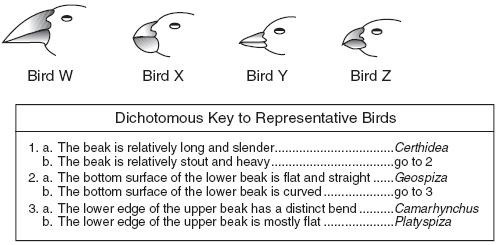
What is the name of bird W?
a)
Certhidea
b)
Geospiza
c)
Camarhynchus
d)
Platyspiza
48.
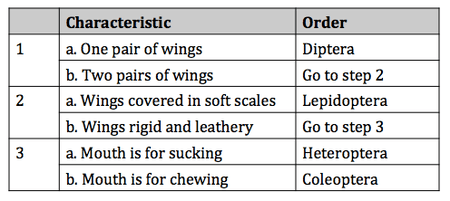
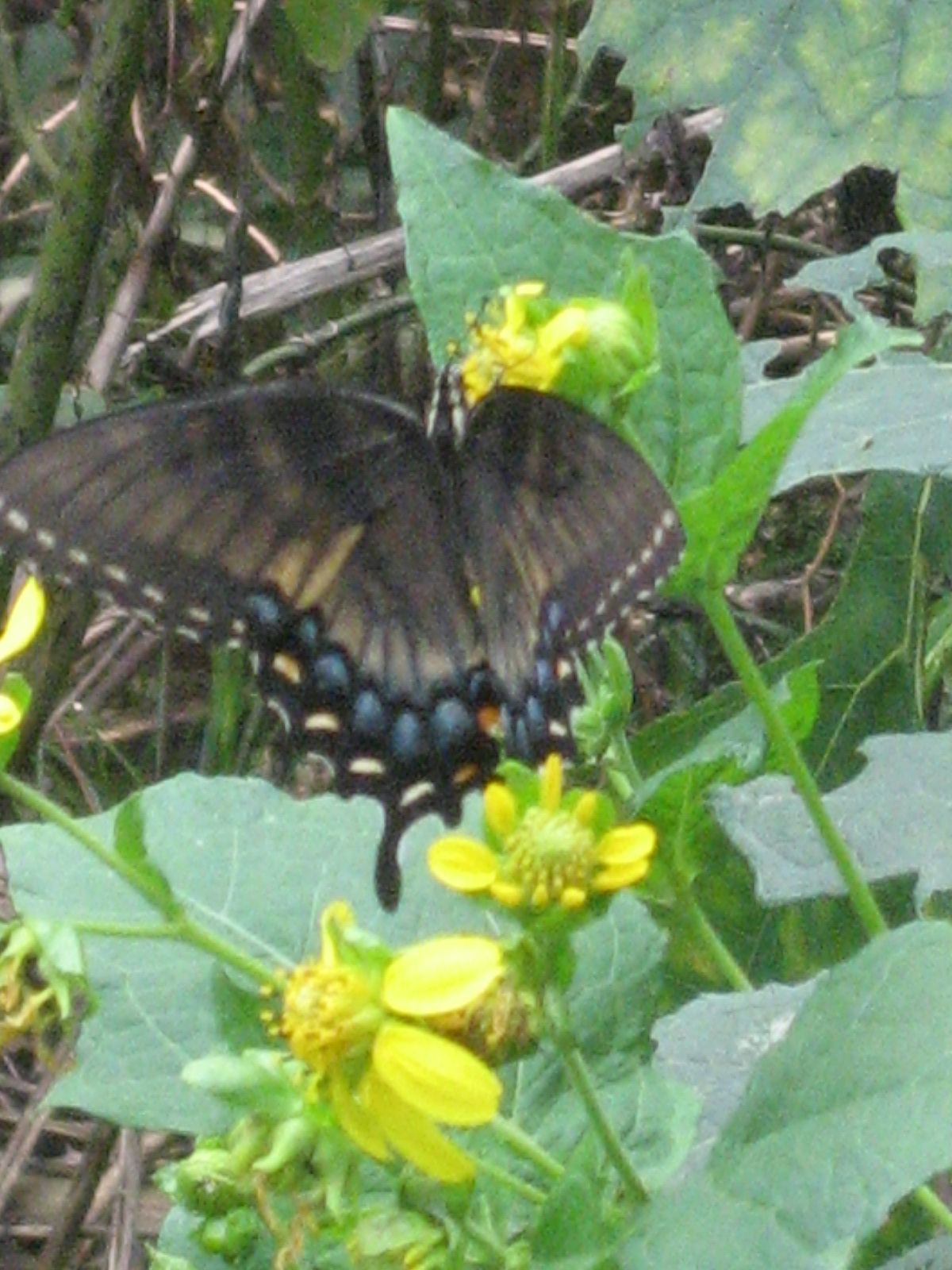
A dichotomous key for insects is given. To what order does an insect with two pairs of scaly wings belong?
a)
Coleoptera
b)
Heteroptera
c)
Diptera
d)
Lepidoptera
49.
A botanist discovers a new plant in the jungle. Which of the
following observations of the plant’s characteristics would be useful in determining its identity with a dichotomous key?
a)
It was discovered in the summertime
b)
It is wet from a recent rain storm.
c)
Its leaves curl up on the edges.
d)
It is eaten by native jungle ants.
50.
Why do we use scientific names to name organisms instead of relying on common names?
a)

Because common names vary in different regions of the world

b)
Because everyone understands and speaks Latin
c)
To make scientists sound smart
d)
Because they are the most descriptive
51.
Using this dichotomous key, identify the name of the circled Fish, J.
a)
peacock flounder
b)
band-tail puffer
c)
trumpet fish
d)
spotted goat fish
52.

In the scientific naming system, __________________ is capitalized and __________________ is written in lower case.

a)

genus, species

b)

species, genus

53.

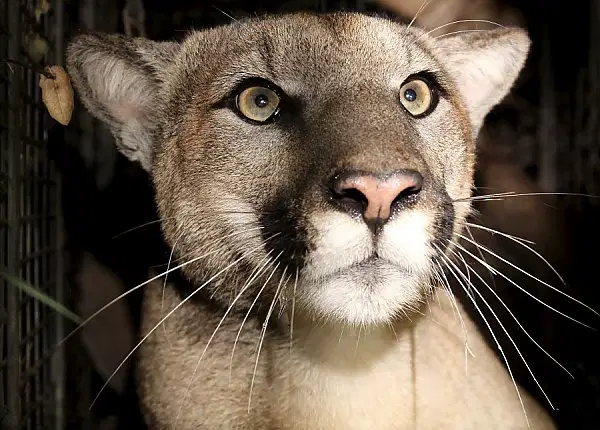
Which is the scientific name for the puma, cougar and mountain lion?

a)

Puma cattus

b)

Puma concolor

c)

Felis domesticus

d)

Panthera leo