
 Worksheets
Chemistry Test 1
Total questions: 132
Worksheet time: 5hrs 4mins
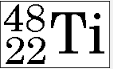


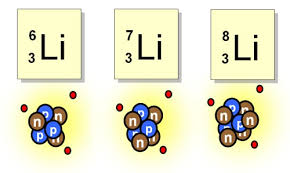


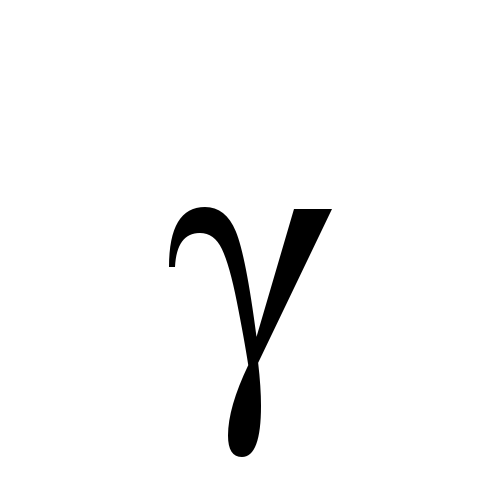
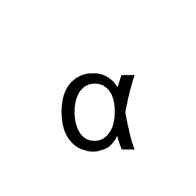
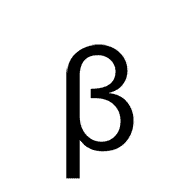
All elements with atomic number greater than _____ are radioactive.
14
84
90
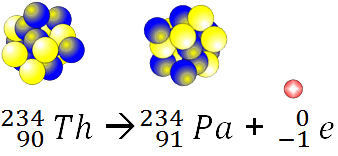
In beta decay, a neutron is
turned into an electron.
is gained.
turned into a proton and a high speed electron.
If Lead-214 undergoes beta decay, the element goes through a transmutation to
mercury
bismuth
polonium
If Polonium-218 undergoes alpha decay, it becomes
lead
Astatine
mercury
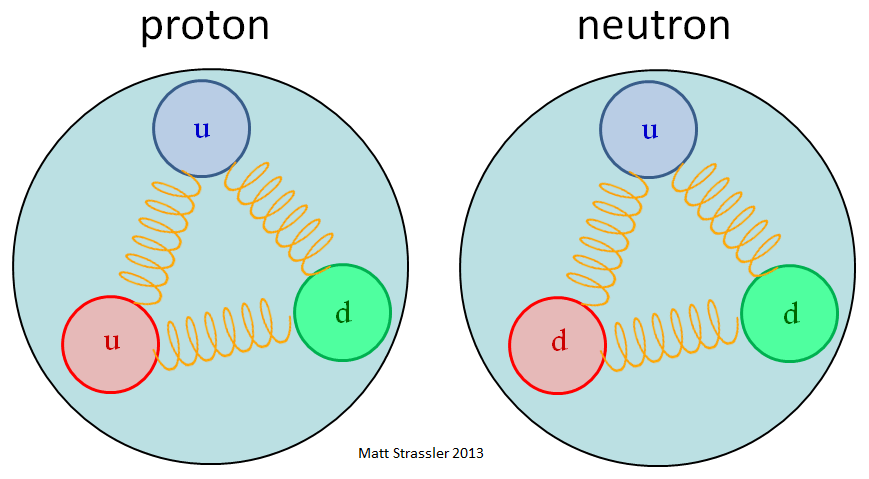
During beta-particle emission, a neutron splits into a____________________.
proton and electron
neutron and electron
neutron and proton

How many grams of Carbon-14 will remain after 17,100 years?
32 g
16 g
8 g
4 g

What percentage of Rubidium-87 will remain after 4 half-lives?
25%
12.5%
6.25%
3.125%
In the equation, 146C --> 147N + 0-1B, the _______ decay of radioactive carbon-14 results in the creation of a new nitrogen-14 atom.
Gamma
Beta
Alpha

85209At = ___ + 24He
146C --> 0-1e + ________
85209At = ___ + 24He
Gamma rays have
no mass
a huge mass
a small mass
an average mass
614C = ___ + -10e

An isotope that undergoes B- decay has
too few protons
too many protons
too few neutrons
Too many neutrons
Solve this equation for beta decay.
614C = ___ + -10e
410Be
714N
210He
613C
Which of these is a use of alpha radiation?
Sterilising food
Smoke detectors
Monitoring paper thickness
Industrial tracers
How is radiation used to treat cancer?
Radiation is used to stimulate the growth of cancer cells
Cancer cells are bombarded with radiation and become inactive
Cancer cells are burned up by radiation
Radiation melts cancer cells
Nuclear medicine (like radiation used in cancer treatment) is used to both diagnose and treat different diseases.
True
False
beneficial uses of radiation include
irradiating food
causing cancer
death
poisoning


Which subatomic particles determine the identity of an element?
electrons
protons
neutrons
photons


Compared to the rest of the atom the nucleus is
small and contains most of the mass
Large and contains no mass
small and contains little mass
Large and contains most of the atoms mass
1s22s22p63s23p64s23d10


What does Pauli exclusion principle state ?
states that each electron occupies the lowest energy orbital available
states that -no two electrons in the same orbital can have the same spin
states that single electrons electrons with the same spin must occupy each-energy orbital before additional electrons with opposite spins can occupy the same orbitals
Horizontal (SIDE TO SIDE) rows on the periodic table are
groups
periods
The period number tells you the number of
protons
energy levels
valence electrons
How many energy levels does Au have? Just give me the number.
(a)
How many energy levels does Co have? Just give me the number.
(a)
Db and Ru have the same number of energy levels.
True
False
H and He have the same number of energy levels.
True
False
JJ Thomson discovered what subatomic particle
nucleus
neutron
proton
electron
Rutherford discovered what part of the atom
nucleus
neutron
proton
electron
First person to propose the concept of an atom
Rutherford
Democritus
Dalton
Bohr
Who proposed the theory that atoms orbit the nucleus in specific orbits.
Bohr
Democritus
Rutherford
Chadwick
This particle balances the charges from the protons to make the atom neutral
proton
electron
neutron
nucleus
These particles are found in the nucleus
protons and electrons
nucleus and neutrons
protons and neutrons
electrons and neutrons
Which of the following shows the correct order of Atomic Theory Timeline
Rutherford, Bohr, Dalton, Democritus, Thomson
Bohr, Democritus, Thomson, Rutherford, Dalton
Dalton, Thomson, Rutherford, Bohr, Democritus
Democritus, Dalton, Thomson, Rutherford, Bohr
Thomson Experimented with ______
Gold Foil
alpha particles
cathode rays
protons
Rutherford experimented with ____
Gold foil and alpha particles
Cathode rays and alpha particles
electron and alpha particles
gold foil and cathode rays

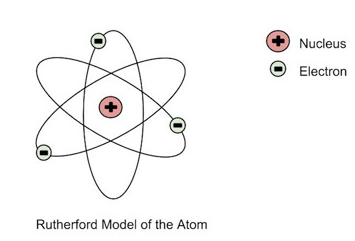
Which Scientist created this model
Democritus
Chadwick
Bohr
Rutherford



What results did Rutherford expect to see if the Plum-Pudding model is correct?
He expected that most of alpha particles would go through a gold-foil and small number of particles would deflect sightly
He expected that most of alpha particles would not go through a gold-foil and will stop on one side of a foil.
He expected that most of alpha particles would ricochet back after hitting a gold-foil
What results did Rutherford observe in his Gold-Foil experiment?
He observed that all alpha particles did go through a gold-foil in straight lines
He observed that most alpha particles did not go through a gold-foil and stopped on one side of the gold foil.
He observed that a small number of alpha particles bounced off the gold-foil at very large angles
He observed that all alpha particles slightly deflected from the straight line when going through a gold-foil
Choose one of the conclusions that Ernest Rutherford made based on the experimental results of his Gold-Foil experiment
He concluded that the atom is indivisible
He concluded that the atom is mostly empty space
He concluded that the atom has neutrons
He concluded that the atom is tightly packed with subatomic particles all mixed together

The color of emitted light with the LONGEST wavelength is
violet
green
red
indigo

Each element produces its own pattern of emission spectra lines because each element has its own distinct
Speed of light
Electron configuration
Number of neutrons
None of these
The color of emitted light with the SHORTEST wavelength is
violet
green
red
indigo

This device is a
telescope
spectrascope
microscope
prism
How many of the following substances are elements?
5
3
4
6

All stars are composed of a mixture of elements. When these elements are heated they emit specific amounts of electromagnetic radiation, known as an emission spectrum. Each element emits a unique, identifiable, spectrum.
Using the Bright-line emission spectrum chart below, identify the elements present in this modeled star (found in the line labeled “mixture”).
Lithium and cadmium are in the mixture. Strontium is not in the mixture.
Lithium and strontium are in the mixture. Cadmium is not in the mixture
Cadmium and strontium are in the mixture. Lithium is not in the mixture
All of the shown elements are present in the mixture.

How many electrons can each sublevel hold?
s-1, p-2, d-3, f-4
s-2, p-2, d-2, f-2
s-2, p-6, d-10, f-14


