
 Worksheets
KS3.End of Unit Quiz on cells
Total questions: 81
Worksheet time: 50mins
Select all the characteristics of a microorganism.
Microscopic (unable to be seen with the naked eye)
Needs space
Needs other microorganisms present to survive
Needs a food source
True or false, bacteria is only found on the floor of a restroom.
True
False
What is the purpose of antibiotics?
To wage war against the aliens found in our microbiome
To kill bacteria
To protect the walls of the gut when mucus isn't present (there)
To produce antibodies
Select all three parts of the cell theory.
That if you use your phone during class, it will become mine until the end of the day.
Cells can only come from other cells
All living things are made up of cells.
Cells are found in plants and humans only.
Cells are the smallest unit (basic building blocks) of living organisms.
Select all of the scientists who are known for contributing to the cell theory.
Louis Pasteur
Matthias Schlieden
Charles Darwin
Theodore Schwann
Rudolf Virchow
_______ are the smallest units of life because they grow, reproduce, respond, and use energy.
atoms
elements
cells
all of the above
Cells come from______.
other preexisting cells
cytoplasm
organelles
prokaryotes
The cell theory states that_________
cells come from cells
all organisms are made of cells
cells are the basic unit of structure and function for life
all of the above
________ is the scientist who saw small chambers when looking at cork, and named them “cells”.
Newton
Hooke
Carson
Manning
The size of an organism is determined -
by the size of the cells that make up the organism.
by the number of cells that the organism has.
The cell theory is a result of the work of one very important scientist name Hooke.
True
False
A multicellular organism is made of
one cell
multiple cells
unicellular cells
there is no such thing as a "multicellular" organism
One common feature of all cells is their ability to -
work with other cells in a "unicellular" organism.
reproduce themselves.
be formed by spontaneous generation.
exist without needing a cell membrane
When a cell is ready to reproduce, it duplicates its contents, then divides into two similar (and sometimes exact duplicate) cells.
True
False
Regardless of type, all cells
have a cell membrane
have cytoplasm
can duplicate themselves by undergoing cell division
all of the above
An organism with more than one cell is known as a/an
organ system
multicellular organism
unicellular organism
Which organism represents a multicellular organism?


What does mitochondria do for the cell?
provides the cells energy
is the cell's control center
fills and supports the cell

What does cytoplasm do for the cell?
provides energy
stores water, food, and wast
fills and supports the cell structure
Which part of the cell allows materials to move in an out of the cell?
cell wall
cell membrane
vacuole
nucleus
When an organism has many organs working together for the same purpose, they form a/an
tissue
organ
organ system
multicellular organism
A cell is-
an organism made up of one cell.
a structure that stores food and water.
the smallest unit of a living organism.
Which of the following is a plant cell?


The control center of the cell is known as...
cytoplasm
mitochondria
nucleus
chloroplast
What is the purpose of the nucleus?
supply energy to the cell
control the cell functions
store waste, water, and food
make food for the organism
The difference between a prokaryotic cell and a eukaryotic cell is that
only one has a nucleus
they are not different
one is blue, the other is red
An organism with only one cell is known best as...
a disease
plankton
multicellular organism
unicellular organism
An organism is...
a membrane within a cell
a multicellular or unicellular creature
the smallest unit of a living thing
a liver, heart, brain, or lung in your body
Which level of organization is missing?
- organism
- organ system
- organs
- __________
- cell
- organelle
tissue
prokaryotic
multicellular
eukaryotic
The purpose of the cell wall is to provide
energy
storage
support
sugar
Plants and animal cells have...
Mitochondria and chloroplasts
Nucleus and chloroplast
Cell wall and chloroplast
Mitchochodria and cytoplasm
Which of the following are prokaryotic cells?
Plant
Animal
Bacteria
Plant and Animal
Which of the following is a eukaryotic cell?
Bacteria
Plant
Plant and animal
Animal
What is the difference between mitochondria and chloroplast?
Mitochondria produces energy and chloroplasts breaks down energy
There is no difference. They are the same.
Mitochondria breaks down energy from food and chloroplasts produce energy from sunlight.
Mitochondria contains DNA and chloroplasts are green
The outermost layer of a plant cell and animal cell is...
Plant cell - cell membrane, animal cell - cell wall
Plant cell - cell wall; animal cell - cell membrane
Plant and animal cell - cell wall
Plant and animal cell - cell membrane
"Post office" of the cell that packages proteins and fats:
ER
Golgi Body
Nucleus
Cytoplasm
"Envelopes" of the cell, used for transporting material:
ER
Golgi Body
Mitochondria
Chloroplast
What is the jelly-like substance that keeps the organelles floating?
Cell Membrane
Nucleus
ER
Cytoplasm
What are the "protein-makers" of a cell?
Ribosomes
Mitochondria
ER
Golgi Body
Which organelle holds the cell together? (found in both an animal and plant cell)
Cell Wall
Nucleus
Cell Membrane
Ribosome

A chicken egg is a cell.
True
False

All plant and animal cells contain chromosomes with DNA.
True
False
Genes are made of the molecule ______________________.
hydrogen
DNA
oxygen
chromosome
Which scientist created the second microscope?
Hooke
Leeuwenhoek
Schleiden
Which scientist created the first microscope?
Hooke
Leeuwenhoek
Schleiden

To calculate magnification of an electron micrograph we use......
magnification = image size x actual size
magnification = image size ÷ actual size
magnification = actual size ÷ field of view
magnification = ocular lens x objective lens

These organelles are one of the largest in plant cells. Their content varies and can affect the osmotic pressure. Some unicellular organisms such as Euglena use these organelles to remove the excess water or waste from the cell.
What is the name of this organelle?
lysosome
chloroplast
vacuole
cytoplasm



If you wanted to center the image what direction would you move your slide in?
Down and left
Down and right
Up and left
Up and right
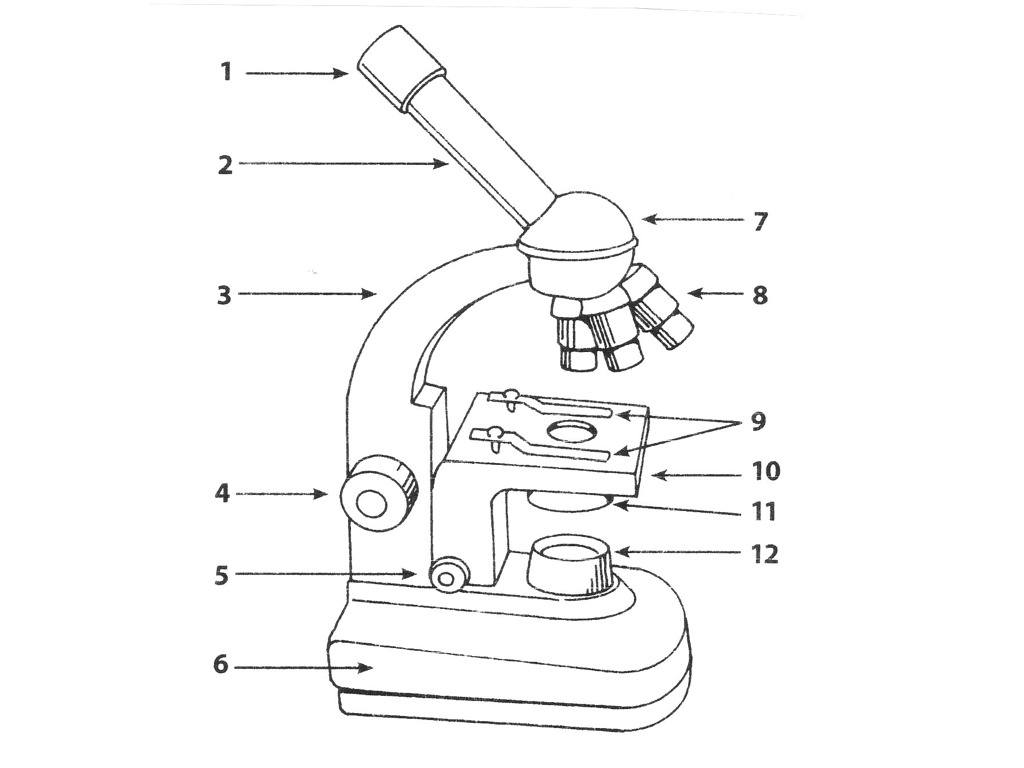
You should always carry the microscope with just one hand and let it swing freely.
True
False
Which part of the microscope do you never use under high power?
Diaphragm
Coarse adjustment
Stage
Fine adjustment
Which part of the microscope should you use to sharpen the image?
Diaphragm
Coarse adjustment
Stage
Fine adjustment
What is the total magnification of a microscope with an eyepiece of 15X and a high power objective of 40X?
55
400
600
415
Which specialised cell has no nucleus
Sperm
Red Blood Cell
Nerve Cell
Palisade Cell
How is a sperm cell adapted?
It has a tail, so can swim towards the egg
It has no nucleus
It has lots of chloroplasts
It has lots of branches
How has the egg adapted to feed the growing baby?
It has a cell wall
It has yolk in the cytoplasm
It has lots of chloroplasts
It has a nucleus
Which specialised cell is long and branched
Egg
Sperm
Nerve cell
Red Blood Cell

What is the name of this plant cell?
Hairy Root Cell
Root Hair Cell
Palisade Cell
Sperm Cell
How are palisade cells adapted to carry out their job?
They are long and branched
They have hairs
They don't have a nucleus
They have lots of chloroplasts to feed the plant
Where in the body can we find ciliated cells?
Everywhere
Heart
Liver
Lungs and Airways

What is the name for this cell?
Egg
Sperm Cell
Palisade Cell
Ciliated Cell
What is the function of red blood cell?
Transport nutrients
Transport oxygen
What makes blood cells appear red?
They contain red dye
They contain red pigment (haemoglobin)
They reflect red light
All of the above
What can be present in blood?
Red blood cells
White blood cells
Platelets
All of the above
Nerve cells communicate through?
Electrical Impulses
Blood movement
Are bone cells able to regenerate once broken?
Yes
No
Where can you find fat cells in your body?
Beneath the skin
Surrounding the organ
In between muscles
All of the above
What is the correct order of the following biological unites, from smallest to largest?
Cell, tissue, organ, organ system
Cell, tissue, organ system, organ
Tissue, cell, organ, organ system
Organ system, organ, tissue, cell
Which of these cells is NOT specialised to carry out any particular role?
Tissue cells
Phloem cells
Nerve cells
Stem cells
From the following description which specialised cell is it referring to?:
I have half the genetic information and also have a streamlined shape.
Egg cell
Sperm cell
White blood cell
Ciliated epithelial cell

