wayground logo

Free Printable Worksheets

Font size

S
M
L
XL
Worksheets

8th Chemistry Part 1

Total questions: 87

Worksheet time: 22hrs 45mins

Name
Class
Date
1.
What is the atomic number?
a)
the number of protons
b)
the number of protons and neutrons
c)
the number of neutrons
d)
the number of protons and electrons
2.
Which particle has a positive charge?
a)
electron
b)
orbital
c)
proton
d)
neutron
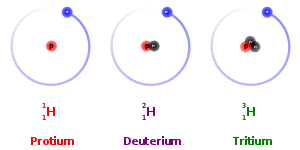
3.
This particle determines what element you have - the elements identity.
a)
electron
b)
proton
c)
neutron
d)
valence shell
4.

The fluorine atom has an atomic number of

a)

19

b)

9

5.

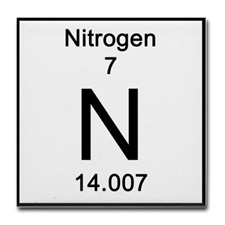
What is the mass number and atomic number ?

a)

Mass number = 7, atomic number = 14

b)

Mass number = 14, atomic number = 7

6.

Which subatomic particle has a negative charge in the atom?

a)

proton

b)

neutron

c)

electron

d)

quark

7.

A compound is

a)

2 or more atoms of different elements chemically combined

b)

2 or more atoms chemically combined

c)

a mixture

d)

hydrogen

8.

The number of protons can be found by reading what from the Periodic Table?

a)

atomic mass

b)

mass number

c)

energy level

d)

atomic number

9.

Carbon dioxide and sodium chloride are examples of

a)

elements

b)

homogeneous mixtures

c)

compounds

d)

heterogeneous mixtures

10.

Which of the following is evidence that a chemical change has occurred?

a)

melting

b)

boiling

c)

bubbling/fizzing

d)

change of size

11.
An atom of a certain element has 36 protons, 36 electrons, and a mass number of 84.  At room temperature this element is a very stable gas.  How many neutrons are in this atom?
a)
58
b)
72
c)
120
d)
48
12.
What is the number of protons that the element in this image contain?
a)
14
b)
7
c)
15
d)
18
13.
all matter is made of what 
a)
energy 
b)
atoms 
c)
electrons 
d)
compounds 
14.
the central region of an atom where its neutrons and protons are is its 
a)
nucleus 
b)
electron cloud
c)
core 
d)
center 
15.
Which of the following is a subatomic particle with no charge that is found in the nucleus of an atom?
a)
Electron
b)
Proton
c)
Neutron
d)
Quark
16.
Where are electrons of an atom found?
a)
Nucleus
b)
Electron Cloud
c)
Some are in the nucleus and some in the electron cloud.
d)
They are moving everywhere.
17.
Something that is made up of only one kind of atom is known as _________________.
a)
a molecule
b)
a compound
c)
an element
d)
a proton
18.
The sum of the protons and neutrons in the nucleus of an atom
a)
Atomic Number
b)
Compound
c)
Electrons
d)
Mass Number (also called Atomic Mass)
19.
Which one can be found on the periodic table?
a)
Compound 
b)
Element
20.
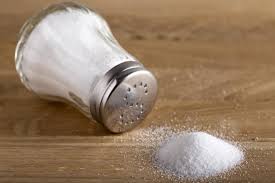
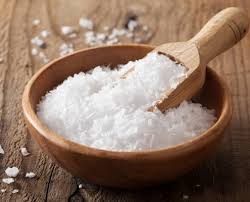
Is salt (NaCI) a compound or a element
a)
Compound
b)
element
21.
How many elements are represented in the compound?
Na2CO3
a)
1
b)
2
c)
3
d)
4
22.
What is the name of this element?
a)
Helium
b)
Hydrogen
c)
Argon
d)
Silver
23.

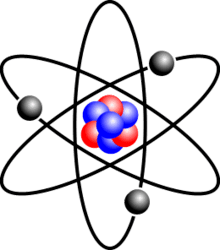
What element is represented in this Bohr Model?

a)

Carbon

b)

Hydrogen

c)

Aluminum

d)

Lithium

24.
What's a valence electron?
a)
electrons in the second energy level
b)
electrons in the outermost energy level
c)
the atomic number
d)
electrons in the first level
25.
How many valence electrons?
a)
2
b)
3
c)
5
d)
10
26.
A covalent bond is
a)
a bond that shares electrons metallicaly
b)
A bond that shares electrons with non metals
c)
Metalloids bonding
d)
metals and nonmetals bonding
27.
What is the formula to solve for the neutron?
a)
Mass + Atomic Number= Neutrons
b)
Mass x Atomic Number = Neutrons
c)
Mass - Atomic Number = Neutrons
d)
Mass + Number of Protons = Neutron
28.
An atom with 19 protons, and 19 electrons and a mass of 39 has how many neutrons?
a)
19
b)
39
c)
20
d)
58
29.

Valence electrons determine an atom's--

a)

proton number

b)

chemical reactivity

c)

atomic mass

d)

atomic number

30.

______ always gives the identify of the atom.

a)

Protons

b)

Neutrons

c)

Electrons

31.
How is a physical change different from a chemical change?
a)
There is absolutely no difference
b)
Chemical changes produce a new substance, physical changes stay the same substance
c)
Chemical changes create and destroy matter, physical changes don't
d)
Physical changes create and destroy matter, chemical changes dont
32.

An atom with the same number of protons and electrons (no charge) and the expected atomic mass or number of neutrons from the periodic table.

a)

Neutral/Normal Atom

b)

Ion

c)

Isotope

33.

An atom that has gained or lost electrons in an attempt to become stable/bond with another atom.

a)

Normal/Neutral Atom

b)

Ion

c)

Isotope

34.

Atoms of the same element that have different mass than expected because they have a different number of neutrons.

a)

Neutral Atom

b)

Ion

c)

Isotope

d)

Cation

35.

A weak bond between two ions of opposite charge (a metal that loses electrons and a non-metal that gains electrons)

a)

Ionic Bond

b)

Covalent Bond

c)

Alloy

d)

Mixture

36.

A strong bond between two non-metals that share electrons to satisfy the octet rule.

a)

Ionic Bond

b)

Covalent Bond

c)

Alloy

d)

Mixture

37.

If an ion has a positive charge you would __________ the charge number from the number of protons to figure out how many electrons there are.

a)

subtract

b)

add

c)

multiply

d)

divide

38.

If an ion has a negative charge you would __________ the charge number to the number of protons to figure out how many electrons there are.

a)

Add

b)

Subtract

c)

Divide

d)

Multiply

39.

If an atom has an expected atomic mass of 14, and it has 7 protons and 8 neutrons it is a ____________.

a)

Anion

b)

Normal Atom

c)

Isotope

d)

Cation

40.

If an atom has an expected atomic mass of 12, and it has 6 protons and 6 neutrons it is a ____________.

a)

Normal Atom

b)

Isotope

c)

Cation

d)

Anion

41.

To figure out the mass of an atom based on its subatomic particles you would add ______ & ________.

a)

Protons & Electrons

b)

Protons & Neutrons

c)

Neutron & Electrons

42.
All solids at room temperature
a)
ionic compounds
b)
covalent compounds
43.
Some are solids, some are liquids, and some are gases at room temperature.
a)
ionic compounds
b)
covalent compounds
44.
Molten compound conducts electricity.
a)
ionic compound
b)
covalent compound
45.
Molten compound does NOT conduct electricity.
a)
ionic compound
b)
covalent compound
46.
Have a high m.p. (1000°C-3000°C)
a)
ionic compounds
b)
covalent compounds
47.
Have a low m.p. (< 200°C)
a)
ionic compounds
b)
covalent compounds
48.
When dissolved in water, the solution is a good conductor of electricity.
a)
ionic compounds
b)
covalent compounds
49.
When dissolved in water, the solution does NOT conduct electricity.
a)
ionic compounds
b)
covalent compounds
50.
usually hard but brittle
a)
ionic compounds
b)
covalent compounds
51.
usually soft
a)
ionic compounds
b)
covalent compounds
52.
forms ions in solution
a)
ionic compounds
b)
covalent compounds
53.
electrolytes
a)
ionic compounds
b)
covalent compounds
54.
nonelectrolytes
a)
ionic compounds
b)
covalent compounds
55.
CO2
a)
Ionic
b)
Covalent
c)
Polyatomic Ion 
d)
Metallic 
56.
NaCl
a)
Ionic
b)
Covalent
c)
Metallic
d)
Polyatomic Ion 
57.
MgCl2
a)
Ionic
b)
Covalent
c)
Polyatomic Ion
d)
Metallic 
58.
Covalent bonds are between...
a)
Metal and Non-metal
b)
Non-metal and Non-metal
c)
Metal and Metal
59.
Ionic bonds are between...
a)
Metal and Non-metal
b)
Non-metal and Non-metal
c)
Metal and Metal
60.
How are covalent bonds formed?
a)
Sharing of electrons
b)
Transfer of electrons
61.
How are ionic bonds formed?
a)
Transfer of electrons
b)
Sharing of electrons
62.
Elements that have the same number of valance electrons have 
a)
Different chemical properties
b)
Similar chemical properties
c)
The same physical state
d)
None of the above
63.

Elements that are in the same group have the same

a)

Number of Valence electrons

b)

Number of Periods

c)

Number of energy levels

d)

Number of total electrons

64.

What is aluminum (Al)?

a)

Element

b)

Compound

c)

Mixture

65.

What is water (H2O)?

a)

Element

b)

Compound

c)

Mixture

66.

What is a compound?

a)

A substance that is made up of one type of atom and can't be reduced to simpler substances.

b)

A substance made of two or more different atoms chemically bonded to one another. They can only be destroyed by chemical processes.

c)

A material containing two or more elements or compounds that are in close contact and are mixed in any proportion. They can be separated by physical means.

67.

What is an element?

a)

A substance that is made up of one type of atom and can't be reduced to simpler substances.

b)

A substance made of two or more different atoms chemically bonded to one another. They can only be destroyed by chemical processes.

c)

A material containing two or more elements or compounds that are in close contact and are mixed in any proportion. They can be separated by physical means.

68.
Which of these compounds is ionic? 
a)
Carbon dioxide
b)
Dinitrogen Trioxide
c)
Silicon tetrachloride
d)
Lithium bromide
69.

Classify ionic or molecular

CaO

a)

Ionic

b)

covalent

70.

Classify ionic or covalent

C2H2

a)

Ionic

b)

covalent

71.
Which of the following is NOT an ionic compound:
a)
CaO
b)
NaOH
c)
BaCl2
d)
CH4
72.

Which following is a molecular (covalent) compound?

a)

SO2

b)

K2O

c)

CaO

d)

BeO

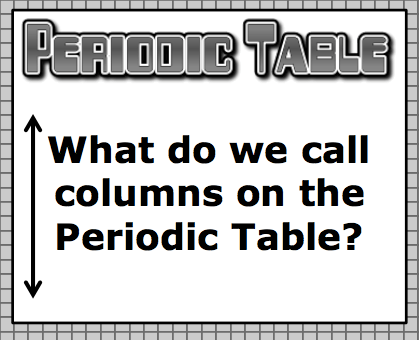
73.
a)
Periods
b)
Groups
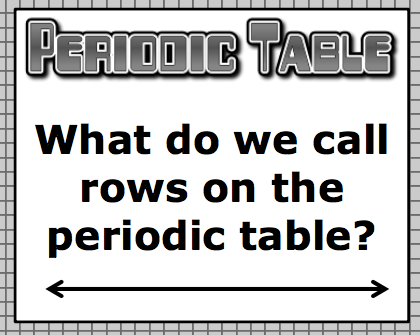
74.
a)
Periods
b)
Groups
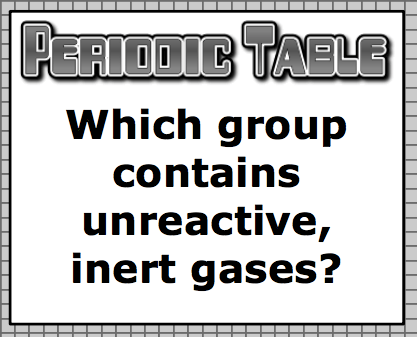
75.
a)
Group 1
b)
Group 17
c)
Group 2
d)
Group 18
76.
a)
Group 1
b)
Group 17
c)
Group 18
d)
Group 2
77.
a)
Group 1
b)
Group 17
c)
Group 18
d)
Group 2
78.
a)
Metals
b)
Nonmetals
c)
Metalloids
79.
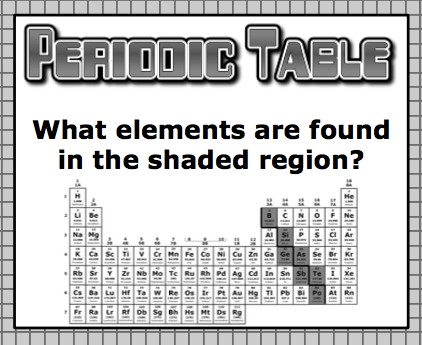
a)
Metals
b)
Nonmetals
c)
Metalloids
80.
a)
Metals
b)
Nonmetals
c)
Metalloids
81.
a)
Metals
b)
Nonmetals
c)
Metalloids
82.
a)
Metals
b)
Nonmetals
c)
Metalloids
83.
a)
Metals
b)
Nonmetals
c)
Metalloids
84.
a)
Metals
b)
Nonmetals
c)
Metalloids
85.
a)
Metals
b)
Nonmetals
c)
Metalloids
86.
What is an isotope? 
a)
A charged atom
b)
An atom with different amounts of neutrons
c)
An atom with different amounts of protons
d)
A neutral atom
87.
Different isotopes have...
a)
different masses
b)
different atomic numbers
c)
different electrons
d)
different protons