
 Worksheets
9th CBSE Term 1 Science (2,5,6,8,9)
Total questions: 80
Worksheet time: 3hrs 40mins
Name the mixture whose particles are large enough to scatter light:
True solution
Homogenous solution
Colloid
all of the above
Which of the following property does not describe a compound:
it is composed of two or more elements
it is a pure substance
constituents cannot be separated by physical means
mixed in any proportion by mass
Smell of Hydrogen sulfide gas
rotten eggs
burning tyre
pleasant
sweet
Which of the following techniques is used in diagnostic lab for blood and urine test:
Sublimation
Crystallization
Centrifugation
Evaporation
Two substances A and B when bought together form a substance C with the evolution of heat. The properties of C are entirely different from those of A and B. the substance C is:
A compound
An element
A mixture
None of the above

Air is regarded as mixture because?
It's pressure may vary.
It's temperature may vary.
Volume changes under different compositions.
It's compositions may vary.
The amount of solute present per unit volume or per unit mass of the solution/solvent is known as
(a) Composition of solute
(b) Concentration of a solvent
(c) Concentration of a solute
(d) Concentration of a solution
If we put camphor in an open container, its amount keeps on decreasing due to the phenomenon of
Evaporation
Precipitation
Condensation
Sublimation

Name the effect
brownian
tyndall
suspension
colloidal
The Tyndall Effect is not visible in which of the following?
Solution
Suspension
Colloid
Heterogeneous Mixture

Brass is an example of?
Homogeneous compound.
Homogeneous mixture.
Heterogeneous mixture.
Heterogeneous compound.
The process of removing impurities from a solution by using filter paper is called as
Chromatography
Filtration
Sublimation
Solution
When two liquids do not mix, they form two separate layers and are known as
(a) Miscible liquids
(b) Immiscible liquids
(c) Saturated liquids
(d) Super saturated liquids
Tyndall effect means
Rays scattered by dust particles
Rays travelling from one medium to other
Rays undergoing Refraction
Rays undergoing totally reflected

NAME THE SEPARATION TECHNIQUE
FRACTIONAL DISTILLATION
DISTILLATION
SEPARATING FUNNEL
EVAPORATION

NAME THE PROCESS
DISTILLATION
FRACTIONAL DISTILLATION
EVAPORATION
CONDENSATION

The process used to separate oil and water is:
Distillation
Sublimation
Separating funnel
chromatography
If we put camphor in an open container, its amount keeps on decreasing due to the phenomenon of
Evaporation
Precipitation
Condensation
Sublimation
Well defined nucleus is absent in
Animal cells
Plant cells
Eukaryotic cells
Prokaryotic cells
Amoeba acquires its food through a process termed as
Endocytosis
Exocytosis
Plasmolysis
Exocytosis and endocytosis both
Organelle without a cell membrane is
Ribosomes
Nucleus
Mitochondria
Chloroplast
The longest cell in human body is
Red blood cell
Nerve cell
Muscle cell
Fat cell
Which of the following is only present in plant cell?
Cell membrane
Cell wall
ribosomes
Lysosomes
The colour of flowers and fruits is due to
Chromoplasts
Chloroplasts
Leucoplasts
None of the above
which of the following is present in lysosomes
digestive enzyme
protein
sugars
DNA
ATP - stands for
Adenosine tri phosphate
Adenosine di phosphate
Adenosine phosphate
Add triple phosphate
Which organelle provide turgidity and rigidity to the cell
Endoplasmic Redticulum
Centriole
Mitochondria
Vacuole
The colourless plastids are known as
Chromoplasts
Chloroplasts
Leucoplasts
Protoplasts
The barrier between the protoplasm and the outer environment in an animal cell is
Cell wall
Plasma membrane
Nuclear membrane
Cytoplasm
The phenomenon by which cytoplasm of a cell shrinks from the wall is
Osmosis
Plasmolysis
Diffision
Glycolysis
Who discovered the nucleus of the cell?
Robert Hooke
Robert Brown
Leeuwenhoek
Purkinje
Which statement is true about cell theory?
Cell theory states that all cells are nonliving.
Cell theory states that cells can come from nonliving
things.
Cell theory states that all cells arise from other cells.
Cell theory says animal cells are the only type of
living cells.
Cell theory was given by
Robert Hooke
Leeuwenhoek
Schleiden and Schwann
Virchow
The flexibility in plants is due to tissue called
Chlorenchyma
Parenchyma
Sclerenchyma
Collenchyma
The tissue present in the lining of kidney tubules and ducts of salivary glands is
Squamous epithelium tissue
Glandular epithelium tissue
Cuboidal epithelium tissue
Collumnar epithelium tissue
The connective tissue that connects muscles to bone is called
Ligament
Tendon
Nervous tissue
All of these
Sieve tubes and companion cells are present in
Xylem
Phloem
Cork
Cambium
Cartilage and bone are types of
Muscular tissue
Connective tissue
Meristematic tissue
Epithelial tissue
A tissue whose cells are capable of dividing and redividing is called
Complex tissue
Connective tissue
Permanent tissue
Meristematic tissue
There is more Intercellular space found in this tissue
Collenchyma
Sclerenchyma
Parenchyma
Epidermis
I am a kind of parenchymatous cell, and I perform photosynthesis. Who am I?
Collenchyma
Aerenchyma
Chlorenchyma
Sclerenchyma
It helps water Hyacinth to float on water. What type of parenchyma tissue is it?
Chlorenchyma
collenchyma
Aerenchyma
schlerenchyma

Which epithelial tissue has more than one layer of flattened cells?
simple squamous
stratified squamous
transitional
simple columnar

What feature found on the surface of this epithelial layer greatly increases the surface area for absorption?
cilia
microvilli
endoplasmic reticulum
multiple nuclei
Stratified epithelium is typically used for
excretion
secretion
protection
absorption
Which of the following task is NOT performed by epithelial cells?
Filtration
Secretion
Absorption
Contraction

While doing work and running, you move your organs like hands, legs, etc. Which among the following is correct?
Smooth muscles contract and pull the ligament to move the bones
Smooth muscles contract and pull the tendons to move the bones
Skeletal muscles contract and pull the ligament to move the bones
Skeletal muscles contract and pull the tendon to move the bones

In a test of biology a figure of smooth muscle labeled as A, B, C and D for different parts of the muscles. Four students P, Q, R and S in a way to attempt the question named the four parts as given below. But only one student could name all the four parts correctly.
Which of the following options is the answer written by that student?
A – Intercalated disc; B – Sarcoplasm; C – Branched fibres; D – Nucleus
A – Intercalated disc; B – Branched fibres; C – Sarcoplasm; D – Nucleus
A – Branched fibres; B – Intercalated disc; C – Sarcoplasm; D – Nucleus
A – Branched fibres; B – Sarcoplasm; C – Intercalated disc; D – Nucleus

Given below is a diagram showing the structure of a neuron tissue.
Choose the correct labeling for the parts A, B, C, D and E.
A – Nucleus; B – Cell body; C – Dendrite; D – Axon; E – Nerve ending.
A – Nucleus; B – Dendrite; C – Cell body; D – Nerve ending; E – Axon
A – Nucleus; B – Axon; C – Cell body; D – Dendrite; E –Nerve ending.
A – Nucleus; B – Dendrite; C – Cell body; D – Axon; E – Nerve ending
A particle is moving in a circular path of radius r.
The displacement after half a circle would be:
(a) Zero
(b) πr
(c) 2r
(d) 2πr
Which of the following do you think travel in uniform velocity?
A car in a circular track
The Earth around the Sun
A man running in a straight line
A car travelling at uniform speed in a traffic road

If a puppy runs for 50 meters in 10 seconds , what was the puppies speed in kilometer per hour?
5 m/s
18m/hr
18 km/s
18 km/hr
Which equation will you use if you are given the values of u, v and a to find distance?
First eq of motion
Second eq of motion
Third eq Motion
Insufficient data
An example of a body moving with constant speed but still accelerating is
A body moving with constant speed on a straight road
A body moving in a helical path with constant speed
A body moving with constant speed in a circular path
A body moving with constant speed on a straight railway track
When a car driver travelling at a speed of 10 m/s applies brakes and brings the car to rest in 20 s, then the retardation will be:
+ 2 m/s2
− 2 m/s2
− 0.5 m/s2
+ 0.5 m/s2
One of the following is not a vector quantity. This one is :
displacement
speed
acceleration
velocity
A bus moving along a straight line at 20 m/s undergoes an acceleration of 4 m/s2. After 2 seconds, its speed will be: (use EOM)
8 m/s
12 m/s
16 m/s
28 m/s

Four cars A, B, C and D are moving on a levelled, straight road. Their distance time graphs are shown in the figure below. Which of the following is the correct statement regarding the motion of these cars?
Car A is faster than car D
Car B is the slowest
Car D is faster than car C
Car C is the slowest
What does the odometer of an automobile measure?
Total distance traveled
Total average traveled
Total speed traveled
A sprinter completes a round on a circular path of circumstances 400m. What is his displacement ?
400 m
200 m
100 m
Zero
For which of the following physical quantities it is necessary to indicate direction along with its magnitude ?
Speed
path length
displacement
temperature
A scooterist travels at 30km h -¹ along a straight path for 20min. how much distance has he travelled?
1.5 km
6km
10km
90 km
Distance traveled by a car in first 5 mins is the same as the distance it covers in next 5 mins which is same as the distance covered by it in next 5 mins. the car is executing
Non- uniform motion
Uniform Motion
Uniform Circular Motion
None of these
Acceleration is measured opposite to velocity then
acceleration is taken as positive
acceleration is taken as negative
Both options
None of these
Balanced forces do not change the state of motion of an object.
True
False
None of these
Don't Know
In cricket the fielder while making a catch gradually pulls his hands backwards with moving ball. This is an application of
Newton's First Law of Motion
Newton's Second Law of Motion
Newton's Third Law of Motion
None of these
When a sailor jumps in the forward direction from a small boat the boat moves backwards. Here reaction force is
In the same direction of applied force.
Opposite to the direction of applied force
Enough data not provided
None of these
Motion's first equation is.
v=u+at
u=v+at
a=ut+v
t=u+vt
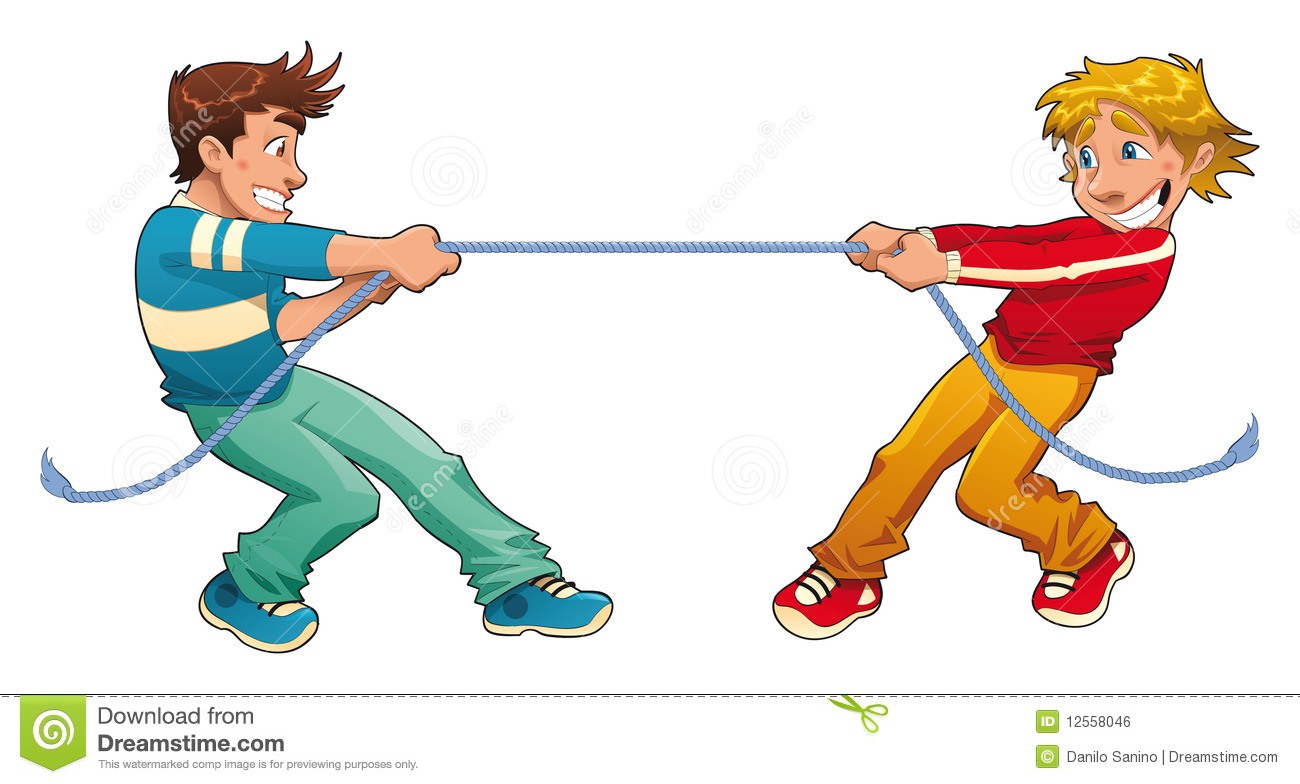
If a force of 26 N is exerted on two balls, one with a mass of 0.52 kg and the other with a mass of 0.78 kg, which ball will have the greater acceleration?
Same
0.78 kg
o.52 kg
None
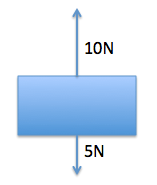
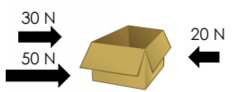
The greater the mass of an object, the more force it will take to accelerate the object.
Newton's 1st Law of Motion
Newton's 2nd Law of Motion
Newton's 3rd Law of Motion

