Wayground logo

Free Printable Worksheets

Font size

S
M
L
XL
Worksheets

Cell Concept 1 Review

Total questions: 75

Worksheet time: 4hrs 7mins
Name
Class
Date
1.
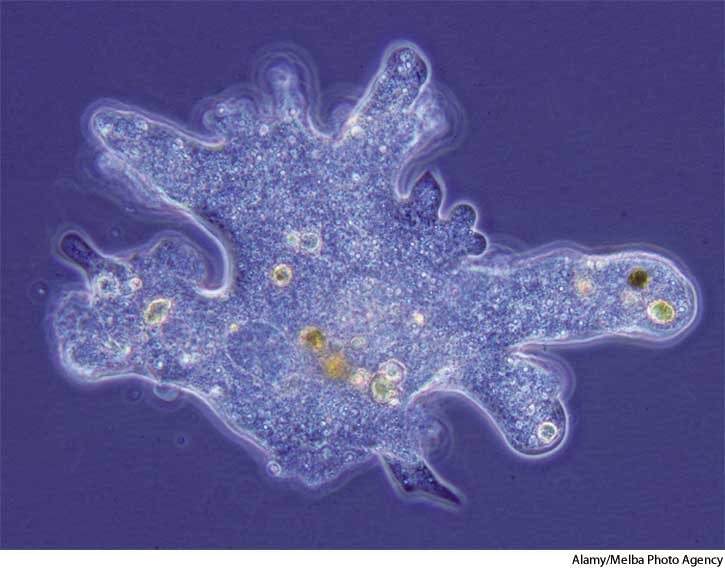
An Amoeba is a unicellular, animal-like protist that lives in ponds and streams. According to cell theory, where did this cell come from?
a)
another pre-existing amoeba cell.
b)
energy from sun that allowed the protist to reproduce.
c)
a multicellular organism.
d)
the nonliving environment.
2.
Which of the following is NOT a cell theory.
a)
All non-living things are made of cells
b)
All cells come from pre-existing cells
c)
Cells are the basic unit of structure and function of all living things
3.
All living things are made up of...
a)
cells
b)
cell tissues
c)
organ
d)
organ systems
4.
All cells come from___________ cells.
a)
pregnant
b)
pre-existing
c)
paternal
d)
pin size
5.
Rocks are not living because
a)
they never move
b)
they aren't needed for humans
c)
they are not made of cells
d)
they don't break down
6.
What is the basic structural and functional unit of all living things? 
a)
atom
b)
cell
c)
molecule
d)
human
7.
An organism made of one cell is called
a)
unicellular organism
b)
multicellular organism
8.
What is one way in which all living things on Earth are alike?
a)
All living things have hair.
b)
All living things are made of cells and come from other cells.
c)
The cells of all living things have chloroplast.
d)
All living things can move. 
9.
Which of the following statements is not part of the cell theory?
a)
Cells are the basic unit of structure and function in all living things.
b)
All cells are produced from other cells.
c)
Only animal cells are composed of cells.
d)
All living things are composed of cells.
10.
Which is NOT part of the Cell Theory
a)
New cells are produced from existing cells
b)
All living things are composed of cells
c)
Only eukaryotic cells have a nucleus
d)
Cells are the basic unit of structure & function in living things
11.
How are unicellular organisms different from multicellular organisms? 
a)
There are no differences.
b)
They are made of many cells. 
c)
They are only classified as prokaryotes.
d)
They are made of only one cell. 
12.

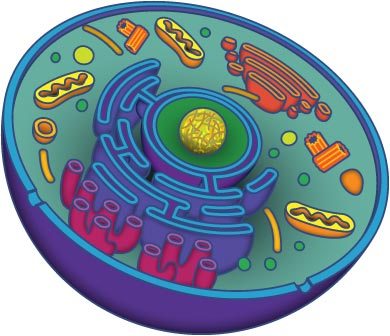
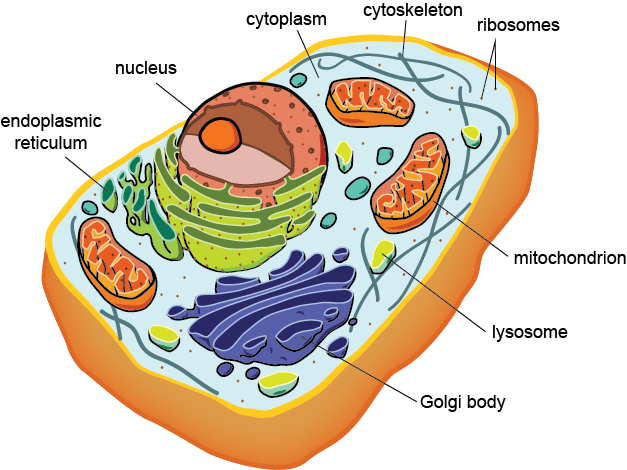
What type of cell is an animal cell?

a)

Prokaryotic

b)

Eukaryotic

13.

What type of cell is a plant cell?

a)

Prokaryotic

b)

Eukaryotic

14.

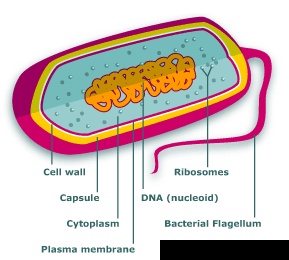
What type of cell is a bacterial cell?

a)

Prokaryotic

b)

Eukaryotic

15.

How do eukaryotes reproduce?

a)

Sexually

b)

Asexually

c)

Both

16.

How to prokaryotes reproduce?

a)

Sexually

b)

Asexually

c)

Both

17.

Which scientist coined the term "cell"?

a)

Schleiden

b)

Schwann

c)

Hooke

d)

Van Leuwenhoek

18.

What is the smallest unit of an organism that can perform life functions?

a)

Organ system

b)

Organ

c)

Tissue

d)

Cell

19.

All organisms are made of

a)

organs

b)

tissues

c)

cells

20.

The idea that all living things are composed of cells, the cell is the basic unit of structure and function, and all cells come from cells is known as the

a)

Theory of relativity

b)

Agenda Theory

c)

Cell Theory

d)

Theory of naturalization

21.

Control center of the cell

a)

Cell Membrane

b)

Endoplasmic reticulum

c)

Ribosome

d)

Nucleus

22.

A cell without a true nucleus

a)

Prokaryotic

b)

Eukaryotic

23.

A cell that has a true nucleus

a)

Prokaryotic

b)

Eukaryotic

24.

All cells have DNA,cytoplasm, ribosomes, and

a)

Nucleus

b)

Cell membrane

c)

Golgi body

d)

Endoplasmic Reticulum

25.

____ is credited with being the first scientist to observe cork cells.

a)

Leewenhoek

b)

Shleidon

c)

Hooke

26.

What type of organisms does the cell theory apply to

a)

bacteria

b)

multicellular organisms

c)

plants and animals

d)

all of the above

27.
This scientist was the first to identify cells and name them:
a)
Hooke
b)
Leeunwenhoek
c)
Schleiden
d)
Virchow
28.

Which of the following scientists was the first to observe animacules?

a)

Anton van Leuwenhoek

b)

Matthais Schleiden

c)

Robert Hooke

d)

Theodor Schwann

29.
What structures distinguish a plant cell from an animal cell?
a)
Plant cells have cell walls and ribosomes.
b)
Plant cells have cell walls and chloroplasts.
c)
Plant cells have chloroplasts and ribosomes.
d)
Plant cells have chloroplasts and mitochondria.
30.
This organelle takes food and turns it into ENERGY for plant and animal cells.
a)
Chloroplast
b)
Mitochondria
c)
Lysosome
d)
Ribosome
31.
jello-like material, fills the space between cell organelles, is where many chemical reactions occur
a)
cytoplasm
b)
chromatin
c)
chloroplast
d)
cell membrane
32.
Controls the cell and contains DNA
a)
Nucleus
b)
Mitochondria
c)
Chloroplast
d)
Cell Wall
33.

packages and distributes proteins

proteins may be modified here

a)

golgi body

b)

chloroplast

c)

ribosomes

d)

lysosome

34.

makes proteins from amino acids

a)

ribosomes

b)

mitochondria

c)

nucleus

d)

lysosome

35.

detroys worn-out or damaged organelles

gets rid of waste materials and protects the cell from foreign invaders

found mostly in animal cells

a)

lysosome

b)

vacuole

c)

cell wall

d)

golgi body

36.
If a cell had the following organelles: nucleus, mitochondria, ribosome, and cell membrane. And DID NOT have a chloroplast and cell wall, what kind of organism is the cell found in? 
a)
Animals only
b)
Plants only
c)
Both plants and animals
d)
Bacteria
37.
If an organism had the following organelles: mitochondria, chloroplast, ribosome, nucleus, cell wall, and cell membrane, what type of organism is the cell found in? 
a)
Only plants
b)
Only animals
c)
Plants and Animals
d)
Animals & Fungi
38.
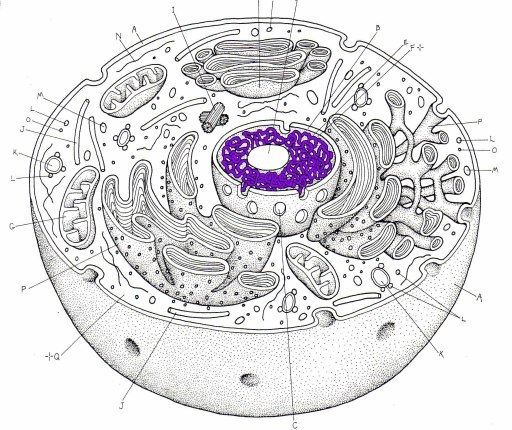
Letter L represents what cell part?
a)
nucleus
b)
nucleolus
c)
nuclear membrane
d)
cytoplasm
39.

What is this?

a)

mitochondria

b)

smooth endoplasmic reticulum

c)

chloroplast

d)

rough endoplasmic reticulum

40.

Which of the following is the rough ER?

a)

12

b)

9

c)

7

d)

14

41.

Which of the following is the mitochondria?

a)

12

b)

9

c)

7

d)

5

42.
Which type of cell?
a)
Prokaryote
b)
Eukaryote
43.
Has membrane bound organelles
a)
Prokaryote
b)
Eukaryote
c)
both
44.
A single-celled organism that lacks a membrane-bound nucleus, mitochondria, or any other membrane -bound organelle .
a)
Prokaryote
b)
Eukaryote
c)
Nucleus
d)
Single-celled organism
45.
Cells are often called "the ____ of life."
a)
bread
b)
road map
c)
building blocks
d)
meaning
46.

Ribosomes, the organelles that make proteins, can be found free-floating in the cytoplasm or attached to the surfaces of the _______________________.

a)

Lysosomes

b)

Cell membrane

c)

Cell wall

d)

Endoplasmic Reticulum

47.

What part of the cell forms a barrier between the cell and its environment and allows materials to enter or exit the cell?

a)

Cell membrane

b)

Nucleus

c)

Mitochondria

d)

Roof

48.
What part of the cell acts as the cells "post office" or "UPS", packaging and distributing materials throughout the cell?
a)
Golgi Body
b)
Cytoplasm
c)
Nucleus
d)
Photosynthesis
49.

Identify the organelle labeled with the number "5 & 6".

a)

Cell Membrane

b)

Cytoplasm

c)

Cell Wall

d)

ER

50.

Identify the organelle labeled as "10".

a)

Cell Membrane

b)

Cytoplasm

c)

Cell Wall

d)

ER

51.
What type of cell has no nucleus and its genetic information (DNA) is contained within the cytoplasm?
a)
Plant Cell
b)
Animal Cell
c)
Prokaryote
d)
Eukaryote
52.
What is found in both plant and animal cells but is much larger in plant cells?
a)
Nucleus
b)
Mitochondria
c)
Chloroplast
d)
Vacuole
53.
What kind of cell is this?
a)
Eukaryotic
b)
Prokaryotic
54.

Contains ribosomes

a)

Eukaryotic Cells

b)

Prokaryotic Cells

c)

Both

d)

Neither

55.

Refer to the illustration, in Eukaryotic cells, DNA and RNA are found in which structure?

a)

Structure A

b)

Structure D

c)

Structure E

d)

Structure F

56.

Refer to the illustration, Structure "A" is the

a)

Nucleus

b)

Cell membrane

c)

Cytoplasm

d)

Mitochondria

57.
The two kinds of cells are Prokaryotes and Eukaryotes. How are they different?
a)
Prokaryotes have a nucleus.
b)
Eukaryotes have a nucleus.
c)
Prokaryotes are plant cells.
d)
There is no difference.
58.

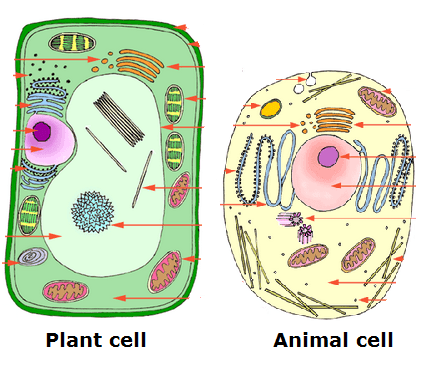
Using this image, what organelle is A?

a)

Cell Wall

b)

Large Central Vacuole

c)

Mitochondria

d)

Chloroplast

59.
This organelle is like a recycling center for the cell. It breaks down old materials. It is like a vacuum cleaner that cleans up the waste in cells.
a)
Ribosomes
b)
Lysosomes
c)
Mitochondria
d)
Chloroplasts
60.

Using this image, what organelle is C?

a)

Cell Wall

b)

Mitochondria

c)

Large Cell Vacuole

d)

Chloroplast

61.

Which organelle is the site where amino acids are synthesized into proteins?

a)

1

b)

2

c)

3

d)

4

62.

Which of the following contain complex, membrane-bound organelles?

1. bacteria

2. viruses

3. eukaryotic

4. prokaryotic

a)

1 and 2

b)

2 and 4

c)

3 only

d)

4 only

63.
Which  structures are present in animal and plant cells?
a)
Vacuole, nucleus and cell membrane
b)
Nucleus, cell wall, cytoplasm
c)
Nucleus, cell membrane, cytoplasm
d)
Cell membrane, chloroplast, cell wall
64.
Which cell structure is correctly paired with its primary function?
a)
ribosome - movement
b)
mitocondrion - energy production
c)
vacuole - cell division
d)
nucleus - storage of nutrients
65.
This organelle turns the light energy into a simple sugar. 
a)
Mitochondria
b)
ER
c)
Chloroplast
d)
Nucleus
66.
What of the following is a prokaryote?
a)
animal cell
b)
bacteria
c)
virus
d)
plant cell
67.
Animal cells could have one or a couple ______ (long tails) to move through fluid.
a)
Cilia
b)
Flagella
c)
Mitochondria
d)
Nucleus
68.
The short, finger-like projections on animal cells that are responsible for catching fluids or nutrients:
a)
Cilia
b)
Flagella
c)
Nucleus
d)
Golgi Apparatus
69.
I am only found in a plant cell. What am I?
a)
cell wall
b)
mitochondria
c)
cytoplasm
d)
chloroplast
70.

What distinguishes a plant cell from an animal cell? (How do you tell them apart) Hint: There's 3 ways (Check all 3)

a)

Central Vacuole

b)

Mitochondria

c)

Cell Wall

d)

Ribosomes

e)

Chloroplasts

71.

Cellular Respiration occurs within me and I am in BOTH plant and animal cells. I am a....

a)

Nucleus

b)

Golgi Body

c)

Cytoskeleton

d)

Mitochondria

72.

I like to be thought of as the "storage bubble" for both plant and animal cells. I am a...

a)

Cell Membrane

b)

Cytoskeleton

c)

Vacuole

d)

Endoplasmic Reticulum

73.

I provide plant cells their rigid shape. I am the...

a)

Basketball that Nic Quarne left in Mr. Woller's room last week

b)

Cytoskeleton

c)

Cell Membrane

d)

Cell Wall

74.

I am found in a plant cell and I provide a "central" and LARGE amount of storage. I am a...

a)

Central Vacuole

b)

Cytoplasm

c)

Central Membrane

d)

Mitochondria

75.

I provide structure from within the animal cell so it doesn't collapse inwards upon itself. I am made of micro-filaments. I am the...

a)

Cytoskeleton

b)

Cytoplasm

c)

Baconidis

d)

Cell Wall