
 Worksheets
Classification and Biodiversity
Total questions: 64
Worksheet time: 1hrs 24mins

How do you define 'biodiversity'?
Biology
Living organisms
Variety of living organism
Interaction between living and non-living organism
'' The differences between living organisms within a species.''
This statement refers to which type of diversity?
Genetic diversity
Ecosystem diversity
Interaction diversity
Species diversity
In naming species, Linnaean System group them into hierarchy of increasingly inclusive categories (taxonomic system)
Choose the correct order.
Kingdom->Domain->Phylum->Class->Order->Family->Genus->Species
Domain->Kingdom->Order->Phylum->Class->Family->Genus->Species
Domain->Kingdom->Order->Phylum->Family->Class->Genus->Species
Domain->Kingdom->Phylum->Class->Order->Family->Genus->Species
Species with closely related in the family are placed in the same ____________.
Genus
Family
Species
Order
What is taxonomy?
Science of conserving biodiversity.
Science of comparing macromolecules.
Science of naming, describing and classifying organisms
Science of creating new species.
What is the main basis of classification in the five-kingdom system?
Types of reproduction.
The structure of cell wall.
Modes of nutrition.
The structure of nucleus.
The 3 domain system divide the living organisms into _________ groups.
2
3
4
5
The levels of cell organization includes
prokaryotes and unicellular
prokaryotes and eukaryotes
eukaryotes and multicellular
unicellular and multicellular
Scientific names of different organisms are made up of:
Kingdom
Phyllum
Genus
Species

The plant pictured has scientific name Galanthus nivalis. What is the genus called?
Snowdrop
Galanthus
nivalis
Nivalis

The organism pictured has the scientific name Canis familiaris. What is the species name?
dog
Canis
familiaris
Familiaris
Which statements are true about taxonomic hierarchy
The broadest taxon is phylum
Order is a taxon within a class and it consists of several families
Different organisms within a class are from the same family
Different organisms within an order may belong to different classes
Choose the correct order
Genus > Species > Order > Class > Family > Phylum > Kingdom > Domain
Kingdom > Domain > Phylum > Class > Order > Family > Genus > Species
Kingdom > Domain > Phylum > Class > Order > Family > Species > Genus
Domain > Kingdom > Phylum > Class > Order > Family > Genus > Species
Species with closely related in the family are placed in the same ____________.
Genus
Family
Species
Order
The three domains are:
Plant, Animal, Bacteria
Bacteria, Archaea, Eukarya
Invertebrates, Vertebrates, Plants
Fungi, Animal, Plant

Three types of biodiversity with their explanation are given in the table below.
Which types of biodiversity’s correspond to their explanation?
refer choice 5 to answer.
A
B
C
D

Organism X and Y are from the same order. Which of the following statements are TRUE?
They are from the same class
They are from the same family
They may be from the same genus
They may be from a different family


Which species is most closely related to species C?
A
B
D
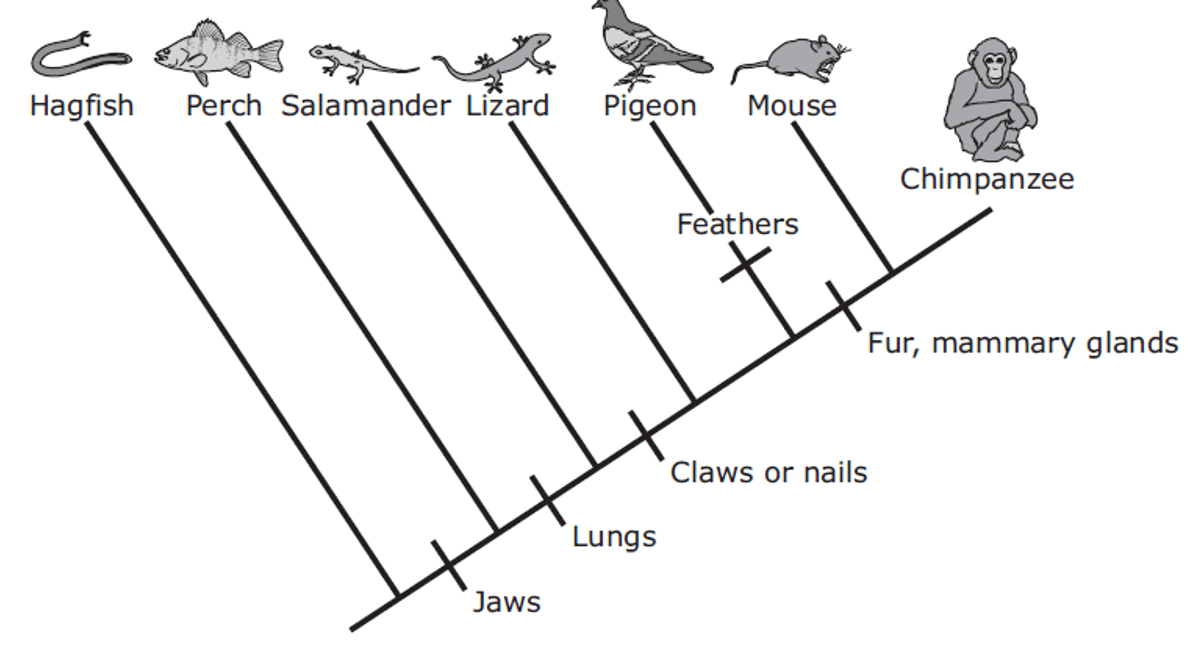
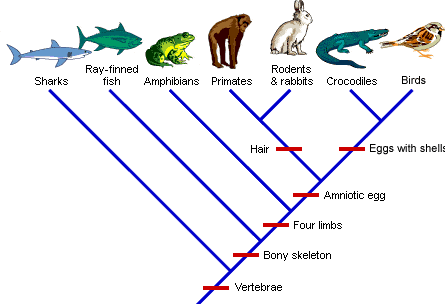
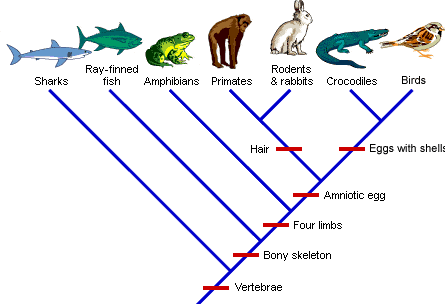
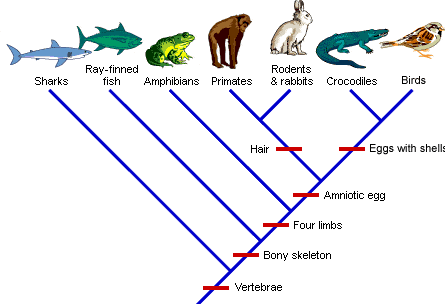
All the animals to the right of the salamander would have the common characteristic of...
Fur
Claws or nails
Lungs
Jaws
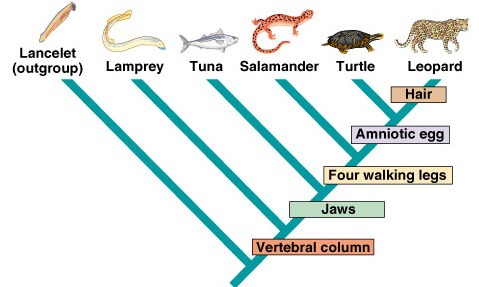
Which is the newest trait?
Amniotic egg
Walking legs
Jaws
Hair

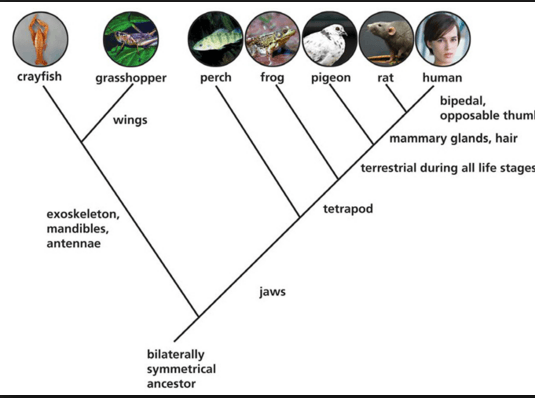
What is this a picture of?
Pedigree
Cladogram
Family Tree
Oak Tree
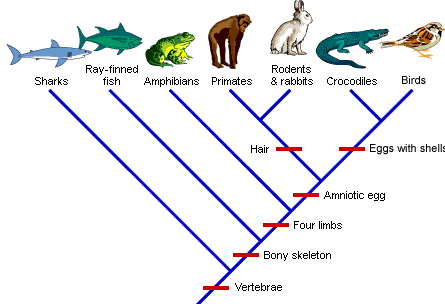
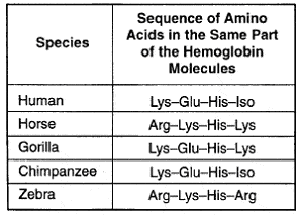
Which best describes shared characteristics?
They appear in all the ancestors.
They appear at the end of each branch.
They are newly evolved traits that all future organisms have in common.
They stem from primary characteristics.

Which letter represents the most recent common ancestor of sponges and mushrooms?
A
B
C
D
E

Which trait(s) do conifers have?
vascular tissue only
vascular tissue and seeds
vascular tissue, seeds and flowers
seeds only

According to the cladogram, which organism is most distantly related to the chimpanzee?
salmon
salamander
lizard
hamster

According to this image, which two domains of life are most related?
Bacteria & Archaea
Archaea & Eukarya
Eukarya & Bacteria

Who is most closely related to Taxidea taxus?
Lutra lutra
Panthera pardus
Canis latrans
Canis lupus
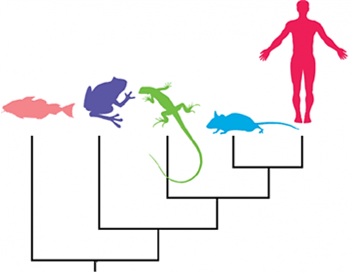
According to this phylogenetic tree, which creature is the least related out of all pictured?
Fish
Frog
Salamander
Human

Which of these animals does not have/produce an amniotic egg?
Turtle
Leopard
Lamprey
All three of these animals produce the amniotic egg

According to this image, when did the ancestors of Indohyus and Pakicetus diverge?
52 million years ago
56 million years ago
25 million years ago
47 million years ago

Which group of animals on this tree are most closely related to birds?
Saurischian dinosaurs
Ornithischian dinosaurs
Crocodiles
None of these are related to birds

If a plant has vascular tissue but no seeds, which of the four plant groups here would it fall into?
Ferns
Cone-bearing plants
Mosses
Flowering plants

According to this tree, which of these animal phyla are most closely related?
Arthropoda & Mollusca
Arthropoda & Chordata
Chordata & Mollusca

The lizard has all these derived characteristics EXCEPT
Jaws
Lungs
Bipedal

Which animals have amniotic eggs?
Turtle and Tuna
Turtle and Leopard
Lancelet and Lamprey
Why do scientists use scientific names?
to confuse people
to have a common language
to allow people to say the same thing
because common names are not appropriate

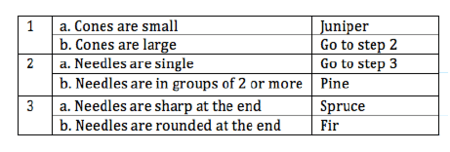

In a dichotomous key, organisms should be classified based on their
diet
habitat
observable features
sounds they make

Identify leaf F
Cydonia
Magnolia
Aesculus
Fraxinus
Ilex

If you were to make a dichotomous key to identify this organism, which option would NOT be used?
Presence of webbed feet
Presence of tail
Fur on the body
Ability to swim
Absence of wings

Based on the dichotomous key, which bird is Certhidea? (Slender = thin; stout= round)
Bird W
Bird X
Bird Y
Bird Z

Identify the plant shown
A
B
C
D

A
B
C
D

