wayground logo

Free Printable Worksheets

Font size

S
M
L
XL
Worksheets

CBA Gander Time Oct 2021

Total questions: 103

Worksheet time: 2hrs 31mins
Name
Class
Date
1.
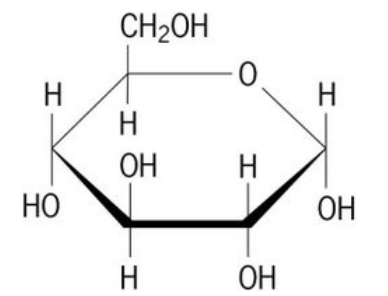
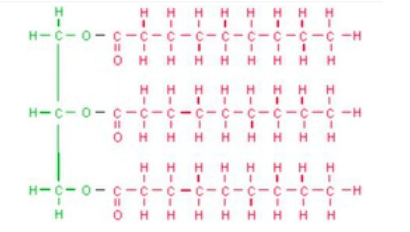
Which biomolecule is this a picture of?
a)
Protein
b)
Nucleic Acid
c)
Lipid
d)
Carbohydrate
2.
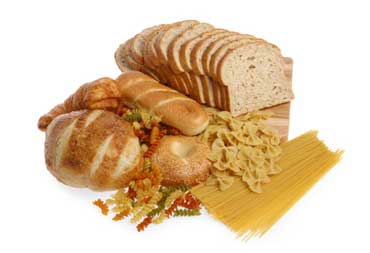
Which biomolecule is this a picture of?
a)
Protein
b)
Nucleic Acid
c)
Lipid
d)
Carbohydrate
3.
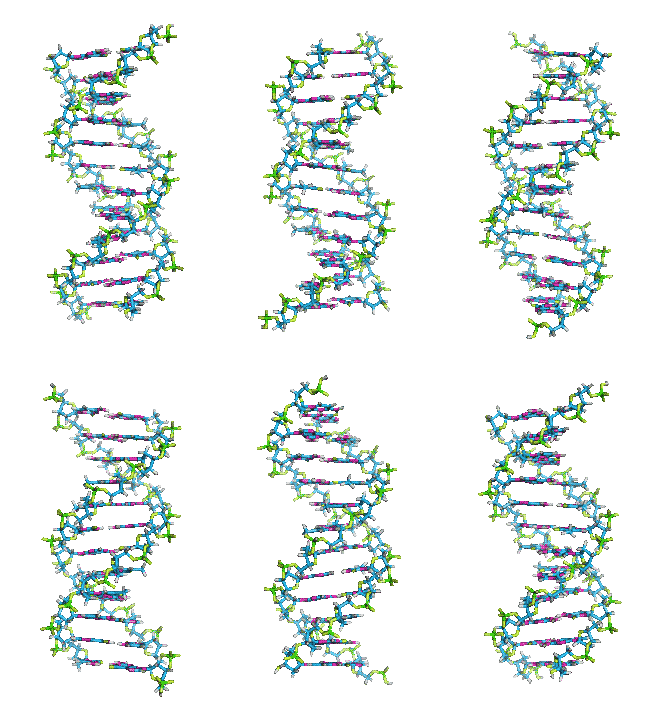
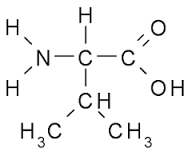
Which biomolecule is this a picture of? (Hint: it is made of amino acids)
a)
Proteins
b)
Nucleic Acids
c)
Lipids
d)
Carbohydrates
4.
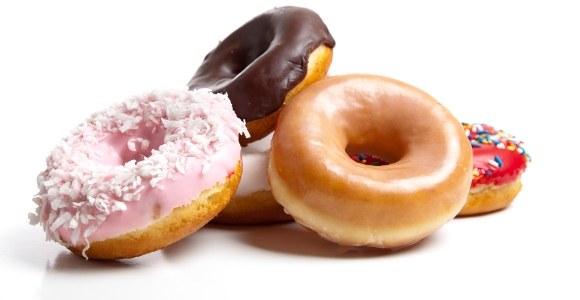
Which biomolecule is found in pastas and breads? (Hint: it is a polymer)
a)
Lipid
b)
Protein
c)
Simple Carbohydrate
d)
Complex Carbohydrate
5.
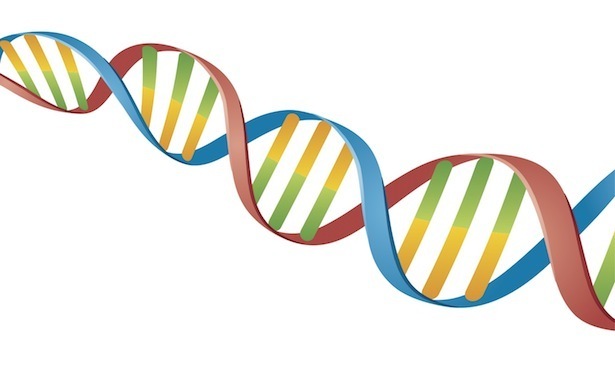
Which biomolecule is made of nucleotides and include your DNA? (Hint: they carry genetic information)
a)
Carbohydrate
b)
Lipids
c)
Protein
d)
Nucleic Acid
6.
Which biomolecule is responsible for insulation and LONG term energy storage?
a)
Proteins
b)
Nucleic Acids
c)
Lipids
d)
Carbohydrates
7.
Which biomolecule includes sugars and starches? (Hint: simple or complex)
a)
Lipids
b)
Proteins
c)
Carbohydrates
d)
Nucleic Acids
8.
Which biomolecule group includes fats, oils, and waxes?
a)
Proteins
b)
Nucleic Acid
c)
Lipids
d)
Carbohydrate
9.
The monomer (building block) of a nucleic acid is
a)
Monosaccharide
b)
Amino Acid
c)
Nucleotide
d)
Polysaccharide
10.
ALL polymers (large molecules) are made up of...
a)
monosaccharides
b)
monomers
c)
proteins
d)
None of these
11.
Which of the following is NOT a biomolecule?
a)
Water
b)
Nucleic Acid
c)
Protein
d)
Lipid
12.
Lipids can be digested into what smaller subunits?
a)
nucleic acids
b)
amino acids
c)
fatty acids
d)
glucose
13.
Which 2 molecules contains the elements C-H-O and function pertains to energy?
a)
Lipids and Protein
b)
Carbohydrates and Nucleic Acids
c)
Protein and Carbohydrates
d)
Carbohydrates and Lipids
14.
Which biomolecule contains pastas and breads?
a)
Lipid
b)
Protein
c)
Nucleic Acid
d)
Carbohydrate
15.
Which biomolecule helps form body structures like muscles?
a)
Nucleic Acid
b)
Carbohydrate
c)
Protein
d)
Lipids
16.
Which biomolecule is responsible for insulation and long term energy storage?
a)
Protein
b)
Nucleic Acid
c)
Lipid
d)
Carbohydrate
17.
Which biomolecule includes sugars, cellulose and starch?
a)
Lipids
b)
Proteins
c)
Carbohydrates
d)
Nucleic Acid
18.
Which biomolecule is made of the monomer amino acids?
a)
Nucleic Acid
b)
Carbohydrate
c)
Protein
d)
Lipid
19.
Which biomolecule is your main source of energy?
a)
Nucleic Acid
b)
Protein
c)
Lipid
d)
Carbohydrate
20.
Which biomolecule contains fats, oils, and waxes?
a)
Proteins
b)
Nucleic Acid
c)
Lipids
d)
Carbohydrate
21.
What do monomers do?
a)
Bond to make a polymer
b)
Create essential proteins
c)
Stores energy
d)
Splits to make more cells
22.
The monomer of a protein is called...
a)
an amino acid
b)
a monosaccharide
c)
a fatty acid
d)
a nucleotide
23.
Many monomers can be linked together to form ______________. 
a)
building blocks
b)
chemical reactions
c)
polymers
d)
energy
24.
Enzymes are considered to be 
a)
Lipids
b)
Carbohydrate
c)
Protein
d)
Nucleic Acid
25.
What is the purpose  of an enzyme?
a)
give permission for the reaction
b)
raise activation energy
c)
speed up reactions
d)
control how many reactions occur
26.
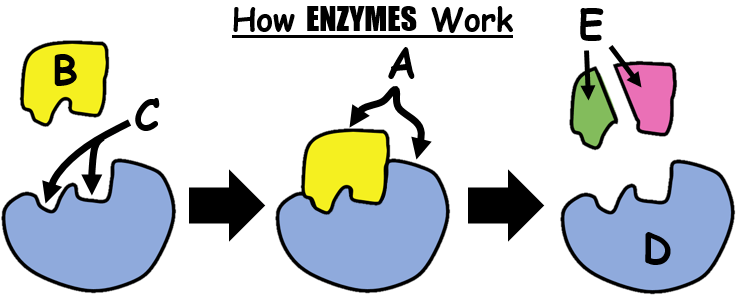
Letter D in the picture is...
a)
active site
b)
enzyme
c)
substrate
d)
products
27.
The enzyme known as ‘catalase’ is involved in the breakdown of hydrogen peroxide molecules into separate water and oxygen molecules. During this reaction, what happens to the ‘catalase’?
a)
The enzyme would become products: O2 and H20
b)
The enzyme would be fully used up and discarded.
c)
The enzyme would remain unchanged in any way.
d)
The enzyme would become a new type of enzyme.
28.
What is being represented by the letter A in the image?
a)
Substrate
b)
Enzyme
c)
Product
d)
Complex
29.
What is being represented by the letter A in the image?
a)
Substrate
b)
Enzyme
c)
Product
d)
Complex
30.
What is being represented by the letter B in the image?
a)
Active Site
b)
Enzyme
c)
Substrate
d)
Product
31.
The part of the enzyme that the substrate bonds to is called the _____.
a)
active site
b)
activation energy
c)
bond site
d)
dehydration synthesis
32.
What makes an enzyme substrate specific?
a)
Size
b)
Shape
c)
Name
d)
Location it is found in
33.
Why does the shape of an enzyme determine its function?
a)
enzymes are specific to substrates (lock and key)
b)
enzymes can work with any substrate
c)
enzymes are activated by molecules
d)
enzymes are found everywhere
34.
Which biomolecule is a main source of quick energy?
a)
Nucleic Acid
b)
Protein
c)
Lipid
d)
Carbohydrate
35.
What is the function of a nucleic acid?
a)
Stores genetic information
b)
Stores energy
c)
Quick source of energy
d)
Builds structures
36.
Carbon, Hydrogen, Oxygen and Nitrogen are elements in what biomolecule?
a)
Carbohydrate
b)
Lipid
c)
Protein
d)
Nucleic acid
37.
What does the word organic mean?
a)
has nitrogen
b)
has sulfur
c)
has carbon
d)
has oxygen
38.
Which of the following is NOT a biomolecule?
a)
Water
b)
Nucleic Acid
c)
Protein
d)
Lipid
39.
Which foods are high in protein?
a)
Meats, cheeses, milk, eggs
b)
Breads, pasta, grains
c)
Butter, oil, lard
d)
Apples, Bananas, Grapes
40.
Enzymes are considered to be 
a)
Lipids
b)
Carbohydrate
c)
Protein
d)
Nucleic Acid
41.
Enzymes are capable of increasing the rate of a chemical reaction within a living cell.  Enzymes accomplish this through which of the following means?
a)
reducing the number of products   
b)
reducing the activation energy
c)
increasing the temperature of the cell
d)
increasing the concentration of reactants 
42.
What is structure C?
a)
Substrate
b)
Active site
c)
Enzyme
d)
Products
43.

Complete the sentence.


During a chemical reaction, atoms ________.

a)

can appear

b)

can disappear

c)

get rearranged

d)

stop moving and vibrating

44.

How many iron (Ag) atoms are reactants in this equation?

4Ag + 3O2 → 2Ag2O

a)

4

b)

2

c)

3

d)

0

45.

What are the four most abundant (plentiful) elements in the human body

a)

oxygen

b)

carbon

c)

nitrogen

d)

sodium

e)

hydrogen

46.

The energy needed to start a chemical reaction is called

a)

beginning energy

b)

starting energy

c)

activation energy

d)

contact energy

47.
Has cytoplasm
a)
Prokaryote
b)
Eukaryote
c)
both
48.
more complex
a)
Prokaryote
b)
Eukaryote
c)
both
d)
both
49.
multicellular
a)
Prokaryote
b)
Eukaryote
c)
both
50.
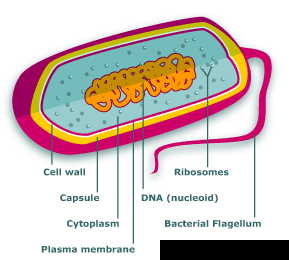
Which type of cell?
a)
Prokaryote
b)
Eukaryote
51.
Which type of cell?
a)
Prokaryote
b)
Eukaryote
52.
Where is the DNA found in a eukaryotic cell? 
a)
floating around in the cytoplasm 
b)
in the nucleus 
53.
What type of cell does not have a nucleus?
a)
eukaryotic 
b)
prokaryotic 
54.
Has membrane bound organelles
a)
Prokaryote
b)
Eukaryote
c)
both
55.
Which is true of prokaryotic and eukaryotic cells?
a)
Prokaryotic cells are larger than eukaryotic cells.
b)
Eukaryotic cells do not have nuclei, and prokaryotic cells do have nuclei.
c)
Prokaryotic cells lack membrane-bound organelles, and eukaryotic cells contain membrane-bound organelles.
d)
Eukaryotic cells are simpler than prokaryotic cells.
56.
Which of the following is not a characteristic of a Prokaryotic cell?
a)
unicellular
b)
floating DNA
c)
very small
d)
complex
57.
A fossilized cell is discovered, and evidence suggests it reproduced on its own and had DNA, but a membrane did not enclose its DNA. Which type of organism would this most likely be?
a)
prokaryote
b)
eukaryote
c)
plant cell
d)
animal cell
58.

Which do BOTH prokaryotes and eukaryotes contain?

a)

nucleus

b)

mitochondria

c)

ribosomes

d)

cell wall

59.

Which does only eukaryotic cells contain?

a)

nucleus

b)

DNA

c)

cell membrane

d)

ribosomes

60.

You can distinguish a prokaryote apart from a nucleus by--

a)

The presence of a ribosome

b)

The presence of a cell membrane

c)

The presence of DNA

d)

The presence of a nuclear membrane

61.

Prokaryotic cells do not have…….

a)

membrane bound organelles

b)

cell membrane

c)

DNA or RNA

d)

life

62.

Which of the following structures is ALWAYS found in both eukaryotic and prokaryotic cells?

a)

nucleus

b)

mitochondria

c)

ribosomes

d)

cell wall

63.

The smallest unit of a living thing are

a)

atoms

b)

cells

c)

DNA

d)

organelles

64.

Which cell type tends to be smaller?

a)

Prokaryote

b)

Eukaryote

c)

there is not a size difference

65.

Bacteria is an example of a(n)

a)

prokaryotic cell.

b)

eukaryotic cell.

66.

CHALLENGE QUESTION: Which of the following provides evidence for the hypothesis that prokaryotes evolved before eukaryotes.

a)

prokaryotes are more complex

b)

prokaryotes have no nucleus and fewer genes

c)

eukaryotes are multicellular which makes them simpler

d)

prokaryotes grow into eukaryotes

67.
Osmosis is the movement of _____ across a membrane.
a)
food
b)
energy
c)
oxygen
d)
water
68.
The cell below is in a _________ solution.
a)
Hypotonic
b)
Hypertonic
c)
Isotonic
69.
The cell below is in a _____________ solution.
a)
Hypertonic
b)
Hypotonic
c)
Isotonic
70.
A cell in an isotonic solution will
a)
swell
b)
shrink
c)
stay the same size
d)
impossible to tell
71.
Describes the arrangement of the cell membrane as bendable and made of many parts. 
a)
The Fluid Mosaic Model 
b)
The Major Mobility Model 
c)
The Crazy Cell Model
d)
The Maze Model
72.
Something is ___________ ____________
when some molecules can cross the membrane while others cannot. 
a)
Selectively (or Semi) Permeable 
b)
Totally Transparent
c)
Liquid Licorice 
d)
Heavily Patrolled 
73.
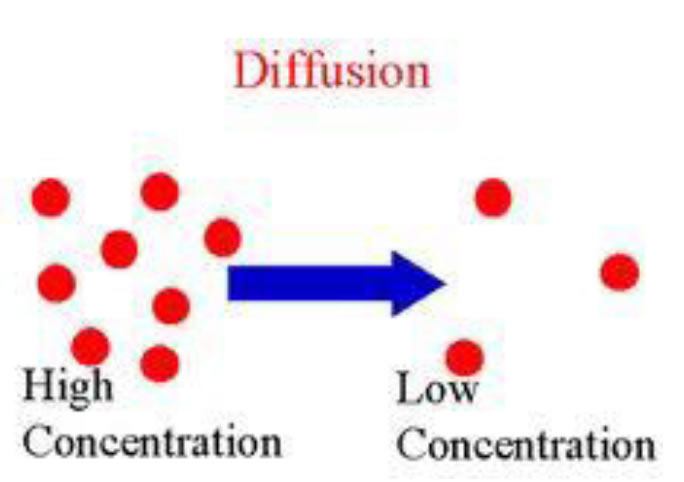
What is it called when molecules move across the cell membrane from an area of high concentration to an area of low concentration through a carrier protein?
a)
Diffusion
b)
Osmosis
c)
Active Transport
d)
Facilitated Diffusion
74.
Movement of particles from high to low concentration. 
a)
Passive Transport
b)
Active Transport
75.
When a cell is placed in a hypertonic solution water
a)
moves from the inside of the cell to the solution
b)
moves from the solution to the inside of the cell
c)
moves equally in and out of the cell
d)
none of these
76.
When the concentration of particles inside of a cell is the same as the concentration of particles outside of the cell. 
a)
active transport
b)
concentration
c)
diffusion
d)
equilibrium
77.

In an isotonic solution which way will the water flow

a)

it will not flow at all

b)

it will flow into the cell

c)

it will flow both ways at equal rates

d)

out of the cell

78.
What three substances make up the cell membrane?
a)
lipids, starches, nucleic acids
b)
lipids, fats, sugars
c)
lipids, sugars, proteins
d)
lipids, proteins, carbohydrates
79.

Nemo and other ocean dwelling fish cannot survive in freshwater because......

a)

freshwater is hypertonic to Nemo's cells and will result in water leaving them causing the cells to shrink

b)

freshwater is hypotonic to Nemo's cells and will result in water leaving them causing the cells to shrink

c)

freshwater is hypertonic to Nemo's cells and will result in water entering them causing the cells to swell and burst

d)

freshwater is hypotonic to Nemo's cells and will result in water enter them causing the cells to swell and burst

80.

Hypotonic solutions

a)

make cells shrink

b)

make cells swell

81.

Some celery sticks were placed in salt water. What type of solution are they in? What will happen to the celery sticks?

a)

hypotonic, the cells will swell

b)

hypertonic, the cells will shrink

82.

Which part of the phospholipid is hydrophobic?

a)

The head

b)

The tails

c)

Only one tail

d)

The heart

83.

Which molecule provides stability to the cell membrane?

a)

Cholesterol

b)

Protein

c)

Carbohydrates

d)

Sugars

84.

Which molecule in the cell membrane receives messages from the body?

a)

Cholesterol

b)

Protein

c)

Carbohydrates

d)

Sugars

85.

Which molecule in the cell membrane is involved in transporting large molecules across the cell membrane

a)

Cholesterol

b)

Protein

c)

Carbohydrates

d)

Sugars

86.

Some celery sticks were placed in pure water. What type of solution are they in? What will happen to the celery sticks?

a)

hypotonic, the cells will swell

b)

hypertonic, the cells will shrink

87.

Diffusion & Facilitated Diffusion are both __________ transport.

a)

Passive

b)

Active

c)

Easy

d)

Free

88.

Passive Transport is the movement of particles across the membrane from an area of [ ___ ] to an area of [ ___ ]

a)

high to low

b)

low to high

c)

low to low

d)

high to high

89.

Passive Transport uses ____ energy

a)

no

b)

a lot of

c)

a little bit of

d)

some

90.

_____________ is the free movement of particles across the membrane with the concentration gradient

a)

diffusion

b)

facilitated diffusion

c)

active transport

d)

fusion

91.

Passive Transport is the movement of particles _________ the concentration gradient.

a)

with

b)

against

c)

opposing

d)

throughout

92.

An example of diffusion is

a)

CO2 and O2 exchange in the lungs

b)

Glucose transport

c)

Na+ / K+ Pumps

d)

Exocytosis

93.

What is the movement of particles with the concentration gradient using protein "helpers"?

a)

diffusion

b)

facilitated diffusion

c)

active transport

d)

enzymatic reactions

94.

An example of facilitated diffusion is

a)

CO2 and O2 exchange in the lungs

b)

Glucose transport

c)

Na+ / K+ Pumps

d)

Endocytosis

95.

Facilitated diffusion needs what to get particles from one side of the membrane to the other?

a)

a membrane-spanning protein

b)

a surface protein

c)

a phospholipid

d)

a carbohydrate

96.

What is a difference between diffusion and facilitated diffusion?

a)

movement of particles from [high] to [low]

b)

a protein "helper"

c)

movement of particles from [low] to [high]

d)

energy

97.

The general name for movement of substances across cell membranes without need of energy input

a)

passive transport

b)

active transport

98.

The condition in which all acting influences are balanced.

a)

equilibrium

b)

dynamic equilibrium

c)

net movement

99.

Small changes of particles moving across the membrane that sum together to produce no net change.

a)

equilibrium

b)

dynamic equilibrium

c)

net movement

100.

The number of molecules moving one direction minus the number of molecules moving in the other direction.

a)

equilibrium

b)

dynamic equilibrium

c)

net movement

101.

occurs when the concentration of particles is higher in one area than another.

a)

concentration gradient

b)

concentration

c)

[high] --> [low]

102.

The relative amount of a given substance contained within a solution or in a particular volume of space; the amount of solute per unit volume of solution. The higher the concentration, the more solute is present.

a)

concentration gradient

b)

concentration

c)

[high] --> [low]

103.

Way to display that molecules are moving from an area of high concentration to an area of low concentration.

a)

concentration gradient

b)

concentration

c)

[high] --> [low]