wayground logo

Free Printable Worksheets

NEW

Font size

S
M
L
XL
Worksheets

AP Chem Review Unit 2

Total questions: 77

Worksheet time: 2hrs 55mins

Name
Class
Date
1.
When writing Lewis Structures, only __________ electrons are used.
a)
Inner shell
b)
Core 
c)
Valence
d)
Stable
2.
Each line in a Lewis Structure represents __________ electron(s).
a)
3
b)
2
c)
1
d)
4
3.
A molecule of water has what shape?
a)
Linear
b)
Tetrahedral
c)
Bent
d)
Triangular
4.
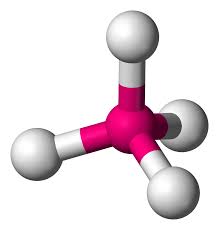
A molecule of methane has what shape?
a)
Tetrahedral
b)
Triangular
c)
Pyramidal
d)
Octahedral
5.
The theory that is used to predict the arrangement of atoms about a central atom is called?
a)
Valence shell repulsion
b)
Valence shell electron sharing
c)
Valence shell electron pair repulsion
d)
Valence electron shell repulsion pair
6.
Atoms of H only form _________ bonds.
a)
Double
b)
Single
c)
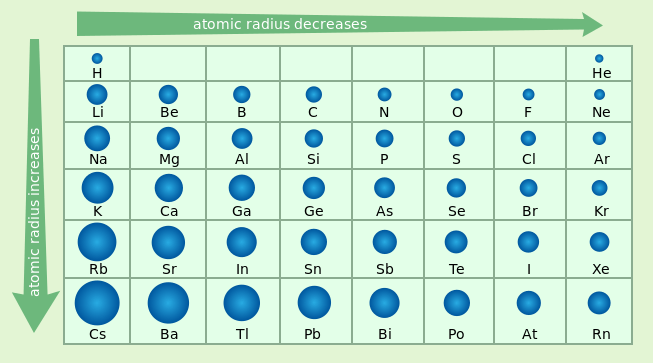
Multiple
d)
Triple
7.
 Lone electron pairs in a molecule...
a)
Never exist
b)
Are lost in space
c)
Creates an isotope
d)
Push the bonded atoms closer
8.
A covalent bond is
a)
a bond that shares electrons metallicaly
b)
A bond that shares electrons with non metals
c)
Metalloids bonding
d)
metals and nonmetals bonding
9.
Which of the following is the correct Lewis dot structure for the molecule fluorine (F2)?
a)
A
b)
B
c)
C
d)
D
10.
How many valence electrons are in Phosphorus?
a)
15
b)
4
c)
5
d)
31
11.

Which is the correct molecular structure for carbon dioxide?

a)
b)
c)
d)
12.

In HCN (Carbon is usually the central atom) what kind of bond is between the C and N

a)

Single

b)

Double

c)

Triple

13.

The electrons in a polar covalent molecule are shared...

a)

Evenly

b)

Unevenly

c)

Electrons are not shared

d)

None of the Above

14.

The electrons in a nonpolar covalent molecule are shared...

a)

Evenly

b)

Unevenly

c)

Electrons are not shared

d)

None of the Above

15.

The electrons in an ionic molecule are shared...

a)

Evenly

b)

Unevenly

c)

Electrons are not shared

d)

None of the Above

16.

In a polar covalent bond, the electrons gather around...

a)

The atom with the Greatest Electronegativity

b)

The atom with the Lowest Electronegativity

c)

Each atom Equally

d)

None of the Above

17.

In a nonpolar covalent bond, the electrons gather around...

a)

The atom with the Greatest Electronegativity

b)

The atom with the Lowest Electronegativity

c)

Each atom Equally

d)

None of the Above

18.

The polarity of a bond is determined by...

a)

The sum of the electronegativities of the two atoms

b)

The difference in the electronegativities of the two atoms

c)

The charges of the atoms

d)

None of the Above

19.

Partial charges are present in which type of bond?

a)

Ionic

b)

Nonpolar Covalent

c)

Polar Covalent

d)

Both Polar Covalent and Ionic

20.

Molecules that contain whole number charges on atoms (+1,-3, etc.) must be...

a)

Polar Covalent

b)

Nonpolar Covalent

c)

Ionic

d)

Polar Covalent or Ionic

21.

A diatomic molecule like O2 is always _____ because electrons are shared _____

a)

nonpolar; unequally

b)

polar; equally

c)

nonpolar; equally

d)

polar; unequally

22.
For carbonate ions, how many resonance structures can be drawn ?
a)
2
b)
3
c)
4
d)
5
23.
For carbonate ions, what is the bond strength between C and O
a)
C-O (single bond)
b)
C=O (double bond)
c)
C≡O (triple bond)
d)
C-O(between single and double bond)
24.
What is the bond order for CO32- ion?
a)
1
b)
1.5
c)
2
d)
1.33
25.
How many resonance structures for NO3- ion?
a)
1
b)
2
c)
3
d)
4
26.
What is the bond strength between N and O?
a)
N-O (Single bond)
b)
N=O (double bond)
c)
N Ξ O (Triple bond)
d)
N-O (between single and double bond)
27.
What is the bond order for NO3- ion?
a)
1
b)
1.5
c)
2
d)
1.3
28.
How many resonance structure can you draw for benzene?
a)
1
b)
2
c)
3
d)
4
29.
Calculate the Formal Charge for the Oxygen Labeled 1 
a)
-1
b)
+1
c)
0
d)
-2
30.
Calculate the Formal Charge for the Oxygen Labeled 2 
a)
-1
b)
+1
c)
0
d)
-2
31.
Calculate the Formal Charge for the Nitrogen
a)
-1
b)
+1
c)
0
d)
-2
32.
What is the formal charge for each of the Fluorine atoms
a)
-1
b)
+1
c)
0
d)
+2
33.
What is the formal charge for Xenon
a)
-1
b)
+1
c)
0
d)
+2
34.
What is the formal charge for Selenium
a)
+1
b)
-1
c)
0
d)
-2
35.
What is the Molecular Geometry of the molecule?
a)
Linear
b)
Bent, 120o
c)
Bent, 109.5o
d)
Trigonal Planar
36.
What is the Molecular Geometry for the Molecule?
a)
Tetrahedral
b)
SeeSaw
c)
Square Planar
d)
T-Shape
37.

What molecular geometry would PH3 have?

a)

Trigonal Pyramidal

b)

Trigonal Bipyramidal

c)

Bent

d)

Linear

38.
What is the Molecular Geometry of the molecule?
a)
Linear
b)
Bent, 120o
c)
Bent, 109.5o
d)
Trigonal Planar
39.
The bond angle for a trigonal planar molecule is 
a)
90 Degrees
b)
109.5 Degrees
c)
120 Degrees
d)
180 Degrees
40.

What is the molecular shape of a molecule with 3 bonded atoms and 2 lone pairs?

a)

T-Shape

b)

Trigonal Bipyramid

c)

See-Saw

d)

Square Planar

41.

What is the molecular shape of a molecule with 5 bonded atoms and 1 lone pair?

a)

Octahedral

b)

Pentagon

c)

Square Pyramid

d)

Square Planar

42.

What is the name of the shape with 4 bonds and two lone pairs?

a)

Square planar

b)

seesaw

c)

trigonal pyramidal

43.
Is this molecule polar or non polar?
a)
Polar
b)
Non Polar
44.

How many total valence electrons does SF4 have?

a)

28

b)

22

c)

34

d)

6

45.

Draw the Lewis Dot structure for PCl5 and determine the predicted molecular geometry

a)

octahedral

b)

trigonal pyramidal

c)

seesaw

d)

trigonal bipyramidal

46.

Which of the following images represents an ionic compound?

a)
b)
c)
d)
47.

Based on formal charge and the the Lewis dot structure rules, which of the following would be correct Lewis structure for N2O?

a)

A

b)

B

c)

C

d)

C

48.

Which change to an ionic solid would lead to a decrease in the density of the solid compound.

a)

Replace the anion in the compound with one that has a greater positive charge

b)

Replace the cation in the compound with one that has a greater negative charge

c)

Replace the anion in the compound with one that has a greater atomic radius

d)

Replace the anion in the compound with one that has a smaller atomic radius

49.

What is the molecular geometry of SO2?

a)

bent <120°

b)

bent <109.5°

c)

linear

d)

trigonal planar

50.

What is the hybridization of this molecule shown above

a)

sp

b)

sp2

c)

sp3

d)

sp4

51.

What is the bond angle for the CH4 molecule?

a)

120°

b)

107°

c)

109.5°

d)

90°

52.
Choose the correct shape for this molecule:
a)
Trigonal planar
b)
Trigonal pyramidal
c)
Tetrahedral
d)
Linear
53.
What type of bonding typically exhibits the greatest melting point and boiling point?
a)
ionic
b)
metallic
c)
polar covalent
d)
nonpolar covalent
54.
If you want to have a high Coulombic attraction you would want...
a)
high charge, high distance
b)
low charge, low distance
c)
low charge, high distance
d)
high charge, low distance
55.

In the reaction shown below does the bond hybridization of the carbon atoms change?

CH4 + 2O2 --> 2H2O + CO2

a)

No , it stays the same , sp3

b)

No, it stays the same sp2

c)

Yes it changes from sp to sp3

d)

Yes it changes from sp3 to sp

56.

Using formal charge rules, identify where the negative charge would be located on the this SO2 molecule?

a)

On the O atom #1

b)

On the O atom #2

c)

On the sulfur atom

d)

There is no charge on a this molecule, it is non polar

57.

Which of the following molecules would hvae the largest dipole moment?

a)

CH3Cl

b)

CH2Cl2

c)

SiH2Cl2

d)

CCl4

58.
A covalent bond consists of
a)
a shared electron
b)
two attractive ions
c)
shared electron pair
d)
octet of electrons
59.
Atoms with a strong attraction for electrons they share with another atom exhibit
a)
zero electronegativity
b)
low electronegativity
c)
high electronegativity
d)
negative electronegativity
60.
A bond in which there is unequal sharing of electrons is 
a)
ionic
b)
polar covalent
c)
nonpolar covalent
d)
metallic
61.
If two covalently bonded atoms are identical, the bond is identified as 
a)
nonpolar covalent
b)
ionic
c)
polar covalent 
d)
coordinate covalent
62.
VSEPR is based on the assumption that 
a)
positive ions repel each other
b)
positive ions attract negative ions
c)
sp2 hybridization occurs
d)
electrons in molecules repel each other
63.
Bond length is equivalent to the distance between nuclei at 
a)
minimum potential energy
b)
zero potential energy
c)
maximum potential energy
d)
depends on the molecule
64.
Metallic bonds occur when 
a)
nonmetals bond with nonmetals
b)
metals bond with metals
c)
metals bond with nonmetals
d)
depends on the molecule
65.

Which has the highest ionization energy?

a)

Arsenic

b)

Iron

c)

ZInc

d)

Cobalt

66.

Ionization energy __________ as you do across a period

a)

has no pattern

b)

stays the same

c)

decreases

d)

increases

67.

Explain why ionization energy decreases as you go down a group.

a)

Outer electrons are further away from the nucleus you go down a group

b)

Electrons feel less pull from the nucleus as you go down a group

c)

Electrons are easier to remove as you go down a group

d)

All of the above

68.

As you look from left to right across a period, ionization energy and electronegativity both

a)

increase

b)

decrease

69.

Which element has the greater ionization energy?

a)

Magnesium (Mg)

b)

Phosphorus (P)

70.
What is ionization energy?
a)
Energy needed to destroy an atom
b)
Energy required to remove an electron
c)
Energy needed to split an electron
d)
Energy required to add an electron
71.

The graph above shows the ionization energy values as the elements are arranged on the periodic table. Which conclusion cannot be drawn from the graph?

a)

The ionization energy drops significantly as you move down a group because the valence electrons are in a shell further from the nucleus.

b)

The ionization energy increases gradually as you move right across a period because the valence electrons are in a shell further from the nucleus.

c)

The ionization energy increases gradually as you move right across a period because you are adding more protons.

d)

The ionization energy increases when the valence electrons are more attracted to the nucleus.

72.
As you move down the periodic table atoms get bigger.  This is because ____________.
a)
The atoms have more mass.
b)
The atoms have more protons.
c)
The atoms have more energy levels
d)
The atoms have more nuetrons
73.
As you move across the periodic table atoms tend to get smaller because, ______________.
a)
the atoms have more mass.
b)
the atoms have less mass
c)
the atoms have more protons.
d)
the atoms have less electrons.
74.
The atom with the largest atomic radius in Group 18 is - 
a)
Ar
b)
He
c)
Kr
d)
Rn
75.
Which periodic group has the smallest atomic radius?
a)
Alkali metals
b)
Halogens
c)
Noble Gases
d)
Transition metals
76.

What makes a valence electron less attracted to the nucleus?

a)

less distance between the nucleus and having less protons

b)

less distance between the nucleus and having more protons

c)

more distance between the nucleus and having less protons

d)

more distance between the nucleus and having more protons

77.

The period that an element is in on the periodic table, tells you what?

a)

Number of protons

b)

Number of electrons

c)

Number of valence electrons

d)

Number of energy levels