wayground logo

Free Printable Worksheets

Font size

S
M
L
XL
Worksheets

Unit Review

Total questions: 57

Worksheet time: 2hrs 45mins

Name
Class
Date
1.
When humans burn fossil fuels, most of the carbon quickly enters the                       as carbon dioxide.
a)
Water
b)
Atmosphere
c)
Sun
d)
Air
2.
Which one of these does not add CO2 to the atmosphere?
a)
cooking with gas
b)
planting trees
c)
burning wood
d)
riding in a bus
3.
What does not produce carbon dioxide?
a)
Photosynthesis
b)
Burning Fossil Fuels
c)
Animal respiration
d)
Plants decaying
4.
How do living organisms return carbon to the atmosphere in the carbon cycle?
a)
respiration and photosynthesis
b)
 decomposition and respiration
5.
In the carbon cycle, producers take in the gas __
a)
carbon dioxide
b)
oxygen
c)
nitrogen
d)
carbon monoxide
6.
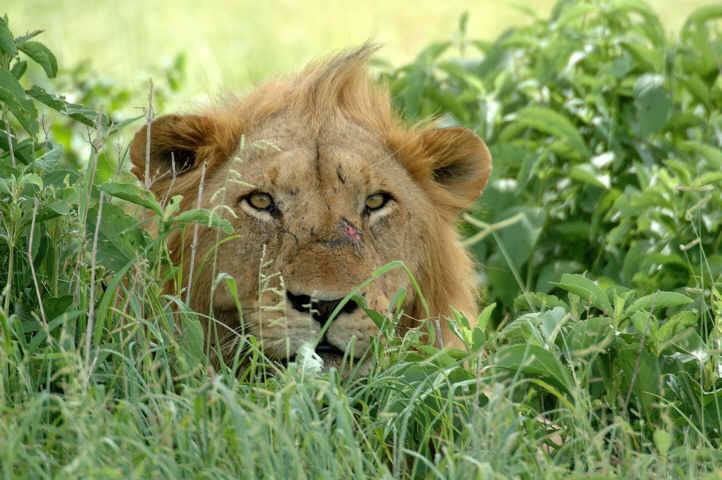
How does the carbon in grass become part of a lion?
a)
The lion eats the grass
b)
Carbon from grass doesn't end up in a lion. 
c)
The carbon ends up in the lion's food chain. 
d)
The lion breathes in carbon given out by the plant
7.
All of the carbon in existence is continually recycled in the carbon cycle
a)
True
b)
False
8.
Which of the following removes carbon from the atmosphere?
a)
Combustion
b)
Respiration
c)
Photosynthesis
d)
Death
9.
Organisms that do not decompose can be buried and become what?
a)
water
b)
nutrients
c)
air
d)
fossil fuels
10.
If the plant population decreased, the amount of carbon would _________.
a)
Stay the same
b)
Increase
c)
Decrease
11.

Which is a true statement?

a)

Humans depend on oxygen, plants depend on carbon dioxide

b)

Plants produce carbon dioxide

c)

Humans depend on carbon dioxide, plants depend on oxygen

d)

Humans don't depend on plants for the air they need

12.

Which of the following creates a calcium carbonate structure?

a)

plants

b)

cows

c)

corals

d)

decomposers

13.
if there is a fire in a forest, there will be less _ in the environment?
a)
nitrogen
b)
oxygen
14.
How is the burning of fossil fuels related to global warming?
a)
Magic
b)
Fuels are hot
c)
Greenhouse effect
d)
Photosynthesis
15.
Which of the following is an example of a decomposer?
a)
Owl
b)
Fish
c)
Tree
d)
Mushroom
16.
Organisms that do not decompose can be buried and become what?
a)
water
b)
nutrients
c)
air
d)
fossil fuels
17.

What is not a stage in the water cycle?

a)

Evaporation

b)

Precipitation

c)

Drizzle

d)

Runoff

18.

What is needed for the water cycle?

a)

Moon

b)

Venus

c)

Mars

d)

Sun

19.

What is a run-off?

a)

Where two or more main or independent clauses are joined without a word to connect them or a punctuation mark to separate them

b)

A further competition after an inconclusive result

c)

I forget

d)

The movement of land water to the oceans

20.

What is a run-off?

a)

Where two or more main or independent clauses are joined without a word to connect them or a punctuation mark to separate them

b)

A further competition after an inconclusive result

c)

I forget

d)

The movement of land water to the oceans

21.

What is the water cycle

a)

A bike made of water

b)

The movement of water on, above, or below the surface of the Earth

c)

Rain falling from clouds

d)

Something we learn in Envi Sci

22.
What part of the water cycle does this picture show?
a)
condensation
b)
precipitation
c)
evaporation
23.
Which of these is an example of precipitation?
a)
snow
b)
air
c)
clouds
d)
vapor
24.
Does evaporation happen before or after condensation?
a)
before
b)
after
c)
during
25.
What is it called when WATER is FORMED from an LIQUID to a WATER VAPOR or a GAS?
a)
EVAPORATION
b)
PRECIPITATION
c)
TRANSPIRATION
26.
What is the next stage after EVAPORATION in the water cycle?
a)
CONDENSTATION
b)
GROUNDWATER
27.
In the water cycle, the sun provides
a)
energy for water to evaporate from oceans, lakes and rivers.
b)
water for evaporation to happen. 
c)
energy to produce electricity. 
d)
water for condensation to happen. 
28.
The water cycle has
a)
a beginning and an end. 
b)
no beginning an no end. 
c)
only a beginning. 
d)
only an end. 
29.
Which stage does the #2 show in the diagram?
a)
condensation
b)
evaporation
c)
precipitation
d)
run off
30.
Which stage does the #3 show in the diagram?
a)
condensation
b)
evaporation
c)
precipitation
d)
run off
31.

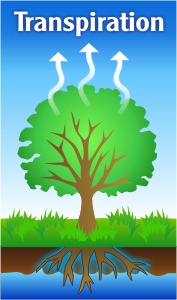
What is transpiration?

a)

Excess water being released from the aerial parts of plants in the form of water vapor

b)

Excess sugar being released from the leave

c)

The way a plant makes its food

d)

When the plant uses sugar for energy

32.

Select all of the environmental factors that would increase transpiration.

a)

Increased humidity

b)

Increased wind speed

c)

Increased temperature

d)

Decreased surface area

33.
Transpiration is
a)
the movement of water through a plant from the roots up the stem
b)
the loss of water from the leaves of a plant by the process of evaporation
c)
the flow of water into plant roots by osmosis from the soil
d)
the process of minerals and sugars moving through plant veins
34.

Which is true?

a)

99% of water taken by the plant evaporates through transpiration

b)

9% of water taken by the plant evaporates through transpiration

c)

Evaporation through transpiration accounts only for 1% of all the water the plant takes in

d)

Evaporation through transpiration is minuscule

35.

Adaptations in plant to reduce transpiration are -

a)

No of stomata

b)

Thickness of cuticle

c)

Loss of leaves

d)

All of the above

36.

Factors which affect transpiration are (external)

a)

Sunlight

b)

Wind speed

c)

Humidity

d)

Rain

37.

Which of the following properties of water explains how sweat that is released during intense

exercise, is capable of regulating the body’s physical and chemical conditions?

a)

cohesive ability

b)

acting as a universal solvent

c)

ability to moderate temperature

d)

capability to expand upon freezing

38.

Summer solstice is the longest day of the year, meaning it is the day of the year with the most

sunlight. How will the extended hours of light impact the hydrologic cycle.

a)

The longer time will have a higher evaporation rate

b)

The shorter time will have a higher evaporation rate

c)

The longer time will have less evaporation rate

d)

The evaporation rate will not be affected

39.

Precipitation is one of the main processes involved in the water cycle. It involves the formation

of water falling to the ground from clouds and transforming into either rain, snow, sleet, or hail.

Which of the following properties of water can be used to explain why when water falls from

clouds it is able to form a rain drop?

a)

cohesive ability

b)

universal solvent

c)

expansion upon freezing

d)

moderation of temperature

40.

Fossil fuels are involved in the carbon cycle and are currently our world’s primary sources of

energy. Fossil fuels are formed from organic matter over the course of millions of years. There

has been a growing concern about people's increased usage and dependence on fossil

fuels. How has fossil fuel usage over time affected the carbon cycle?

a)

Increased combustion of fossil fuels will encourage higher rates of respiration.

b)

Decreased combustion of fossil fuels will deplete our carbon reserves found

underground.

c)

Increased combustion of fossil fuels will lead to higher levels of carbon dioxide in the

atmosphere.

d)

Decreased combustion of fossil fuels will lead to more available carbon for photosynthetic

organisms.

41.

The oceans are the Earth’s largest carbon reservoirs. What property of water allows the

oceans’ water to store carbon dioxide?

a)

cohesive behavior

b)

versatility as a solvent

c)

expansion upon freezing

d)

ability to moderate temperature

42.

True or False? An increase in global land and ocean temperatures will result in higher rates of

evaporation.

a)

True

b)

False

43.
The arrows in a food chain or web represents what?
a)
They point to the organism that is being eaten.
b)
It shows how sunlight flows within an ecosystem.
c)
They show what direction the energy is flowing between organisms. 
d)
They represent how water is transferred within a habitat.
44.
In this food chain, what will happen if the frogs become extinct?
a)
The snakes will increase.
b)
The grasshoppers will decrease.
c)
The eagles will remain the same.
d)
The grasshoppers will increase.
45.
What percentage of energy is passed on to each tropic level?
a)
10%
b)
50%
c)
90%
d)
100%
46.
How do producers obtain energy?
a)
They conduct photosynthesis.
b)
They consume plants.
c)
They consume primary consumers.
d)
They consume secondary consumers.
47.
A food web can be broken down into several seperate
a)
food chains
b)
food pyramids
c)
producers
d)
consumers
48.
Which represents the largest group in a food web?
a)
carnivores
b)
omnivores
c)
herbivores
d)
producers
49.
All energy transformations in an ecosystem begin with
a)
a scavenger
b)
the sun
c)
a decomposer
d)
a herbivore
50.
a deer population has significantly increased, the best hypothesis is 
a)
the deer's main predator has been eliminated
b)
competition increased
c)
decreased water levels of local ponds
d)
organisms that rely on similar food sources migrated to the area
51.
Use the diagram answer the question.
What is a fitting description for this diagram?
a)
A Food Chain
b)
An Ecosystem
c)
A Food Web
d)
Biotic and Abiotic Factors
52.
Use the diagram to answer the question.
The Mayfly is a food source for which 3 organisms?
a)
Frog, Dragon Fly and snake
b)
Frog, trout and dragon fly
c)
Frog, salamander and trout
d)
Frog and phytoplankton
53.
Use the diagram to answer the question.
The trout is a source of food for the human and the eagle. When there are more than one organism vying for the same source we call this____?
a)
Population
b)
Resources
c)
Community
d)
Competition
54.
What is the best explanation for an energy pyramid?
a)
It shows the FLOW of energy from one organism to the next. 
b)
It shows HOW much energy flows through a food web
c)
It shows the MEMBERS in a single organism
55.
True or False. In this Food Web Pyramid the consumers on each level only get about 10 percent of energy that the plants have stored.
a)
True
b)
False
56.
In this Food Web Pyramid what is the proper name for the organisms above the producer level at the bottom.
a)
herbivores
b)
consumers
c)
carnivores 
d)
omnivores
57.
In Australia the farmers had a problem with beetles eating the sugar cane. So they introduced the cane toad to control that population. Instead of eating the beetles, they ate the source of food and other organisms. What would be a possible consequence of this?
a)
The other organisms attacks the toad population
b)
The ecosystem would be destroyed
c)
The cane toads would get too much food and die
d)
The food web was changed by this one organism