wayground logo

Free Printable Worksheets

NEW

Font size

S
M
L
XL
Worksheets

Unit 2: Composition of the Earth

Total questions: 62

Worksheet time: 50mins

Name
Class
Date
1.
What is the charge of a Proton?
a)
malluable
b)
negative
c)
positive
d)
no charge
2.
Particles in an atom's nucleus that are neutral and have no charge are 
a)
megatrons. 
b)
electrons.
c)
neutrons.
d)
protons. 
3.
A negatively charged particle that moves around the nucleus is a(n)
a)
proton
b)
neutron
c)
electron
d)
quark
4.
The atomic number of this pictured element is
a)
28
b)
58.6934
c)
Ni
d)
Nickel
5.
Elements which are shiny, conduct electricity and heat are called
a)
metal
b)
nonmetal
c)
metalloid
d)
nonexistent
6.
What does the H stand for?
a)
Hydrogen
b)
atomic number
c)
atomic mass
d)
atomic explosion
7.
How many electrons does Si contain? (click to see image)
a)
14
b)
28
c)
2
d)
4
8.
A pure substance that cannot be separated into simpler substances by chemical or physical means.  
a)
Element
b)
Compound
c)
Mixture
d)
Chemical
9.
What is the atomic mass of "F"
a)
9
b)
18
c)
17
d)
19
10.
the central region of an atom where its neutrons and protons are is its 
a)
nucleus 
b)
electron cloud
c)
core 
d)
center 
11.

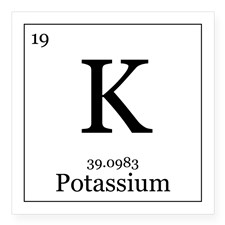
How many neutron are in the atom "K"?

a)

7

b)

2

c)

39

d)

20

12.
What are the 3 particles that make-up the atom?
a)
protons, neutrons, and isotopes
b)
neutrons, isotopes, and electrons
c)
positives, negatives, and electrons
d)
protons, neutrons, and electrons
13.
A rock which contains a useful mineral is call a/an
a)
gem
b)
quarry
c)
ore
d)
alloy
14.
The color of a mineral in powder form is called the mineral's 
a)
hardness
b)
specific gravity
c)
luster
d)
streak
15.
How light reflects off of a mineral is called the mineral's 
a)
luster
b)
streak
c)
cleavage
d)
fracture
16.
Why is coal not a mineral?
a)
It's not a solid
b)
It is man-made
c)
It is not inorganic
d)
It is made of carbon
17.
The following image shows what mineral property?
a)
Hardness
b)
Streak
c)
Cleavage
d)
Density
18.
Diamond has a hardness of ___ on Mohs Hardness Scale.
a)
1
b)
5
c)
8
d)
10
19.
Dull, silky, waxy, pearly, and earthy are terms that best describe which property of minerals?
a)
luster
b)
color
c)
streak
d)
cleavage
20.
By definition, a mineral has which of the following characteristic(s)?
a)
definite chemical composition
b)
crystal structure
c)
naturally occuring
d)
all of the above
21.
How do you test the hardness of a mineral? 
a)
Throw it against a wall
b)
Step on it
c)
Scratch Test
d)
Kick it until it breaks
22.
What mineral is used for pencils?
a)
Graphite
b)
Galena
c)
Magnetite
d)
Quartz
23.
What mineral is salt?
a)
quartz
b)
sulfur
c)
halite
d)
calcite
24.
The solid, geometric form of a mineral produced by a repeating pattern of atoms
a)
crystal
b)
density
c)
element
d)
fracture 
25.
This narrow channel of gold intruding into the surrounding rock is called a 
a)
sill
b)
dike
c)
volcanic neck
d)
vein
26.
Large crystals are going to form
a)
when lava erupts from a volcano
b)
when a shallow sea evaporates
c)
when magma underground cools off
d)
all of the above
27.

A rock deep within the Earth experiences extreme temperature and pressure. After a long period of time it becomes which rock?

a)

Magma

b)

Igneous

c)

Metamorphic

d)

Sedimentary

28.

What must happen to a metamorphic rock before it becomes a sedimentary rock?

a)

It must be broken down into sediment

b)

It must be melted into magma

c)

Its minerals must dissolve in water

d)

It must be exposed to high temperature and pressure

29.

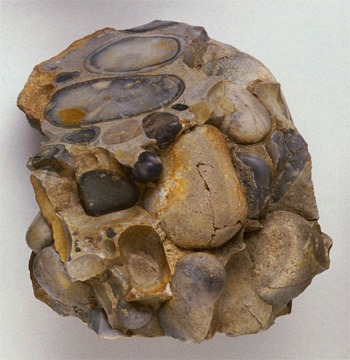
This rock formed when bits of other rocks became pressed into a solid. What type of rock is it?

a)

Sedimentary Rock

b)

Metamorphic Rock

c)

Igneous Rock

30.

This rock was formed by smaller pieces of rock that settled at the bottom of a lake millions of years ago. What type of rock is this?

a)

Sedimentary

b)

Igneous

c)

Metamorphic

31.

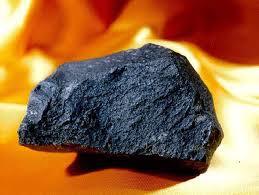
This rock was found near the mouth of a volcano. What type of rock is this?

a)

Sedimentary

b)

Igneous

c)

Metamorphic

32.

When sediments are pressed together tightly, this is called ____________.

a)

Compaction

b)

Cementation

c)

Weathering

d)

Erosion

33.

The process in which sediment are fused or glued together.

a)

compaction

b)

deposition

c)

organic rock

d)

cementation

34.
This rock was formed when molten rock cooled into a solid. What type of rock is it?
a)
Igneous Rock
b)
Metamorphic Rock
c)
Sedimentary Rock
35.
Which type of rock is formed from INTENSE heat and pressure?
a)
igneous
b)
sedimentary
c)
metamorphic
36.
This rock was molten magma that slowly cooled under the ground. What type of rock is this?
a)
Sedimentary
b)
Igneous
c)
Metamorphic
37.
The three groups of rocks are classified by
a)
How they form
b)
Color
c)
Grain size
d)
Chemical Composition
38.
Fossils are only found in
a)
Sedimentary rocks
b)
Foliated Metamorphic rocks
c)
Igneous Rocks
d)
Nonfoliated Metamorphic rocks
39.
Large rocks can be broken down into smaller rocks by wind and water.  These small rocks can break down into very tiny pieces called _______.
a)
minerals
b)
pebbles
c)
sediments
d)
chalk
40.

In which location would you most likely find an igneous rock?

a)
b)
c)
d)
41.

Compaction and cementation are two common processes associated with:

a)

Extrusive igneous rocks

b)

Intrusive igneous rocks

c)

Sedimentary rocks

d)

Metamorphic rocks

42.
What is the relationship between a rock and a mineral?
a)
Rocks are made up of minerals.
b)
Minerals are made up of rocks.
c)
Rocks are on the Earth's surface. Minerals are found underground.
d)
Rocks and minerals are different names for the same thing.
43.

A model that describes all the processes by which rock is formed.

a)

rock cycle

b)

Weathering

c)

Sedimentation

44.

What is the product of Melting?

a)

Igneous Rock

b)

Sediments

c)

Sedimentary rock

d)

Magma

e)

Metamorphic rock

45.
magma that flows onto the surface
a)
Lava
b)
sedimentary
c)
metamorphic
46.
Extrusive rocks
a)
Forms underground
b)
Has a coarse-grained texture
c)
Cools quickly
47.
Minerals that precipitate out of solution
a)
clastic rocks
b)
chemical rocks
c)
organic rocks
48.

What is a renewable energy source.

a)

Coal

b)

Solar Power

c)

Nuclear Power

d)

Natural Gas

49.

What is a non renewable energy source.

a)

Solar Power

b)

Wind

c)

Natural Gas

d)

Tidal

50.

It takes over millions of years for fossil fuels to form underground.

a)

True

b)

False

51.

What are the 3 MAIN types of fossil fuels?

a)

Coal - Oil - Nuclear

b)

Coal - Oil - Solar

c)

Oil - Coal - Gas

52.

What is the energy produced by moving water?

a)

hydroelectric power

b)

streams

c)

hydrowater power

d)

rivers

53.

The intense heat from Earth’s interior is called ____________________________________________ energy.

a)

thermal

b)

geothermal

c)

solar

d)

wind

54.

Oil is the remains of small animals, algae, zooplankton and other ocean marine life that over time, and under heat and pressure has become a black liquid fossil fuel. Another name for this energy source is __________________.

a)

Petroleum

b)

Coal

c)

Biocarbon

d)

All the above

55.

Graphite is a native element mineral that consists of

a)

lead

b)

carbon

c)

silver

d)

molybdenum

56.

A company is likely to mine a site if the site

a)

is rich in minerals

b)

contains gold

c)

contains minerals that can be extracted economically

d)

does not contain gangue minerals

57.

Open pits called _______ are used to mine stone and gravel.

a)

overburdens

b)

cyanide heaps

c)

solar evaporation ponds

d)

quarries

58.
Goose and Harley are cruising down the interstate on some motorcycles. They're burning gas like crazy. What would be an effect on the environment?
a)
water pollution
b)
land pollution
c)
air pollution
59.
Which of the following is an example of REDUCING?  
a)
taking glass bottles to the recycling center
b)
turning off the lights when you leave a room
c)
using a soup can for a pencil cup

d)
throwing your garbage in the trash can
60.
Conservation is the act of conserving, or protecting the environment, plants, and animals. Why is this so important? What are some things you can do to help conserve our environment? 
a)
leave water on, leave TV on, run dishwasher with 1 plate
b)
run the washing machine with 1 shirt
c)
leave the refrigerator door open
d)
turn off water, turn off lights, turn off TV
61.

Which of the following is a direct effect of recycling?

a)

More water is polluted.

b)

Less coal and gas are used.

c)

Less trash goes into landfills.

d)

More energy comes from power plants.

62.

Why is reducing your carbon footprint so important?

a)

Carbon dioxide is the main cause of global warming

b)

Carbon dioxide helps grow forests and grasslands

c)

The atmosphere will cool with too little carbon dioxide.

d)

Sea levels will drop with too much carbon dioxide.