
 Worksheets
The Chemical Building Blocks of Life Review #2
Total questions: 63
Worksheet time: 53mins
Three fatty acids bonded together with a glycerol are found in a(n)
alcohol
enzyme
phospholipid
chlorophyll pigment
triglyceride
Biological membranes contain bilayers of which of the following lipids?
phospholipids
oils
prostaglandins
triglycerides
cholesterol
Which of the following lipid classes is found in Chlorophyll, retina of the vertebrate eye, and synthetic rubber?
phospholipid
terpene
steroid
prostaglandin
wax
Which of the following is not a protein?
enzyme
antibody
keratin
pectin
collagen
Proteins possess all of the following functions except
structure
metabolism
encode genetic information
membrane transport
cell recognition
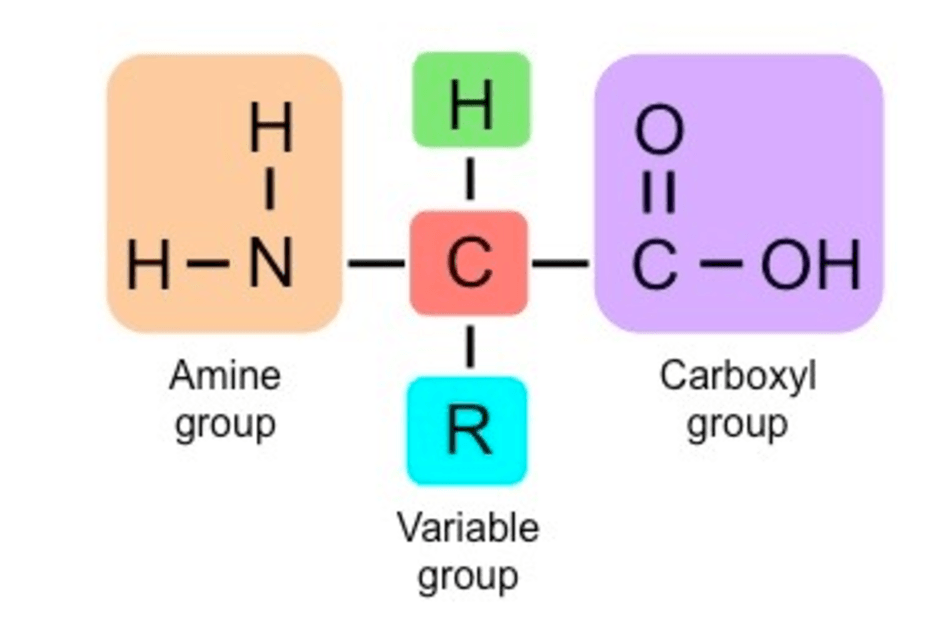
Functional groups found in amino acids include all of the following except
-NH2.
phosphate
-COOH
-OH
alkyl (linked multiple carbons with hydrogens).
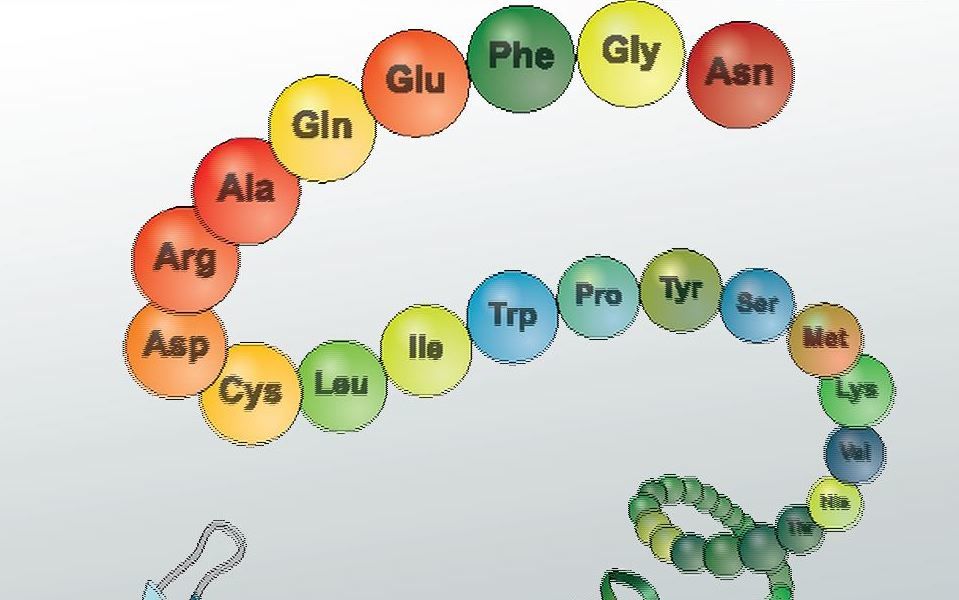
A chain of amino acids linked together end-to-end can only be found in a
membrane lipid
nucleic acid
polysaccharide
polypeptide
starch
The specific amino acid sequence in a protein is its
zero order structure
primary structure
secondary structure
tertiary structure
quaternary structure
You have recently identified a novel protein. After obtaining the protein sequence you realize that this protein contains several motifs and domains. How might this information help you to determine the function of your new protein?
All motifs and domains have a calatogued structure and function. Therefore, the identification of such structures in the new protein will easily determine its function.
Motifs and domains are patterns that exist in protein structure and are often associated with particular functions. Therefore, identification of such sites can provide insight into possible functions of the unknown protein.
This information would not likely aid in determining the function of the new protein.
The human immunodeficiency virus (HIV) uses RNA, rather than DNA, to encode genetic information. During infection, however, HIV uses an enzyme known as reverse transcriptase to generate double-stranded DNA. Generally speaking, how would the enzyme generate a double strand of DNA from a single strand of RNA?
Reverse transcriptase first catalyzes the synthesis of a DNA copy from the viral RNA, and then catalyzes the synthesis of a second strand of DNA complementary to the first one.
Reverse transcriptase first catalyzes the synthesis of a RNA copy from the viral DNA, and then catalyzes the synthesis of a second strand of RNA complementary to the first one.
Reverse transcriptase first catalyzes the synthesis of a DNA copy from the viral RNA, and then catalyzes the synthesis of a second strand of RNA complementary to the first one.
The digestive enzyme pepsin works in the acidic environment of the stomach to hydrolyze peptide bonds. On which of the following macromolecules does pepsin act?
carbohydrate
protein
DNA
lipid
Muscle contraction is accomplished by a mechanism known as the cross-bridge cycle, in which myosin heads bind to actin and cause the actin filaments to move across the myosin filaments. Which of the following is capable of providing the energy needed for this process?
ATP
FAD
NAD+
enzymes
Which of the following would not contain polymers of b-glucose?
cellulose
wood
paper
amylose
You arrive late to a biological seminar. However, just as you enter the room, you hear the speaker referring to the "five-prime end" and the "three-prime end" of a macromolecule. Immediately, you know that they are talking about a
carbohydrate
protein
DNA
lipid
You arrive late to a biological seminar. However, just as you enter the room, you hear the speaker referring to the "amino end" and the "carboxyl end" of a macromolecule. Immediately, you know that they are talking about a
carbohydrate
protein
DNA
lipid
Vitamin D can be synthesized by the body from a derivative of cholesterol. Given this information, which of the following statements about the solubility of vitamin D is true?
Vitamin D is water-soluble.
Vitamin D is fat-soluble.
Vitamin D is soluble in both water and fat.
Vitamin D is not soluble in either water or fat.
Margarine is made by hydrogenating vegetable oils so that they take on the consistency of butter. Which of the following is the chemical basis for this change from a liquid to a solid?
Fats are changed from unsaturated to saturated, allowing them to solidify.
Fats are changed from saturated to unsaturated, allowing them to solidify.
Trans-fatty acids are changed from unsaturated to saturated, allowing them to solidify.
Trans fatty acids are changed from saturated to unsaturated, allowing them to solidify.
Egg whites consist primarily of water and the protein albumin. When you fry an egg, why does the egg white turn from clear to white?
The protein becomes dissociated.
The protein acquires tertiary structure.
The protein becomes denatured.
The protein becomes dehydrated.
People who are lactose intolerant can often consume some products made from milk such as cheese and yogurt. By comparison, people with a true milk allergy, which involves an immune response to milk protein, cannot consume milk or products made from milk. Given this information, which of the following statements is true?
The protein that causes a true milk allergy is lactose.
All people who are lactose intolerant are also allergic to milk.
Yogurt contains live and active cultures of Lactobacillus acidophilus bacteria and therefore prevents an allergic response in people with a true milk allergy.
Lactose is a carbohydrate, not a protein and is therefore not the cause of true milk allergies.
L-lysine is an essential amino acid and must be supplied in the diet. By comparison, the stereoisomer D-lysine is not biologically active. Why can your body only utilize one form?
Since the L form and D form are enantiomers, they will bind together and inhibit utilization of the D form.
Since the L form and D form are chiral molecules, they will bind together and inhibit utilization of the D form.
Antibodies recognize the D form and destroy it before your body can use it for nutritional purposes.
Enzymes can only recognize a single, specific stereoisomer.
You recently identified a novel protein that contains several membrane-spanning domains. Which of amino acids would you expect to be most common in these domains?
nonpolar
polar uncharged
charged
aromatic
Which of the following is a DNA sequence capable of pairing with CGATTAGT?
GCTAATCA
CGATTAGT
GCUAAUCA
CGAUUAGT
The oxidation of glucose (C6H12O6) by cellular respiration is an example of a dehydration reaction. A simplified version of this reaction can be written as
6H2O + 6CO2 →C6H12O6 + 6O2.
C6H12O6 + 6O2 → 6H2O + 6CO2
C6H12O6 →6H2O + 6CO2
C6H12O6 + 6O2 → 6CO2C.
Nucleic acids are created with
phosphodiester bonds
peptide bonds
a phosphate and two fatty acids bonded to glycerol
sugar polymers
Which of the following best describes an enzyme?
reacts with other enzymes to form a product
catalyzes chemical reactions
structural protein
inorganic cofactor
Carbohydrates are created with
phosphodiester bonds
peptide bonds
a phosphate and two fatty acids bonded to glycerol
sugar polymers
Phospholipids are created with
phosphodiester bonds
peptide bonds
a phosphate and two fatty acids bonded to glycerol
sugar polymers
Proteins are created with
phosphodiester bonds
peptide bonds
a phosphate and two fatty acids bonded to glycerol
sugar polymers
Which of the following would not be an example of protein use in a living organism?
synthesis of macromolecules
muscle contraction
recognition of "self" in immune reactions
stores information
forms hair
All of the following are examples of monomer: polymer pairings except
amino acids: polypeptides.
monosaccharides: polypeptide.
nucleotides: DNA.
glucose: starch.
fatty acids: triglycerides.
DNA and RNA are similar in some respects and different in others. Which of the following statements is not accurate about their similarities?
Both DNA and RNA nucleotides contain the nitrogen bases adenine, cytosine, and guanine.
Both DNA and RNA always double helices.
Both DNA and RNA contain monosaccharide sugars on their respective nucleotides.
Both DNA and RNA are involved in the "Central Dogma" of biology.
Both DNA and RNA contain phosphate groups on their respective nucleotides.
Imagine that you were able to see a nucleotide under a very special microscope. As you scan the nucleotide you see a T nitrogen base. Without seeing any other part of the nucleotide you know that
it is a DNA nucleotide.
it is a RNA nucleotide.
it is a either a DNA nucleotide or an RNA nucleotide.
you will need to continue to scan for more clues, such as the type of sugar associated with it, to be able to determine which type of nucleotide it is.
Imagine that you were able to see a nucleotide under a very special microscope. As you scan the nucleotide you see a U nitrogen base. Without seeing any other part of the nucleotide you know that
it is a DNA nucleotide.
it is an RNA nucleotide.
it is either a DNA nucleotide or an RNA nucleotide.
you will need to continue to scan for more clues, such as the type of sugar associated with it, to be able to determine which type of nucleotide it is.
Cystic fibrosis (CF) is an inherited disorder that is caused by a mutation that prevents various ions from moving across cell membranes. Normally there are proteins that allow passage of the ions, but in CF these proteins seemed to be disabled. Researchers have found that one explanation of this has to do with
the chaperone proteins are missing or are not functioning and, thus, the correct folding of the proteins are prevented from occurring.
the proteins are denatured and as a result become disabled, which prevents the correct interface with the substrate, effectively blocking ion transfer.
the chaperone proteins are bound with the ions at the cell membrane surface and cannot release to aid the unfolded proteins.
the proteins are disabled because of the pH change at the cell membrane surface caused by the accumulated ions.
the chaperone proteins and the proteins are unable to segregate themselves because of the lower pH environment produced by the ionic gradient created on the cell membrane.
Four of the following five choices are functions of carbohydrates. Select the exception.
Chitin is a carbohydrate that is used in insects and other arthropods in the structures of their exoskeletons.
Starch is a carbohydrate that is used by some plants as a way to store glucose.
Glycogen is a carbohydrate that is used by animals as a way to store glucose.
Cellulose is a carbohydrate that serves a structural function in plants.
Glucose is a carbohydrate that is utilized by all life forms in the construction of nucleotides.
Carbohydrates contain 4 calories per gram, proteins contain 4 calories per gram, and fats contain 9 calories per gram. There is a food that contains 108 calories per serving. There are 4 grams of carbohydrate, 5 grams of protein, and 8 grams of fat in a serving. Which of the following represents the calories for fat?
20
16
72
18
Fructose and galactose all have the same six carbon atoms, twelve hydrogen atoms, and six oxygen atoms, just as glucose. A friend of yours says to you, "Since two of those sugars have the same number of atoms, they should all have the same name." You answer, "Yes. They do have the same atoms and the numbers are the same; however,
they are all polysaccharides and have slightly different functions within organisms and therefore have different names."
they are named differently because of their quaternary structures, which is very important in carbohydrates, especially glucose."
they are named differently because when heated above their optimal temperature they become denatured and will not react with their substrates."
they are named differently because they are involved in different DNA nucleotide formation."
they are named differently because they are alternate forms of the monosaccharide, glucose."
Which of the following is not found in RNA?
adenine
cytosine
guanine
thymine
uracil
The nitrogen base not found in DNA is called
adenine
cytosine
guanine
thymine
uracil
Which of the following is not a component of nucleic acids?
a five-carbon sugar
a six-carbon sugar
a phosphate group
phosphodiester bonds
an organic nitrogen containing base
The information storage molecules of cells are called
fatty acids.
membrane lipids
enzymes
hormones
nucleic acids
Denaturation, a process in which a protein loses its native shape and function, is likely to be caused by all of the following except
being transported from one cell to another in a living organism.
pH change
temperature change
ionic concentration change
increase in hydrogen ion concentration
Alpha helix and beta pleated sheets are examples of which level of protein structure?
zero order
primary
secondary
tertiary
quaternary
The specific amino acid sequence in a protein is its
zero order structure
primary structure
secondary structure
tertiary structure
quaternary structure
A chain of amino acids linked together end-to-end can only be found in a
membrane lipid
nucleic acid
polysaccharide
polypeptide
starch
Functional groups found in amino acids include all of the following except
-NH2.
phosphate
-COOH
-OH.
alkyl (linked multiple carbons with hydrogens)
which of the following terms refers to the order in which amino acids are linked together in a protein.
Primary
Secondary
Tertiary
Quaternary
The chain of amino acids folds and coils on itself
Primary
Secondary
Tertiary
Quaternary
The entire polypeptide forms a three-dimensional structure
Primary
Secondary
Tertiary
Quaternary
Two or more polypeptides attached together and work as one unit
Primary
Secondary
Tertiary
Quaternary

The difference between tertiary and quartenary structure is:
Tertiary structure has double bond whereas quartenary structure does not have double bond
Tertiary structure consists of one polypeptide chain whereas quartenary structure consists of more than one polypeptide chains
Tertiary structure is fibrous whereas quartenary structure is globular
Tertiary structure is water-soluble whereas quartenary structure is lipid soluble
Monosaccharides are monomers of
Lipids
Nucleic Acids
Proteins
Carbohydrates
Which of these are examples of Lipids?
simple sugars
complex carbohydrates
fats, oils, & waxes
hair, skin, & nails
Monomers of Lipids include
amino acids
monosaccharides
nucleotides
glycerol and fatty acids


