wayground logo

Free Printable Worksheets

NEW

Font size

S
M
L
XL
Worksheets

Practice Test Unit 3

Total questions: 65

Worksheet time: 1hrs 5mins
Name
Class
Date
1.
Proteins are composed of what smaller building blocks?
a)
amino acids
b)
nucleic acids
c)
fatty acids
d)
nucleotides
2.
Which group of organic molecules serve as long-term energy storage and make the cell membrane is?
a)
proteins
b)
carbohydrates
c)
lipids
d)
nucleic acids
3.
Which 2 molecules form the sides (backbone) of the DNA ladder?
a)
deoxyribose sugar and adenine
b)
deoxyribose sugar and a hydrogen bond
c)
deoxyribose sugar and the nucleus
d)
deoxyribose sugar and phosphate
4.
Nitrogenous bases are joined by which type of bond?
a)
polar bonds
b)
ionic bonds
c)
covalent bonds
d)
hydrogen bonds
5.
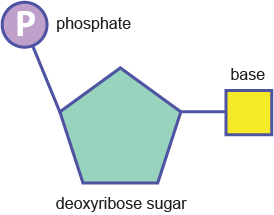
What are the three components of a nucleotide?
a)
sugar, hydrogen, nitrogen base
b)
sugar, oxygen, nitrogen base
c)
sugar, phosphate, nitrogen base
d)
sugar, phosphate, protein
6.
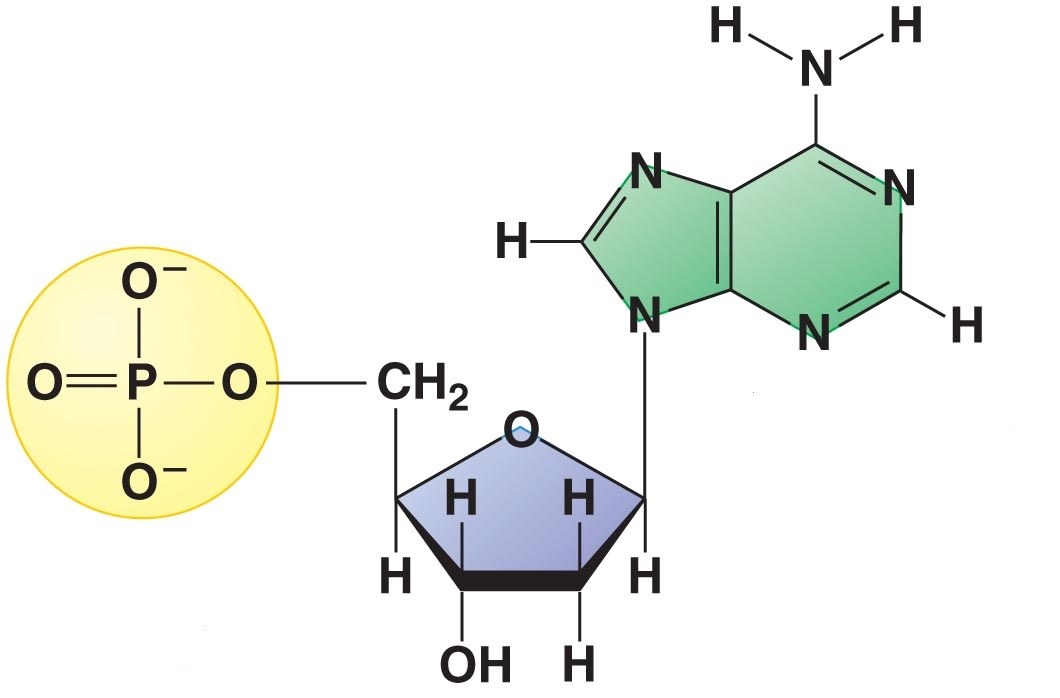
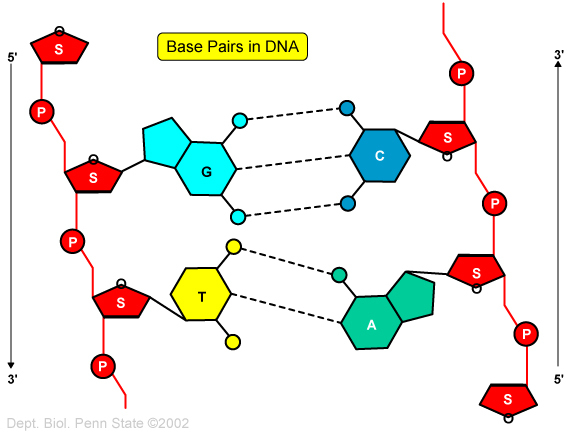
Name this structure
a)
double helix
b)
nucelotide
c)
twisted ladder
d)
hydrogen bond
7.
Nucleotides are made up of a sugar, phosphate, and..?
a)
nitrogenous base
b)
nucleic acid
c)
cholesterol
d)
fatty acid
8.
Which sequence of DNA bases would pair with this partial strand
ATG TGA CAG
a)
ATG TGA CAG
b)
TAC ACT GTC
c)
GTA AGT GAC
d)
CAT TCA CTG
9.

Translate the mRNA molecule for this gene:

C-A-T-G-T-A-A-A-C

a)

T-C-G-A-T-U-U-C-C

b)

G-G-G-A-T-C-U-U-T

c)

G-U-A-C-A-U-U-U-G

d)

G-T-A-C-A-T-T-T-G

10.

What do ribosomes do for the cell?

a)

Make proteins for the cell

b)

Package and deliver items in the cell

c)

Produce energy for the cell

d)

Controls what exits/enters the cell

11.
What type of RNA carries the DNA message out of the nucleus to the ribosomes?
a)
mRNA
b)
tRNA
c)
rRNA
d)
aRNA
12.
What do we call the process of turning DNA into mRNA?
a)
Replication
b)
Transcription
c)
Translation
d)
Cloning
13.
DNA codes for...
a)
cholesterol
b)
proteins
c)
fatty acids
d)
a sandwich
14.
Which is the mRNA molecule that would be transcribed from this DNA template:
TGGCAAGTACGT
a)
ACCGTTCATGCA
b)
UGGCAAGUACGU
c)
UCCGUUCUUGCU
d)
ACCGUUCAUGCA
15.
What would the complimentary DNA strand be to this DNA template?
TTC  CGA
a)
AAG  GCT
b)
AAG GCU
c)
CCG  GCT
d)
UUG  GCA
16.
Amino Acids link together to form?
a)
Carbohydrates
b)
DNA
c)
Protein
d)
Carbohydrates
17.

where is the site of translation ?

a)

ribosomes

b)

telomerase

c)

helicase

d)

primase

18.

What is the order for Protein Synthesis?

a)

Transcription -> Translation -> Protein

b)

Translation - > Transcription -> Protein

c)

Protein -> Transcription -> Translation

d)

Translation -> Protein -> Transcription
19.
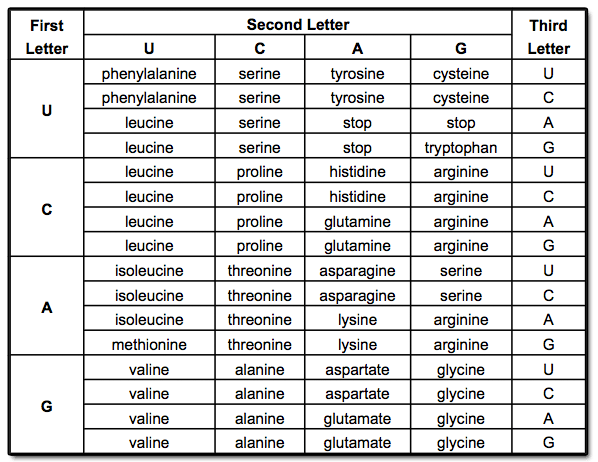
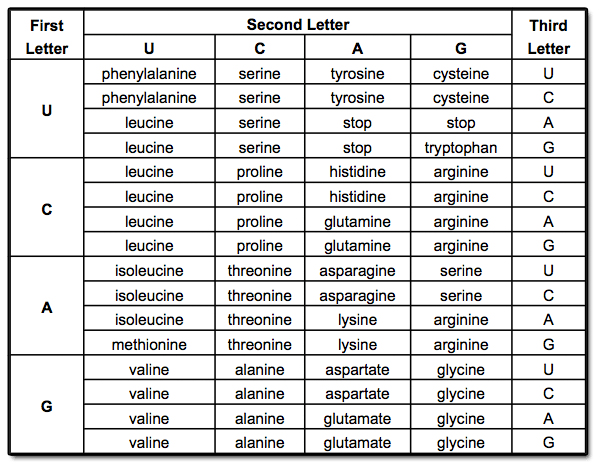
What amino acid is represented by the codon UUA?
a)
Phenylalanine
b)
Tyrosine
c)
Leucine
d)
Stop codon
20.
What is the correct amino acid sequence for the mRNA code AUGCCAGUAUGA
a)
Met-Pro-Ala-Val
b)
Met-Pro-Val
c)
Tyr-Gly-His
d)
Tyr-Gly-Arg-His
21.

Messenger RNA travels out of the nucleus to ribosomes

and is used as a template to assemble a protein.

a)

Translation

b)

Transcription

c)

Replication

d)

Homeostasis

22.
What is the term for a three-nucleotide sequence that codes for an amino acid?
a)
base
b)
codon
c)
amine
d)
serine
23.
The process to go from DNA to mRNA is _______
a)
translation
b)
transcription
c)
replication
24.
The process to go from mRNA to a protein is called ____
a)
transcription
b)
rRNA
c)
replication
d)
translation
25.
What amino acid is represented by the codon UUA?
a)
Phenylalanine
b)
Tyrosine
c)
Leucine
d)
Stop codon
26.
What type of solution is this cell in?
a)
Isotonic
b)
Hypertonic
c)
Hypotonic
d)
diffused
27.
What type of solution allows water to enter the plant cell?
a)
hypotonic solution
b)
hypertonic solution
c)
isotonic solution
d)
active transport
28.
What type of solution is this cell in?
a)
Isotonic
b)
Hypertonic
c)
Hypotonic
d)
diffused
29.

In an isotonic solution which way will the water flow

a)

it will not flow at all

b)

it will flow into the cell

c)

it will flow both ways at equal rates

d)

out of the cell

30.

What would happen to a cell placed in a hypertonic solution

a)

The cell would shrink

b)

The cell would expand and possibly burst

c)

The cell would remain the same

d)

The cell would dance and do the Nay Nay!

31.
In this picture, which way will the water move?
a)
Water will move into the cell
b)
Water will move out of the cell
c)
Water will move in and out of the cell
d)
Water will not move
32.
How does a cell maintain homeostasis?
a)
Regulates what enters and leaves the cell
b)
Flexibility
c)
Protective barrier
d)
Structure and support
33.
The cell membrane is selectively permeable, which means...
a)
All materials can enter and leave the cell
b)
Certain things can enter while others cannot
c)
The cell manually sorts through all materials
d)
Only certain cells can interact with the cell.
34.

The concentration of red molecules outside the cell is higher than the concentration inside the cell. The red molecules cannot penetrate the cell. What will happen to the cell?

a)

Water will leave the cell, and the cell will shrink.

b)

Water will enter the cell, and the cell will expand.

35.

The concentration of red molecules outside the cell is higher than the concentration inside the cell. The red molecules cannot penetrate the cell. The cell is inside a ______.

a)

hypotonic solution

b)

hypertonic solution

36.
The cell below is in a _________ solution.
a)
Hypotonic
b)
Hypertonic
c)
Isotonic
37.
The cell below is in a _____________ solution.
a)
Hypertonic
b)
Hypotonic
c)
Isotonic
38.

This egg has shrunk, what type of solution was it placed in?

a)

hypotonic solution

b)

hypertonic solution

c)

isotonic solution

39.

If the dots represent sugar what direction will the water flow?

a)

Into the cell

b)

Out of the cell

c)

Both equally (equilibrium)

40.

What will happen to the cell in the given solution?

a)

Swell up

b)

Shrink

c)

Stay the same

41.
The cells seem to be shriveled and dehydrated what type of solution are they most likely in?
a)
Hypertonic
b)
Isotonic
c)
Hypotonic
42.
The image indicates what type of solution the cell is in?
a)
Isotonic
b)
Hypertonic
c)
Hypotonic
43.

Movement of SOLUTE through the cell membrane from high to low concentration is called.....

a)

diffusion

b)

active transport

c)

facilitated diffusion

d)

osmosis

44.

_______ regulates what enters and leaves a cell.

a)

Cell Membrane

b)

Nucleus

c)

Mitochondria

d)

Cytoplasm

45.
What is the difference between active and passive transport?
a)
Active does not need energy and passive uses ATP (energy)
b)
Active uses ATP (energy) and passive does not need energy
c)
Active stores transport proteins and passive releases 
d)
Active uses hormones and passive does not 
46.
What are three types of passive transport
a)
Transport proteins, Endocytosis, Exocytosis
b)
None of the ones listed
c)
Osmosis, Diffusion, Facilitated diffusion 
d)
Touchdown, interception, football
47.
Diffusion is the movement of molecules from an area of higher concentration to an area of lower concentration.
a)
True
b)
False
48.
Movement of particles from high to low concentration. 
a)
Passive Transport
b)
Active Transport
49.
The movement of molecules against a concentration gradient
a)
simple diffusion
b)
facilitated diffusion
c)
active transport
d)
osmosis
50.
This picture represents what type of cell transport?
a)
endocytosis
b)
exocytosis
c)
osmosis
d)
passive transport
51.

What is the term for maintaining equilibrium within your body(cell) despite the external forces outside you body (cell)?

a)

Osmosis

b)

Diffusion

c)

Homeostasis

d)

Transport

52.
In a solution, salt is considered the _______.
a)
solvent
b)
solute
c)
solution
d)
ion
53.
The diffusion of water is known as _________
a)
active transport
b)
facilitated diffusion
c)
osmosis
d)
pinocytosis
54.
What is diffusion?
a)
when molecules move 
b)
when molecules move from a high concentration to a low.
c)
no movement 
d)
molecules move everywhere
55.
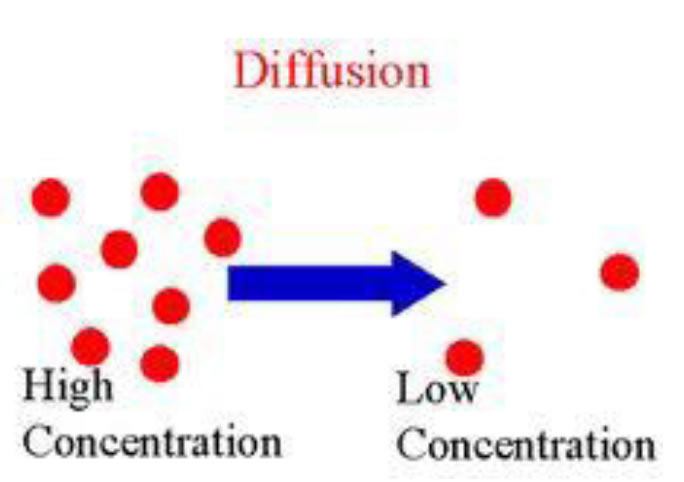
The picture below is an example of _________________.
a)
osmosis
b)
isotonic
c)
diffusion
d)
active transport
56.
Active transport...
a)
... includes diffusion
b)
... requires energy
c)
... is limited to only things leaving the cell
d)
... is limited to only things entering the cell
57.
The cells seem to be swelling and about to burst what type of solution are they most likely in?
a)
Hypertonic
b)
Isotonic
c)
Hypotonic
58.

If ATP is being used, then molecules are moving from _____ to _____.

a)

High; low

b)

Low; high

c)

Active; passive

d)

Passive; active

59.
The function of the plasma membrane is....
a)
to regulate what enters and leaves the cell.
b)
fight bacteria and viruses that enter the cell.
c)
provide rigid support and protection to the cell.
d)
make sure each cell can move
60.
What is another term for "selectively permeable"?
a)
porous
b)
completely permeable
c)
permanent
d)
semipermeable
61.
The function of the plasma membrane is....
a)
to regulate what enters and leaves the cell.
b)
fight bacteria and viruses that enter the cell.
c)
provide rigid support and protection to the cell.
d)
make sure each cell can move
62.

This organelle is in both plants and animals. It is a barrier between the cell and the environment. (It controls what goes in and out of a cell.)

a)

cell wall

b)

cell membrane

c)

cell organelles

d)

mitochondria

63.
The cellular process in which materials are moved across a membrane from an area of low concentration to an area of high concentration is called
a)
Osmosis
b)
Simple Diffusion
c)
Active Transport
d)
Passive Transport 
64.
Osmosis is the diffusion of __________.
a)
water
b)
glucose
c)
air
d)
passive transport
65.
Passive transport requires no
a)
concentration gradients
b)
osmosis
c)
motion
d)
energy